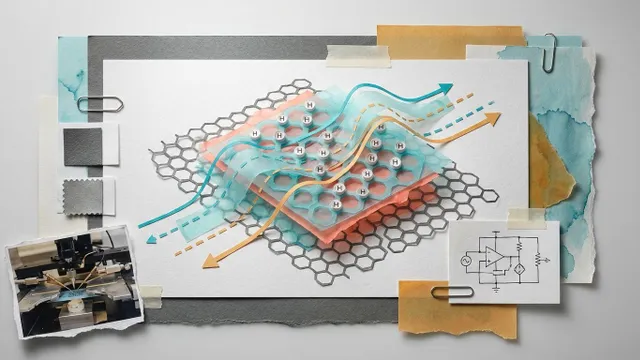
698. Engineering Terahertz Excitons via Hydrogenated Graphene Superlattices
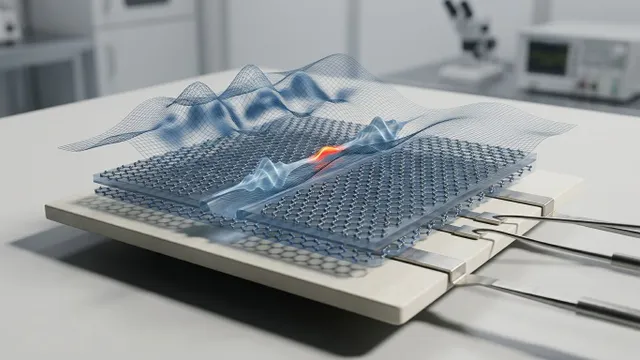
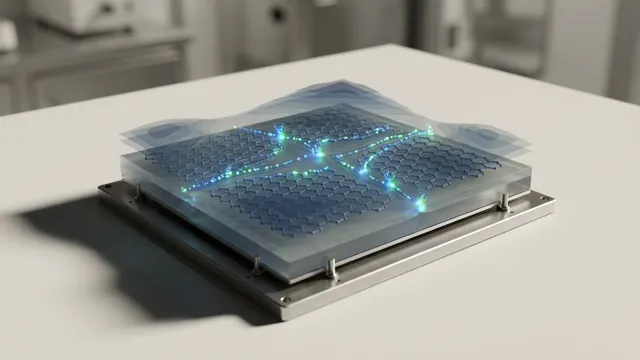
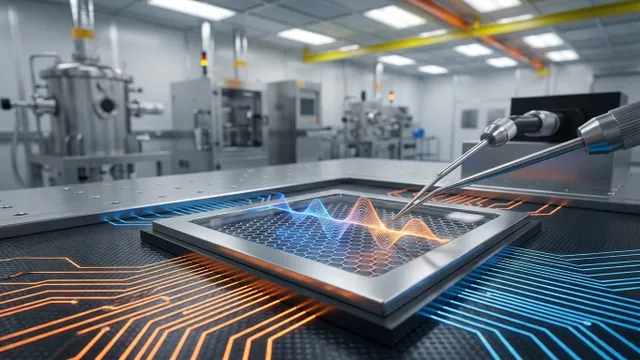
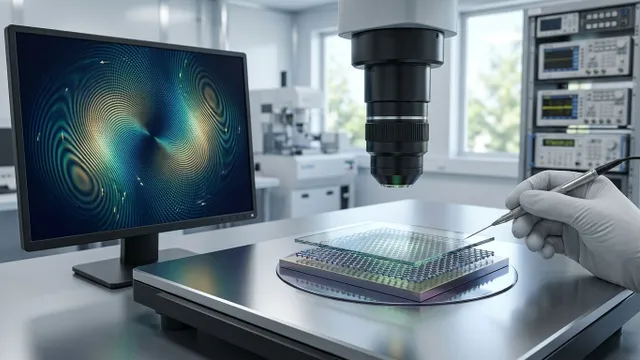
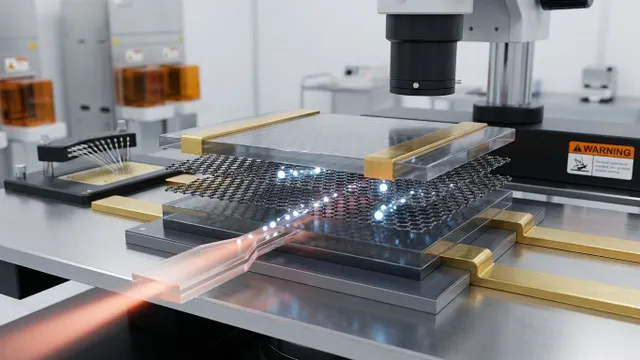
Discover how scientists are using hydrogenated graphene superlattices to manipulate electrons and create new possibilities for terahertz technology.
Raimundas Juodvalkis
Knowledge Base
Daily technical briefs on graphene production, batteries, sensors, coatings, aerospace, biomedical research, and industrial manufacturing.
Search titles, full articles, categories and tags.
Graphene production research, scalable manufacturing methods, reactor design, carbon conversion, and industrial process development.
Graphene battery materials, supercapacitor electrodes, hydrogen production, photocatalysts, and energy-storage research.
Graphene electronics, photonics, semiconductor interfaces, spintronics, sensors, and device-level research.
Graphene chemical sensors, biosensors, environmental sensors, tactile sensing, and high-sensitivity detection technologies.
Graphene coatings, composite additives, corrosion protection, plastics, concrete, films, and engineered materials.
Graphene biomedical materials, drug delivery, biosensing, cancer research, tissue interfaces, and medical device applications.
Graphene aerospace materials, radiation shielding, lightweight composites, thermal management, and defense applications.
Graphene membranes, water filtration, pollutant detection, environmental remediation, and clean technology research.
Discover how scientists are using hydrogenated graphene superlattices to manipulate electrons and create new possibilities for terahertz technology.
Raimundas Juodvalkis
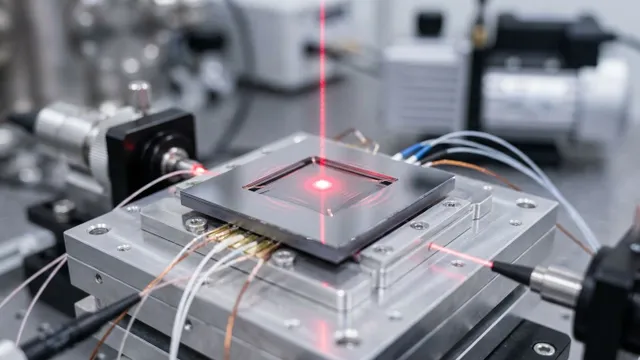
Learn how to implement optomechanical tuning to control Duffing nonlinearity in graphene resonators, enabling highly stable and sensitive mass sensing applications.
Raimundas Juodvalkis
Researchers have discovered a method to create chiral superconductors by utilizing the non-uniform Berry curvature of parent electronic states, potentially paving the way for robust topological quantum computing.
Raimundas Juodvalkis
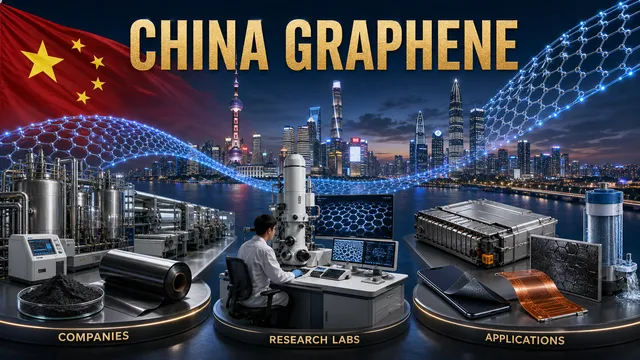
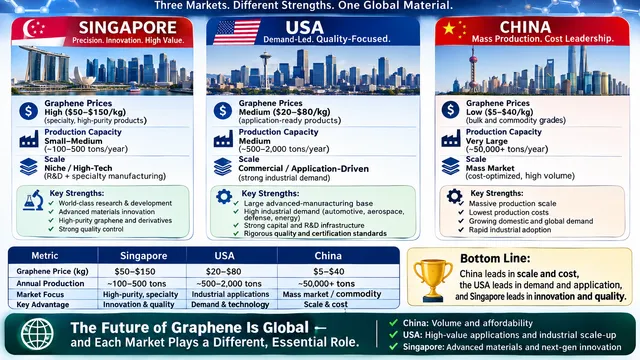
China’s graphene advantage is practical: thermal films, battery additives, coatings and composites supported by dense manufacturing clusters and leading research laboratories.
Raimundas Juodvalkis
New theoretical research introduces a unified quasiparticle GW framework that treats electron-phonon and electron-plasmon couplings simultaneously, paving the way for more accurate predictions in superconductor design.
Raimundas Juodvalkis
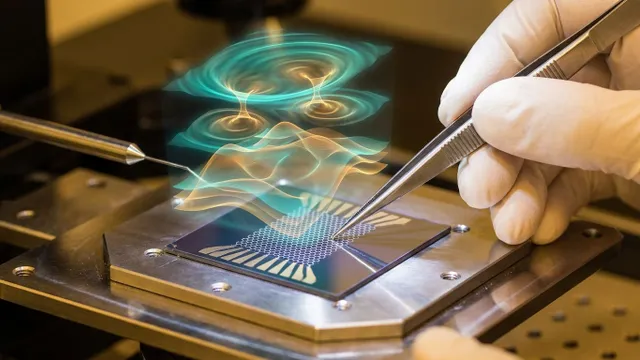
Learn how to leverage the unique capacitance signatures in bilayer graphene to build high-precision sensors for sub-nanometer displacement detection.
Raimundas Juodvalkis
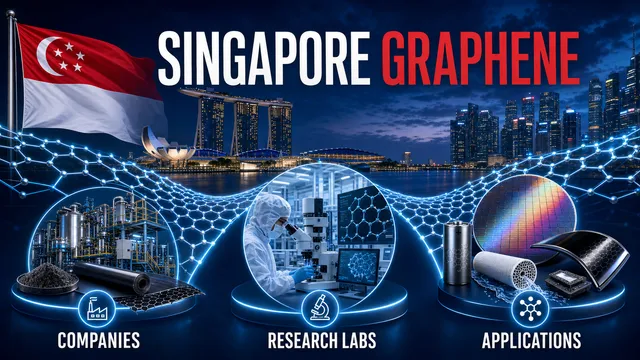
Singapore is not a bulk graphene powerhouse. Its advantage lies in world-class research, materials standards, specialist production and high-value applications spanning water treatment, batteries, photonics, coatings and sensors.
Raimundas Juodvalkis
China leads the three-country comparison in disclosed bulk powder capacity, the United States spans industrial CVD film and specialty powders, and Singapore competes through quality, standards and application development. Public prices reveal why graphene must be compared grade by grade.
Raimundas Juodvalkis
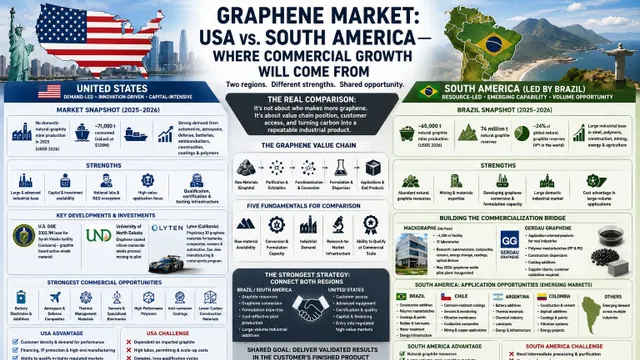
The United States leads in downstream demand and advanced manufacturing, while Brazil gives South America a major graphite-resource and industrial-formulation advantage. Here is where each graphene market can win.
Raimundas Juodvalkis
Scientists have utilized machine learning and quantum theory to discover a new class of 3D carbon materials that could revolutionize high-speed, low-power electronic devices.
Raimundas Juodvalkis
Scientists have developed a method to control electronic interactions in van der Waals heterostructures using light, enabling precise, real-time modulation of charge transport without chemical impurities.
Raimundas Juodvalkis
Learn how to use Fabry-Pérot interference patterns to map internal potential profiles and identify unintentional doping in large-angle twisted bilayer graphene devices.
Raimundas Juodvalkis
Scientists use cathodoluminescence to study how growing Zn3P2 on graphene via MOVPE and MBE affects grain boundaries and defects, a critical step for next-generation solar and electronic materials.
Raimundas Juodvalkis
Learn how researchers are using the tunable conductivity of graphene to create dynamic cavities that can selectively amplify specific frequencies, a breakthrough for future high-speed communication.
Raimundas Juodvalkis
A practical guide to implementing hierarchical graphene-metal oxide architectures for creating ultra-repellent, anti-fouling surfaces in microfluidic devices.
Raimundas Juodvalkis
Scientists have discovered how rotating atomic layers of graphene and boron nitride creates measurable mechanical torques, opening new ways to control quantum states through geometry.
Raimundas Juodvalkis
Researchers have engineered a groundbreaking graphene heterostructure that achieves 160 Gbps speeds in the C-band without external power, effectively solving the long-standing conflict between sensitivity and speed in optical detectors.
Raimundas Juodvalkis
Learn how to leverage the coupling between flexural phonons and Dirac fermions to create high-sensitivity electronic switches using controlled graphene membrane ripples.
Raimundas Juodvalkis
Graphene coatings are being studied for radar absorbing materials because they can help make aircraft and drones lighter, thinner, and more electromagnetically tunable.
Raimundas Juodvalkis
Discover how researchers are manipulating electron energy in graphene to create the next generation of ultra-sensitive, high-speed photodetectors.
Raimundas Juodvalkis
Graphene can help absorb electromagnetic waves, but it does not make aircraft invisible by itself. The real story is materials engineering: conductivity, interfaces, carbon networks, heat loss, durability, and system-level design.
Raimundas Juodvalkis
Researchers explore how the electronic structure of silver layers changes depending on their phase when placed on a graphene-silicon carbide interface.
Raimundas Juodvalkis
Learn how to implement the Rowhammer Vulnerability Counter (RVC) framework in a custom memory controller to reduce refresh overhead and latency compared to standard Graphene-based mitigations.
Raimundas Juodvalkis
Researchers have discovered a way to stabilize surface flat bands in rhombohedral graphite without needing an external electric field, opening new doors for quantum technology.
Raimundas Juodvalkis
Showing articles 241-264.