842. Practical Guide: Build a Graphene FET with a Polymer-Free Mica Transfer Method
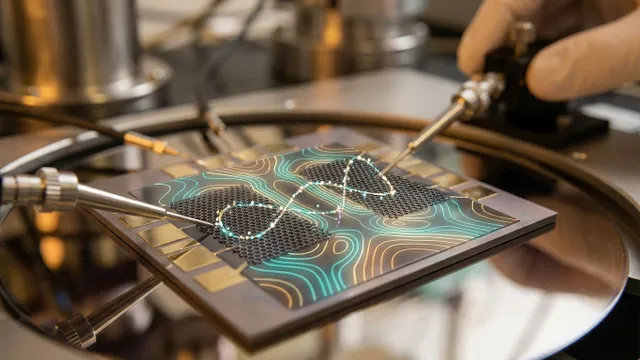
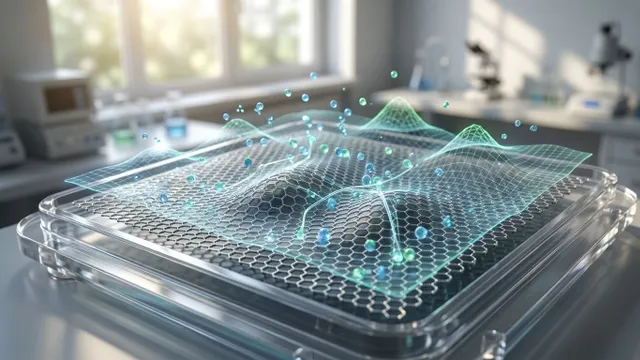
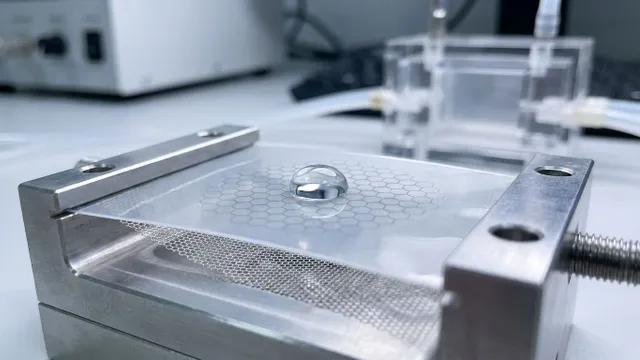
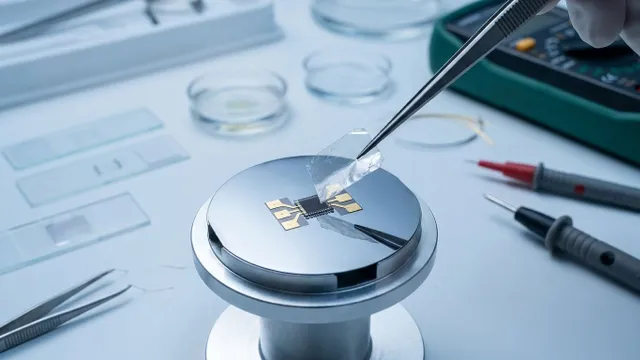
Learn a practical, polymer-free method for building a graphene FET using muscovite mica for clean transfer, assembly, and contact patterning.
Raimundas Juodvalkis
Knowledge Base
Daily technical briefs on graphene production, batteries, sensors, coatings, aerospace, biomedical research, and industrial manufacturing.
Search titles, full articles, categories and tags.
Graphene production research, scalable manufacturing methods, reactor design, carbon conversion, and industrial process development.
Graphene battery materials, supercapacitor electrodes, hydrogen production, photocatalysts, and energy-storage research.
Graphene electronics, photonics, semiconductor interfaces, spintronics, sensors, and device-level research.
Graphene chemical sensors, biosensors, environmental sensors, tactile sensing, and high-sensitivity detection technologies.
Graphene coatings, composite additives, corrosion protection, plastics, concrete, films, and engineered materials.
Graphene biomedical materials, drug delivery, biosensing, cancer research, tissue interfaces, and medical device applications.
Graphene aerospace materials, radiation shielding, lightweight composites, thermal management, and defense applications.
Graphene membranes, water filtration, pollutant detection, environmental remediation, and clean technology research.
Learn a practical, polymer-free method for building a graphene FET using muscovite mica for clean transfer, assembly, and contact patterning.
Raimundas Juodvalkis
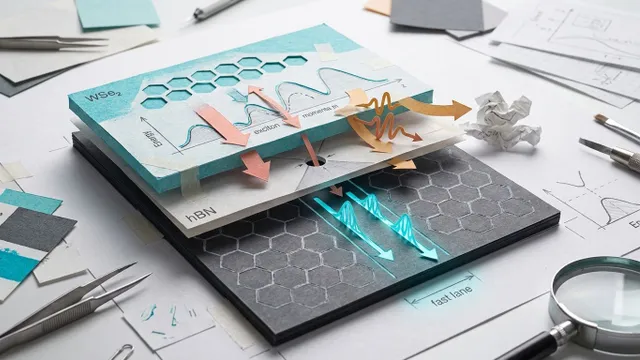
New research reveals that graphene can accept energy from a 2D semiconductor in a highly selective, momentum-dependent way, paving the path for next-gen...
Raimundas Juodvalkis

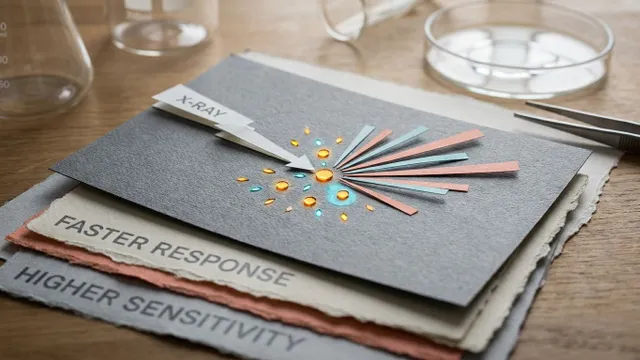
Explore how researchers are using graphene-based nanoplasmonic scintillators to tune light-matter interactions, paving the way for faster, more sensitive...
Raimundas Juodvalkis
Learn to build air-stable quantum circuit components using graphene-encapsulated superconductors. This guide details a practical fabrication process.
Raimundas Juodvalkis
Researchers discover a moiré heterostructure with a unique "dual-flatness" electronic property, enabling continuous electrical tuning between exotic quantum...
Raimundas Juodvalkis
Explore chiral fermion localization in two-kink systems. This theoretical physics research offers a powerful new model for controlling electrons in...
Raimundas Juodvalkis
Explore how a gate-defined graphene superlattice can create a versatile quantum sensor, leveraging unique electron states for advanced magnetic field detection.
Raimundas Juodvalkis
New research introduces a controlled loop expansion for the topological heavy fermion model, a powerful theoretical tool for designing future quantum materials.
Raimundas Juodvalkis
Researchers derived an analytic formula for twisted bilayer graphene electron lifetimes, providing a key design tool for future quantum and electronic devices.
Raimundas Juodvalkis
Learn to build a high-responsivity 1.5 µm graphene photodetector. This guide details the materials and steps for a prototype based on upconversion...
Raimundas Juodvalkis
New software for the modal analysis of electromagnetic resonators now includes 2D materials, accelerating the design of advanced graphene optical and...
Raimundas Juodvalkis
New research provides a theoretical framework for calculating the lifetime and spectral function of topological heavy fermions, a key step for developing...
Raimundas Juodvalkis
Learn to build a prototype strain-tunable magnetic device using graphene as a sacrificial layer to create freestanding MnPtGa membranes. This guide covers...
Raimundas Juodvalkis
Researchers revisit a graphene, n-heptane, and permalloy system, observing apparent ideal diamagnetism at ambient conditions, a key property of superconductors.
Raimundas Juodvalkis
Researchers are using artificial intelligence to autonomously discover optimal recipes for growing graphene, a breakthrough in AI-driven graphene synthesis...
Raimundas Juodvalkis
Explore how environment-dependent tight-binding models, derived from ab initio principles, are revolutionizing materials simulation for graphene applications.
Raimundas Juodvalkis
Learn how a graphene support layer can mechanically reinforce ultra-thin polymer membranes, boosting water flux without compromising filtration efficiency.
Raimundas Juodvalkis
Researchers have developed a breakthrough method for growing twisted bilayer graphene with pre-designed angles, a key step toward manufacturable quantum...
Raimundas Juodvalkis
Learn how deep learning is revolutionizing the structural characterization of twisted bilayer materials, accelerating the development of next-generation...
Raimundas Juodvalkis
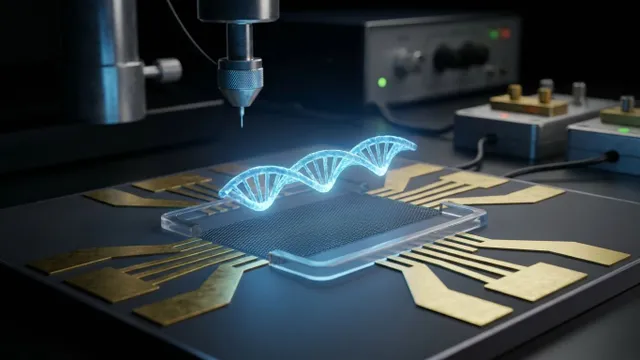
Learn to build a prototype graphene FET biosensor for sensitive DNA detection. This guide covers materials, fabrication, and testing for point-of-care...
Raimundas Juodvalkis
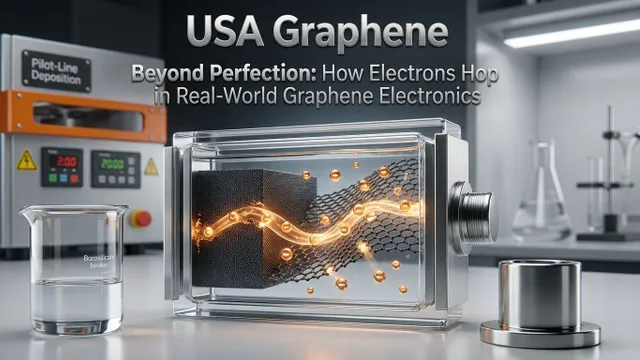
Discover how hopping-mediated charge transport explains graphene's electrical behavior beyond the ideal ballistic regime, a key insight for creating...
Raimundas Juodvalkis
A practical guide to fabricating a flexible graphene fiber sensor for the simultaneous detection of nitric oxide and H2O2, key cancer biomarkers.
Raimundas Juodvalkis
Explore a new low-noise Pauli-consistent ensemble Monte Carlo simulation for graphene, a powerful computational tool for designing next-generation...
Raimundas Juodvalkis
Researchers propose a new method for dark matter detection using angular scanning, a technique that may rely on graphene's unique electronic sensitivity.
Raimundas Juodvalkis
Showing articles 97-120.