
How AI Learns to Grow Better Graphene
Researchers are using artificial intelligence to autonomously discover optimal recipes for growing graphene, a breakthrough in AI-driven graphene synthesis...
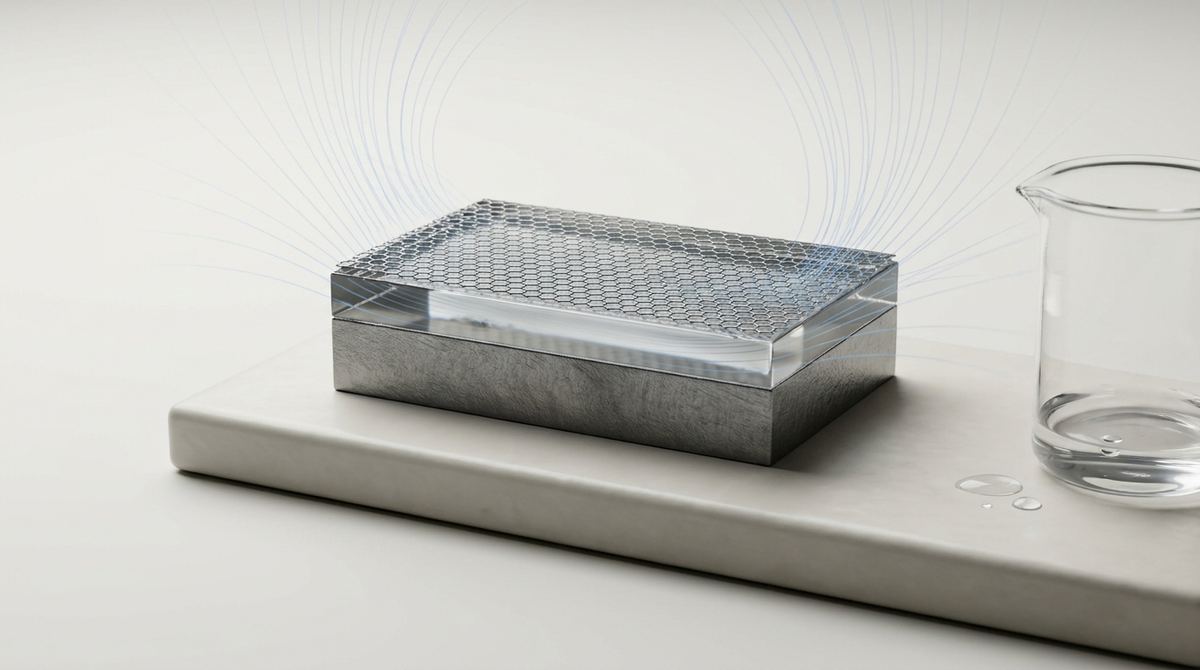
The quest for a material that can conduct electricity with zero resistance at room temperature is one of the most significant challenges in modern physics and materials science. Such a material, a room-temperature superconductor, would revolutionize everything from energy transmission and computing to transportation and medical imaging. One of the defining characteristics of a superconductor is its ability to perfectly expel magnetic fields, a phenomenon known as the Meissner effect, or ideal diamagnetism. While countless materials have been studied, this property has remained locked away at cryogenic temperatures or extreme pressures. A recent investigation, however, brings this futuristic goal back into the realm of ambient conditions. New research revisits a fascinating composite system and explores tantalizing signs of this extraordinary magnetic behavior in a material that can be handled on a lab bench, without any complex cooling equipment.
The central challenge this research addresses is the fundamental barrier preventing the widespread use of superconducting technologies: the environment. Conventional superconductors require cooling with expensive and cumbersome cryogens like liquid nitrogen or liquid helium, restricting their applications to high-value domains like MRI machines and particle accelerators. The dream is to find a material that exhibits these properties under everyday conditions. Over the years, fleeting, difficult-to-reproduce hints of such phenomena have appeared in various material systems, often met with healthy scientific skepticism. The problem, therefore, is not just about discovering a new material, but also about rigorously verifying and understanding these extraordinary claims. A team of researchers, including Rajendra Dulal, Serafim Teknowijoyo, Sara Chahid, Vahan Nikoghosyan, and Armen Gulian, took on this challenge by meticulously re-examining a specific composite system composed of graphene, n-heptane, and permalloy that had previously shown signs of unusual magnetic activity. Their goal was to understand if the observed "apparent ideal diamagnetism" is a genuine quantum phenomenon or an artifact of the experimental setup.
The core concept behind this work is that novel, powerful properties can emerge from the careful layering of relatively simple materials. The researchers didn't invent a new compound; instead, they created a specific nano-architecture. They started with a substrate of permalloy, a well-known magnetic alloy of nickel and iron. On top of this, they placed a layer of graphene, the single-atom-thick sheet of carbon atoms arranged in a honeycomb lattice. The crucial third ingredient was n-heptane, a simple organic liquid that filled the space between the graphene and the permalloy. The hypothesis is that the unique interplay at the interfaces between these three distinct materials—the magnetic metal, the atomically thin semiconductor, and the insulating liquid—could create a collective electronic state that behaves in an unexpected way. Specifically, they investigated whether the electrons in the graphene, influenced by the magnetic field from the permalloy and mediated by the heptane, could organize themselves to generate a powerful opposing magnetic field, effectively mimicking the perfect magnetic shielding seen in a superconductor.
To understand the results, it is essential to look at the role of each component in this three-part system. The foundation is permalloy. As a soft ferromagnet, its magnetic domains can be easily influenced by an external magnetic field. Its purpose in this experiment is likely to provide a strong, yet tunable, local magnetic environment right at the surface where the graphene sits. It acts as a magnetic template, creating a complex field landscape for the graphene's electrons to interact with.
The second component is n-heptane. This clear, non-polar liquid acts as a pristine, atomically smooth spacer. It prevents direct electrical contact between the graphene and the permalloy, which would otherwise complicate the electronic behavior. More importantly, as a dielectric medium, it modifies the electromagnetic interaction between the two solid layers. The presence of the heptane molecules at the interface can influence charge distribution and mediate forces, potentially enabling the formation of the exotic electronic state responsible for the observed diamagnetism.
The final and most critical element is graphene. Its unique electronic structure is the engine of the entire phenomenon. In graphene, electrons behave as if they have no mass, moving across the lattice at incredible speeds. This behavior, described by the Dirac cone band structure, makes them extraordinarily sensitive to their environment. When placed near the permalloy's magnetic field, the mobile electrons within the graphene sheet can be induced to flow in microscopic circular paths, or "vortices." According to the laws of electromagnetism, any moving charge creates a magnetic field. If these electron currents can be organized to flow in just the right way across the entire sheet, they can collectively generate a magnetic field that directly opposes the external field, effectively pushing it away. The quality of the material, such as the type of turbostratic graphene flakes used, can significantly impact the mobility of these electrons and the uniformity of their response.
The title of the paper, with its careful use of the words "revisiting" and "apparent," signals a nuanced and cautious scientific conclusion. The researchers observed a remarkably strong diamagnetic response from their system when a magnetic field was applied. The magnetic susceptibility, a measure of how much a material becomes magnetized in a magnetic field, was found to be very close to -1. This value is the theoretical hallmark of a perfect diamagnet, or a superconductor in its Meissner state. This finding confirms that the system is indeed capable of powerfully expelling magnetic fields at room temperature and normal atmospheric pressure.
However, the term "apparent" suggests that the researchers also uncovered evidence that complicates a simple "room-temperature superconductor" conclusion. The effect may be highly dependent on the precise preparation of the sample, the exact thickness of the heptane layer, or the magnetic history of the permalloy substrate. It is possible the ideal diamagnetism is not a bulk, uniform property but exists in localized patches or is a transient state that is difficult to sustain. Therefore, while they confirmed the existence of a powerful and scientifically exciting phenomenon, they stopped short of claiming the discovery of true, stable superconductivity, instead opening the door for a deeper investigation into its origins.
Even without a definitive confirmation of superconductivity, the demonstration of near-ideal diamagnetism under ambient conditions is a landmark achievement. It represents a significant step toward engineering quantum phenomena in materials by design. Traditionally, scientists have sought new properties by synthesizing new chemical compounds. This research showcases an alternative path: creating new functionalities by architecting interfaces between existing materials.
The result is important because it detaches a key superconducting property from the requirement of extreme cold. If this powerful diamagnetism can be harnessed, it could enable a new class of technologies that rely on passive magnetic field manipulation. It suggests that the unique electronic properties of graphene can be leveraged to create emergent behaviors that far exceed the capabilities of the constituent parts. This opens up a new playbook for materials scientists exploring quantum effects, shifting focus from discovering a single "magic" material to designing and controlling complex heterostructures. This approach has broad implications for many advanced material systems, which could accelerate innovation in a wide range of graphene applications.
The primary limitation of the current work is the uncertainty surrounding the precise physical mechanism behind the effect. While the system powerfully repels magnetic fields, it is not yet clear if this is caused by the same physics as superconductivity. True superconductivity is also characterized by zero electrical resistance, a property that was not the focus of this magnetic study. Future experiments must perform transport measurements on this system to see if it also conducts electricity without loss.
Furthermore, issues of reproducibility and scalability remain. The observed effect may be very sensitive to nanoscale variations in the system's geometry, such as the purity of the heptane or the defect density in the graphene sheet. Understanding and controlling these variables is crucial for turning a laboratory curiosity into a reliable technology. This necessitates advancements in scalable graphene manufacturing techniques to produce the consistent, high-quality material needed for these sensitive applications. Researchers still need to test the system's stability over time, its response to different magnetic field strengths, and whether similar effects can be achieved with other liquids or magnetic substrates.
While it is too early for commercial-ready products, the potential applications of a room-temperature, strong diamagnetic material are vast. One of the most direct uses would be in magnetic shielding. Sensitive medical equipment, scientific instruments, and quantum computers could be protected from stray magnetic fields without the need for bulky, cryogenically cooled shields. This could lead to smaller, cheaper, and more accessible technologies.
Another exciting possibility is in passive magnetic levitation. Frictionless bearings could be created for high-speed rotating machinery, reducing wear and energy consumption. Small-scale maglev transport systems could become feasible without the massive energy cost of traditional electromagnets. The system's extreme sensitivity to magnetic fields could also be harnessed to create a new generation of sensors capable of detecting minute magnetic anomalies, with applications in medical diagnostics, geological surveying, and non-destructive material testing. The commercial viability of these concepts is a topic of intense interest, often tracked in detailed graphene market research.
If you take away just one idea from this research, it should be this: by cleverly layering graphene with a simple liquid and a magnetic metal, scientists have created a system that strongly repels magnetic fields at room temperature. While it may not be true superconductivity, this work demonstrates a powerful new method for engineering quantum properties in materials, potentially paving the way for revolutionary magnetic shielding and levitation technologies.
What is diamagnetism?
Diamagnetism is a property of all materials that causes them to be repelled by a magnetic field. It occurs when an external field induces tiny electrical currents within the atoms of the material, which in turn generate an opposing magnetic field. In most common materials, this effect is incredibly weak. Superconductors, however, are an extreme case known as "ideal" or "perfect" diamagnets, meaning they expel magnetic fields completely.
Why is "ambient conditions" so important for this research?
"Ambient conditions" refers to normal room temperature and atmospheric pressure. This is significant because the most powerful magnetic and electrical phenomena known today, like superconductivity, typically only occur under extreme conditions, such as temperatures hundreds ofdegrees below freezing. Achieving a similar effect at ambient conditions eliminates the need for expensive and complex cryogenic cooling systems, which is the primary barrier to the widespread, practical use of these technologies.
What is permalloy and why was it used?
Permalloy is an alloy of nickel and iron that is known for its very high magnetic permeability, meaning it can easily support the formation of a magnetic field. It is also a "soft" magnetic material, so it can be magnetized and demagnetized easily. In this experiment, it was likely used as a substrate to create a specific and controllable magnetic landscape for the graphene layer to interact with, acting as a key ingredient to trigger the unusual electronic response.
Is this graphene system a true room-temperature superconductor?
Based on the cautious language in the research paper, the system is likely not a confirmed room-temperature superconductor. It exhibits one key property—ideal diamagnetism—but superconductivity also requires the confirmation of zero electrical resistance, which has not yet been demonstrated. The term "apparent" suggests the effect might have an alternative physical origin that mimics the Meissner effect without being true superconductivity.
How does graphene enable this effect?
Graphene's role is central to the phenomenon due to its unique electronic structure. The electrons in its two-dimensional honeycomb lattice behave like massless particles, allowing them to move with very little resistance and respond dramatically to external electric and magnetic fields. This high mobility and sensitivity allow the electrons to be easily organized into coordinated microscopic currents by the nearby permalloy's magnetic field, generating a collective, powerful opposing field that results in the strong diamagnetism observed.
The research conducted by Rajendra Dulal and his colleagues provides a compelling and meticulous look at an extraordinary phenomenon. By revisiting the graphene-n-heptane-permalloy system, they have confirmed the existence of apparent ideal diamagnetism at ambient conditions, a property long considered the exclusive domain of cryogenically cooled superconductors. While the ultimate classification of this effect as true superconductivity remains an open and critical question for future research, the work stands as a monumental achievement in materials science. It champions a new paradigm of designing emergent quantum properties through the careful architectural assembly of simple components. This investigation illuminates a promising path forward, not just in the search for high-temperature superconductivity, but in the broader quest to engineer materials with functionalities that nature itself has not yet produced. The continued exploration of such heterostructures will undoubtedly reshape the future of fields like graphene electronics and advanced magnetic devices.
Serious about B2B integration? Test our premium Pulsed Electrical Resistive Carbon Heating turbostratic graphene in your lab. 100g sample packs available now.
Explore More
Researchers are using artificial intelligence to autonomously discover optimal recipes for growing graphene, a breakthrough in AI-driven graphene synthesis...

Explore how environment-dependent tight-binding models, derived from ab initio principles, are revolutionizing materials simulation for graphene applications.

Learn how a graphene support layer can mechanically reinforce ultra-thin polymer membranes, boosting water flux without compromising filtration efficiency.