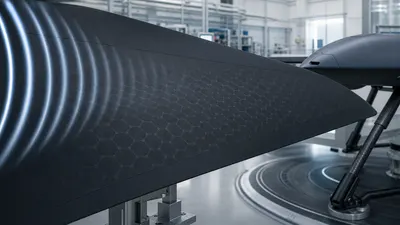
Graphene Radar Absorbing Materials for Aircraft and Drones
Graphene coatings are being studied for radar absorbing materials because they can help make aircraft and drones lighter, thinner, and more electromagnetically tunable.
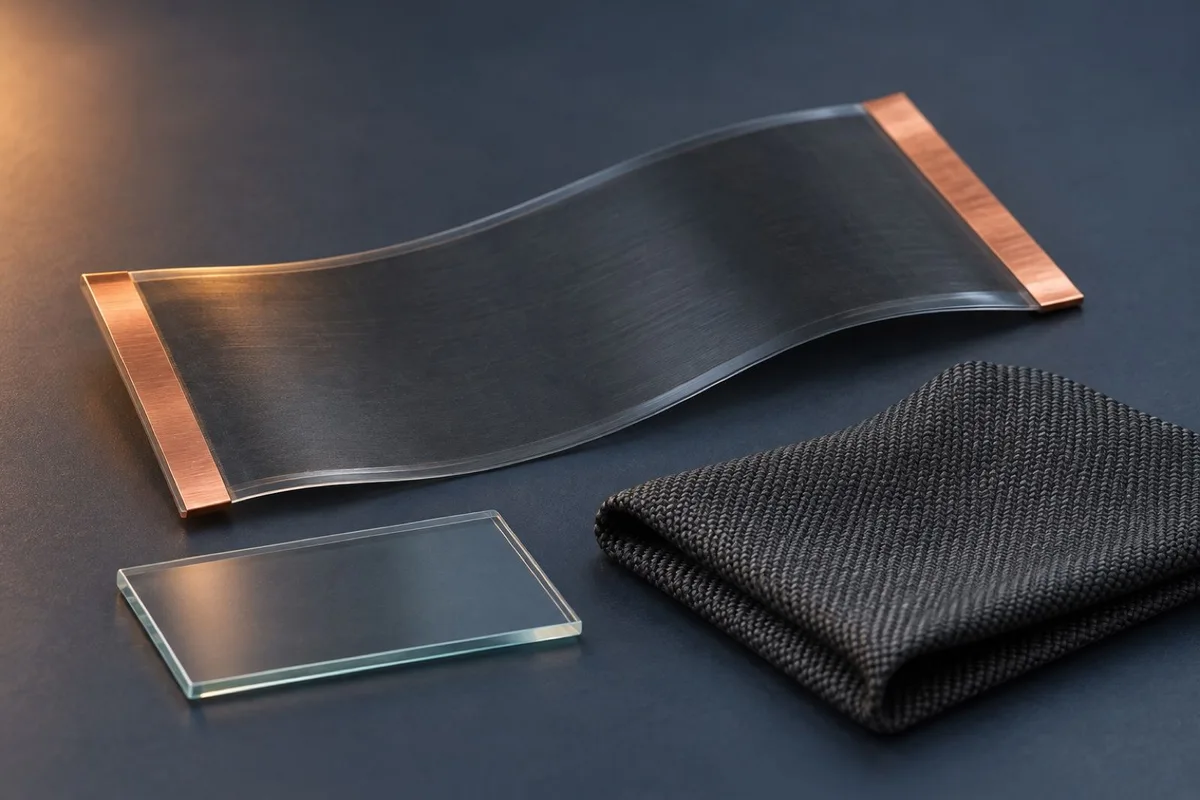
A graphene heater is an electrical resistance heater that uses graphene or a graphene-containing layer to generate heat. Researchers have built heaters into jackets, coated transparent films, and used conductive composites to release ice from surfaces. Each application asks something different of the heating element. A jacket needs flexibility and reliable electrical connections through repeated use. A heated window has to transmit light. A deicing system must deliver heat to an exposed surface under cold conditions.
When current passes through a resistive layer, electrical power is dissipated as heat. For a heater with resistance R and voltage V across it, the input power is P = V²/R. Changing the film thickness, the material formulation, or the spacing between electrodes changes resistance and therefore the power drawn from a given supply. A rectangular film with reasonably uniform sheet resistance can distribute heat across a broad area. The electrode layout and the uniformity of the conductive layer affect how evenly it heats.
The final temperature depends on where the heat goes. A heater in still air, one laminated to glass, and one pressed against a cold, wet surface can reach very different temperatures at the same power. This is why a useful test report includes voltage, current or power, active area, warm-up time, and mounting and ambient conditions. For products that run on batteries, power draw at the operating temperature matters more to runtime than the maximum temperature the sample can reach.
Yuan and colleagues reinforced a graphene-assembled film with a network of graphitized carbon fibers to help arrest cracking. In a winter-jacket demonstration, the heater reached 40.8 °C within 30 seconds at 5 V. The authors also reported stable heating performance after 60 machine-washing cycles in their test. This result gives designers a published example of a low-voltage heater with a measured laundering result. Its applicability to another garment depends on the construction, connections, and wash protocol. Yuan et al., Nano Research, 2026
Fabric coatings offer another route. A study in the Journal of Materials Chemistry C combined graphene with the conductive polymer PEDOT:PSS and demonstrated heaters mounted on the finger and palm. The authors reported response times of 15 to 25 seconds. A coated fabric and a reinforced film can both generate heat, while placing different demands on coating adhesion, stretch, and electrical connections. Journal of Materials Chemistry C, 2020
For windows, displays, and optics, the design challenge is delivering enough heat while preserving visibility. In one study, researchers coated a copper grid on flexible PET with graphene. The hybrid heater reached 85 °C at 5 V with a response time under 20 seconds in the reported test. The copper grid was part of the conductive architecture, so the measured result describes the assembled hybrid device. When comparing transparent designs, optical transmission and haze belong alongside heating rate and temperature uniformity. RSC Advances, 2017
In a cold-surface demonstration, Raji and colleagues used an epoxy composite containing graphene nanoribbon stacks on a stationary helicopter rotor blade. The study reported applying 0.5 W/cm² to remove approximately 14 g of ice about 1 cm thick in a −20 °C environment. Reporting power per unit area makes this result easier to interpret for a surface heater. A full deicing design would also need to account for wind, how ice adheres to the surface, and how much heat flows into the structure underneath. Raji et al., ACS Applied Materials & Interfaces, 2016
The material format drives the manufacturing route. A graphene nanoplatelet formulation can be screened as a coating or polymer composite by varying filler loading and layer thickness. A film can be laminated into a stack with separately designed electrodes and protective layers. A transparent heater may use a thin conductive film or a hybrid grid. Each route should be evaluated in the actual substrate and encapsulation, because those layers affect both heat transfer and service life.
Start with an electrical and thermal baseline. Measure resistance, power density, warm-up time, and the temperature distribution at the intended voltage. Check temperature at the electrical connections as well as across the active area. For a comparison with an existing heater, match the active area, mounting, ambient conditions, and operating target. Measure how much power each design needs to maintain the same target temperature under those conditions.
Then repeat the measurements after exposure to the conditions the product will see. For a wearable, that can include bending, stretching, laundering, and moisture. A window heater may need adhesion and optical checks after thermal cycling. For outdoor deicing, repeated cold and wet exposure and time to release ice are useful measures. Track changes in resistance and temperature distribution alongside visible damage. Qualification depends on the assembled product and its applicable requirements and test methods.
Nano Materials LLC supplies graphene materials for evaluation and works with product teams on application development. For a heater project, we can discuss candidate materials, define a prototype around the target voltage and operating conditions, and plan a comparison with an existing heater where one is available. If the prototype meets the agreed performance and durability targets, we can discuss pilot production and the next steps toward manufacturing. Contact Nano Materials LLC
Serious about B2B integration? Test our premium Pulsed Electrical Resistive Carbon Heating turbostratic graphene in your lab. 100g sample packs available now.
Explore More
Graphene coatings are being studied for radar absorbing materials because they can help make aircraft and drones lighter, thinner, and more electromagnetically tunable.
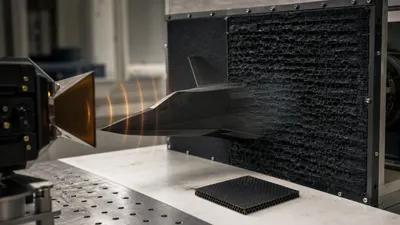
Graphene can help absorb electromagnetic waves, but it does not make aircraft invisible by itself. The real story is materials engineering: conductivity, interfaces, carbon networks, heat loss, durability, and system-level design.

A new Science paper shows how phase-change memristor hardware can run neural dynamical systems in milliseconds. Here is why graphene and 2D materials matter for the future of physics-driven computing.