
Practical Guide: A Practical Guide to Building a Graphene Battery Safety Sensor
Build a flexible graphene battery sensor for real-time temperature and strain monitoring, a crucial step toward preventing thermal runaway in Li-ion cells.
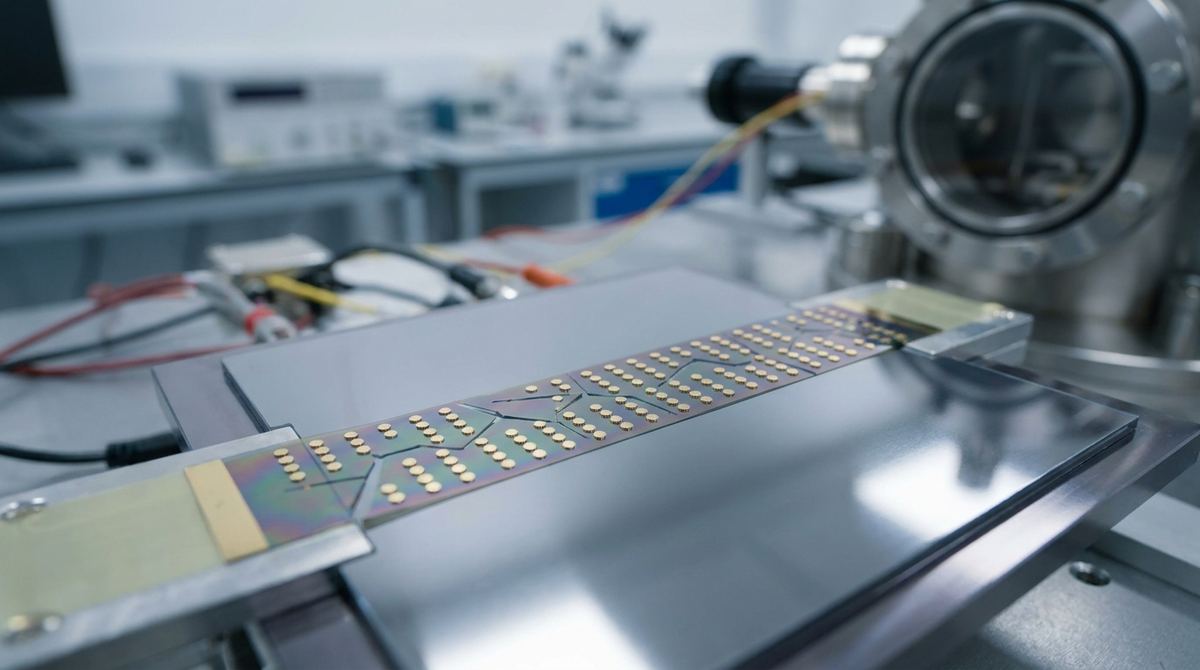
In the race to develop next-generation computing, the industry is shifting from traditional charge-based electronics to spintronics. The goal is to use the spin of an electron, rather than just its charge, to carry information. The primary bottleneck in this transition is the generation of spin currents. Currently, converting a standard electrical charge current into a spin current is often inefficient, resulting in significant energy loss through heat.
Recent research into electronic Lévy glasses has revealed a way to bypass these efficiency limits. By engineering graphene ribbons with specific, randomly distributed regions of high spin-orbit coupling (SOC), we can create a system that operates in a superdiffusive transport regime. In this regime, the conversion efficiency—known as the Spin Hall Angle—can jump from a mediocre 5 percent to an extraordinary 30 percent. For an engineer or a startup, this represents a massive leap in the potential for low-power spin-logic gates and high-density spin-memory components.
To build this, you must understand the distinction between the diffusive and superdiffusive regimes described in the research by Fonseca, Pereira, and Barbosa.
In a standard diffusive regime, electrons undergo frequent, random scattering events that wash out the spin information, leading to a low Spin Hall Angle. This typically occurs at higher Fermi energies where the density of states is high.
However, when the Fermi energy is tuned to a low level, the system enters the superdiffusive regime. In this state, the electron transport is not purely random; instead, it follows a more direct, ballistic-like path through the graphene lattice, despite the presence of the high-SOC scatterers. This allows the charge current to be converted into a massive spin current with minimal resistance. The engineering challenge is not just creating the disorder, but precisely tuning the Fermi energy to hit this superdiffusive sweet spot.
To prototype a spin current generator based on this research, you will need to fabricate a graphene ribbon with a controlled distribution of heavy-metal nanodots. These dots act as the high-SOC regions that create the Lévy glass effect.
Required Materials:
1. Graphene: High-quality, large-area CVD-grown graphene is essential. The carrier mobility must be high enough to allow for the superdiffusive regime to manifest.
2. High-SOC Material: Platinum (Pt) or Tungsten (W) are the best candidates for the circular SOC regions due to their high intrinsic spin-orbit coupling.
3. Substrate: A silicon wafer with a thick thermal oxide layer (SiO2/Si) to serve as a back-gate.
4. Contact Metals: Titanium (Ti) and Gold (Au) for low-resistance electrical contacts.
5. Resist: PMMA or similar electron-beam resist for lithography.
Engineering Assumptions for Dimensions:
Since the research does not specify exact physical dimensions, the following values are proposed as cautious starting points for a laboratory prototype:
1. Graphene Ribbon Width: 500 nm to 2 micrometers.
2. SOC Region Diameter: 20 nm to 100 nm.
3. SOC Region Spacing: Randomly distributed, but with a mean free path significantly larger than the dot diameter.
4. Oxide Thickness: 285 nm or 300 nm for efficient electrostatic gating.
The fabrication of a Lévy glass graphene device requires high-precision lithography to ensure the SOC regions are distributed in a way that promotes superdiffusive transport rather than simple localization.
1. Substrate Preparation: Clean the Si/SiO2 substrate using standard RCA cleaning procedures to ensure no organic contaminants remain.
2. Graphene Transfer: Transfer the CVD graphene onto the substrate using a standard polymer-assisted transfer method. Ensure the graphene is continuous and free of wrinkles or bubbles.
3. Patterning the Lévy Glass: Use Electron-Beam Lithography (EBL) to define the pattern of the SOC regions. Instead of a grid, use a stochastic algorithm to generate a pattern of non-overlapping circles. This randomness is critical to creating the Lévy glass characteristic.
4. Metal Deposition: Deposit the high-SOC material (e.g., Platinum) via electron-beam evaporation. The thickness should be sufficient to provide strong SOC but thin enough to avoid massive charge scattering.
5. Contact Fabrication: Use EBL to define the source and drain electrodes. Deposit Ti/Au via thermal evaporation to ensure ohmic contact with the graphene.
6. Gate Integration: The silicon substrate itself will act as the back-gate. A voltage applied to the Si substrate will allow you to tune the Fermi energy of the graphene ribbon.
Once the device is fabricated, the goal is to verify the existence of the superdiffusive regime and measure the Spin Hall Angle.
1. Resistance and Magnetoresistance Mapping: Measure the longitudinal resistance (Rxx) of the ribbon while sweeping the back-gate voltage. You are looking for the regime where resistivity is low and magnetoresistivity is minimized, which indicates the superdiffusive state.
2. Fermi Energy Tuning: Use the back-gate to sweep the Fermi energy from the charge neutrality point (Dirac point) upwards. The research suggests the superdiffusive regime occurs at low Fermi energy.
3. Spin Hall Angle Measurement: This is the most critical test. You can use the Inverse Spin Hall Effect (ISHE) to detect the spin current. By injecting a charge current and measuring the transverse voltage generated by the spin-to-charge conversion, you can calculate the Spin Hall Angle.
4. Comparative Analysis: Compare the measured Spin Hall Angle at low Fermi energy (target: ~30 percent) against measurements taken at higher Fermi energies (target: ~5 percent).
It is important to distinguish between the findings of the research and the practical implementation.
Source Basis: The physics of the superdiffusive regime and the predicted 30 percent Spin Hall Angle are derived directly from the theoretical simulations of Fonseca et al. The ability to achieve these results in a physical device is an engineering assumption.
Primary Risks:
1. Fabrication Precision: The "Lévy glass" effect relies on the specific distribution of the SOC regions. If the dots are too large or too close together, the system may enter a diffusive or localized regime, destroying the superdiffusive advantage.
2. Gate Control: The superdiffusive regime is highly sensitive to the Fermi energy. If the gate voltage cannot precisely tune the chemical potential into the required low-energy window, the device will remain in the inefficient diffusive regime.
3. Contact Resistance: High contact resistance at the Ti/Au interfaces can introduce noise that masks the subtle spin-to-charge conversion signals.
4. Material Purity: Any unintended impurities in the graphene will act as additional scattering centers, potentially shifting the transport from superdiffusive to diffusive.
By carefully controlling the pattern of high-SOC nanodots and maintaining precise control over the gate voltage, engineers can realize the high-efficiency spin current generation promised by the superdiffusive regime.
Serious about B2B integration? Test our premium Pulsed Electrical Resistive Carbon Heating turbostratic graphene in your lab. 100g sample packs available now.
Explore More
Build a flexible graphene battery sensor for real-time temperature and strain monitoring, a crucial step toward preventing thermal runaway in Li-ion cells.

Research on 30° quasi-periodic twisted bilayer graphene reveals a unique, fractal-like energy structure under magnetic fields, paving the way for novel...

Researchers discover naturally formed graphene sheets and carbon ovals in stingless bee hives, creating a novel emergent material with powerful blue light...