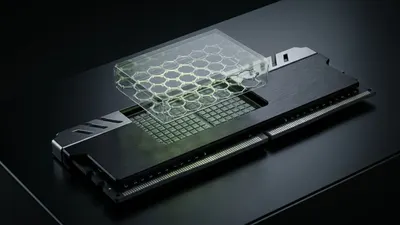
Graphene in PC Memory: What Research Shows and What Comes Next
Graphene memory research is advancing, but a fast laboratory device is not a PC RAM upgrade. Here is what the evidence shows.
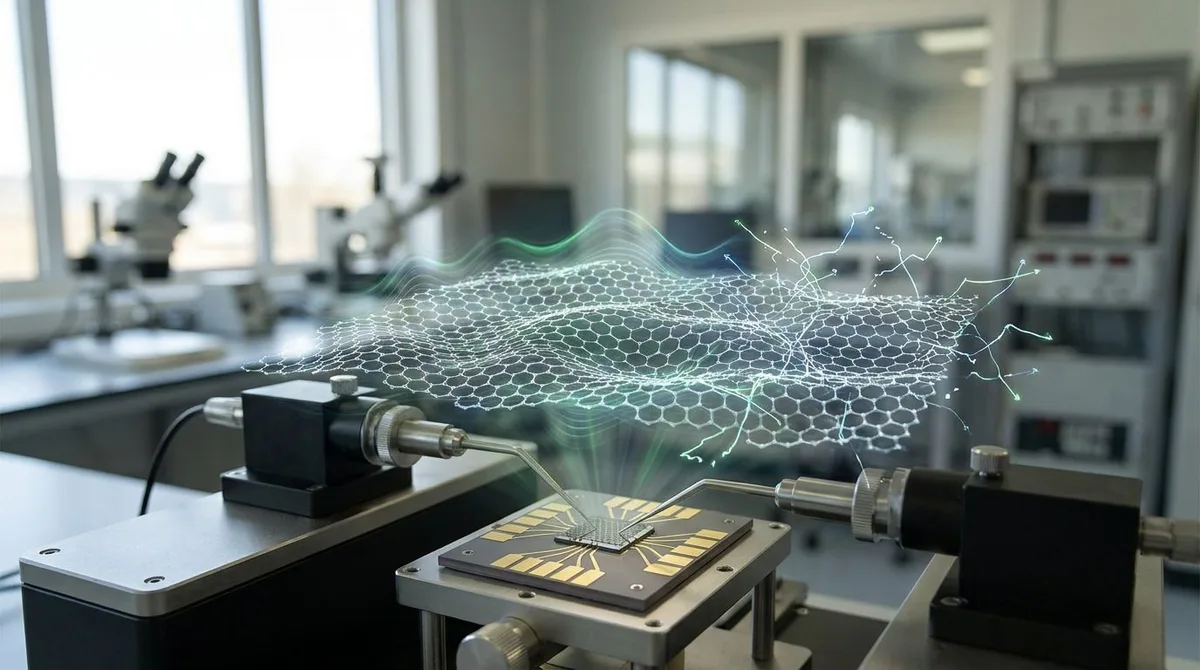
For decades, the bedrock of our understanding of metals, the materials that power our entire technological society, has been a remarkably successful concept called Fermi liquid theory. It paints a simple and intuitive picture: electrons moving through a metal's crystal lattice behave much like a gas of individual particles, interacting only weakly with each other. This model elegantly explains why copper is a great conductor and why your computer's silicon chips work the way they do. But in the strange and wonderful world of quantum materials, this tidy picture often shatters. Many of the most tantalizing materials discovered, including high-temperature superconductors, refuse to play by these rules. Their electrons act not as individuals, but as a strongly interacting, collective entity whose behavior defies simple explanation. Understanding the origin of this "non-Fermi-liquid" behavior is one of the most significant challenges in modern physics. A new theoretical work offers a fascinating and potentially revolutionary insight, suggesting a way to coax this exotic state out of a familiar material: graphene.
The standard model of metals, Fermi liquid theory, has been a monumental success. It allows physicists to predict the electrical resistivity, heat capacity, and other essential properties of most common conductors with incredible accuracy. The theory's power lies in its simplification. It posits that even in a dense crowd of interacting electrons, the collective excitations of the system can be treated as if they were individual particles, dubbed "quasiparticles," which carry the same charge as an electron but have a different effective mass. For most materials and conditions, this works perfectly. However, for a growing class of advanced materials, this theory completely fails. In these "strange metals," properties like electrical resistivity change with temperature in bizarre ways that the quasiparticle picture cannot explain. This breakdown signals that the interactions between electrons are so powerful that the very idea of an individual electron-like particle loses its meaning. This is the realm of strongly correlated electrons, and it is both a physicist's puzzle and an engineer's dream, as this behavior is intrinsically linked to phenomena like high-temperature superconductivity. The central problem is that we lack a universal theory for these states and the mechanisms that create them are often obscure and material-specific. A new theoretical investigation by Rutvij Gholap, Alexey Ermakov, Alexander Kazantsev, Mohammad Saeed Bahramy, Marco Polini, and Alessandro Principi tackles this challenge head-on by proposing and analyzing a novel and surprisingly elegant mechanism for generating non-Fermi-liquid behavior in the relatively simple and well-understood structure of graphene.
Imagine electrons flowing through a wire like cars on a smooth, multi-lane highway. This is the Fermi liquid picture. Each car stays in its lane and interacts only minimally with others. Now, imagine that the highway itself begins to vibrate and warp in very specific, rhythmic ways. These vibrations are so severe that they don't just jostle the cars; they fundamentally alter the roadway, creating powerful, phantom forces that push and pull the cars in complex patterns. The traffic flow becomes chaotic, and the cars no longer act as independent vehicles but as a single, correlated jam. This is the core idea of the new research. The "cars" are electrons in graphene, and the "vibrating highway" is the graphene lattice itself. The specific vibrations are known as phonons, which are quantized packets of vibrational energy. The researchers focused on a special class of these vibrations they term "gauge phonons." In graphene, stretching or compressing the honeycomb lattice of carbon atoms changes the electronic environment in a way that is mathematically identical to applying a magnetic field. This is not a real magnetic field from a magnet but an effective or "pseudo-magnetic" field generated purely by mechanical strain. A gauge phonon, then, is a lattice vibration that generates a powerful, fluctuating pseudo-magnetic field. The key insight is that the interaction, or coupling, between electrons and these gauge phonons can be exceptionally strong, far stronger than typical electron-phonon interactions that just cause resistance. This intense coupling scrambles the electrons' behavior so thoroughly that they can no longer be described as individual quasiparticles, forcing them into a collective, non-Fermi-liquid state.
The researchers developed a sophisticated theoretical model to explore this phenomenon. The foundation of their system is a single, pristine sheet of graphene. Graphene's unique electronic properties stem from its honeycomb lattice, which allows electrons to behave as "massless Dirac fermions," particles that move at a constant, very high speed. This makes them exceptionally sensitive to their environment, including the precise geometry of the lattice they inhabit. The model then introduces specific vibrational modes, the gauge phonons, into this lattice. These are not just random jitters but coordinated, in-plane atomic movements, like stretching and shearing waves propagating through the sheet. As these waves move, they locally distort the hexagonal cells of the lattice. This distortion alters the quantum mechanical pathways available to the electrons. The effect of this dynamic strain is captured in the equations of motion as a "gauge field." For an electron moving through this vibrating lattice, the experience is equivalent to flying through a turbulent field of fluctuating pseudo-magnetic forces. The researchers' calculations focused on the strength of this interaction. They demonstrated that under certain conditions, this coupling is the dominant force governing electron dynamics, overwhelming the weaker, conventional electron-electron and electron-phonon interactions. The system's behavior is therefore dictated not by electrons scattering off of static defects or simple vibrations, but by their constant, strong engagement with these potent, strain-induced quantum fields. This makes graphene an ideal testbed, as its two-dimensional nature and unique electronic structure amplify the effects of such geometric distortions. Even materials like the turbostratic graphene flakes used in industrial composites are built from these fundamental layers, whose intrinsic properties are the key to performance.
Through rigorous quantum field theory calculations, the research team demonstrated that coupling electrons to gauge phonons robustly drives the system into a non-Fermi-liquid state. Their primary finding is the emergence of transport properties that are hallmarks of "strange metals." In a conventional Fermi liquid, electrical resistivity at low temperatures typically scales with the square of the temperature (T²), as electron-electron scattering becomes the dominant mechanism. The researchers found that in their model, the resistivity instead shows a linear dependence on temperature (T¹). This linear-in-T resistivity is one of the most famous and persistent mysteries in the study of high-temperature superconductors and is a smoking gun for non-Fermi-liquid physics. It implies a scattering rate that is as strong as quantum mechanics will allow, a phenomenon known as Planckian dissipation. Furthermore, the team analyzed the fate of the quasiparticle itself. They calculated the "single-particle spectral function," a measure that essentially asks, "How well-defined is an electron-like excitation in this system?" In a Fermi liquid, this function shows a sharp peak, indicating a stable, long-lived quasiparticle. The researchers' calculations revealed that in the presence of strong coupling to gauge phonons, this peak completely broadens and disappears. This signifies the death of the quasiparticle. There are no longer any well-defined, individual particle-like entities carrying charge. Instead, the electronic system exists as a complex, strongly interacting quantum fluid, or "soup," where the concept of a single particle is no longer meaningful. They successfully mapped out the conditions, in terms of coupling strength and temperature, under which this transition from a conventional metal to a strange metal occurs.
This theoretical discovery is significant for several reasons. First, it provides a new, concrete, and controllable recipe for creating a non-Fermi-liquid state. Many existing "strange metals" are chemically complex, multi-element compounds that are difficult to synthesize and model. This work shows how to achieve the same exotic physics in a simple, single-element material—carbon—by manipulating its mechanical properties. This simplifies the problem immensely and provides a cleaner platform for studying the fundamental physics of strong correlations. Second, it forges a powerful link between the fields of mechanics and quantum electronics, a discipline sometimes called "strain-tronics." It suggests that we can engineer the fundamental quantum state of a material's electrons not just through chemical doping or applying external fields, but by carefully controlling its internal vibrations. This could open a new frontier in materials design, where mechanical strain and phononic engineering become primary tools for tuning electronic properties. This level of control is a foundational step toward developing future graphene electronics, moving beyond simple transistors to devices that leverage complex quantum phenomena. Finally, by providing a solvable model of a non-Fermi liquid, this work offers a crucial theoretical stepping stone. It can be used to test and refine our broader theories of strongly correlated systems, potentially shedding light on the still-unsolved mystery of high-temperature superconductivity, where similar physics is believed to be at play.
It is crucial to recognize that this is a theoretical work based on a highly idealized model. The immediate and most significant hurdle is experimental verification. Creating the conditions described in the paper—a pristine graphene sheet where specific gauge phonon modes can be excited and controlled while simultaneously performing precise, low-temperature electrical measurements—is an immense experimental challenge. Scientists might use techniques like surface acoustic waves, optical pumping with lasers, or specially engineered substrates to try and generate these specific vibrations, but it will not be simple. The model also makes certain simplifying assumptions. It primarily focuses on the electron-gauge-phonon interaction, potentially underestimating the role of other factors present in any real material, such as static impurities, lattice defects, and direct electron-electron Coulomb interactions. The interplay between these different effects could modify the results in a real-world sample. Furthermore, the theory predicts this behavior will be most prominent in a specific regime of temperature and electron density, which may or may not be easily accessible in a laboratory setting. The next phase of this research will undoubtedly involve close collaboration between theorists and experimentalists to design an experiment that can isolate and confirm the predicted signatures of this novel mechanism.
While direct commercial applications are on a distant horizon, the long-term implications of this fundamental research are profound. By establishing a clear link between mechanical strain and exotic electronic states, this work lays the groundwork for entirely new classes of devices. One can envision ultra-sensitive graphene sensors based on this principle. If the material's electrical resistance is so exquisitely sensitive to specific vibrations, it could be used to create resonant mechanical sensors with unparalleled sensitivity for detecting tiny forces or acoustic signals. In the more distant future, the ability to switch a material between a conventional metallic state and a strongly correlated quantum fluid state using mechanical or optical triggers could form the basis of novel computing elements. These would not be simple binary switches but could perform more complex, analog-style information processing by leveraging the collective dynamics of the electron fluid. Perhaps most importantly, this line of research contributes to the grand challenge of designing materials with on-demand quantum properties. The dream of creating room-temperature superconductors or other exotic materials for energy and computing depends on achieving a deep, fundamental understanding of how to control the collective behavior of electrons. This work provides a new and promising tool for that ultimate quest.
By precisely shaking the atomic lattice of a graphene sheet, scientists can theoretically force its electrons to stop behaving like individual particles and instead move as a single, strange quantum fluid. This discovery provides a new and elegant pathway for controlling the fundamental quantum states of matter, connecting the mechanical world of vibrations to the exotic realm of strongly correlated electrons.
What is a Fermi liquid?
A Fermi liquid is the standard theoretical model used to describe the behavior of electrons in most ordinary metals, like copper or aluminum. It treats the electrons as if they are nearly independent particles that only interact weakly, simplifying calculations of properties like electrical conductivity and making them highly predictable.
What makes this "non-Fermi-liquid" behavior so special?
Non-Fermi-liquid behavior signifies that the interactions between electrons are so strong they can no longer be ignored or treated as individuals. This collective, strongly correlated state is responsible for some of the most fascinating and technologically promising phenomena in physics, including high-temperature superconductivity, and represents a major frontier of materials science.
What is a "gauge phonon"?
A gauge phonon is a specific, quantized vibration of a crystal lattice that creates a "pseudo-magnetic field" through mechanical strain. In graphene, as the atomic lattice stretches and twists, it alters the quantum mechanical environment for electrons in a way that is mathematically equivalent to a magnetic field, strongly influencing their motion.
Is this a new type of graphene material?
No, this research does not describe a new chemical composition or type of graphene. Instead, it reveals a new physical behavior that can be induced in standard, high-quality graphene. It is about discovering new physics by manipulating how the material behaves, rather than changing what it is made of.
When can we expect devices based on this research?
This is fundamental theoretical research that marks the very beginning of a new line of inquiry. The immediate next step is for experimental physicists to try and verify these theoretical predictions in a laboratory, which is a significant challenge. Commercial devices based on this specific principle are likely many years, if not decades, away.
The work by Gholap and his collaborators provides a beautiful and compelling theoretical picture of how the mechanical and quantum worlds can be intimately linked within a simple sheet of graphene. They have identified a clear mechanism—the strong coupling of electrons to strain-induced gauge phonons—that can drive the system away from conventional metallic behavior and into the exotic territory of non-Fermi liquids. This is more than just a theoretical curiosity; it is a potential roadmap for a new paradigm of materials control. By moving beyond traditional methods like chemical doping and embracing mechanical and vibrational engineering, we may unlock the ability to design and tune the quantum states of matter with unprecedented precision. This research enriches our fundamental understanding of strongly correlated systems and illuminates a new path forward in the quest to harness their remarkable properties for the next generation of electronics, sensors, and quantum technologies.
Serious about B2B integration? Test our premium Pulsed Electrical Resistive Carbon Heating turbostratic graphene in your lab. 100g sample packs available now.
Explore More
Graphene memory research is advancing, but a fast laboratory device is not a PC RAM upgrade. Here is what the evidence shows.
Researchers develop a new technique using the nonlinear Hall effect in ballistic graphene to create high-resolution maps of Berry curvature, a key quantum...
Explore how alternating-twist multilayer graphene's unique response to in-plane magnetic fields, as modeled by new research, opens doors to advanced...