Imagine a world where the electronic components inside your smartphone or computer do not struggle against the friction of movement. In our current technology, electrons act like heavy, clumsy particles as they move through silicon, bumping into atoms and generating heat that slows down the system. But what if electrons could move as if they had no mass at all, gliding through a material at incredible speeds without losing energy? This is the promise of Dirac materials, a class of substances that behave unlike anything found in traditional electronics. Recent research has taken a massive leap toward realizing this future by identifying a unique state of matter in a specific form of copper selenide. By exploring the intersection of crystal symmetry and quantum mechanics, scientists are uncovering ways to bypass the physical limitations that currently govern our digital age.
The Problem This Research Is Solving
Modern computing is facing a fundamental wall known as the end of Moore's Law. For decades, we have made computers faster by shrinking transistors, but as components approach the atomic scale, the physics of silicon starts to fail. When electrons move through standard semiconductors, they encounter resistance caused by collisions with the crystal lattice and impurities. This resistance creates heat, which is why your laptop gets hot during intensive tasks, and it also limits the maximum speed at which a processor can operate. As we demand even faster processing for artificial intelligence and quantum computing, the energy wasted as heat becomes an insurmountable obstacle.
The engineering challenge is to find materials where electrons can travel long distances without being scattered by the very atoms that make up the material. If we can find a material where the electrons behave like light particles rather than heavy weights, we can create transistors that operate at much higher frequencies with almost zero energy loss. This requires moving beyond the standard parabolic energy bands of silicon and into the realm of topological physics, where the very structure of the electronic clouds allows for a more efficient type of conduction.
The Key Idea in Plain English
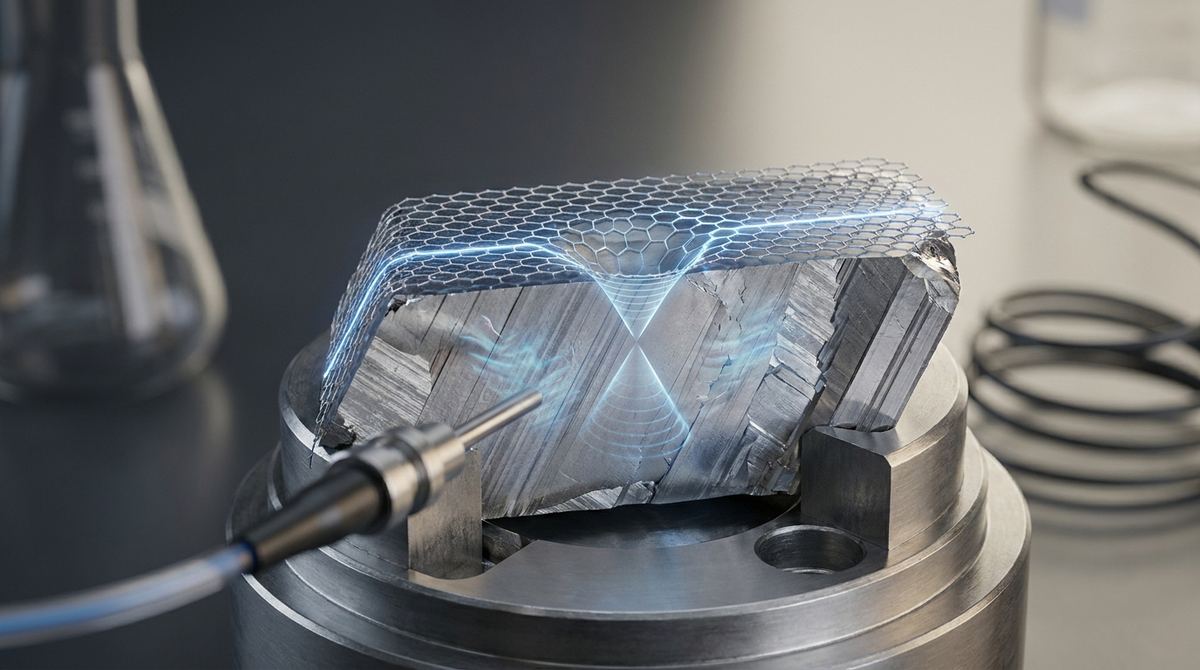
To understand this research, we must understand the concept of a Dirac semimetal. In a normal solid, the energy of an electron is related to its momentum in a way that makes it act like it has a specific mass. Think of this like a heavy ball rolling across a floor; it takes a lot of force to move it, and it is easy to slow it down. In a Dirac semimetal, the quantum mechanical rules governing the electrons are different. The energy and momentum are related linearly, which is exactly how light behaves.
Because of this linear relationship, the electrons behave as if they have zero effective mass. They are essentially massless fermions. This means that when an electron moves through a Dirac semimetal, it is much harder for it to be deflected by defects or impurities in the material. This phenomenon is known as topological protection. It is as if the electron is traveling in a specialized lane that prevents it from bumping into the walls, allowing it to maintain its momentum and speed across the material. This breakthrough discovery in beta-Cu2Se provides a new platform to study these incredibly fast, protected electron movements in a three-dimensional crystal.
How the Graphene-Based System Works
While this research focuses on copper selenide, the physics it describes is closely related to the phenomena seen in graphene, the famous one-atom-thick sheet of carbon that revolutionized the study of Dirac physics. In graphene, the carbon atoms are arranged in a hexagonal lattice, which creates a "Dirac cone" where the electronic energy levels meet at a single point. This specific geometry is what allows the electrons to act as massless particles. The research by Thomas Steele, Becker Sharif, David Lederman, Xiangang Wan, and Sergey Y. Savrasov looks at how these same Dirac-like properties can emerge in a much more complex, three-dimensional rhombohedral structure.
In the beta-Cu2Se system, the arrangement of copper and selenium atoms creates a specific symmetry that is vital to the process. The rhombohedral structure provides a precise geometric environment that forces the electronic energy bands to touch at specific points in the momentum space. In these points, the electrons transition from having a traditional mass to having the massless, linear characteristics seen in graphene. Instead of being restricted to a two-dimensional plane like graphene, these electrons can move through a three-dimensional volume, opening up entirely new possibilities for how we design quantum-grade materials. The symmetry of the crystal acts as the architect, shaping the electronic landscape to create these high-speed corridors for charge carriers.
What the Researchers Found
The research conducted by Thomas Steele, Becker Sharif, David Lederman, Xiangang Wan, and Sergey Y. Savrasov has successfully identified a distinct Dirac semimetal phase within the rhombohedral phase of beta-Cu2Se. Through detailed computational and theoretical analysis, the team demonstrated that the crystal structure of this material allows for the formation of Dirac nodes. These nodes are the specific points where the valence and conduction bands intersect, creating the massless electron behavior described earlier.
The findings are significant because they confirm that the rhombohedral phase of beta-Cu2Se possesses the necessary topological properties to host these particles. The researchers were able to map out the electronic structure and show that the symmetry of the rhombohedral lattice is the driving force behind this phase. By identifying this phase, the study provides a roadmap for how other materials might be engineered to exhibit similar properties, moving the field of condensed matter physics closer to a complete understanding of how to control these exotic particles for technological use.
Why the Result Matters
This discovery is a vital piece of the puzzle in the quest for next-generation electronic materials. The presence of a Dirac semimetal phase in a relatively simple compound like copper selenide suggests that many other materials might be hiding similar properties, waiting to be discovered through careful structural manipulation. This is important because the ability to create massless electrons could lead to a revolution in low-power electronics. If electrons can move without scattering, the heat generated by electronic devices would drop dramatically, allowing for much more densely packed and powerful processors.
Furthermore, the topological protection offered by the Dirac phase means that the electronic properties are remarkably robust. In traditional materials, even a small defect can ruin the performance of a component. In a topological semimetal, the electrons are essentially protected by the mathematical symmetry of the crystal, making the material's performance highly predictable and reliable. This stability is essential for the development of quantum technologies, where even the slightest bit of interference or "noise" can cause a computation to fail.
Limitations and What Still Needs Testing
While the identification of this Dirac phase is a major scientific milestone, it is important to distinguish these theoretical and computational findings from a commercially ready product. At this stage, the research is a fundamental exploration of material properties and does not imply that beta-Cu2Se is ready to be integrated into consumer devices. One of the primary challenges is the stability and scalability of the rhombohedral phase. In many advanced materials, the specific crystal structure required to produce these exotic effects can be difficult to maintain outside of a controlled laboratory environment.
Additionally, the temperature at which these Dirac properties are most prominent must be thoroughly investigated. For many quantum materials, these effects are only visible at extremely low, near-absolute-zero temperatures, which limits their use in everyday gadgets. Researchers will need to determine if the Dirac semimetal phase in beta-Cu2Se can survive at room temperature and whether the material can be manufactured in large, high-quality crystals without structural defects that might disrupt the delicate symmetry required for the Dirac phase to exist.
Real-World Applications
The long-term implications of discovering new Dirac semimetals are vast. In the realm of high-speed telecommunications, materials that allow for incredibly fast electron transport could enable the development of even faster signal processing components, supporting the massive data requirements of 6G networks and beyond. The reduced heat production could also lead to highly efficient power electronics used in electric vehicles and renewable energy grids, where minimizing energy loss during conversion is critical.
In the burgeoning field of quantum computing, Dirac semimetals could serve as a platform for more stable qubits. Because the electrons in these materials are topologically protected, they are less susceptible to the environmental noise that currently causes decoherence in quantum systems. Furthermore, the unique way these materials interact with light and electromagnetic fields makes them ideal candidates for ultra-sensitive quantum sensors, which could revolutionize everything from medical imaging to deep-space communication by detecting incredibly faint signals that are currently invisible to us.
If You Remember One Thing
If you take away only one concept from this research, let it be this: the discovery of the Dirac semimetal phase in beta-Cu2Se proves that we can engineer the very nature of how electrons behave, potentially allowing them to move through crystals as if they were weightless, paving the way for the next era of ultra-fast, low-energy technology.
FAQ
How does a Dirac semimetal differ from a normal conductor like copper? In a normal conductor, electrons have mass and behave like particles that frequently collide with atoms, creating resistance and heat. In a Dirac semimetal, the electronic structure is so unique that electrons behave as if they have no mass at all, allowing them to travel much faster and with much less interference.
Why is the crystal structure of beta-Cu2Se so important? The rhombohedral symmetry of the crystal is the direct cause of the Dirac phase. The specific way the atoms are arranged creates a mathematical environment where the energy bands of the electrons touch in a very specific way, which is the only way to achieve the massless electron behavior.
What is the connection between graphene and this research? Graphene was the first material discovered to exhibit Dirac-like physics in a two-dimensional plane. This research extends those concepts into three-dimensional materials like beta-Cu2Se, showing that the revolutionary properties of graphene can exist in more complex, bulk crystal structures.
Is this discovery going to change my laptop's performance immediately? Not immediately. While this is a major breakthrough in material science, it is a fundamental discovery. It takes many years of engineering to turn a laboratory discovery into a mass-produced component that can be used in everyday electronics like laptops or smartphones.
What are the main challenges in using these materials? The biggest challenges involve stability and temperature. Scientists need to ensure that the material keeps its special properties at room temperature and that we can manufacture large, perfect crystals of the material that can be used in real-world industrial manufacturing processes.
Conclusion
The identification of the Dirac semimetal phase in rhombohedral beta-Cu2Se by Thomas Steele, Becker Sharif, David Lederman, Xiangang Wan, and Sergey Y. Savrasov represents a significant step forward in our mastery over condensed matter physics. By moving beyond the limitations of traditional semiconductors and exploring the topological possibilities of crystal structures, we are beginning to unlock a new regime of electronic behavior. While many hurdles remain before these materials can power our daily lives, the discovery of massless electron transport in a three-dimensional lattice provides a profound new tool for the engineers and scientists who will build the high-speed, low-energy future of technology.