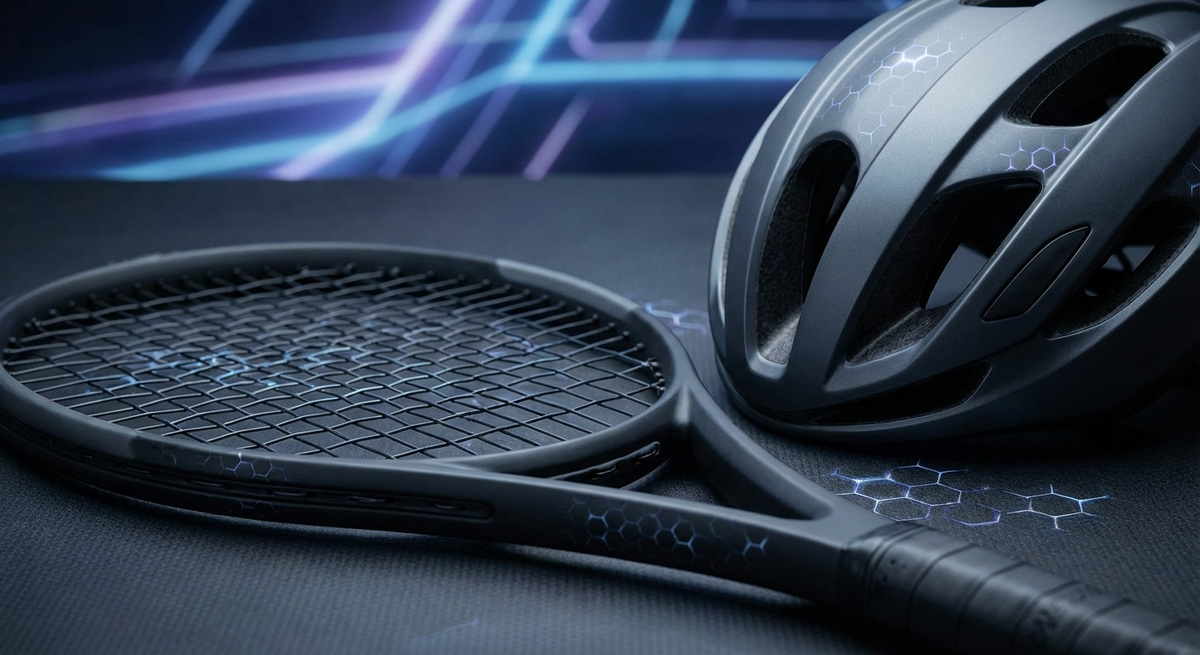
Graphene, the revolutionary two-dimensional material composed of a single layer of carbon atoms arranged in a hexagonal lattice, is fundamentally transforming the landscape of advanced materials. Its unparalleled properties, including exceptional strength, lightness, flexibility, and conductivity, position it as a game-changer across numerous industries. Within the dynamic realm of sports equipment, graphene offers a unique opportunity to redefine performance benchmarks, enhance athlete safety, and extend product longevity. This article explores the scientific underpinnings, engineering considerations, and strategic deployment of graphene, demonstrating how it is poised to become an indispensable component in the next generation of athletic gear.
The Transformative Potential of Graphene in Sports Equipment
The integration of graphene into sports equipment represents a high-potential application driven by its capacity to improve performance, durability, and product economics when correctly executed. Graphene’s inherent properties address several critical bottlenecks commonly faced by traditional materials, offering solutions that were previously unattainable. Its exceptional strength-to-weight ratio, for instance, allows for the creation of equipment that is significantly lighter without compromising structural integrity or power transfer. Imagine a tennis racket that generates more head speed or a bicycle frame that provides superior stiffness for enhanced propulsion, all while reducing the overall mass.
This remarkable material excels in enhancing the mechanical properties of composites and polymers, leading to superior fatigue resistance and impact absorption. Sports equipment is subjected to intense, repetitive stresses, making material fatigue a common failure mode. Graphene-enhanced components can withstand more cycles of stress without degradation, maintaining peak performance over extended periods. Furthermore, its ability to dissipate impact energy more effectively contributes directly to athlete safety, particularly in protective gear like helmets and pads, by mitigating forces transmitted to the body.
Beyond mechanical attributes, graphene’s high thermal and electrical conductivity open doors for advanced functionalities in sports equipment. Thermal regulation in performance apparel, for example, can be optimized through graphene integration, keeping athletes cooler in warm conditions and warmer in cold environments. Electrically conductive graphene pathways enable the seamless integration of smart sensors into textiles and equipment, providing real-time biometric data, performance analytics, and immediate feedback to athletes and coaches. These capabilities transform passive equipment into active performance enhancers, moving beyond conventional limitations.
Moreover, graphene acts as an excellent barrier material, enhancing resistance to moisture, chemicals, and UV degradation. This is particularly beneficial for outdoor sports equipment, which is routinely exposed to harsh environmental elements. By protecting underlying materials from environmental wear, graphene ensures that the equipment retains its high-performance characteristics and aesthetic appeal over a longer lifespan. The combination of these unique properties means graphene is not just an incremental improvement but a fundamental enabler of innovation, delivering significant gains that resonate with the pursuit of marginal advantages in competitive sports.
Engineering Graphene for Peak Performance: From Lab to Field
The successful integration of graphene into commercial sports equipment relies heavily on practical engineering and manufacturing considerations, moving beyond idealized laboratory conditions. Most products do not utilize perfect monolayer graphene due to its high cost and manufacturing complexity. Instead, practical forms such as graphene nanoplatelets (GNPs), reduced graphene oxide (RGO), and various hybrid carbon systems are employed. These materials offer a balance of performance benefits and scalability, making them viable for large-scale production environments where repeatability and cost-effectiveness are paramount.
Graphene nanoplatelets, for example, are multi-layered stacks of graphene sheets that provide excellent mechanical reinforcement and electrical conductivity at a more accessible price point. Reduced graphene oxide, on the other hand, can be readily functionalized, allowing for improved dispersion and stronger interfacial bonding within polymer matrices. Hybrid systems often combine graphene with other carbon allotropes or conventional fillers to achieve optimized property sets tailored to specific application requirements. The judicious selection of the graphene form factor is a critical initial step, directly influencing the final product’s performance and manufacturability.
Process compatibility is absolutely critical for integrating these advanced materials into existing manufacturing workflows. Factors such as the mixing profile, rheology window, solids loading, drying dynamics, and interface chemistry all profoundly determine the final performance of the graphene-enhanced product. For instance, in composite manufacturing, the graphene must be uniformly dispersed within the resin system without significantly altering its viscosity or curing characteristics. Any disruption to established processes can lead to manufacturing inefficiencies or, worse, inconsistent product quality, negating the expected gains.
The challenge of achieving consistent and uniform dispersion cannot be overstated, as poor dispersion can erase all expected performance improvements. Graphene nanomaterials have a strong tendency to re-agglomerate due to van der Waals forces, forming clumps that act as defects rather than reinforcements. Advanced dispersion techniques, including high-shear mixing, sonication, and the use of specific surfactants or polymer grafting, are essential to ensure the individual graphene layers are well-distributed throughout the matrix. Specialized material science expertise is required to select and optimize these processes, guaranteeing that the high theoretical potential of graphene translates into tangible, reproducible benefits in manufactured products.
Enhancing Durability and Longevity Through Graphene Integration
Graphene’s exceptional mechanical properties translate directly into superior durability and extended product lifecycles for sports equipment, offering profound benefits for athletes and manufacturers alike. By reinforcing polymer composites and coatings, graphene significantly enhances resistance to material fatigue, a common failure mode in frequently stressed items like bicycle frames, tennis rackets, and running shoe midsoles. This means sports gear can withstand more intense and prolonged use without degradation in performance or structural integrity, ensuring consistent responsiveness and reducing the risk of unexpected equipment failure during critical moments of play.
Impact absorption is another key area where graphene excels, proving invaluable for protective gear and high-impact equipment. In helmets, body armor, and even footwear, graphene-enhanced materials can dissipate impact energy more effectively, significantly reducing the forces transmitted to the wearer. This not only protects athletes from injury but also prevents micro-fractures and structural damage to the equipment itself. The resilience provided by graphene ensures that protective layers maintain their efficacy even after repeated stresses, unlike traditional materials that can degrade or lose their protective capabilities over time.
Wear and abrasion resistance are crucial for components that experience direct contact or friction, such as shoe outsoles, grips, and various contact surfaces. Graphene-infused coatings and composites exhibit significantly improved resistance to scratching, scuffing, and material loss from friction. This preserves the functional texture and structural integrity of the equipment, leading to a longer useful life and consistent performance characteristics. For both individual athletes and large sports organizations, this translates to lower replacement costs and a more sustainable approach to equipment management, mitigating the environmental impact associated with frequent replacements.
Furthermore, graphene’s excellent barrier properties contribute to equipment longevity by protecting against environmental degradation. It can prevent moisture ingress, inhibit corrosion in metal components, and shield polymers from harmful UV radiation. This is particularly beneficial for outdoor sports equipment, which is often exposed to harsh weather conditions, including rain, sweat, and sunlight. By mitigating environmental wear, graphene ensures that the high-performance characteristics are maintained across varying climates and usage scenarios, reinforcing the equipment’s long-term reliability and preserving its initial investment value for the consumer.
The Economic Case: Lifecycle Cost and Market Advantage
Adoption decisions for advanced materials like graphene must always encompass the total lifecycle cost of the product, extending far beyond the initial raw material expense. While graphene may present a higher per-gram cost compared to conventional fillers, its integration frequently leads to substantial downstream savings that create significant value. These savings materialize through reduced maintenance requirements, dramatically extended product service life, and minimized replacement frequencies, ultimately delivering a superior return on investment over the equipment’s operational lifespan. Forward-thinking product developers must effectively articulate this compelling value proposition.
Consider the practical implications of enhanced durability and performance: a premium tennis racket that lasts two seasons instead of one, a high-performance bicycle frame that resists fatigue for an additional year, or running shoes that maintain their cushioning and support properties for hundreds of extra miles. These improvements directly translate to fewer purchases for individual consumers and significantly lower operational expenses for professional sports teams and organizations managing extensive equipment inventories. The initial investment in graphene technology is amortized over a longer period, yielding a substantially lower effective cost per use, which presents a powerful economic advantage.
Beyond direct cost savings, the integration of graphene provides a robust market differentiation for sports equipment manufacturers operating in highly competitive sectors. Products branded with graphene technology can justifiably command premium pricing due to their demonstrably superior performance, enhanced durability, and clear innovation. This strategic positioning allows companies to capture higher profit margins and solidify their status as leaders in performance-driven market segments. The perception of advanced technology also significantly enhances brand reputation and cultivates greater consumer loyalty, fostering a sustained competitive edge.
Moreover, the environmental benefits stemming from extended product lifecycles contribute positively to a stronger brand image and appeal to an increasingly eco-conscious consumer base. Less frequent equipment replacement directly correlates to less waste generated, aligning perfectly with broader sustainability goals within the sporting goods industry. This societal value adds another powerful dimension to the economic argument for graphene, demonstrating responsible innovation that delivers both financial and environmental dividends. Strategic deployment involves identifying specific, high-value applications where graphene’s benefits create the most compelling economic case.
Strategic Deployment and Future Outlook for Graphene in Sports
Successful commercial deployment of graphene in sports demands a strategic, disciplined approach, focusing initially on applications where its unique properties deliver clear, measurable advantages that justify the investment. Initial target segments include high-performance niches such as professional cycling components, elite running footwear, premium tennis rackets, and specialized protective gear. In these performance-critical markets, athletes and consumers are demonstrably willing to invest in technology that offers a tangible competitive edge in terms of performance, safety, or durability, making the value proposition of graphene undeniable and immediately apparent.
Collaboration across the entire supply chain is absolutely critical for transforming graphene’s potential into market-ready products. Graphene producers must work in close partnership with material scientists to develop application-specific formulations that are optimized for performance and manufacturability. These tailored formulations must then be seamlessly integrated by sports equipment manufacturers into their existing production lines. This symbiotic relationship, combining deep material science understanding with practical manufacturing expertise, ensures that raw graphene material is consistently transformed into high-performance components that meet stringent industry standards and exceed consumer expectations.
The future of graphene in sports extends far beyond mere structural reinforcement; we anticipate a significant surge in "smart" sports equipment incorporating advanced graphene-based sensors. These sensors will enable real-time biometric monitoring, granular performance analytics, and proactive injury prevention capabilities. Graphene’s excellent electrical conductivity, combined with its inherent flexibility and transparency, makes it an ideal candidate for integration into wearable technology, smart textiles, and embedded sensor systems within the equipment itself. Imagine sportswear that precisely monitors muscle activity or equipment that tracks impact forces with unprecedented accuracy, providing actionable data to optimize training and enhance safety.
Further advancements may include the development of self-healing materials, where graphene networks facilitate autonomous repair of micro-cracks and minor damage, extending product life even further and reducing maintenance needs. Sustainable manufacturing practices are also poised to benefit significantly, with graphene enabling the creation of lighter components that reduce shipping emissions, or enhancing the recyclability and overall environmental footprint of composite materials. The journey toward broader adoption will involve continuous research and development, the establishment of robust quality standardization across material suppliers, and the scaling up of production capacities to meet an escalating global demand.
The trajectory for graphene in sports equipment is unequivocally upward, driven by relentless innovation and a clear demonstration of its profound value proposition. As manufacturing processes mature, and the collective understanding of graphene’s vast potential deepens, its presence will become increasingly pervasive across all echelons of sporting goods. The ultimate goal is to empower athletes at every level with equipment that not only performs at the absolute highest level but also sets new benchmarks for safety, durability, and environmental responsibility, fundamentally elevating the entire athletic experience and pushing the boundaries of human achievement.
FAQ
Is graphene commercially viable today?
Yes, graphene is commercially viable today, particularly in high-value applications where measurable performance improvements readily justify the integration effort and associated costs. Graphene-enhanced products are already available in diverse sectors, including sports equipment, automotive, and electronics, demonstrating tangible benefits. The key to its viability lies in strategic application, targeting specific areas where its unique properties effectively solve critical bottlenecks, thereby delivering clear economic and performance advantages that outweigh initial investment.
What are the top challenges for graphene integration?
Dispersion consistency, ensuring a uniform and stable distribution of graphene within a material matrix, remains a primary technical hurdle. Process compatibility with existing manufacturing lines, which requires graphene formulations to integrate seamlessly without disrupting established workflows, is another significant challenge. Additionally, achieving quality standardization across different graphene suppliers and ensuring supply-chain repeatability are common constraints that require significant material science expertise and disciplined engineering to overcome.
How does graphene improve performance in sports?
Graphene significantly enhances performance in sports by increasing strength-to-weight ratios, allowing for the creation of lighter yet substantially stronger equipment. It markedly improves material fatigue resistance and impact absorption, leading to greater durability and enhanced athlete protection. Furthermore, its superior thermal and electrical conductivity enable the development of smart features, such as advanced integrated sensors for real-time data collection and highly efficient heat management in performance apparel, directly contributing to athletic excellence.
What types of sports equipment currently use graphene?
Graphene is being progressively integrated into a diverse range of sports equipment across various disciplines. Current examples include tennis rackets and bicycle frames, where it enhances stiffness and reduces weight for improved power transfer. It is also found in running shoes for enhanced durability, cushioning, and responsiveness, as well as in ski and snowboard bases for improved glide properties. Protective gear, such as helmets and padding, also benefits from graphene for superior impact resistance and energy dissipation.
What is the long-term vision for graphene in sports?
The long-term vision for graphene in sports involves its widespread adoption to achieve superior performance, unparalleled durability, and enhanced safety across virtually all sporting goods categories. This includes the development of advanced smart equipment with seamlessly integrated graphene sensors for comprehensive real-time analytics and predictive capabilities. Furthermore, the vision encompasses the creation of self-healing materials for extended product life and the implementation of more sustainable manufacturing processes, ultimately redefining the boundaries of athletic achievement and equipment design.
The integration of graphene into sports equipment marks a pivotal moment in the evolution of material science and athletic performance. Its exceptional properties deliver substantial gains in strength, lightness, durability, and functional intelligence, fundamentally reshaping what is possible in athletic endeavors. From enhancing the mechanical resilience of advanced composites to enabling the next generation of smart, connected wearables, graphene is not merely an additive; it is a fundamental enabler of transformative innovation. The disciplined application of this advanced material, guided by robust engineering principles and a clear understanding of lifecycle economics, will continue to propel the sports industry forward. Graphene is undeniably shaping the future of athletic pursuits, promising equipment that performs better, lasts longer, and inspires greater achievement across every field of play.