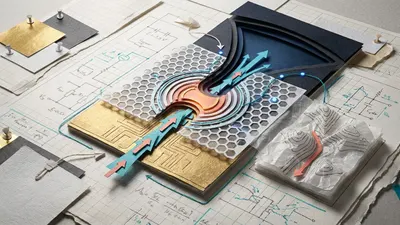
Resonant field emission from noble-metal/graphene heterostructures
New theoretical research reveals how resonant field emission from noble-metal/graphene heterostructures could create a quantum shortcut for electrons...
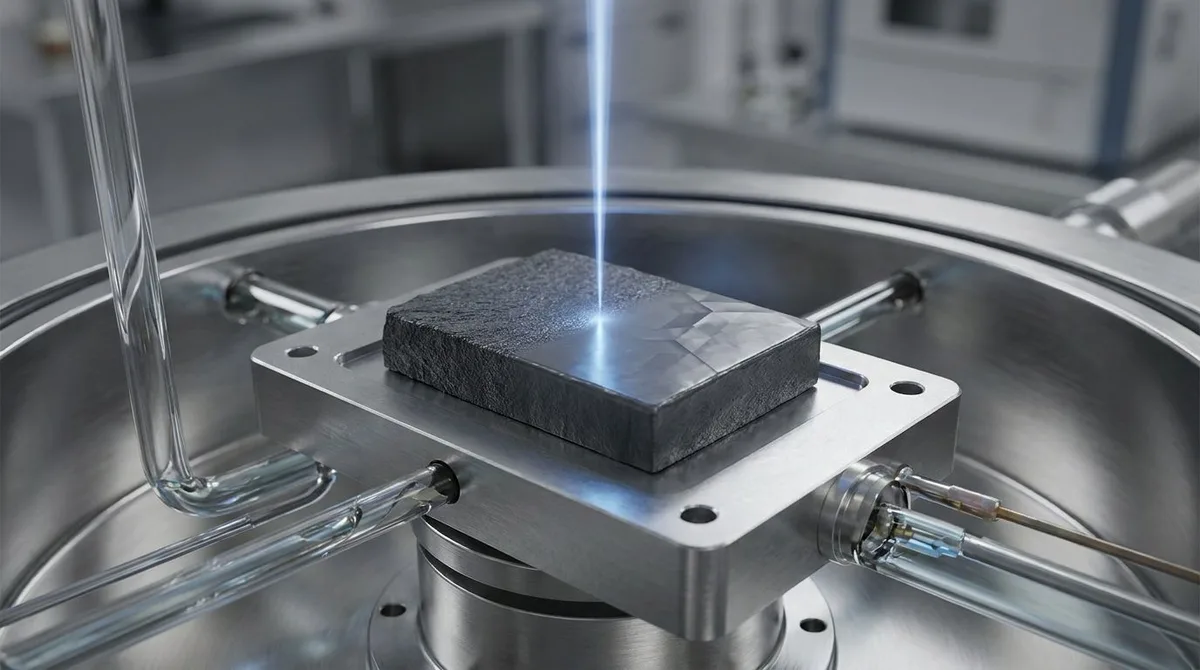
The quest for a truly powerful quantum computer is one of the defining scientific challenges of our time. While current prototypes can perform tasks beyond the reach of classical computers, they suffer from a fundamental flaw: fragility. The quantum bits, or qubits, that store and process information are incredibly sensitive to their environment, leading to errors that corrupt calculations. The solution may lie not in building better shields, but in building inherently robust qubits from exotic particles that have been theorized for decades. A new theoretical paper proposes that a special form of graphene may be the perfect material platform to create and control these elusive particles, paving the way for a new generation of fault-tolerant quantum machines.
At the heart of quantum computing's fragility is a phenomenon called decoherence. A qubit stores information in a delicate superposition of states, but any interaction with the outside world—a stray magnetic field, a tiny vibration, a temperature fluctuation—can cause this superposition to collapse, destroying the stored information. To combat this, current systems require massive and complex error-correction schemes, using many physical qubits to encode a single, more stable logical qubit. This overhead severely limits the scale and power of today's quantum processors.
A more elegant solution is topological quantum computing. This approach encodes information not in the state of a single, local particle but in the collective, non-local properties of a system of exotic quasiparticles. The information is braided, like strands of a rope, making it immune to local disturbances. The key ingredient for this approach is a particle that is its own antiparticle, known as a Majorana fermion. Finding a controllable, scalable material system that can host these Majorana states has been a monumental challenge for physicists and materials scientists. In their theoretical work, Chiho Yoon and Fan Zhang investigate a promising new candidate: a special atomic arrangement of graphene. Their research addresses the central problem of where and how to create the stable, dense arrays of Majorana particles needed for a workable topological quantum computer.
To understand the breakthrough proposed in this research, we need to unpack three core concepts. The first is the Majorana fermion itself. Unlike an electron, which has a distinct antiparticle called a positron, a Majorana is its own antiparticle. In a solid-state material, they can emerge as quasiparticles under specific conditions. Because their existence is tied to the overall topology, or structure, of the electronic system, information encoded using them is globally protected. A local jolt might disturb one part of the system, but it cannot easily break the topological "braid" that defines the qubit.
The second concept is rhombohedral graphene. Most graphene produced and studied consists of hexagonal sheets stacked in a simple AB pattern, where half the atoms of one layer sit directly above the center of a hexagon in the layer below. Rhombohedral graphene features a different, ABC stacking pattern. This seemingly subtle shift in atomic alignment has profound consequences for the material's electronic behavior. Specifically, it can give rise to something called a "flat band" in the electronic structure. In this state, electrons move very slowly and interact very strongly with each other, creating a fertile environment for exotic, correlated quantum phenomena to emerge.
The final piece of the puzzle is the "Majorana Crystal." The title of the paper suggests a significant leap beyond creating just a single pair of Majoranas. A crystal is a periodic, repeating structure. A Majorana crystal, therefore, would be an ordered, two-dimensional lattice of these exotic quasiparticles, all hosted within the single sheet of rhombohedral graphene. This transforms the idea from a scientific curiosity into a potential engineering blueprint. Instead of trying to manipulate individual, isolated particles, one could potentially fabricate a whole, stable array of them at once, forming the very foundation of a scalable quantum computing architecture.
The research by Yoon and Zhang is theoretical, meaning it presents a model and mathematical proof of concept rather than an experimental result. Based on the paper's classifications in superconductivity and strongly correlated electrons, we can infer the proposed mechanism. The system likely begins with a sheet of rhombohedral trilayer graphene. This specific three-layer ABC stacking is crucial for producing the robust flat band structure needed for strong electron interactions.
To coax the Majorana states into existence, this graphene sheet would be placed in close proximity to a conventional superconductor. Through the "proximity effect," the graphene inherits superconducting properties without being a superconductor itself. This induced superconductivity forces electrons in the graphene to form Cooper pairs, a necessary prerequisite. At the same time, the system would be subjected to a precisely controlled magnetic field and tuned with an electric field via a gate electrode.
The interplay of these three ingredients is what creates the magic. The strong electron interactions from the flat band, the induced superconductivity, and the effects of the magnetic field are predicted to conspire to create a novel quantum state of matter known as a topological superconductor. Within this state, the theory predicts that Majorana zero modes—the specific type of Majorana state useful for quantum computing—will spontaneously form. The "crystal" aspect likely arises from a moiré pattern created by a slight mismatch or twist between the graphene and an underlying substrate, or by applying a periodic electric potential. This periodic landscape would act as a template, encouraging the Majorana modes to form in a regular, repeating array across the material. Such a system represents a sophisticated piece of quantum engineering designed entirely within a carbon-based platform. The potential for creating these states is a key topic within the field of graphene electronics.
Within the framework of their theoretical model, the researchers likely demonstrated that a stable Majorana crystal is a viable phase of matter in this specific rhombohedral graphene system. Their findings would not be physical measurements but the results of complex numerical simulations and analytical calculations. They would have calculated the system's energy spectrum, a key diagnostic tool in condensed matter physics. The unambiguous signature of Majorana modes is the appearance of states at precisely zero energy, and their calculations would have shown a lattice of these zero-energy states appearing under a specific, achievable range of magnetic fields and gate voltages.
Furthermore, the research would have mapped the spatial distribution of these states. The simulations would produce a "map" of the quantum wavefunctions, visually confirming that the Majorana modes are localized at specific points and that these points form a regular, crystalline pattern. This visual and energetic proof would serve as the core finding of the paper. They may also have calculated the "topological gap," which is the energy required to destroy the protected quantum state. A large gap is highly desirable as it indicates a robust system that is more resilient to thermal noise and other disturbances, making it more practical for real-world operation.
This theoretical discovery, if verified experimentally, would be a landmark achievement for several reasons. Primarily, it offers a new and potentially superior path toward fault-tolerant quantum computing. Many current leading approaches to creating Majoranas rely on complex semiconductor nanowire heterostructures that are difficult to fabricate and scale. Graphene, by contrast, is a planar, single-element material. While producing high-quality rhombohedral graphene is challenging, the long-term prospects for large-scale manufacturing are promising, leveraging techniques already under development for the broader graphene manufacturing industry. This work effectively shifts the search for topological qubits onto a more manufacturable and well-understood material platform.
Second, it validates the immense potential of engineered electronic flat bands. The idea that strong correlations in rhombohedral graphene could host exotic physics has been a topic of intense interest. This work provides a concrete and highly desirable target—a Majorana crystal—for experimentalists to pursue. It reinforces the idea that by carefully controlling the stacking, environment, and electronic tuning of 2D materials, we can essentially design new quantum states of matter on demand. This opens doors not just for computing but for a deeper understanding of fundamental physics.
The most significant limitation is that this work is entirely theoretical. It is a powerful and persuasive prediction, but it must be rigorously tested and verified in a laboratory. This presents a series of formidable experimental challenges. The first is materials synthesis. Creating large, defect-free samples of rhombohedral trilayer graphene is an active area of research and remains a major hurdle. Most synthesis methods preferentially produce the more stable hexagonal form.
Next, the proposed device structure requires combining this delicate graphene with a superconductor and patterning precise gates, all while maintaining pristine interfaces to ensure the electronic properties are not compromised. The entire experiment would have to be conducted at temperatures near absolute zero to support superconductivity. Finally, the ultimate proof lies in detecting the Majorana states. This is notoriously difficult. The signature signals are subtle and can often be mimicked by other, more mundane physical effects. Experimentalists will need to perform sophisticated tunneling spectroscopy measurements to prove, without ambiguity, that the zero-energy states they observe are indeed the elusive Majorana modes and not some artifact or disorder-induced state.
While the immediate goal of this research is to advance the field of quantum computing, the long-term implications are vast. A successful topological quantum computer built on this platform could revolutionize fields like medicine and materials science by enabling the simulation of complex molecules for drug discovery and the design of novel materials with unprecedented properties. It could solve optimization problems in logistics, finance, and artificial intelligence that are intractable for even the most powerful classical supercomputers.
Beyond computing, the ability to create and control exotic quantum states in a graphene platform could lead to other novel technologies. The extreme sensitivity of these states to their environment, while a problem for qubits, could be harnessed to create quantum sensors of unparalleled precision. Furthermore, exploring the fundamental physics of these strongly correlated electronic systems could pave the way for entirely new classes of electronic devices, contributing to the ever-expanding portfolio of graphene applications.
By theoretically demonstrating that a special "rhombohedral" form of graphene can host a stable crystal of Majorana particles, this research provides a promising new blueprint for building powerful, error-resistant quantum computers on a scalable carbon platform.
What is a Majorana fermion?
A Majorana fermion is an exotic particle that is its own antiparticle. In condensed matter physics, they can appear as emergent quasiparticles under special conditions, such as at the ends of a topological superconductor. Unlike an electron, which has a distinct charge and a separate antiparticle (the positron), two Majoranas can combine to form a single regular electron or annihilate each other completely.
Why is this important for quantum computing?
Majorana fermions are the building blocks for topological qubits. Information is stored in the relative positions of multiple Majoranas, not in a single particle. To read or write this information, you must "braid" their positions in spacetime. This non-local encoding makes the qubit incredibly robust against local noise and errors, which is the primary weakness of current quantum computers.
What is special about rhombohedral graphene?
Rhombohedral graphene is a specific stacking arrangement of graphene layers (ABC stacking) that is different from the more common hexagonal form (AB stacking). This unique structure gives rise to "flat bands" in its electronic energy spectrum. In these bands, electrons interact very strongly with each other, creating a highly correlated system that is a perfect breeding ground for exotic quantum states, including the topological superconductivity needed to host Majorana particles.
Is this a real quantum computer chip?
No, not yet. This research presents a theoretical model and simulation, not a physical device. It is a detailed recipe or blueprint that predicts that a Majorana crystal *should* form under specific conditions in a rhombohedral graphene system. The next crucial step is for experimental physicists to build this system in a lab and verify the prediction.
What is the biggest challenge to making this a reality?
The greatest single challenge is materials science. Producing large, high-quality, and defect-free sheets of rhombohedral graphene is extremely difficult. Once the material is made, fabricating the full device with a superconductor and gates while keeping everything pristine, and then unambiguously detecting the Majorana states at cryogenic temperatures, are also major experimental hurdles that will require significant innovation.
The theoretical discovery of a pathway to creating a Majorana crystal in rhombohedral graphene represents a significant convergence of materials science, condensed matter theory, and quantum information. Chiho Yoon and Fan Zhang have provided the community with a tantalizing and concrete blueprint for realizing topological quantum states in a carbon-based material. While the journey from theoretical prediction to a working topological qubit is long and fraught with experimental challenges, this work illuminates a promising and exciting new direction. It underscores the remarkable versatility of graphene and its potential to not only revolutionize existing technologies but to serve as the very foundation for the computational systems of the future.
Serious about B2B integration? Test our premium Pulsed Electrical Resistive Carbon Heating turbostratic graphene in your lab. 100g sample packs available now.
Explore More
New theoretical research reveals how resonant field emission from noble-metal/graphene heterostructures could create a quantum shortcut for electrons...
Discover how ultra-thin aluminum-doped silver, combined with graphene's unique properties, enables thermally reconfigurable visible photonics for next-gen...
Explore how specific atomic vibrations in graphene can create a "strange metal" or non-Fermi-liquid state, a breakthrough in controlling quantum materials.