
3D Atomic Imaging of Graphene Dynamics from a Single Low-Dose TEM Snapshot
A new physics-informed AI method reconstructs the 3D atomic structure and dynamics of graphene from a single low-dose TEM image, solving a key imaging...
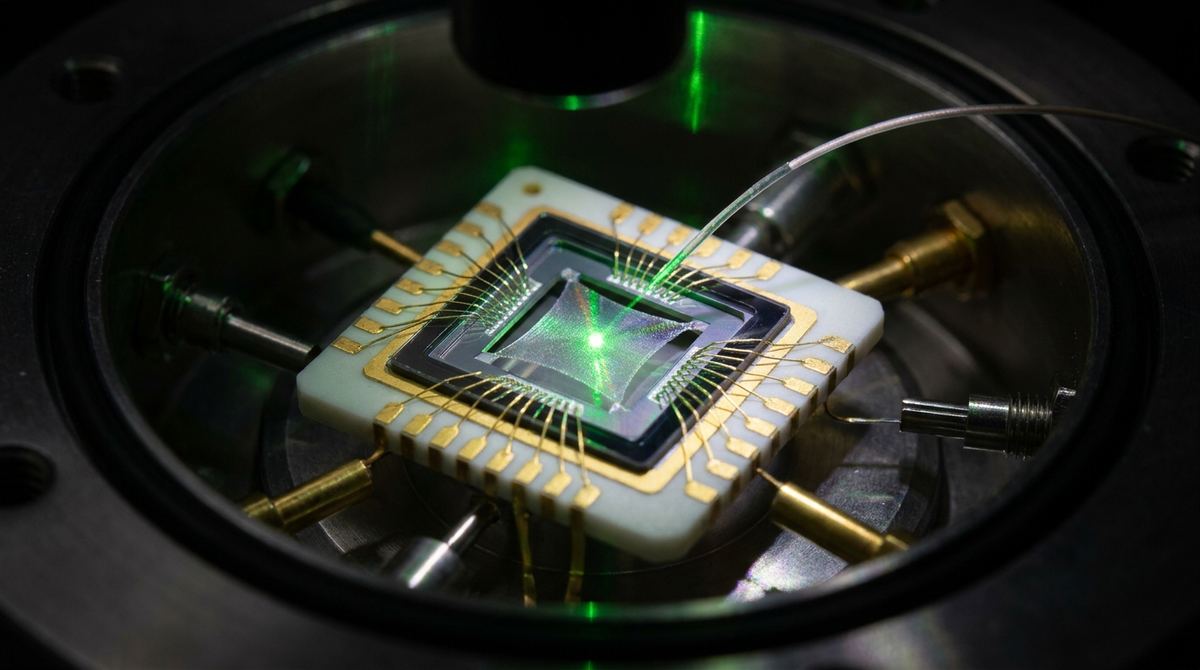
In the field of nanoelectromechanical systems (NEMS), graphene has long been the gold standard due to its exceptional mechanical strength and high quality. However, crystalline graphene presents manufacturing challenges, specifically regarding grain boundaries and the inherent tension required to keep the membrane stable. Recent research into the amorphous 2D limit has introduced a new player: Monolayer Amorphous Carbon (MAC).
Unlike crystalline graphene, MAC is a disordered, non-crystalline form of carbon. This lack of long-range order changes the mechanical landscape entirely. According to recent findings, MAC membranes can be fabricated in a low-tension state, making them much more sensitive to external perturbations than their crystalline counterparts. This guide explores how to turn this unique property into a practical, high-sensitivity mass sensor.
Most NEMS devices aim for linear operation, where the response is directly proportional to the input. However, the research shows that MAC nanodrums exhibit pronounced nonlinear dynamics—such as hardening, softening, and Duffing responses—at much lower drive powers than crystalline materials.
For an engineer, this nonlinearity is not a bug; it is a feature. By operating a MAC resonator near its nonlinear bifurcation point, you can achieve extreme sensitivity. A tiny change in mass on the membrane surface can trigger a significant, measurable shift in the resonant frequency or a sudden jump in the oscillation amplitude. This allows for the detection of much smaller mass increments than a standard linear resonator could provide.
The target application for this guide is a NEMS mass sensor designed for detecting ultra-low mass loads (such as biological molecules or chemical contaminants) in a gas or liquid environment. The device consists of a suspended MAC membrane that acts as a resonator. When a target mass lands on the membrane, the resonant frequency shifts. By using optothermal actuation (using a laser to heat the membrane slightly) and interferometric readout (using a laser to measure the vibration), we can track these shifts with high precision.
To build a prototype, you will need the following components. Note that some specific dimensions and concentrations are engineering assumptions based on standard MEMS fabrication workflows.
- Substrate: A silicon wafer with a pre-etched layer of silicon dioxide (SiO2).
- Membrane Material: Monolayer Amorphous Carbon (MAC), typically deposited via Chemical Vapor Deposition (CVD).
- Actuation Source: A continuous-wave (CW) laser diode (e.g., 633 nm or 532 nm).
- Detection System: A high-speed photodiode and a laser interferometer setup.
- Fabrication Tools: A Reactive Ion Etcher (RIE) for silicon dioxide removal and a CVD reactor.
- Environment Control: A vacuum chamber or a controlled fluid cell for testing.
The following steps outline the process for creating a suspended MAC nanodrum. These steps are engineering assumptions based on standard microfabrication techniques.
1. Substrate Preparation: Start with a silicon wafer that has a thin layer of SiO2 (approximately 300-500 nm thick). Use photolithography to define the cavity areas where the membranes will be suspended.
2. MAC Deposition: Use a CVD process to deposit a monolayer of amorphous carbon. While the exact parameters are not specified in the research, a cautious starting range for deposition would be using a methane (CH4) precursor at temperatures between 600 and 800 degrees Celsius. The goal is to achieve a monolayer thickness without inducing high intrinsic tension.
3. Patterning: Use electron-beam lithography or high-resolution photolithography to define the edges of the MAC membrane.
4. Membrane Release: This is the most critical step. Use a Hydrofluoric acid (HF) etch to remove the SiO2 layer underneath the patterned MAC. This leaves the MAC membrane suspended over the etched cavities.
5. Post-Release Cleaning: Perform a careful rinse in high-purity isopropyl alcohol (IPA) to remove any residual etching chemicals or contaminants that could add unintended mass to the membrane.
Once the prototype is fabricated, follow this test plan to validate the sensor performance.
1. Linear Frequency Mapping: Use the laser to excite the membrane and identify the fundamental resonant frequency. Ensure the membrane is stable and not vibrating uncontrollably.
2. Nonlinear Regime Characterization: Gradually increase the laser power to drive the membrane into the nonlinear regime. Observe the frequency response to identify the Duffing behavior (hardening or softening). This confirms the membrane is operating in the low-tension, high-sensitivity regime described in the research.
3. Mass Loading Sensitivity: Introduce a known mass (such as a controlled aerosol or a specific chemical vapor) to the membrane. Measure the frequency shift (delta f).
4. Limit of Detection (LOD) Calculation: Determine the smallest mass change that produces a signal-to-noise ratio (SNR) of at least 3.
It is vital to distinguish between the scientific findings and the engineering implementation.
Source Basis:
- The observation of low-tension, nonlinear dynamics (Duffing response, mode coupling) is directly from the research source.
- The use of optothermal actuation and interferometric readout is a standard engineering method for NEMS, supported by the research's mention of these techniques.
Engineering Assumptions:
- The CVD parameters (temperature, precursor gas) are assumed for the purpose of this guide.
- The specific cavity dimensions (assumed to be 50-100 micrometers) are assumed.
- The specific mass-loading medium (gas or liquid) is an assumption for the application.
Technical Risks:
- Membrane Fragility: The MAC membrane is atomically thin. Excessive laser power during actuation or improper handling during the release step can lead to membrane rupture.
- Tension Control: The primary advantage of MAC is its low tension. However, if the CVD process introduces too much stress, the device will behave like a standard, less-sensitive crystalline resonator.
- Contamination: At the nanoscale, even a single layer of moisture or organic residue can significantly alter the mass and the nonlinear response.
- Thermal Drift: Since optothermal actuation relies on heat, temperature fluctuations in the environment can cause frequency shifts that mimic mass loading.
Monolayer amorphous carbon membranes offer a unique pathway for developing NEMS sensors that operate in the nonlinear regime. By moving away from the rigid constraints of crystalline graphene and embracing the disorder-governed mechanics of MAC, engineers can create resonators that are incredibly sensitive to minute physical changes. For startups and labs specializing in mass sensing, the ability to leverage these nonlinearities at low power could be a significant competitive advantage in the development of next-generation sensing platforms.
Serious about B2B integration? Test our premium Pulsed Electrical Resistive Carbon Heating turbostratic graphene in your lab. 100g sample packs available now.
Explore More
A new physics-informed AI method reconstructs the 3D atomic structure and dynamics of graphene from a single low-dose TEM image, solving a key imaging...

Explore how to build a graphene-FGT voltage-tuned microwave filter. This guide details a prototype for electrically controlling magnetic damping in spintronics.

Researchers map ballistic transport in bilayer graphene junctions, revealing quantized conductance thresholds. This fundamental work is key to designing...