
Graphene Sensors and a New Method for Dark Matter Detection
Researchers propose a new method for dark matter detection using angular scanning, a technique that may rely on graphene's unique electronic sensitivity.
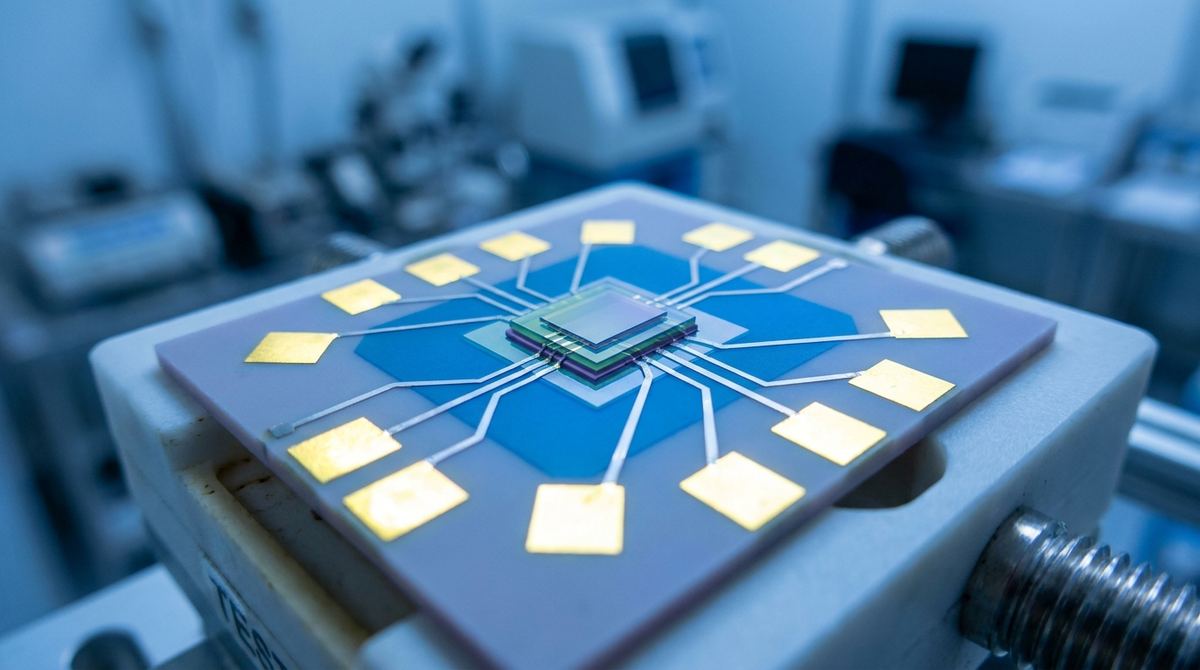
The transition from charge-based electronics to valleytronics relies on the ability to manipulate the valley degree of freedom in Dirac materials like graphene. While traditional electronics focus on charge density, the next generation of quantum sensors will likely exploit the viscous properties of the electron fluid. Recent theoretical work has resolved how to calculate the valley-resolved Hall viscosity in integer quantum Hall phases, suggesting that this viscosity is a finite, measurable quantity that can be detected through nonlocal transport. For an engineer, this means a new way to detect subtle physical gradients through voltage signals that appear far from the primary current path.
By moving beyond simple charge transport and looking at the viscous response of the electron fluid, we open the door to sensors that are sensitive to the topological properties of the material. This is not just a theoretical curiosity; it is a roadmap for a new class of quantum-limited sensors.
To measure valley Hall viscosity, you cannot use a standard two-terminal setup. You must build a multi-terminal device, specifically a Hall bar or a specialized multi-terminal geometry, that allows for nonlocal voltage measurements.
The target material for this prototype is biased Bernal bilayer graphene. The bilayer structure provides a more controllable electronic environment for observing the integer quantum Hall phases compared to monolayer graphene. The ability to tune the bandgap via an external electric field (bias) is critical for accessing the specific quantum Hall states described in recent research.
The device must be capable of operating in the quantum Hall regime, which requires high-quality, low-disorder samples. The most effective architecture is a van der Waals heterostructure where the graphene is encapsulated between layers of hexagonal Boron Nitride (hBN). This encapsulation protects the graphene from environmental noise and substrate impurities.
Building this prototype requires specialized cleanroom equipment and high-purity materials.
1. Graphene: High-mobility Bernal bilayer graphene. Exfoliated flakes are preferred for research-grade prototypes, while CVD-grown graphene can be used for scalable testing if the quality is sufficient.
2. Substrate: Hexagonal Boron Nitride (hBN) flakes. These must be ultra-clean to prevent charge puddles that mask the viscosity signal.
3. Contact Metallization: Chromium/Gold (Cr/Au) or Titanium/Gold (Ti/Au) for electrical contacts.
4. Lithography: Electron Beam Lithography (EBL) is required for the fine feature sizes needed for quantum transport measurements.
5. Cryogenics: A dilution refrigerator or a high-performance Helium-3 cryostat capable of reaching temperatures below 4 Kelvin.
6. Measurement: A precision Lock-in amplifier and a high-resolution Source Measure Unit (SMU).
The fabrication of a van der Waals heterostructure is a delicate process that requires a dry-transfer method to avoid contamination.
Step 1: Substrate Preparation
Begin with a highly polished silicon wafer with a thick oxide layer (SiO2) to serve as a back-gate.
Step 2: The Sandwich Stack
Using a dry-transfer technique, stack the materials in the following order:
- Bottom layer: Thick hBN flake.
- Middle layer: Bernal bilayer graphene.
- Top layer: Thin hBN flake (to encapsulate the graphene).
Step 3: Patterning and Etching
Use Electron Beam Lithography to define the Hall bar geometry. Once the resist is developed, use Oxygen Plasma Etching to define the edges of the graphene and hBN stack.
Step 4: Contact Deposition
Perform metal evaporation in a high-vacuum chamber. Deposit the adhesion layer (Cr or Ti) followed by the gold layer.
Step 5: Final Encapsulation
If necessary, a final layer of PMMA can be used to protect the device during the final stages of handling.
The goal is to detect the nonlocal voltage signal resulting from the valley Hall viscosity.
1. Device Characterization: First, perform standard longitudinal and Hall resistance measurements to confirm the presence of integer quantum Hall plateaus.
2. Magnetic Field Sweep: Apply a perpendicular magnetic field. Based on the physics of Dirac materials, you should expect to see the signal in the integer quantum Hall regime.
3. Nonlocal Measurement: Inject a current through two terminals and measure the voltage across two distant, non-aligned terminals.
4. Gate Voltage Sweep: Use the back-gate to tune the carrier density. The viscosity signal is expected to show specific signatures as you move through different integer quantum Hall phases.
Since the research focuses on the theoretical resolution of the viscosity divergence, the following parameters are assumed for a successful prototype:
- Temperature: The device must be cooled to at least 4 Kelvin. For high-precision validation of the Hoyos-Son formula extension, temperatures in the millikelvin (mK) range are recommended to minimize thermal excitation.
- Magnetic Field: A magnetic field range of 0 to 14 Tesla is required to reach the integer quantum Hall regime in bilayer graphene.
- Channel Dimensions: A channel width of 20 to 50 micrometers is recommended to balance signal strength with the need for high-mobility transport.
- Gate Voltage: The back-gate voltage should be sufficient to sweep through multiple integer filling factors.
The primary risk in this project is material contamination. Even a single layer of polymer residue can destroy the quantum Hall effect.
- Risk: High contact resistance at the graphene-metal interface.
- Mitigation: Use Ar+ ion cleaning or high-temperature annealing after metal deposition to improve contact quality.
- Risk: Charge puddles from the substrate.
- Mitigation: Ensure the hBN flakes are extremely clean and use the encapsulation method described above.
- Risk: Thermal noise masking the nonlocal signal.
- Mitigation: Use lock-in amplification techniques to extract the signal at specific frequencies, effectively filtering out DC noise and thermal fluctuations.
This guide is based on the research by M. Selch regarding valley-resolved Hall viscosity in (2+1)D Dirac materials. The core engineering concept—using nonlocal transport to measure viscosity—is derived from the paper's discussion on the prospects of measuring valley Hall viscosity in monolayer and bilayer graphene. The transition from the divergence of single-valley contributions to a finite, well-defined value in the proper representation is what makes this measurement physically possible in a real-world device.
Serious about B2B integration? Test our premium Pulsed Electrical Resistive Carbon Heating turbostratic graphene in your lab. 100g sample packs available now.
Explore More
Researchers propose a new method for dark matter detection using angular scanning, a technique that may rely on graphene's unique electronic sensitivity.

Build a flexible graphene battery sensor for real-time temperature and strain monitoring, a crucial step toward preventing thermal runaway in Li-ion cells.

Research on 30° quasi-periodic twisted bilayer graphene reveals a unique, fractal-like energy structure under magnetic fields, paving the way for novel...