
Low-Noise Monte Carlo Simulation for Graphene Electronics Design
Explore a new low-noise Pauli-consistent ensemble Monte Carlo simulation for graphene, a powerful computational tool for designing next-generation...
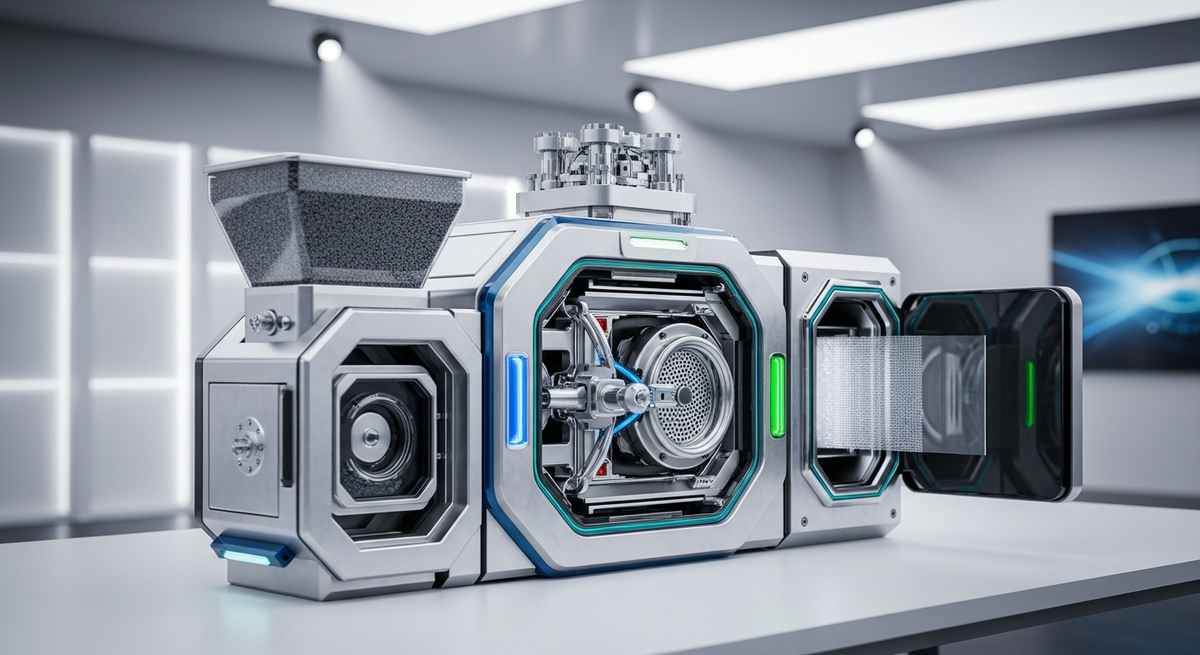
Carbon, a fundamental element with an atomic number of 6 and electronic configuration [He] 2s²2p², forms the backbone of life and countless industrial materials. Among its diverse allotropes, graphite stands out as a critical precursor for the wonder material of our age: graphene. This anisotropic semimetal, with its remarkable thermal and electrical conductivity under specific conditions, has captivated the scientific community due to the extraordinary properties of its constituent basal planes—the single-atom-thick layers known as graphenes. The advent of graphene has opened unprecedented avenues across nearly all scientific and engineering disciplines, promising advancements from ultra-fast electronics to robust composites and efficient energy storage. However, realizing graphene's full potential hinges on developing scalable, cost-effective, and high-quality production methods. Traditional approaches often present trade-offs between yield, purity, and structural integrity, driving continuous innovation in synthesis techniques. This article delves into an innovative and highly effective method for graphene exfoliation from graphite, leveraging the synergistic power of mechanical alloying with yttrium oxide and subsequent microwave irradiation. This approach addresses some inherent limitations of purely mechanical exfoliation by introducing a thermal or energetic assist, paving the way for more efficient and abundant graphene production vital for industrial applications. Understanding this sophisticated process is crucial for engineers, materials scientists, and R&D professionals seeking to harness the full capabilities of 2D materials. These diverse structures arise from distinct hybridization states of carbon, primarily sp¹, sp², and sp³ configurations, with graphite being a prime example of sp² hybridization arranged in hexagonal layers that are the very source of graphene.
Graphene's exceptional properties position it as a revolutionary material across a vast spectrum of industries. Its unparalleled electrical conductivity, superior mechanical strength—200 times stronger than steel by weight—and remarkable thermal conductivity make it ideal for next-generation electronics, high-performance batteries, and advanced composite materials. Imagine devices with processing speeds orders of magnitude faster, batteries that charge in minutes and last for days, or aircraft components that are both lighter and more durable. The implications extend to highly sensitive sensors, efficient water filtration systems, and even biomedical applications.
However, the chasm between graphene's theoretical potential and its widespread industrial adoption remains significant, primarily due to production challenges. The laboratory-scale methods, while capable of producing high-quality material, are often expensive, slow, and yield only small quantities. Chemical vapor deposition (CVD) offers some scalability but can be costly and requires specific substrates, limiting its direct use for bulk applications. Liquid-phase exfoliation, while producing larger quantities, often results in lower quality graphene with more defects and smaller flake sizes.
Addressing this production bottleneck is paramount for unlocking graphene's transformative power. Industries require methods that can generate large volumes of high-purity, structurally intact graphene at a cost point that allows for commercial viability. This drives the continuous exploration of novel synthesis routes, particularly those that can overcome the inherent limitations of existing techniques. The need for a scalable, cost-effective, and quality-controlled production platform is not merely an academic pursuit; it is the commercial imperative for the entire graphene industry.
Mechanical exfoliation, particularly through methods like ball milling, represents one of the earliest and most straightforward approaches to graphene production. This technique involves subjecting graphite to intense mechanical forces, typically in a ball mill, where grinding media collide with the graphite flakes, shearing them apart. The sheer force exerted during these collisions overcomes the weak van der Waals forces holding the graphite layers together, leading to the gradual separation of graphene sheets. It is a dry, solvent-free process that offers potential for large-scale production, appealing for its simplicity and relatively low cost.
However, purely mechanical exfoliation methods face several significant limitations. The aggressive nature of ball milling often introduces a high density of structural defects into the graphene sheets, compromising their pristine electronic and mechanical properties. These defects can act as scattering centers for electrons, reducing conductivity, and weaken the material's structural integrity. Furthermore, controlling the number of layers and the lateral size of the exfoliated graphene flakes proves challenging; the resulting product is typically a heterogeneous mixture of few-layer graphene, multi-layer graphene, and often severely damaged single-layer fragments.
Another critical issue is the tendency for exfoliated graphene sheets to re-stack due to strong attractive forces between their basal planes. Once separated, without a stabilizing agent or environment, the graphene layers can agglomerate back into graphite-like structures, diminishing the yield of truly exfoliated material. Achieving a high yield of high-quality, large-area, few-layer graphene through pure mechanical means remains an elusive goal. These drawbacks necessitate the integration of complementary strategies to enhance the efficiency, quality, and scalability of mechanical exfoliation.
The introduction of yttrium oxide (Y2O3) into the mechanical exfoliation process fundamentally transforms its efficacy. Yttrium oxide is a hard, chemically stable ceramic material, which, when co-milled with graphite, acts as a sophisticated grinding aid and an effective exfoliation promoter. Unlike traditional grinding aids, Y2O3 does not merely facilitate the physical breakdown of graphite; it actively participates in the exfoliation mechanism by creating a more efficient and controlled environment for layer separation.
During the mechanical alloying process, Y2O3 particles are subjected to the same high-energy collisions as graphite. Their hardness helps to impart significant shear and compressive forces onto the graphite flakes, initiating the delamination process with greater efficiency than graphite-on-graphite collisions alone. Beyond its abrasive action, Y2O3 plays a crucial role in preventing the undesirable re-stacking of exfoliated graphene layers. As graphene layers are separated, Y2O3 nanoparticles can intercalate or become entrapped between the freshly exfoliated sheets. This physical separation prevents the van der Waals forces from drawing the layers back together, effectively "locking" the exfoliated state.
Furthermore, the presence of Y2O3 can induce localized stress concentrations within the graphite lattice, promoting the formation of defects and edges that serve as initiation points for further exfoliation. This targeted disruption of the graphitic structure, coupled with the anti-re-stacking effect, allows for a more controlled and thorough delamination of graphite into thinner graphene flakes. The chemical inertness of Y2O3 ensures that it does not react adversely with the carbon, preserving the integrity of the graphene structure, making it a highly effective and strategic additive for enhancing mechanical exfoliation.
Following the mechanical alloying process with yttrium oxide, microwave irradiation emerges as a powerful, complementary technique for further enhancing graphene exfoliation and improving its quality. Microwaves interact intensely with carbonaceous materials, particularly those with a graphitic structure, leading to rapid and localized heating. This interaction is not merely a thermal effect; it involves complex electromagnetic phenomena that can induce specific structural changes within the material.
When the Y2O3-pretreated graphite (or partially exfoliated graphene) is exposed to microwave radiation, any remaining intercalated Y2O3 particles, or even residual moisture and trapped gases, can absorb microwave energy and heat up rapidly. This localized heating generates immense pressure within the graphitic interlayers. The rapid expansion of these trapped species or the sudden increase in temperature causes the graphite layers to "puff up" or "explode," leading to a dramatic increase in volume and further separation of the graphene sheets. This process is often referred to as exfoliation by thermal shock or microwave-assisted expansion.
Beyond simple thermal expansion, microwave irradiation can also contribute to the purification of the graphene product. The intense localized heating can aid in the volatilization of certain impurities or even facilitate the removal of residual yttrium oxide particles, particularly if they are loosely adsorbed or trapped between layers. The rapid, uniform heating provided by microwaves, compared to conventional heating methods, allows for swift and efficient processing, minimizing the potential for prolonged exposure to high temperatures that could degrade the graphene structure. This energetic assist serves as a critical post-processing step, leveraging the weaknesses introduced during mechanical alloying to achieve a higher degree of exfoliation and purity.
The true innovation lies in the synergistic combination of yttrium oxide-assisted mechanical alloying and subsequent microwave irradiation. This integrated approach leverages the strengths of each method while mitigating their individual limitations, resulting in a highly efficient and effective pathway for high-quality graphene production. The process begins with graphite and yttrium oxide powder being introduced into a high-energy ball mill. During this stage, the intense mechanical impacts from the milling media, coupled with the abrasive action of the hard Y2O3 particles, initiate the delamination of graphite.
The Y2O3 acts as an intercalant and a separator, preventing the re-stacking of newly exfoliated graphene layers. It creates a "pre-expanded" or "pre-weakened" graphite structure where the van der Waals forces between layers have been significantly disrupted, and smaller, partially separated flakes are formed. This initial mechanical treatment dramatically reduces the energy barrier for subsequent exfoliation. The resulting powder, a mixture of partially exfoliated graphite and Y2O3, is then subjected to microwave irradiation.
Under microwave exposure, the pre-stressed and Y2O3-intercalated material undergoes a rapid, explosive expansion. The localized heating and pressure buildup within the interlayers, driven by the microwave absorption, causes the remaining graphite layers to violently separate. This secondary exfoliation step significantly increases the yield of few-layer and single-layer graphene, while also promoting the removal of residual Y2O3 particles through thermal shock or improved accessibility for post-processing purification. The synergy is clear: mechanical alloying prepares the material by introducing defects and preventing re-stacking, while microwaves provide the final, powerful energetic impetus for complete and efficient exfoliation, leading to a superior graphene product compared to either method used in isolation.
The quality of graphene produced by this synergistic method is rigorously assessed through a suite of advanced characterization techniques, confirming its suitability for high-performance applications. Raman spectroscopy is a primary tool, providing critical information about the number of layers, defect density, and crystallographic quality. A prominent 2D peak and a low intensity D peak (indicating minimal defects) are hallmarks of high-quality graphene, with the ratio of the D to G peak (ID/IG) often used as a quantitative measure of disorder. The position and shape of the 2D peak help determine the number of layers.
X-ray Diffraction (XRD) analysis provides insight into the interlayer spacing and the degree of exfoliation, showing a reduction or disappearance of the characteristic graphite (002) peak after successful treatment. Scanning Electron Microscopy (SEM) and Transmission Electron Microscopy (TEM) are employed to visualize the morphology, flake size, and number of layers, revealing transparent, thin flakes indicative of few-layer graphene. Atomic Force Microscopy (AFM) offers precise measurements of flake thickness and surface topography, confirming single or few-layer structures and providing statistical data on flake distribution.
The graphene produced via Y2O3-assisted mechanical alloying and microwave treatment typically exhibits significantly improved properties compared to graphene from traditional mechanical methods. It demonstrates enhanced electrical conductivity due to reduced defect concentrations and larger average flake sizes. Its mechanical integrity is also superior, making it suitable for composite reinforcement. Furthermore, the method offers a pathway to produce graphene with controlled layer numbers and improved purity, paving the way for its integration into advanced electronics, energy storage devices, and high-strength materials where pristine properties are paramount.
The combination of mechanical alloying with yttrium oxide and subsequent microwave irradiation offers significant advantages in terms of scalability and economic viability, crucial factors for industrial adoption of graphene. Mechanical alloying, particularly ball milling, is an inherently scalable process. Industrial-scale ball mills capable of processing large quantities of material already exist and are widely used across various industries. Integrating yttrium oxide as a milling aid does not fundamentally alter the scalability of this initial step, merely enhancing its efficiency.
Microwave processing is also well-suited for industrial scale-up. Microwave ovens are common in various manufacturing sectors for heating and drying applications, and large-scale industrial microwave systems are readily available. The speed and energy efficiency of microwave irradiation mean that a high throughput can be achieved with relatively low energy consumption per unit of material. This translates into lower operational costs compared to many other graphene production methods that rely on expensive precursors, complex reactors, or extensive post-processing purification steps.
Furthermore, the raw materials involved – graphite and yttrium oxide – are relatively abundant and affordable. Graphite is a widespread mineral, and Y2O3 is a commercially available ceramic. This contrasts sharply with methods requiring highly specialized precursors or hazardous chemicals, which add to both the cost and environmental footprint. By combining these scalable and cost-effective individual steps, the Y2O3-assisted mechanical alloying and microwave treatment method presents a compelling pathway for mass-producing high-quality graphene, making it a viable option for a wide range of industrial applications and accelerating the commercialization of graphene technologies.
What are the main advantages of this method over traditional mechanical exfoliation?
This method offers several key advantages. The inclusion of yttrium oxide significantly improves exfoliation efficiency by preventing re-stacking and promoting controlled delamination, leading to higher yields of few-layer graphene. Subsequent microwave irradiation provides a rapid, energetic assist that further separates layers and can improve purity. Together, these steps result in higher quality graphene with fewer defects and larger flake sizes compared to purely mechanical methods, while maintaining scalability and cost-effectiveness.
Is yttrium oxide difficult to remove from the final graphene product?
Yttrium oxide is largely inert and non-reactive with carbon, which is beneficial during the exfoliation process. While some Y2O3 nanoparticles may become trapped between graphene layers, the microwave irradiation step can facilitate their removal due to thermal shock and rapid expansion, making them more accessible for subsequent purification. Standard post-processing techniques, such as simple washing or acid treatment, can effectively remove residual yttrium oxide, ensuring a high-purity graphene product for most applications.
What kind of quality can be expected from graphene produced this way?
Graphene produced by this synergistic method generally exhibits high quality suitable for industrial applications. Characterization techniques like Raman spectroscopy and TEM confirm the presence of few-layer graphene with a relatively low defect density. The flake sizes are typically larger and more consistent than those obtained from purely mechanical methods. This balance of quality, yield, and scalability makes it a robust solution for diverse industrial needs.
What are the primary industrial applications for graphene produced using this technique?
The high-quality and scalable nature of graphene produced by this method makes it ideal for various industrial applications. These include conductive additives for high-performance composites, reinforcing agents for polymers and metals, advanced materials for energy storage (e.g., battery electrodes and supercapacitors), highly efficient heat dissipation materials, and conductive inks for flexible electronics. Its cost-effectiveness expands its potential reach across multiple sectors.
How does this method contribute to the scalability of graphene production?
This method contributes to scalability by leveraging established industrial processes. Mechanical alloying (ball milling) is a well-understood and readily scalable bulk processing technique. Microwave irradiation is also a rapid and energy-efficient heating method that can be scaled for continuous production. The relatively low cost of precursors and the efficient, high-throughput nature of both steps make this combined approach highly amenable to large-scale industrial manufacturing, addressing a critical bottleneck in graphene commercialization.
The pursuit of scalable, cost-effective, and high-quality graphene production methods is central to realizing the material's immense potential across global industries. The innovative approach of combining yttrium oxide-assisted mechanical alloying with subsequent microwave irradiation represents a significant leap forward in this endeavor. By synergistically leveraging the controlled exfoliation capabilities of Y2O3 during mechanical processing and the rapid, energetic expansion provided by microwave treatment, this method overcomes many of the inherent limitations associated with traditional exfoliation techniques.
This integrated strategy yields graphene with superior structural integrity, reduced defect density, and improved uniformity, all while maintaining the promise of high throughput and economic viability. Such advancements are not merely incremental; they are foundational to transitioning graphene from a laboratory marvel to a widespread industrial commodity. For engineers, materials scientists, and R&D professionals, understanding and implementing these sophisticated techniques will be pivotal in unlocking new generations of ultra-fast electronics, robust composites, and highly efficient energy solutions. The future of 2D materials, spearheaded by graphene, depends critically on mastering such innovative production pathways.
Serious about B2B integration? Test our premium Pulsed Electrical Resistive Carbon Heating turbostratic graphene in your lab. 100g sample packs available now.
Explore More
Explore a new low-noise Pauli-consistent ensemble Monte Carlo simulation for graphene, a powerful computational tool for designing next-generation...

Researchers propose a new method for dark matter detection using angular scanning, a technique that may rely on graphene's unique electronic sensitivity.

Build a flexible graphene battery sensor for real-time temperature and strain monitoring, a crucial step toward preventing thermal runaway in Li-ion cells.