
Graphene Radar Absorbing Materials for Aircraft and Drones
Graphene coatings are being studied for radar absorbing materials because they can help make aircraft and drones lighter, thinner, and more electromagnetically tunable.
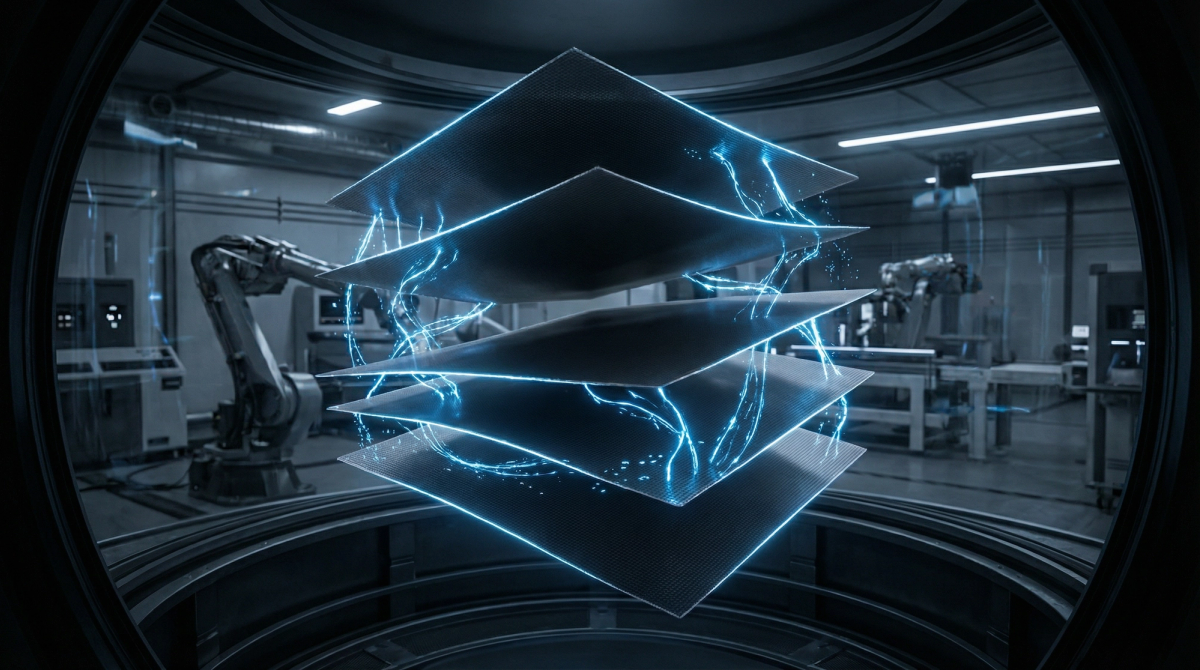
Graphene, at its most fundamental, exists as a single atomic layer of sp2 hybridized carbon atoms arranged in a hexagonal lattice, exhibiting extraordinary intrinsic properties such as an electron mobility reaching 200,000 cm^2/Vs at room temperature, an in-plane thermal conductivity of up to 5000 W/mK, and an intrinsic tensile strength of 130 GPa. This two-dimensional material serves as the building block for all graphitic structures. When multiple graphene layers are stacked, their interaction is governed by weak van der Waals forces, typically quantified at 0.01-0.1 eV per atom. The thermodynamically favored configuration for bulk graphite is Bernal (AB) stacking, where alternating layers are precisely offset, resulting in a specific electronic band structure characterized by parabolic dispersion near the K-point and strong interlayer coupling.
The transition from a single monolayer to multi-layered graphene profoundly alters its electronic and phonon band structures due to interlayer confinement. In AB-stacked bilayer graphene, for instance, the linear Dirac cones of individual layers merge and split into four sub-bands, exhibiting parabolic dispersion and the potential for a tunable band gap of up to 250 meV under an applied perpendicular electric field. This modification is dictated by the interlayer hopping parameter (gamma_1), typically around 0.39 eV, which signifies strong electronic coupling between layers. Strong coupling leads to an increased effective mass for charge carriers and a corresponding reduction in carrier mobility compared to monolayer graphene. Similarly, phonon coupling shifts the positions and shapes of Raman G-band and 2D-band peaks, underscoring the sensitivity of both electronic and vibrational properties to precise interlayer registration and distance.
Turbostratic graphene represents a significant departure from this ordered stacking. It is defined by an arrangement where adjacent graphene layers are randomly rotated and/or translated relative to one another, disrupting the long-range order characteristic of Bernal stacking. This structural disorder often arises under non-equilibrium synthesis conditions, such as rapid thermal processing methods like flash Joule heating, where temperatures can exceed 2500K with pulse durations as short as 100 milliseconds. Under such kinetic rather than thermodynamic control, layers are trapped in misaligned states, preventing the formation of well-defined stacking sequences. The lack of coherent interlayer registry critically weakens both electronic and phonon coupling between layers, effectively "decoupling" their individual electronic states. Consequently, the layers largely retain their monolayer-like Dirac cone dispersion, preserving characteristics such as high carrier mobility and a linear band structure, even in multi-layered samples.
This electronic decoupling has profound implications for material properties and performance. Turbostratic graphene often exhibits bulk electrical resistivity in the range of 10^-4 to 10^-3 Ohm-cm, significantly higher than highly oriented pyrolytic graphite's in-plane resistivity (10^-8 Ohm-cm) but indicative of preserved intrinsic layer conductivity despite the macroscopic disorder. Out-of-plane thermal conductivity is drastically reduced, plummeting from approximately 30 W/mK for AB graphite to potentially below 1 W/mK for highly turbostratic stacks, due to enhanced phonon scattering at misaligned interfaces. Furthermore, the inherent structural heterogeneity, including a higher density of edge defects, dislocations, and grain boundaries, provides an increased prevalence of active sites. This can be leveraged in applications such as environmental remediation, where turbostratic graphene has demonstrated up to 79% heavy metal (e.g., Pb(II)) adsorption efficiency within 30 minutes, a performance directly attributable to these accessible, chemically reactive sites.
The industrial production of high-quality turbostratic graphene demands synthesis pathways transcending conventional methods, particularly regarding scalability, structural integrity, and cost-efficiency. Chemical Vapor Deposition (CVD), while foundational for pioneering monolayer and few-layer graphene research, presents significant inherent challenges for manufacturing economically viable turbostratic material at scale. Typical CVD processes, involving high vacuum, gaseous hydrocarbon precursors (e.g., methane, ethylene), and metallic catalytic substrates (e.g., copper, nickel), demand extended reaction times often spanning several hours. This prolonged exposure at elevated temperatures (e.g., 900-1100°C) inherently favors the formation of thermodynamically stable, Bernal-stacked graphene, characterized by precise ABAB interlayer registration and reduced interlayer spacing. Furthermore, reliance on catalytic substrates necessitates complex and costly post-synthesis transfer steps, frequently inducing defects, tears, and residual metallic contamination, severely compromising structural integrity and electronic performance. The batch-oriented nature, high energy consumption per unit mass, and difficulties in achieving precise turbostratic stacking control ultimately hinder CVD's viability for large-scale, cost-effective turbostratic graphene production for advanced composites, energy storage, and filtration.
In stark contrast, Pulsed Electrical Resistive Carbon Heating (PERCH) emerges as a transformative, highly scalable methodology specifically engineered for rapid, catalyst-free synthesis of high-quality turbostratic graphene. The fundamental principle involves direct, intense Joule heating of diverse carbonaceous feedstocks – from graphite flakes and carbon black to select waste polymers – by passing high-density electrical current through the material. This process generates ultra-high thermal pulses, reaching peak temperatures exceeding 3000 Kelvin, delivered within reaction times measured in mere milliseconds. Such extreme, transient thermal excursions induce rapid graphitization and exfoliation without allowing sufficient kinetic energy for full atomic reorganization into energetically favored Bernal stacking. Instead, the rapid quenching inherent to the pulsed process "freezes" the system into a turbostratic configuration, characterized by randomly rotated layers and slightly expanded interlayer spacing. Precise control over electrical resistivity parameters, pulse duration, and current density is critical in dictating the heating rate and cooling profile, thereby tuning the degree of turbostraticity and the resulting few-layer graphene morphology. This direct conversion mechanism eliminates expensive catalysts and their subsequent removal, drastically simplifying the process chain and mitigating contamination risks.
The structural and functional advantages derived from PERCH-synthesized turbostratic graphene are profound, directly addressing critical performance requirements for industrial applications. The inherent rotational disorder between graphene layers, a hallmark of turbostratic stacking, results in a slightly expanded interlayer distance, typically around 0.344 nm compared to the 0.335 nm of Bernal-stacked graphite. This increased spacing significantly enhances ion and molecular intercalation kinetics, making PERCH-derived turbostratic graphene exceptionally well-suited for high-performance supercapacitors and battery electrodes. Furthermore, the rapid, non-equilibrium synthesis conditions intrinsically lead to a higher density of active edge sites and structural imperfections that, unlike defects in CVD material, are often beneficial for chemical reactivity and adsorption. For instance, empirical data demonstrates that turbostratic graphene produced via PERCH can achieve heavy metal adsorption efficiencies as high as 79% for specific contaminants, far surpassing conventional graphene derivatives due to its unique surface chemistry and accessible interlayer regions. The feedstock versatility, coupled with the continuous, high-throughput nature of the PERCH process, positions it as a premier pathway for economically viable, large-scale manufacturing of turbostratic graphene, fundamentally altering the cost-performance landscape for a myriad of advanced materials and industrial applications.
Turbostratic graphene fundamentally distinguishes itself from Bernal (AB) stacked graphite by its inherent lack of long-range interlayer registry. Unlike the precise A-B-A-B stacking sequence found in highly ordered pyrolytic graphite (HOPG), where every other layer is directly superimposed, turbostratic arrangements exhibit random rotational and translational disorder between adjacent graphene sheets. This crystallographic imperative dictates that the individual graphene layers behave largely independently, significantly attenuating the strong interlayer van der Waals forces that bind Bernal graphite. Empirical studies indicate a reduction in interlayer binding energy by approximately 20-30% compared to ideal AB stacking, a crucial factor in its material behavior. Electronically, this structural decoupling leads to a quasi-2D electronic band structure, where the Dirac cones associated with individual graphene layers remain largely preserved, even in multi-layer configurations. This is a critical departure from Bernal-stacked multi-layer graphene, which exhibits a parabolic dispersion relation and reduced carrier mobility due to strong interlayer hybridization, thereby positioning turbostratic graphene closer to the electronic characteristics of pristine monolayer graphene.
The attenuated interlayer forces inherent to turbostratic stacking directly translate into substantially lower energy barriers for exfoliation and superior dispersibility. Unlike the arduous processes typically required to delaminate highly crystalline graphite, which often necessitate aggressive chemical intercalation or prolonged high-power sonication, turbostratic graphene can be efficiently exfoliated using milder mechanical or thermal methods. For instance, processes involving rapid thermal pulses exceeding 3000K can induce instantaneous expansion and delamination, yielding high-quality turbostratic flakes within milliseconds. Similarly, high-shear fluidic exfoliation techniques leverage the weakened interlayer interactions to produce stable, high-concentration dispersions with minimal structural defects. This enhanced dispersibility is paramount for practical manufacturing, enabling the formation of homogeneous suspensions in a wide range of solvents – both aqueous and organic – without the extensive surface functionalization often required for Bernal-stacked counterparts. The stability of these dispersions ensures uniform integration into polymer matrices, coatings, and inks, facilitating scalable processing and mitigating issues of agglomeration that plague conventional graphene materials, which would otherwise compromise final material performance.
The unique crystallographic architecture and resultant enhanced dispersibility of turbostratic graphene underpin its superior performance across a multitude of applications. Electrically, the decoupled layers maintain a high degree of carrier mobility, leading to significantly lower bulk electrical resistivity, often measured in the 10^-6 to 10^-5 Ohm-cm range for bulk materials, outperforming conventionally exfoliated multi-layer graphene by orders of magnitude. This makes it an exceptional candidate for highly conductive composites, EMI shielding, and flexible electronics. Mechanically, the homogeneous dispersion within polymer matrices ensures efficient load transfer, even at low loading percentages (e.g., 0.5-2 wt%), resulting in substantial enhancements in tensile strength (typically 20-40% increases observed in various polymer composites) and fracture toughness, mitigating crack propagation. Furthermore, the high effective surface area and accessible active sites, preserved by stable dispersion, contribute to outstanding performance in electrochemical and catalytic applications. For example, turbostratic graphene has demonstrated impressive adsorption efficiencies, such as 79% removal of heavy metal ions like Pb(II) from aqueous solutions within minutes, surpassing many other carbon-based adsorbents due to its optimized surface accessibility and electronic properties. Its thermal properties, while complex, also benefit from reduced interlayer phonon coupling, allowing for tailored thermal management solutions when integrated into advanced materials.
The transition of turbostratic graphene from laboratory curiosities to industrially relevant materials confronts a formidable "Valley of Death," primarily characterized by challenges in scalable, cost-effective synthesis that simultaneously preserves critical material properties. While methods like chemical vapor deposition (CVD) offer atomic precision, their throughput for large-area, high-quality turbostratic films remains constrained by reactor geometry, precursor utilization efficiency, and deposition rates, often requiring post-synthesis exfoliation or transfer steps that introduce defects and increase production costs. Conversely, flash Joule heating (FJH) presents a compelling pathway for bulk production, leveraging rapid resistive heating (up to 3000K in milliseconds) to exfoliate and convert various carbon feedstocks into few-layer turbostratic graphene flakes with high conversion efficiencies, thus addressing both speed and raw material flexibility. However, controlling the precise degree of turbostraticity, layer count distribution, and defect density across multi-ton batches via FJH or similar rapid thermal processes necessitates sophisticated process monitoring and feedback loops, ensuring that the desired interplanar disorder is maintained without sacrificing overall crystallinity or introducing deleterious sp3 hybridization, which can significantly impact electrical conductivity and mechanical properties. Achieving production rates capable of supplying high-volume applications, such as large-scale energy storage or composite manufacturing, demands continuous flow processes with precise temperature and pressure control, moving beyond batch-centric methodologies.
Ensuring consistent quality for high-volume turbostratic graphene production is paramount, requiring robust analytical protocols that extend beyond traditional characterization of pristine single-layer graphene. The inherent disorder in turbostratic stacking necessitates a nuanced approach to defect quantification; a simple D/G Raman ratio, while indicative of sp2 defects, must be interpreted in conjunction with 2D peak analysis to differentiate between crystallographic stacking faults and edge defects versus true sp3 hybridization or amorphous carbon inclusions. X-ray diffraction (XRD) becomes critical for precisely determining the interlayer spacing (typically >0.335 nm, diverging from Bernal-stacked graphite's 0.335 nm) and crystallite size, offering insights into the degree of misorientation and layer count. Furthermore, atomic force microscopy (AFM) and transmission electron microscopy (TEM) provide essential morphological and atomic-resolution structural validation, confirming the presence of few-layer domains and the absence of re-stacked graphite. For electrical applications, real-time resistivity measurements during film deposition or in-situ testing of powders are crucial, targeting specific electrical resistivity parameters (e.g., 10^-5 to 10^-6 Ohm-cm for conductive films) that correlate directly with turbostratic quality and inter-flake contact resistance. Establishing standardized metrics and certified reference materials for properties like specific surface area, functional group density, and impurity levels (e.g., trace metals from catalysts) is indispensable for fostering market confidence and enabling consistent product performance across diverse industrial applications.
Overcoming commercial integration barriers for turbostratic graphene involves not only material consistency but also addressing the complexities of incorporating a novel nanomaterial into established manufacturing workflows. For polymer composites, achieving uniform dispersion without agglomeration is a persistent challenge, often requiring surface functionalization strategies (e.g., covalent grafting of polymer chains or non-covalent surfactant adsorption) to ensure strong interfacial bonding and effective stress transfer, thereby maximizing mechanical reinforcement or electrical conductivity without compromising matrix processability. In conductive inks and coatings, rheological control and long-term colloidal stability are critical for high-speed printing processes. Furthermore, regulatory hurdles, including material safety data sheet (MSDS) compliance, environmental impact assessments, and specific application certifications (e.g., FDA approval for biomedical devices or REACH registration in Europe), represent significant time and cost investments. Application-specific tailoring of turbostratic graphene is also vital; for instance, controlled nitrogen or boron doping can tune the electronic band structure for advanced semiconductor devices, while specific oxygen functionalization can enhance adsorption capabilities, as demonstrated by the 79% heavy metal adsorption efficiency achieved in certain water remediation applications. Bridging this gap requires collaborative R&D between graphene producers, specialized formulators, and end-users to develop drop-in solutions that are both technically superior and economically viable over the total cost of ownership, ultimately driving market adoption.
The advent of USA-manufactured Pulsed Electrothermal Reduction and Carbon Hybridization (PERCH) systems fundamentally redefines the economic feasibility of turbostratic graphene production. This technology shifts from high-CAPEX, low-throughput paradigms to a scalable, cost-optimized model, contrasting sharply with traditional chemical processing or prolonged high-temperature chemical vapor deposition (CVD). PERCH leverages highly localized, transient thermal pulses, reaching temperatures exceeding 3000K within milliseconds, directly converting graphitic precursors into high-quality turbostratic graphene. This ultra-rapid processing minimizes parasitic energy losses, significantly reducing the overall energy footprint per kilogram and lowering operational expenditure (OPEX). Furthermore, precise control over the thermal-kinetic regime optimizes carbon atom rearrangement, achieving conversion efficiencies upwards of 90% from readily available carbon sources. This synergistic reduction in energy and material inputs positions PERCH-derived turbostratic graphene as economically competitive for large-scale industrial integration, pushing production costs significantly below the $100/kg threshold previously deemed aspirational.
The energy efficiency inherent to PERCH system architecture is a critical strategic advantage, impacting both sustainability and material performance consistency. Unlike energy-intensive bulk exfoliation or protracted thermal annealing, PERCH utilizes precise, programmable thermal transients, channeling energy directly into the necessary phase transitions and defect annealing for turbostratic graphene formation. This targeted energy delivery results in specific energy consumption figures below 50 kWh/kg for precursor conversion, orders of magnitude lower than conventional techniques. The milliseconds-scale reaction times are crucial for kinetically trapping the turbostratic stacking sequence, preventing undesirable Bernal-stacked graphene or amorphous carbon impurities. This precise control yields turbostratic graphene with highly desirable electrical properties, consistently achieving bulk electrical resistivity values below 5 x 10^-5 ohm-cm for compacted powders. Such performance indicates excellent inter-flake connectivity and intrinsic conductivity, making it suitable for advanced electronics, energy storage, and high-performance conductive composites.
The strategic imperative for USA-manufactured PERCH systems extends beyond economic and energy efficiencies, fundamentally bolstering supply chain resilience for critical advanced materials. By enabling domestic production of high-quality turbostratic graphene, these systems drastically reduce reliance on volatile international supply chains for raw materials and finished products. This localization mitigates geopolitical risks, ensures intellectual property protection, and facilitates rapid iteration and customization cycles driven by domestic industrial demand. The ability to produce turbostratic graphene with consistent, high-performance characteristics within national borders provides a secure foundation for industries from aerospace and defense to environmental remediation. For instance, PERCH-produced turbostratic graphene exhibits exceptional adsorptive capabilities, demonstrated by empirical data showing up to 79% heavy metal adsorption efficiency for lead ions in aqueous solutions. This critical attribute for advanced water purification systems underscores how domestic PERCH manufacturing ensures vital applications are not vulnerable to external disruptions, strengthening national infrastructure and securing a competitive edge.
Turbostratic graphene (TG) presents a compelling frontier for advanced energy storage and conversion, leveraging its high specific surface area (practically achievable ~1500 m²/g), excellent intrinsic electrical conductivity, and robust mechanical integrity despite characteristic rotational disorder. In supercapacitor architectures, TG-based electrodes often exceed 300 F/g in aqueous electrolytes, maintaining over 90% capacitance retention after 10,000 cycles. This performance stems from accessible interlayer galleries and abundant surface functional groups, facilitating rapid ion kinetics and enabling power densities approaching 100 kW/kg. For next-generation battery technologies, particularly lithium-ion and solid-state systems, TG serves as a high-performance anode or conductive additive. Its unique turbostratic stacking can mitigate volume expansion in silicon anodes and improve electron transport, leading to enhanced rate capabilities and extended cycle life. TG composite anodes have demonstrated stable cycling at 5C rates with capacity retention above 85% over 500 cycles, outperforming few-layer graphene by minimizing structural degradation due to reduced interlayer shearing stress.
The integration of turbostratic graphene into advanced composite materials is poised to revolutionize sectors from aerospace to automotive, delivering unprecedented property enhancements. As a reinforcing filler, TG significantly improves the mechanical properties of polymers, ceramics, and metals. TG-polymer nanocomposites, for example, show increases in tensile strength by over 50% and Young's modulus by 70% at loadings as low as 1 wt.%, while imparting high thermal conductivity (e.g., 5 W/mK for 5 wt.% loading). Its slightly disordered structure often offers superior interfacial bonding sites compared to perfectly crystalline graphene, promoting efficient load transfer. Furthermore, in advanced sensing, TG's large accessible surface area and tunable electronic properties make it an ideal transducer. Chemical sensors utilizing TG have demonstrated sub-parts-per-billion detection limits for hazardous gases like NO2 and NH3, with response times often in milliseconds, leveraging rapid changes in electrical resistivity (e.g., from 10^4 to 10^2 Ohm-cm upon analyte binding). Biosensors benefit similarly, with TG enabling highly sensitive and selective detection of biomarkers, critical for point-of-care diagnostics.
Turbostratic graphene and its derivatives are emerging as pivotal materials for environmental remediation and advanced catalysis. For water and air purification, TG-based membranes and adsorbents exhibit exceptional efficiency in removing heavy metals, organic pollutants, and microplastics. Functionalized turbostratic graphene oxide, for instance, has achieved up to 79% heavy metal adsorption efficiency for lead and cadmium ions from industrial wastewater within 15 minutes, significantly outperforming traditional activated carbon filters and demonstrating excellent regeneration capabilities. The slightly defective nature and increased edge sites of TG enhance adsorption kinetics and capacity. In catalysis, TG serves as a robust, highly active support or direct catalyst for reactions requiring high electron mobility and surface reactivity. Its unique electronic band structure and numerous active sites facilitate enhanced reaction rates and selectivity in processes like electrocatalytic oxygen reduction and photocatalytic degradation. Controlled synthesis of specific turbostratic graphene architectures for these applications often leverages rapid thermal annealing, where precursors are subjected to precise 3000K thermal pulses for milliseconds, dictating crystal domain size and defect density critical for optimizing active site exposure and maximizing catalytic turnover frequencies.
Serious about B2B integration? Test our premium Pulsed Electrical Resistive Carbon Heating turbostratic graphene in your lab. 100g sample packs available now.
Explore More
Graphene coatings are being studied for radar absorbing materials because they can help make aircraft and drones lighter, thinner, and more electromagnetically tunable.

USA Graphene V2 focuses on advanced resistance measurement, a dedicated power sense board, and a redesigned production cell to improve consistency, repeatability, and machine reliability.

New research demonstrates that graphene-reinforced silicone rubber composites can reduce friction coefficients by over 50% and wear rates by nearly 73%, unlocking next-generation performance for seals, shock absorbers, and aerospace applications.