
AI-Powered Characterization of Twisted Bilayer Graphene and 2D Materials
Learn how deep learning is revolutionizing the structural characterization of twisted bilayer materials, accelerating the development of next-generation...
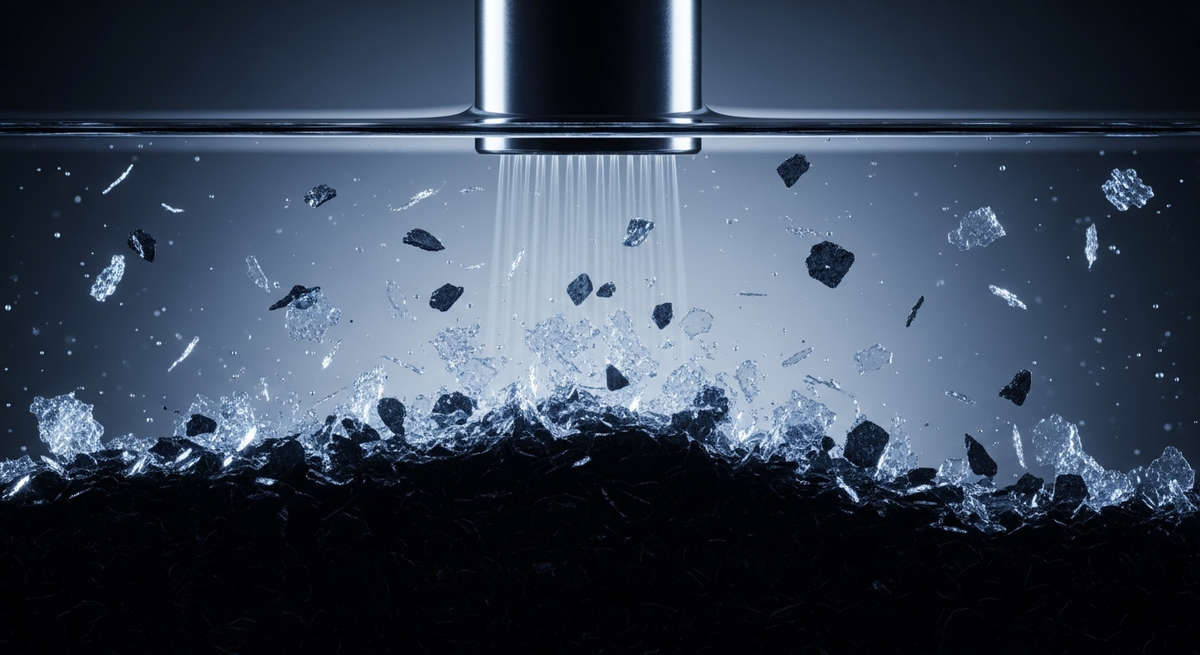
Graphene, the extraordinary single-atom-thick material derived from graphite, has captivated the scientific and industrial world with its unparalleled properties. From exceptional electrical conductivity and mechanical strength to remarkable transparency and thermal properties, graphene promises to revolutionize fields ranging from advanced electronics and energy storage to biomedicine and composites. However, harnessing its full potential hinges on the ability to produce it reliably, cost-effectively, and at scale.
While techniques like chemical vapor deposition (CVD) yield high-quality graphene, their scalability and cost often present significant hurdles for mass production. This is where wet chemical graphene production emerges as a game-changer. By leveraging chemical reactions and physical forces in liquid environments, these methods offer versatile, scalable, and low-cost pathways to synthesize both pristine graphene and its highly adaptable precursor, graphene oxide (GO). Furthermore, the precise characterization of these materials using advanced spectroscopic techniques is paramount to ensure quality and unlock specific applications.
Graphene is fundamentally a quasi-two-dimensional (2D) material composed of sp2 hybridized carbon atoms arranged in an intricate honeycomb lattice. This unique atomic arrangement gives rise to its exceptional electronic and mechanical characteristics, including a delocalized network of π electrons. Depending on the number of layers, graphene can be categorized as single-layer graphene (SG), bilayer graphene (BG), or few-layer graphene (FG), typically defined as having 10 or fewer layers.
The inherent challenge in producing graphene from its bulk form, graphite, lies in overcoming the strong van der Waals forces that bind the π-stacked layers together. These forces, quantified at approximately 5.9 kJ mol−1 carbon, demand significant energy input for exfoliation. To address this, wet chemical graphene production strategies have been developed, primarily focusing on two routes: direct exfoliation of graphite into graphene sheets or the chemical conversion of graphite to graphite oxide, followed by exfoliation and subsequent reduction to graphene.
Several wet chemical methods for graphite exfoliation have been established. These include traditional chemical oxidation processes, such as the well-known Hummers and Offeman, Brodie, and Staudenmaier methods, which produce GO. Other approaches involve intercalation with alkali metal ions and surfactants to weaken interlayer bonds, solvent/surfactant stabilized ultrasonication for direct exfoliation, and liquid-phase exfoliation utilizing specific organic solvents. Each method offers distinct advantages in terms of scalability, quality, and functionalization potential, making wet chemistry a cornerstone of modern graphene synthesis.
For applications demanding high-quality graphene without the extensive oxidative defects often associated with GO reduction, direct liquid-phase exfoliation of graphite in organic solvents has gained significant traction. This method addresses two critical limitations of other techniques: the non-scalability of micromechanical cleavage for industrial settings and the intrinsic damage caused by oxidative processes during GO production. By avoiding harsh chemical treatments, liquid-phase exfoliation aims to yield graphene with structural integrity closer to that of pristine material.
Pioneering work in the late 2000s demonstrated the efficacy of ultrasonication to exfoliate bulk graphite into SG and FG flakes in various organic solvents. Researchers like Blake et al. and Hernandez et al. showed that natural graphite could be effectively exfoliated by ultrasonication for extended periods, often exceeding 3 hours in solvents such as dimethylformamide (DMF). Subsequent centrifugation then allows for the isolation of stable dispersions containing submicron-sized graphene flakes, ready for downstream applications.
The success of solvent-assisted exfoliation hinges on a critical principle: the surface energy of the solvent must closely match that of graphene. This energetic balance allows the solvent molecules to efficiently intercalate between the graphite layers and overcome the van der Waals forces, stabilizing the exfoliated graphene sheets. A diverse range of organic solvents has been identified for this purpose, including N-methylpyrrolidone (NMP), N,N-dimethylacetamide (DMAc), gamma-Butyrolactone, 1,3-Dimethyl-2-imidazolidinone, benzyl benzoate, cyclopentanone, benzylamine, ortho-dichlorobenzene, and various fluorinated solvents. The selection of the optimal solvent is crucial for achieving high yields and stable graphene dispersions.
While direct exfoliation yields high-quality graphene, graphene oxide (GO) stands as an incredibly versatile intermediate, offering a highly scalable and adaptable pathway to graphene and its derivatives. The presence of numerous oxygen-containing functional groups on GO's surface — such as hydroxyl, epoxy, carboxyl, and carbonyl groups — renders it hydrophilic and amenable to diverse chemical modifications and processing in aqueous solutions. This makes GO an ideal precursor for large-scale production, enabling facile dispersion, film formation, and subsequent reduction to reduced graphene oxide (rGO).
The wet chemical production of GO primarily falls into four distinct categories. The most prevalent involves the direct oxidation of graphite to GO, a method that has been refined over a century. Another innovative route is the unzipping of carbon nanotubes (CNTs), which can yield GO nanoribbons with unique edge characteristics. Furthermore, GO can be synthesized via the use of intercalating agents, including organic molecules, solvents, and ionic liquids, which facilitate the separation of graphite layers before oxidation. Finally, bottom-up synthesis methods, such as hydrothermal carbonization (HTC), offer alternative controlled approaches to GO production.
The historical backbone of graphite oxidation relies on methods developed by Hummers and Offeman, Brodie, and Staudenmaier. The Hummers and Offeman method, in particular, has become the industry standard due to its relative simplicity and efficiency, typically employing strong oxidizers like potassium permanganate and sulfuric acid. However, this method can generate toxic gases and requires careful control. Subsequent advancements have led to improved/modified Hummers methods, which often incorporate safer reagents or modified reaction conditions to enhance yield, reduce environmental impact, and minimize structural defects in the resulting GO, making it a cornerstone for scalable wet chemical graphene production.
Beyond the conventional oxidation techniques, the synthesis of graphene oxide (GO) has evolved to include sophisticated methods that leverage intercalation and bottom-up assembly, offering greater control over GO's structural and chemical properties. GO synthesis via intercalating agents represents a crucial strategy to overcome the strong van der Waals forces between graphite layers. By introducing various molecules—such as organic solvents, ionic liquids, or even small organic molecules—between the graphite sheets, the interlayer spacing is increased, making the subsequent oxidation and exfoliation processes more efficient and less aggressive.
These intercalating agents effectively pre-exfoliate the graphite, creating pathways for oxidizing agents to penetrate more uniformly, leading to a more consistent oxidation profile. This approach can result in GO with fewer defects and a more homogeneous distribution of functional groups, which is critical for applications requiring precise control over GO's chemical reactivity and electronic properties. The choice of intercalating agent profoundly influences the swelling behavior of graphite and the final characteristics of the GO produced.
Another intriguing approach to GO fabrication is GO synthesis via unzipping of carbon nanotubes (CNTs). This technique involves longitudinally cutting open the walls of multi-walled or single-walled carbon nanotubes, effectively transforming their tubular structure into flat, ribbon-like GO sheets. This method is particularly valuable for producing GO nanoribbons, which possess distinct edge states and quantum confinement effects that are not easily achievable through traditional graphite oxidation. The unzipping process often involves strong oxidizing agents or electrochemical methods, carefully controlled to ensure the desired morphology.
Furthermore, bottom-up synthesis of GO via hydrothermal carbonization (HTC) offers a distinct pathway, diverging from the exfoliation of bulk graphite. In HTC, carbohydrate precursors (e.g., glucose, sucrose) are subjected to high temperatures and pressures in an aqueous environment, leading to the formation of carbonaceous nanospheres. Subsequent oxidation of these spheres can yield GO, often with unique structural features and tunable sizes. This method provides an alternative for creating GO with tailored properties, potentially bypassing some of the challenges associated with graphite source materials and enabling the use of renewable biomass feedstocks for sustainable graphene-related material production.
The ultimate utility of any graphene or graphene oxide (GO) material produced via wet chemical graphene production hinges on its precise characterization. Spectroscopic techniques are indispensable tools, providing crucial insights into material structure, defect density, oxidation state, and layer number. These analyses are critical for quality control, optimizing synthesis parameters, and understanding the suitability of materials for specific applications.
Raman spectroscopy is arguably the most powerful and widely used technique for characterizing carbon-based materials, including graphene and GO. It provides invaluable information about the electronic and vibrational properties, allowing researchers to determine the number of layers, identify structural defects, and assess the quality of the graphene lattice. Key features in the Raman spectrum include the G band (around 1580 cm⁻¹), corresponding to the in-plane vibration of sp2 carbon atoms, and the 2D band (around 2700 cm⁻¹), which is sensitive to the stacking order and number of graphene layers. For GO and reduced graphene oxide (rGO), the presence and intensity of the D band (around 1350 cm⁻¹), associated with defects and disorder, along with the D/G intensity ratio, serve as critical indicators of oxidation level and the restoration of sp2 domains after reduction.
Ultraviolet-Visible (UV-Vis) spectroscopy is another vital technique, particularly useful for monitoring the dispersion stability and concentration of graphene and GO in solutions, as well as probing their electronic transitions. Graphene typically exhibits a broad absorption across the UV-Vis range, with a characteristic peak around 270 nm for exfoliated sheets, corresponding to the π-π transitions of the sp2 carbon network. GO, due to its oxygen functional groups, shows a distinct absorption peak around 230 nm (also attributed to π-π transitions) and a shoulder around 300-350 nm, which arises from n-π* transitions of carbonyl groups. Monitoring these spectral changes allows for the assessment of oxidation and reduction processes.
Finally, Fourier Transform Infrared (FTIR) spectroscopy is essential for identifying and quantifying the various oxygen-containing functional groups present in graphene oxide (GO) and for confirming their removal during the reduction to reduced graphene oxide (rGO). FTIR spectra of GO typically display characteristic absorption bands corresponding to hydroxyl (O–H stretching, ~3400 cm⁻¹), carboxyl (C=O stretching, ~1730 cm⁻¹; O–H bending, ~1400 cm⁻¹), epoxy (C–O stretching, ~1220 cm⁻¹), and alkoxy (C–O stretching, ~1050 cm⁻¹) groups. By tracking the disappearance or reduction in intensity of these bands, FTIR provides direct evidence of the effectiveness of reduction protocols and the chemical evolution of the material, offering a comprehensive fingerprint of the GO's functionalization state.
Q1: What is wet chemical graphene production?
A1: Wet chemical graphene production encompasses a range of solution-based methods used to synthesize graphene and graphene oxide (GO) from graphite. These techniques involve chemical reactions or physical exfoliation in liquid media, offering scalable and cost-effective alternatives to other graphene manufacturing approaches by leveraging processes like oxidation, intercalation, and ultrasonication.
Q2: How do Hummers, Brodie, and Staudenmaier methods differ in GO synthesis?
A2: These are classical chemical oxidation methods for producing graphene oxide (GO) from graphite. While all involve strong oxidizing agents, they differ in specific reagents and reaction conditions, influencing the GO's oxidation level and defect density. The Hummers method is widely used today, often in modified forms, for its efficiency and scalability, typically using potassium permanganate and sulfuric acid.
Q3: Why is liquid-phase exfoliation preferred over micromechanical cleavage for scalability?
A3: Liquid-phase exfoliation is preferred for scalability because it allows for the mass production of graphene dispersions in solvents, unlike micromechanical cleavage which is a painstaking, low-yield laboratory technique. By utilizing ultrasonication and specific solvents, large quantities of graphite can be exfoliated into graphene flakes, making it suitable for industrial applications.
Q4: What role does Raman spectroscopy play in characterizing graphene and GO?
A4: Raman spectroscopy is crucial for characterizing graphene and graphene oxide (GO) as it provides detailed information on their structural integrity, defect density, and number of layers. For graphene, it helps identify the G and 2D bands, indicating quality and stacking. For GO and reduced GO, the D band and the D/G ratio are key indicators of oxidation level and restoration of sp2 carbon domains.
Q5: What are the key solvents used in ultrasonication-assisted graphite exfoliation?
A5: Key organic solvents used in ultrasonication-assisted graphite exfoliation are selected for their surface energy matching that of graphene, enabling efficient exfoliation and stabilization of dispersions. Prominent examples include N-methylpyrrolidone (NMP), N,N-dimethylacetamide (DMAc), dimethylformamide (DMF), gamma-Butyrolactone, and various fluorinated solvents, which help overcome the van der Waals forces.
The journey from bulk graphite to functional graphene and graphene oxide (GO) is a testament to the ingenuity of wet chemical graphene production. These methods provide the scalable, cost-effective, and versatile platforms necessary to unlock graphene's vast potential across countless industries. From the precision of liquid-phase exfoliation to the robust synthesis of GO via the Hummers method and its subsequent characterization by advanced spectroscopic techniques like Raman, UV-Vis, and FTIR, wet chemistry remains at the forefront of graphene innovation.
As the demand for high-quality graphene materials continues to surge, understanding and implementing these sophisticated wet chemical fabrication techniques are more critical than ever. At usa-graphene.com, we are committed to advancing the frontier of graphene science and providing researchers and industries with premium graphene and graphene oxide materials. Explore our extensive range of products and discover how our commitment to quality and innovation can support your next groundbreaking project. Visit usa-graphene.com today to learn more and partner with us in shaping the future of advanced materials.
Serious about B2B integration? Test our premium Pulsed Electrical Resistive Carbon Heating turbostratic graphene in your lab. 100g sample packs available now.
Explore More
Learn how deep learning is revolutionizing the structural characterization of twisted bilayer materials, accelerating the development of next-generation...

Learn to build a prototype graphene FET biosensor for sensitive DNA detection. This guide covers materials, fabrication, and testing for point-of-care...

Discover how hopping-mediated charge transport explains graphene's electrical behavior beyond the ideal ballistic regime, a key insight for creating...