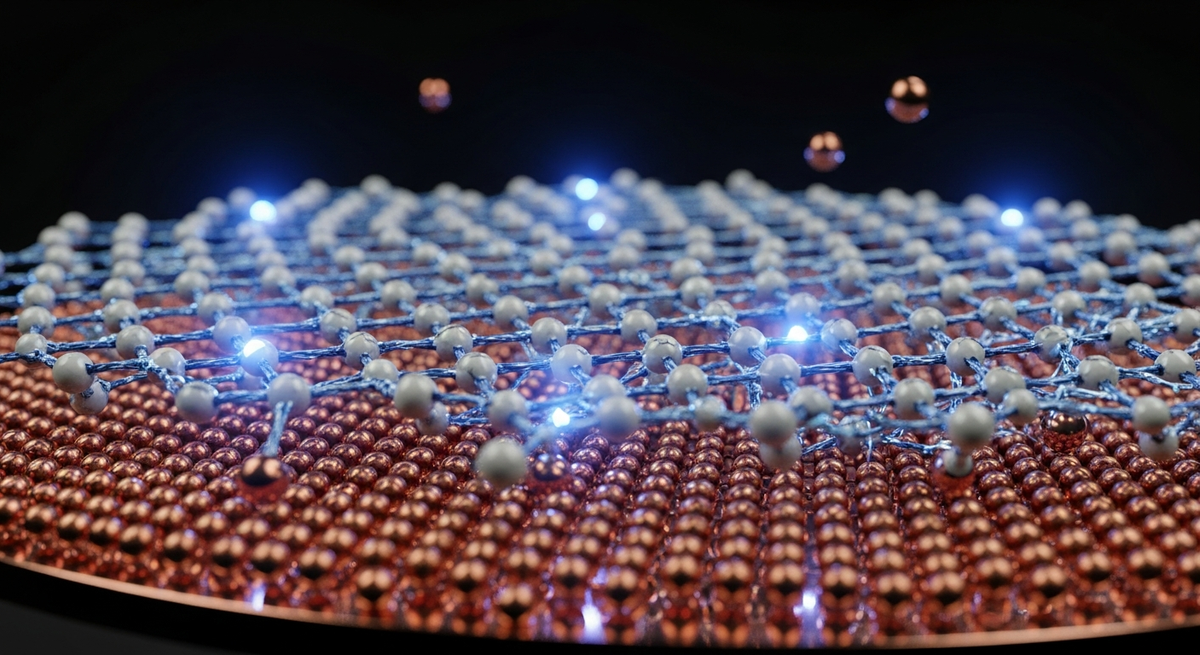
The advent of graphene, a remarkable quasi-two-dimensional material composed of a single layer of carbon atoms arranged in a honeycomb lattice, has captivated the scientific and engineering communities since its successful isolation in 2004. Its extraordinary properties, including exceptionally high electron mobility reaching up to ~200,000 cm²/Vs at room temperature, position it as a foundational material for countless next-generation applications. While initial exfoliation methods provided crucial insights into graphene's fundamental physics, they were inherently limited to producing micron-sized flakes, rendering them impractical for the industrial-scale device integration demanded by modern technology.
Addressing this critical scalability challenge, Chemical Vapor Deposition (CVD) has emerged as the most promising synthesis technique, particularly on copper (Cu) foil catalysts. CVD enables the production of large-area, monolayer graphene with impressive uniformity, a significant leap towards commercial viability. However, even with these advancements, a persistent hurdle remained: integrating high-quality graphene directly onto standard silicon (Si) wafers, the ubiquitous substrate in the semiconductor industry. Conventional CVD on copper foils, while effective, presented inherent limitations in terms of process compatibility and direct integration with existing complementary metal–oxide–semiconductor (CMOS) manufacturing lines.
This chapter delves into a groundbreaking advancement that bridges this gap: the realization of state-of-the-art, high-quality graphene through wafer-scale CVD graphene on annealed copper (Cu(111)) films deposited directly onto standard oxidized 100-mm Si wafers. This innovative approach overcomes the limitations of traditional methods by tailoring the growth characteristics of graphene on evaporated copper films, leading to unprecedented uniformity, minimal defects, and seamless integration potential. The implications for nanoelectronics, sensing, and advanced materials are profound, paving the way for a new era of graphene-enabled devices.
Setting the Stage: Graphene Synthesis Challenges and CVD's Promise
Graphene's unparalleled attributes, from its exceptional electrical conductivity and mechanical strength to its optical transparency, make it an ideal candidate for a vast array of future technologies. Researchers envision its application in high-speed transistors, flexible electronics, advanced sensors, and efficient energy storage solutions. However, translating this immense potential into tangible products necessitates a manufacturing method capable of producing large quantities of high-quality material with precise control over its properties and architecture.
Early methods, such as mechanical exfoliation, while instrumental for fundamental research, could only yield small, irregular flakes, making them unsuitable for industrial applications requiring macroscopic graphene sheets. This limitation spurred the development of alternative synthesis techniques, with CVD quickly rising to prominence. CVD involves introducing carbon-containing gases (precursors) into a reaction chamber where they decompose on a heated catalytic substrate, typically copper, forming a graphene layer. This process has successfully enabled the growth of large-area, single-layer graphene films, a significant step towards practical device fabrication.
Despite the successes of CVD on copper foils, the direct integration of graphene into existing silicon-based microelectronics remained a complex challenge. The primary issue stemmed from the need to transfer graphene from the copper foil to the target substrate, a process that often introduces defects, contamination, and reduces the intrinsic quality of the graphene. Therefore, the development of a method to grow high-quality graphene directly on silicon wafers, or on films compatible with silicon processing, became a critical imperative for the widespread adoption of graphene in advanced nanoelectronics. This is precisely where the innovation of wafer-scale CVD graphene on evaporated copper films offers a transformative solution.
The Critical Distinction: Evaporated Copper Films vs. Conventional Foils
The established method of growing graphene on conventional copper foils has proven effective for producing large-area monolayer films. However, the unique characteristics of evaporated copper films, particularly when deposited on silicon wafers, introduce distinct differences in the thermal, chemical, and physical growth characteristics of graphene compared to growth on bulk copper foils. Understanding these fundamental divergences is paramount to achieving the desired high-quality graphene directly on technologically relevant substrates.
One of the most significant distinctions lies in the phase transition behavior of the copper film. Evaporated copper films, as-deposited on standard amorphous thermal oxide on silicon (SiO2/Si), typically start in an amorphous state. Crucially, during subsequent thermal annealing, these films undergo a phase transition, evolving from an amorphous structure to a highly preferred crystalline copper (111) orientation. This annealed Cu(111) film provides an ideal catalytic surface for graphene growth, a characteristic that is not inherently present or consistently controlled in conventional polycrystalline copper foils. The formation of this specific crystal orientation was rigorously corroborated by advanced characterization techniques such as X-ray diffraction and electron backscatter diffraction, confirming its critical role in facilitating high-quality graphene growth.
Furthermore, this unique phase transition of the copper film was observed on the widely adopted 100-mm Si wafer with a standard amorphous thermal oxide, making the process inherently compatible with existing semiconductor infrastructure. This contrasts sharply with previous methods that often required single crystal epitaxial substrates like sapphire to achieve Cu(111) films, which are not cost-effective or industrially scalable for Si-based manufacturing. The specific interactions between the evaporated copper film and the silicon substrate, along with the annealing process, dictate the resulting copper crystallography, which in turn profoundly influences the subsequent graphene nucleation and growth kinetics, offering a level of control previously unattainable with conventional foils.
Achieving Unprecedented Quality: Hydrogen-Free Growth and Cu(111) Orientation
The unique substrate characteristics of evaporated copper films necessitated a re-evaluation of optimal CVD growth conditions, leading to a breakthrough in graphene quality. Contrary to conventional wisdom for graphene growth on copper foils, which often involves a precise ratio of hydrogen gas to hydrocarbon gas to balance growth and etching, the new approach on evaporated Cu(111) films revealed a different optimal pathway. The role of H2 on the annealed Cu(111) film was found to contrast significantly with conventional foils, a phenomenon first monitored by time-of-flight secondary ion mass spectroscopy (TOF-SIMS), indicating distinct chemical interactions at the surface.
This critical understanding led to the discovery that monolayer graphene with negligible defects could be obtained for the first time on vapor-deposited Cu films on standard oxidized silicon at temperatures below 900°C via thermal CVD, without the inclusion of hydrogen gas during the growth phase. This hydrogen-free growth environment, combined with the presence of the highly desirable Cu(111) crystal orientation, proved to be instrumental. The Cu(111) surface is recognized as the preferred catalytic metal due to its excellent lattice matching with graphene, exhibiting a lattice mismatch of less than 4% at 300°C. This precise lattice alignment minimizes strain and defects during graphene formation, leading to superior material quality.
Previous attempts to grow graphene on evaporated copper thin films often resulted in lower quality material, characterized by a wider 2D-peak or a reduced 2D-peak to G-peak intensity ratio (I2D/IG) in Raman spectroscopy, suggesting the presence of few-layer films, or a substantial D-peak intensity, indicative of appreciable defect density. The innovative conditions, specifically the pre-annealing to form Cu(111) and the absence of hydrogen during growth, directly address these issues. This tailored approach harnesses the specific catalytic properties of the Cu(111) surface, allowing for the controlled deposition of high-quality, single-layer graphene with significantly reduced defects, a crucial step for advanced device fabrication.
Wafer-Scale Realization: Uniformity and Defect Negligibility
The true impact of this advancement lies in its scalability and the exceptional quality achieved across large areas. The synthesis method has successfully transitioned from centimeter-sized pieces to full wafer-scale synthesis of monolayer graphene, specifically across entire 100-mm silicon wafers. This capability is a fundamental requirement for the integration of graphene into standard complementary metal–oxide–semiconductor (CMOS) processes and for the realization of very large-scale graphene nanoelectronics, where uniform, high-quality material is non-negotiable.
Comprehensive characterization, particularly through large-area Raman mapping, confirmed the outstanding material properties across the entire 100-mm wafer. The results indicated a remarkable high uniformity of graphene coverage, exceeding 97%. More impressively, the synthesized graphene exhibited immeasurable defects, with over 95% of the wafer area classified as defect-negligible. These quantitative metrics underscore the consistency and reliability of the new CVD process, demonstrating a level of control over graphene growth previously considered challenging on such large and technologically relevant substrates.
Achieving such high uniformity and low defect density at the wafer scale is a testament to the optimized growth mechanism. The precise control over the formation of the Cu(111) catalytic surface and the hydrogen-free growth environment collaboratively promote a continuous and high-quality graphene layer. This consistency across the entire 100-mm wafer eliminates variability that often plagues large-area material synthesis, making the resulting wafer-scale CVD graphene highly suitable for advanced manufacturing processes. The ability to produce such pristine graphene on an industrial scale opens doors for its widespread adoption in next-generation electronic devices, ensuring reliable performance and manufacturability.
Preserving Purity: Advanced Graphene Transfer Techniques
While the direct growth of graphene on evaporated copper films on silicon wafers represents a significant leap, the subsequent transfer of this pristine material onto various target substrates for device fabrication is equally critical. To fully leverage the intrinsic properties of the synthesized high-quality graphene, a transfer process that preserves its clean surface and electrical integrity is indispensable. Traditional transfer methods, often involving polymer supports and wet etching, can introduce residues, wrinkles, or even tears, thereby degrading the graphene's performance and introducing unwanted variability in device characteristics.
Recognizing this challenge, a novel direct etching transfer process has been recently developed in conjunction with this wafer-scale synthesis. This advanced technique is meticulously designed to minimize any potential damage or contamination during the transfer phase. By carefully controlling the etching of the underlying copper film, the graphene layer can be precisely separated and transferred while maintaining its pristine condition. This direct approach significantly reduces the exposure of graphene to harsh chemicals or mechanical stresses that could compromise its structural integrity or introduce impurities.
The objective of this sophisticated transfer method is to ensure that the transferred monolayer graphene retains its intrinsic electrical properties, which are crucial for achieving high-performance devices. A clean graphene surface, free from polymer residues or other contaminants, is essential for optimal charge transport and reliable device operation. This direct etching transfer process thus serves as a vital complement to the advanced CVD growth, ensuring that the exceptional quality achieved during synthesis is fully preserved through to the final device integration, making the entire wafer-scale CVD graphene workflow robust and industrially viable.
Real-World Impact: High-Mobility Graphene FETs
The ultimate validation of any advanced material synthesis technique lies in its ability to enable high-performance devices. The wafer-scale CVD graphene produced using this innovative method has demonstrated its profound real-world impact through the successful fabrication of high-mobility graphene field effect transistors (FETs). These devices serve as a benchmark for the material's electrical quality and its potential for integration into complex electronic systems, showcasing the practical utility of this breakthrough.
Fabricated graphene FETs on both 100-mm silicon wafers and flexible polyimide plastic substrates consistently achieved high electron mobilities. This outcome is a direct testament to the superior quality of the synthesized graphene, characterized by its high uniformity and remarkably low defect density. High electron mobility is a cornerstone property of graphene, crucial for creating fast, efficient electronic devices, and its consistent achievement across different substrates validates the versatility and robustness of the manufacturing process.
This successful demonstration on both rigid silicon and flexible plastic substrates underscores the broad applicability of this wafer-scale CVD graphene. For silicon-based electronics, it represents a pathway for direct integration into existing CMOS fabrication lines, potentially revolutionizing high-frequency electronics and advanced computing. For flexible electronics, the ability to produce high-quality graphene on polyimide opens vast opportunities in wearable devices, bendable displays, and soft robotics. The consistent high performance of these graphene FETs confirms that the challenges of scalability, quality, and integration for graphene nanoelectronics are being effectively addressed, pushing the boundaries of what is possible in next-generation technology.
SEO FAQ Section
Q1: What is the primary advantage of wafer-scale CVD graphene on evaporated copper film over traditional methods?
A1: The primary advantage is the ability to grow high-quality, uniform, and defect-negligible monolayer graphene directly on standard 100-mm silicon wafers. This overcomes the limitations of mechanical exfoliation and conventional CVD on copper foils, enabling seamless integration with existing semiconductor manufacturing processes for large-scale device fabrication.
Q2: How does the evaporated copper film achieve a Cu(111) crystal orientation?
A2: Evaporated copper films, initially amorphous when deposited on oxidized silicon wafers, undergo a critical phase transition during thermal annealing. This process transforms the film into a highly preferred crystalline Cu(111) orientation, which is essential for providing the optimal catalytic surface with good lattice matching for high-quality graphene growth.
*Q3: Why is hydrogen gas excluded during the growth phase in this advanced CVD method?
A3: Unlike conventional CVD on copper foils, where hydrogen often plays a role in balancing growth and etching, this advanced method on annealed Cu(111) films achieves optimal results without* hydrogen gas during the growth phase. This unexpected observation stems from the unique thermal, chemical, and physical growth characteristics of graphene on evaporated Cu(111) films, as monitored by TOF-SIMS.
Q4: What metrics confirm the high quality and uniformity of the graphene produced?
A4: The high quality and uniformity are confirmed by large-area Raman mapping, which showed over 97% coverage of monolayer graphene across the 100-mm wafer. Furthermore, the material exhibited immeasurable defects, with more than 95% of the area being defect-negligible, demonstrating exceptional consistency and structural integrity.
Q5: What are the key applications enabled by this wafer-scale graphene synthesis?
A5: This wafer-scale graphene synthesis enables a wide range of applications, particularly in next-generation nanoelectronics and nanotechnology. It facilitates direct integration into CMOS processes, leading to high-mobility graphene field effect transistors on both silicon wafers and flexible polyimide substrates, opening doors for advanced computing, flexible displays, and sensors.
Conclusion
The journey to unlock graphene's full potential for industrial applications has been marked by significant scientific and engineering challenges, particularly in achieving scalable, high-quality synthesis compatible with existing semiconductor infrastructure. This detailed exploration of wafer-scale CVD graphene on evaporated copper films on silicon wafers highlights a pivotal breakthrough, addressing these very challenges head-on. By leveraging the unique phase transition of evaporated copper to form a pristine Cu(111) catalytic surface and optimizing growth conditions to be hydrogen-free at temperatures below 900°C, researchers have achieved unprecedented uniformity (>97% coverage) and defect-negligibility (>95%) across entire 100-mm wafers.
This innovation not only provides a robust method for producing large-area, high-quality monolayer graphene but also integrates seamlessly with standard CMOS processes, paving the way for the next generation of nanoelectronics. The successful fabrication of high-mobility graphene field effect transistors on both rigid silicon and flexible polyimide substrates unequivocally demonstrates the practical viability and transformative potential of this advanced manufacturing technique. As the demand for faster, smaller, and more efficient electronic components continues to grow, wafer-scale CVD graphene stands ready to revolutionize industries from advanced computing to flexible and wearable technologies.
For more in-depth information on cutting-edge graphene materials, innovative synthesis techniques, and their applications across various industries, we invite you to explore the extensive resources available on usa-graphene.com. Discover how our commitment to scientific excellence and advanced manufacturing is driving the future of graphene technology. Visit usa-graphene.com today to learn more about how our high-quality graphene solutions can empower your next innovation.