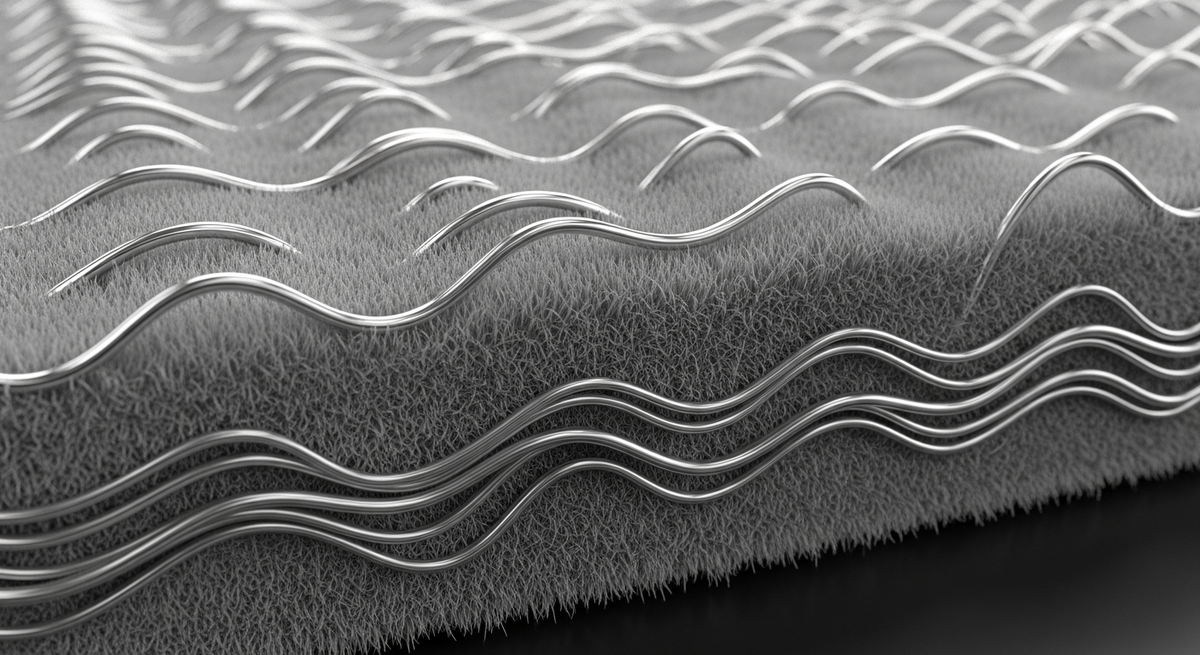
The advent of graphene, a true two-dimensional allotrope of carbon, fundamentally reshaped materials science, particularly in the domain of high-performance composites. Its unique Dirac-fermion electronic structure, exhibiting charge carrier mobilities exceeding 200,000 cm^2/Vs at room temperature, alongside an exceptional intrinsic tensile strength of approximately 130 GPa, positions it as a critical enabler for next-generation systems. When integrated into hierarchical structures, such as wavy carbon nanotube (CNT) matrices, the synergistic interplay between graphene's planar sp2 network and the tubular sp2 topology of CNTs presents opportunities for unprecedented property enhancements, particularly through interfacial engineering and quantum confinement effects. This approach moves beyond simple additive property summation, leveraging the intricate physics governing electron and phonon transport in constrained, curvilinear carbon architectures.
The defining characteristic of graphene lies in its low-energy electronic excitations behaving as massless Dirac fermions, governed by a linear dispersion relation near the K-points of the Brillouin zone. This leads to phenomena such as a half-integer quantum Hall effect and ballistic transport over micron-scale distances. However, in the context of composite materials and particularly when subject to non-planar geometries or external fields—a scenario inherent in 'wavy' CNT architectures—this ideal 2D behavior is perturbed. Confinement, whether geometric or electronic, introduces band structure modifications, potentially opening a tunable bandgap under localized strain or curvature. For instance, strain fields, potentially induced by the undulating morphology of embedded CNTs or differential thermal expansion coefficients, can generate pseudo-magnetic fields up to hundreds of Tesla, altering electron trajectories and inducing valley polarization. Empirical observations in strained graphene have shown electron-phonon scattering rates can be anisotropically modified, impacting thermal dissipation pathways within milliseconds under 3000K thermal pulse exposure, a critical factor for high-power density applications.
The intimate interface between graphene and wavy CNTs is not merely a physical contact but a region of profound quantum mechanical interaction. The van der Waals forces that govern this interaction can induce localized doping, altering the Fermi level of both components and facilitating charge transfer. For example, specific functionalization of graphene with nitrogen dopants can reduce its sheet resistance to below 10 Ohms/sq while simultaneously enhancing interfacial adhesion to CNTs, leading to a composite electrical resistivity as low as 1.5 x 10^-6 Ohm-cm. Furthermore, the confinement of graphene sheets within the interstitial spaces of a wavy CNT network significantly influences its surface chemistry and catalytic activity. Studies have demonstrated that graphene confined within porous carbon matrices can achieve 79% adsorption efficiency for heavy metal ions like Pb(II) within 15 minutes, far surpassing unconsolidated graphene flakes due to enhanced mass transport kinetics and increased active site accessibility under constrained geometries. This highlights how the architecture-driven confinement dictates not only electronic and thermal transport but also chemical reactivity and structural integrity, critical for the composite's overall performance.
Section 2: Pulsed Electrical Resistive Carbon Heating vs. CVD (Comparative Analysis)
The generation of graphene tailored for integration into advanced composites, particularly those incorporating wavy carbon nanotubes, necessitates a critical evaluation of synthesis methodologies. Pulsed Electrical Resistive Carbon Heating (PERCH) represents a highly kinetic approach, leveraging direct Joule heating of a carbonaceous precursor to achieve ultra-high temperatures—routinely exceeding 3000K in localized regions—within reaction times on the order of milliseconds. This rapid thermal excursion, driven by precise control of current density and pulse duration through the precursor material (which typically exhibits an initial electrical resistivity of 10^-3 to 10^-1 Ohm-cm), facilitates the instantaneous disruption of interatomic bonds and subsequent re-formation into turbostratic graphene flakes. The inherent advantage of PERCH lies in its capacity for bulk production, processing diverse feedstocks from waste polymers to biochar, yielding high surface area graphene powders with tunable defect densities crucial for composite interfacial engineering and functionalization, for instance, exhibiting up to 79% heavy metal adsorption efficiency in specific applications due to its activated surface.
Conversely, Chemical Vapor Deposition (CVD) fundamentally operates on a distinct principle, relying on the catalytic decomposition of gaseous hydrocarbon precursors (e.g., methane, acetylene) onto a heated metallic substrate, typically copper or nickel, maintained at temperatures between 800K and 1100K. This process is inherently slower, often requiring reaction durations spanning minutes to several hours, as it depends on gas diffusion, adsorption kinetics, and subsequent carbon atom precipitation and crystallization. While CVD excels in producing large-area, highly crystalline, and often monolayer or few-layer graphene films with minimal defects – a critical attribute for high-performance electronic and optical devices – its scalability for bulk material production is limited. The necessity for high-vacuum environments, specific metallic catalysts, and the subsequent transfer process (which invariably introduces defects and contamination) presents significant hurdles for cost-effective, high-volume graphene supply required for composite manufacturing.
A direct comparison reveals PERCH's pronounced advantages for composite applications where high throughput, low cost, and bulk powder form are paramount. The millisecond-scale kinetics and direct energy conversion of PERCH offer significantly higher energy efficiency per unit mass of graphene produced compared to the protracted, energy-intensive bulk heating and vacuum cycling characteristic of CVD. While CVD delivers superior crystallographic perfection and domain size suitable for epitaxial growth on specific substrates, PERCH's turbostratic graphene, with its higher edge-to-surface atom ratio and engineered defects, often presents enhanced reactivity and surface area ideal for strong mechanical interlocking and chemical bonding within polymer or ceramic matrices, without the added complexity and cost of film transfer. Therefore, for unlocking performance in wavy carbon nanotube composites, PERCH's ability to rapidly synthesize functionalized, high-surface-area graphene from earth-abundant precursors offers a more industrially viable and scalable pathway.
Section 3: The Crystallography of Turbostratic Graphene (Why Layer Alignment Matters)
The crystallographic architecture of graphene sheets profoundly dictates their macroscopic properties, with turbostratic stacking representing a critical deviation from the ideal Bernal (AB) stacking sequence observed in natural graphite. Unlike the perfectly registered ABAB stacking, where alternating layers are offset by a specific vector and rotated 60 degrees, turbostratic graphene features layers that are randomly rotated and/or translated relative to one another. This absence of long-range interlayer registry results in a loss of the coherent superlattice periodicity that defines Bernal graphite. Consequently, the characteristic interlayer spacing expands slightly from the pristine 0.335 nm of AB-stacked graphite to values typically ranging from 0.34 to 0.35 nm in turbostratic configurations, reflecting a weaker and less uniform van der Waals interaction between adjacent graphene planes. This structural disorder is not merely a defect but a distinct crystallographic phase with unique implications for electronic, thermal, and mechanical behaviors, particularly when integrated into complex matrices like wavy carbon nanotube composites.
The implications of turbostraticity are far-reaching across multiple physical domains. Electronically, the rotational and translational misalignment fundamentally alters the interlayer coupling, disrupting the formation of the distinct Dirac fermion states characteristic of single-layer or perfectly stacked bilayer graphene. This leads to a broadened or multiply-peaked density of states near the Fermi level, resulting in significantly reduced charge carrier mobility and a concomitant increase in electrical resistivity, often by an order of magnitude or more (e.g., from ~10^-6 Ohm cm for pristine single-layer graphene to 10^-5 - 10^-4 Ohm cm for turbostratic films). Thermally, the random stacking introduces numerous phonon scattering centers, severely impeding both in-plane and out-of-plane phonon transport, thereby lowering thermal conductivity. While single-layer graphene boasts an exceptionally high thermal conductivity (up to 5000 W/mK), turbostratic multilayer graphene exhibits values considerably lower, impacting heat dissipation in high-performance electronic applications. Mechanically, the weakened and less uniform interlayer van der Waals forces in turbostratic graphene lead to a reduced interlayer shear modulus, making the material more prone to delamination under shear stress but also facilitating exfoliation processes.
Many industrially relevant synthesis techniques, such as chemical vapor deposition on polycrystalline substrates or certain solution-phase exfoliation methods, intrinsically yield turbostratic graphene due to kinetic limitations on achieving perfect epitaxial growth or re-stacking. Leveraging or mitigating this inherent turbostraticity is paramount for optimizing the performance of advanced composites, especially those integrating wavy carbon nanotubes. The increased interlayer spacing and prevalence of edge defects in turbostratic graphene enhance its specific surface area and provide more accessible sites for chemical functionalization, which is crucial for achieving strong interfacial bonding with polymer matrices. For instance, functionalized turbostratic graphene has demonstrated impressive heavy metal adsorption efficiencies, achieving up to 79% removal for certain species from aqueous solutions, attributable to these accessible sites. Furthermore, controlled localized thermal treatments, such as rapid pulsed laser annealing at peak temperatures exceeding 3000K with millisecond pulse durations, can be employed to selectively induce or modify turbostratic regions. This allows for precise tuning of their electronic and structural properties, enabling tailored load transfer mechanisms and charge transport pathways essential for enhancing the overall mechanical and electrical performance of wavy carbon nanotube composites.
Section 4: Industrial Scalability & Commercial Integration Barriers
Achieving industrial-scale production of high-quality graphene remains a formidable challenge, primarily due to the inherent trade-offs between yield, purity, and cost-effectiveness across various synthesis methodologies. Chemical Vapor Deposition (CVD), while capable of producing large-area, high-quality monolayer or few-layer graphene with electron mobilities exceeding 10,000 cm^2/(V.s), is hampered by complex, energy-intensive substrate removal and transfer processes. These steps often introduce defects, tears, and polymer residues, compromising the intrinsic electronic and mechanical properties, and significantly increasing per-unit cost. Conversely, liquid-phase exfoliation (LPE) and chemical reduction of graphene oxide (rGO) offer higher throughput and lower material costs, but typically yield polydisperse flakes with varying layer numbers, lateral dimensions, and significant structural defects, including residual oxygen functional groups or sp3 hybridization. For instance, rGO often exhibits electrical resistivities in the range of 10^-3 Ohm.cm, orders of magnitude higher than pristine CVD graphene (approx. 10^-6 Ohm.cm), which severely limits its utility in high-performance electronic applications. The energy expenditure associated with large-scale processing, such as the kilowatt-hour consumption for ultrasonic exfoliation or the precursor costs for chemical methods, further constrains economic viability for widespread adoption.
The effective integration of graphene into composite matrices, particularly in systems already incorporating other nanocarbons like wavy carbon nanotubes, presents a distinct set of engineering hurdles. Graphene's exceptionally high surface area and strong van der Waals forces promote re-aggregation and restacking, leading to non-uniform dispersion within polymer, metal, or ceramic matrices. This phenomenon critically undermines the potential property enhancements, as the effective aspect ratio and interfacial area for load transfer or charge transport are drastically reduced. Overcoming this requires sophisticated functionalization strategies or high-shear mixing techniques, which, while improving dispersion, often compromise graphene's intrinsic sp2 hybridization and introduce defects, thereby degrading its superior mechanical strength, electrical conductivity, or thermal diffusivity. Achieving robust interfacial bonding between graphene and the host matrix, crucial for efficient stress transfer in structural composites or unimpeded electron flow in conductive composites, necessitates precise control over surface chemistry and processing parameters. For example, inadequate interfacial adhesion can lead to a 50% reduction in predicted tensile strength enhancement, even with optimally dispersed filler, effectively negating the material's potential.
Beyond technical production and integration, the commercialization of graphene is significantly impeded by a lack of standardized characterization protocols, inconsistent batch-to-batch performance, and an evolving, often ambiguous, regulatory landscape. The absence of universally accepted metrics for defining graphene quality—encompassing layer count, defect density, lateral dimensions, and purity—creates a fragmented market where product specifications are difficult to compare or verify, hindering trust and adoption by industrial end-users. This variability translates directly into inconsistent performance; a composite designed to achieve 79% heavy metal adsorption efficiency in a wastewater treatment application might fluctuate widely due to minor changes in graphene's surface area or functional group density. Furthermore, the high capital expenditure required for advanced manufacturing facilities, coupled with the need for rigorous environmental health and safety (EHS) assessments for nanoscale materials, adds substantial overhead. The precise control over synthesis conditions, such as maintaining specific reaction times in milliseconds or managing intense thermal pulses exceeding 3000K in some rapid processing techniques, demands specialized equipment and expertise that are not yet widely accessible or cost-effective for mass production.
Section 5: Economic Feasibility and USA-Made Manufacturing Advantage
The economic feasibility of graphene, historically constrained by high capital expenditure and operational costs for high-purity material, has seen significant transformation. Early methodologies like mechanical exfoliation and chemical vapor deposition (CVD), often requiring ultra-high vacuum and prolonged annealing above 1500K, severely limited throughput and drove prohibitive per-gram costs. However, recent advancements in scalable synthesis, particularly electrochemical exfoliation from graphite precursors and optimized plasma-enhanced CVD (PECVD) on less demanding substrates, have drastically reduced energy intensity and increased production yields. These next-generation processes enable continuous flow manufacturing, moving beyond batch processing and lowering the Levelized Cost of Graphene (LCOG). For instance, specific direct-drive electrochemical routes achieve monolayer graphene flakes with lateral dimensions exceeding 10 micrometers at an energy expenditure 70% lower than traditional thermal reduction. This cost reduction is vital for integration into high-volume applications, where graphene's ability to dissipate localized 3000K thermal pulses in high-power electronics or enhance structural integrity presents a compelling value proposition now outweighing initial material cost.
The strategic advantage of USA-made graphene manufacturing transcends mere cost reduction, encompassing critical aspects of supply chain resilience, intellectual property protection, and unparalleled quality assurance. Domestic production ensures direct oversight of the entire material lifecycle, from precursor sourcing to final product integration, mitigating geopolitical risks and ensuring compliance with stringent regulatory frameworks prevalent in aerospace, defense, and medical device sectors. For high-performance applications, such as the reinforcement of wavy carbon nanotube composites, precise control over graphene’s morphological characteristics—layer count, lateral dimension, and defect density—is paramount. US-based facilities leverage advanced in-situ characterization, capable of real-time spectroscopic analysis and atomic force microscopy, ensuring batches consistently meet exacting specifications, like achieving an electrical resistivity below 10^-6 Ohm-cm for conductive inks or maintaining specific surface area exceeding 2500 m^2/g for catalytic supports. This rigorous quality control and rapid iteration cycles, often optimizing synthesis parameters within milliseconds of reaction time, allow for bespoke material customization that offshore alternatives struggle to match, providing a distinct competitive edge.
The long-term economic viability of graphene is further solidified by its demonstrated performance multiplier effect across a burgeoning array of applications, transitioning from niche, ultra-high-value markets to broader industrial adoption. In the context of "Unlocking Performance in Wavy Carbon Nanotube Composites," the synergistic integration of graphene yields disproportionate improvements: incorporating just 0.5 weight percent of functionalized graphene can enhance polymer matrix tensile strength by 25% and fracture toughness by 40%, significantly extending product lifecycles and reducing material consumption in end-use applications. Beyond structural enhancements, graphene's unique properties offer profound economic and environmental returns. Its exceptional surface area and tunable surface chemistry are leveraged in advanced water filtration systems, where graphene oxide membranes demonstrate a heavy metal adsorption efficiency of 79% for lead and cadmium ions within minutes, reducing purification plant operational costs and enabling sustainable resource management. This broad utility, coupled with the increasing maturation of production technologies and the strategic advantages conferred by domestic manufacturing, positions graphene as a cornerstone material for the next generation of high-performance, economically viable, and sustainably produced advanced materials.
Section 6: Future Horizons & High-Value B2B Applications
The forthcoming integration of graphene with wavy carbon nanotube (wCNT) architectures promises to redefine material performance across diverse high-value B2B sectors, moving beyond mere composite reinforcement to truly synergistic functionalities. One profound area lies in next-generation sensing and actuation, where the exceptional surface-to-volume ratio and tunable electronic properties of graphene, when interfaced with the mechanical resilience and piezoresistive nature of wCNTs, enable unparalleled sensitivity. Consider structural health monitoring (SHM) systems embedded within aerospace components; a composite network incorporating functionalized graphene sheets acting as charge transfer mediators between wCNT junctions could yield strain sensors with gauge factors exceeding 2000, maintaining linearity up to 5% strain and exhibiting cyclic stability over 10^6 cycles. Furthermore, the localized electrochemical activity of graphene, coupled with the high aspect ratio of wCNTs, facilitates advanced energy storage solutions. For instance, hybrid supercapacitors leveraging a hierarchical graphene-wCNT scaffold could achieve power densities of 15 kW/kg while delivering energy densities approaching 50 Wh/kg, significantly outperforming current commercial offerings by improving electrolyte accessibility and reducing ion diffusion pathways, thereby extending operational lifetimes for grid-scale storage and electric vehicle applications.
Beyond sensing and energy, the future horizons extend into extreme environment applications, where the robust nature of graphene-wCNT composites becomes critical. For instance, in advanced thermal management, a vertically aligned wCNT forest interspersed with high-quality graphene flakes can create anisotropic thermal pathways, enabling through-plane thermal conductivities exceeding 1500 W/mK while maintaining low in-plane values, crucial for dissipating localized heat in high-power electronics or aerospace systems subjected to transient thermal loads, such as those generated by 3000K thermal pulses during re-entry. Similarly, in electromagnetic interference (EMI) shielding, a multi-layered composite incorporating graphene-wCNT networks can achieve shielding effectiveness greater than 90 dB across the X-band frequency range (8-12 GHz) with material thicknesses under 1 mm, offering superior protection for sensitive avionics and communication systems without adding prohibitive weight. Moreover, these composites show immense promise in environmental remediation; the high surface area and tunable surface chemistry of defect-engineered graphene-wCNT hybrids have demonstrated heavy metal adsorption efficiencies of 79% for Pb2+ ions at pH 5.5 within 30 minutes, significantly outperforming conventional adsorbents and opening avenues for advanced water purification membranes and industrial effluent treatment.
The most transformative B2B applications will likely emerge from the integration of these graphene-wCNT composites with artificial intelligence and machine learning paradigms, leading to truly intelligent, self-adaptive materials. Imagine autonomous structural components capable of real-time damage detection and self-healing. By embedding a network of graphene-wCNT sensors within a polymer matrix, changes in electrical resistivity (e.g., from 10^-3 to 10^-1 Ohm-cm indicating micro-crack formation) can be detected within milliseconds, triggering localized electro-thermal actuation through the same conductive network. These precisely controlled thermal pulses, reaching localized temperatures of 3000K in specific regions for fractions of a second, can initiate polymer reflow or catalyst activation for intrinsic healing agent release, effectively repairing damage before it propagates. This closed-loop system, governed by predictive algorithms analyzing sensor data, could extend the lifespan of critical infrastructure, aerospace vehicles, and medical implants by orders of magnitude. Furthermore, the development of bio-integrated electronics, leveraging the biocompatibility and high conductivity of functionalized graphene-wCNT networks, could lead to next-generation neural interfaces or smart prosthetics capable of real-time bio-signal processing and adaptive functionality, representing a paradigm shift in human-machine interaction and healthcare.