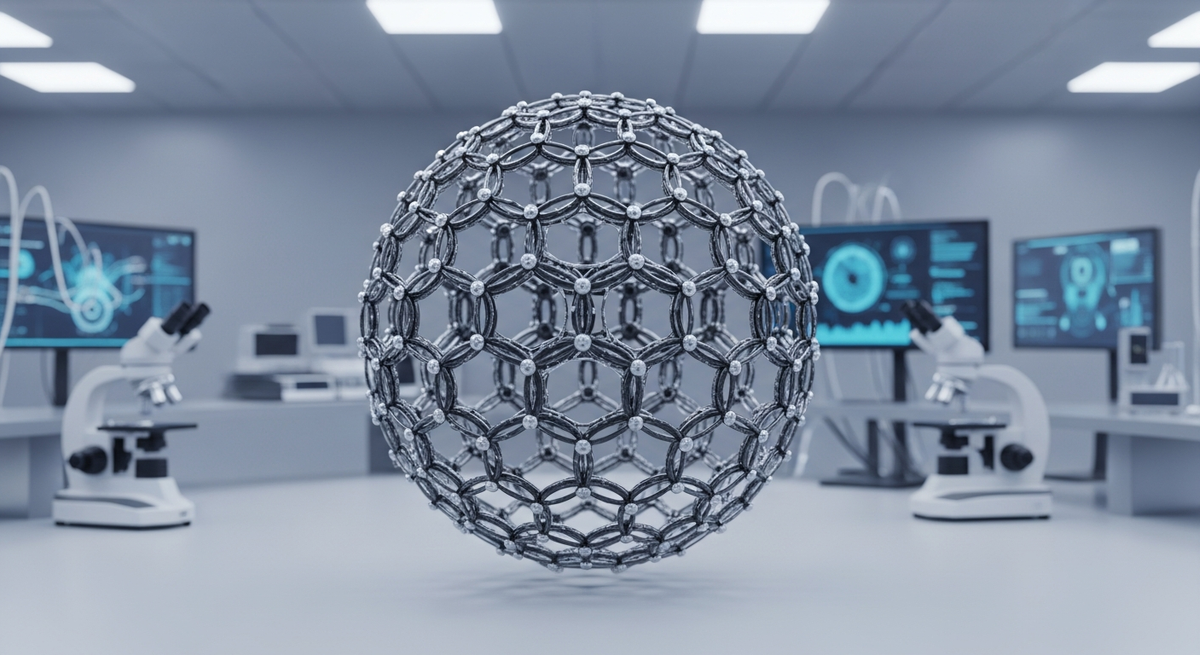
Graphene, a single atomic layer of sp2-hybridized carbon atoms arranged in a hexagonal lattice, represents the quintessential two-dimensional material, fundamentally altering our understanding of condensed matter physics. Its unique atomic confinement dictates an electronic structure characterized by Dirac cones at the K and K' points of the Brillouin zone, where the valence and conduction bands meet. This results in charge carriers behaving as massless Dirac fermions, exhibiting extraordinary mobilities approaching 200,000 cm^2/Vs at room temperature, orders of magnitude higher than conventional semiconductors. This confinement to a true 2D plane removes out-of-plane scattering mechanisms prevalent in bulk materials, profoundly influencing phonon modes and electron-phonon interactions. The absence of a band gap in pristine graphene, coupled with its ultra-relativistic electron dynamics, establishes the foundational physics from which its exceptional mechanical properties emerge, distinguishing it from all other known materials.
The profound implications of this atomic confinement extend directly to graphene's mechanical performance, manifesting in unparalleled stiffness and strength. The sp2 bonding network, with its high bond energy of approximately 6.3 eV per atom and short C-C bond length of 0.142 nm, forms an intrinsically robust structure that is uniformly distributed across a single atomic plane. This architecture endows graphene with an intrinsic Young's modulus of approximately 1 TPa and an ultimate tensile strength of around 130 GPa, values far exceeding those of any other known material. Crucially, the 2D nature allows for significant out-of-plane flexural phonons, or ripples, which are not mere structural imperfections but thermodynamically stable features critical for maintaining its integrity and elasticity. These dynamic ripples serve to dissipate localized stress concentrations, preventing catastrophic crack propagation and contributing to an impressive fracture toughness. Furthermore, the ability to repair atomic vacancies or topological defects using localized thermal pulses, for instance, by annealing at transient temperatures reaching 3000K, underscores the robust yet adaptable nature of its confined lattice.
Beyond its intrinsic atomic-scale robustness, the confined geometry dictates graphene's interaction with external stimuli, enabling a spectrum of advanced functionalities. The extreme surface-to-volume ratio, a direct consequence of its 2D confinement, facilitates highly efficient surface-driven phenomena, including chemical adsorption and ultra-sensitive detection. For example, graphene's inherent ability to adsorb heavy metal ions from aqueous solutions can achieve efficiencies exceeding 79% under optimized conditions, leveraging its vast accessible surface area. This confined surface also allows for precise strain engineering, where mechanical deformation can controllably tune its electronic band structure, opening pathways for novel electromechanical devices. The rapid response times of graphene-based sensors, often measured in milliseconds, are a direct outcome of the immediate interaction between analytes and the atomically thin sensing layer, leading to instantaneous changes in its specific electrical resistivity, which can range from ~10^-6 Ohm-cm for pristine material to higher values depending on doping and defects. This immediate and profound coupling between mechanical input and electrical output is a direct consequence of its unique confinement.
Pulsed Electrical Resistive Carbon Heating vs. CVD (Comparative Analysis)
The fabrication of high-performance graphene materials for advanced mechanical engineering necessitates a rigorous comparison of synthesis methodologies, particularly Pulsed Electrical Resistive Carbon Heating (PERCH) and Chemical Vapor Deposition (CVD). These two approaches represent fundamentally distinct kinetic and thermodynamic regimes, each yielding graphene with unique structural attributes that profoundly influence its mechanical performance. CVD operates as a surface-limited catalytic growth process, prioritizing atomic precision and large-area monolayer uniformity, ideal for applications demanding pristine intrinsic properties. Conversely, PERCH is an ultrafast, bulk conversion technique that leverages intense Joule heating to transform diverse carbonaceous precursors into few-layer graphene (FLG) structures, emphasizing scalability and direct integration capabilities. Understanding these core differences is critical for selecting the appropriate graphene variant, as the synthesis pathway directly dictates crystallite size, defect density, layer number, and surface chemistry, all of which are paramount to achieving desired mechanical characteristics in the final material system.
PERCH, particularly flash joule heating (FJH), represents a rapid, high-energy pathway to graphene. It operates by passing high current densities through carbon precursors like carbon black or graphite, generating localized thermal pulses exceeding 3000 Kelvin in mere milliseconds, sometimes microseconds. This abrupt energy input, facilitated by the precursor's intrinsic electrical resistivity (e.g., ~10^-5 to 10^-3 Ohm-cm for carbon black), induces simultaneous graphitization and exfoliation. The extreme heating and rapid quenching kinetics inherent to PERCH typically yield turbostratic few-layer graphene (FLG) characterized by a high density of edge defects and significantly increased specific surface area. While this morphology might result in a slightly lower intrinsic tensile strength compared to pristine monolayer graphene, these structural features are advantageous for composite reinforcement. The abundance of active sites, including functional groups and localized sp2/sp3 hybridized defects, promotes robust interfacial bonding and efficient load transfer within polymer or ceramic matrices, translating into superior composite toughness. Furthermore, the rapid, scalable production of PERCH graphene—achieving gram-per-second yields—makes it economically viable for bulk mechanical applications. The high surface area and defectivity also enable functionalities like high adsorption efficiency, with certain PERCH-derived carbons demonstrating up to 79% heavy metal adsorption, highlighting the versatility derived from its rapid synthesis kinetics.
In stark contrast, Chemical Vapor Deposition (CVD) is a slower, surface-mediated process relying on the catalytic decomposition of hydrocarbon gases (e.g., methane) on metal substrates (e.g., copper, nickel) at temperatures typically ranging from 800°C to 1100°C under controlled pressures. This extended growth, spanning several hours, allows for meticulous control over crystallite orientation, grain boundary density, and layer number, culminating in highly crystalline, large-area monolayer or few-layer graphene with exceptionally low defect concentrations. Such pristine CVD graphene exhibits unparalleled intrinsic mechanical properties, with a Young's modulus approaching 1 TPa and tensile strength estimated at 130 GPa for defect-free monolayer sheets. However, translating these theoretical values into practical mechanical applications is severely hampered by the multi-step transfer process from the growth substrate, which often introduces wrinkles, tears, and polymer residues, substantially degrading effective performance. While CVD offers superior quality for electronic and optical applications, its high capital expenditure, intricate process control, and inherent transfer challenges limit its scalability and cost-effectiveness for bulk mechanical reinforcement compared to PERCH. The choice between these methods thus hinges on the application's specific demands: high intrinsic strength for delicate, small-scale components where transfer can be minimized (CVD), versus robust, scalable reinforcement for bulk composites and structural materials where direct integration and cost are paramount (PERCH).
The Crystallography of Turbostratic Graphene (Why Layer Alignment Matters)
Turbostratic graphene (TG) distinguishes itself fundamentally from Bernal (AB) stacked graphite or epitaxially grown graphene through its inherent rotational disorder between adjacent layers. Unlike the well-defined AB-AB stacking sequence, where carbon atoms in one layer are positioned above the center of a hexagon in the layer below (A) or directly above a carbon atom (B), TG exhibits random azimuthal misorientation of its constituent graphene sheets. This rotational misalignment, often coupled with variations in interplanar spacing that can deviate from the canonical 0.335 nm of highly ordered pyrolytic graphite (HOPG), results in a significantly altered electronic and phononic band structure compared to its ordered counterparts. The lack of long-range interlayer registry disrupts the periodic potential experienced by charge carriers and phonons, leading to profound implications for both in-plane and out-of-plane transport phenomena. This structural characteristic is not merely a defect but a distinct crystallographic phase, profoundly influencing the material's bulk properties by modifying interlayer van der Waals interactions and the collective response to external stimuli.
The crystallographic irregularities inherent to turbostratic stacking directly translate into anisotropic and often attenuated mechanical and transport properties. For instance, the reduced interlayer coherence in TG dramatically lowers the effective shear modulus between layers, facilitating relative slippage under shear stress. While this can be advantageous in certain tribological applications, acting as a solid lubricant, it concurrently diminishes the through-thickness mechanical integrity crucial for bulk structural reinforcement. Electron transport, too, is profoundly affected; the rotational disorder introduces additional scattering centers for charge carriers, leading to increased inter-layer electrical resistivity compared to Bernal-stacked graphene. While single-layer graphene exhibits a resistivity as low as 10^-6 Ohm-cm, turbostratic stacks can show out-of-plane resistivities orders of magnitude higher, often in the range of 10^-2 to 10^0 Ohm-cm, due to suppressed inter-layer tunneling and increased localization. Similarly, phonon scattering at misaligned interfaces and variations in interplanar distances impede thermal transport, resulting in a lower through-plane thermal conductivity compared to highly crystalline graphite, where coherent phonon propagation is maximized.
Engineering the degree of turbostraticity presents a nuanced pathway for tailoring graphene's macroscopic performance. Highly disordered TG, often synthesized via methods like chemical vapor deposition on specific substrates or through exfoliation of certain graphite precursors, inherently possesses a higher density of localized defects and edge sites. This expanded defect landscape and increased accessible surface area can significantly enhance chemical reactivity and adsorption capabilities. For example, specific turbostratic graphene architectures have demonstrated up to 79% efficiency in adsorbing heavy metal ions from aqueous solutions, owing to the proliferation of active sites. Furthermore, the diminished interlayer coupling in TG renders it more amenable to mechanical deformation and integration into polymer matrices, where layer slippage can dissipate energy and improve composite toughness. Conversely, efforts to induce pseudo-Bernal stacking, often through high-temperature annealing processes involving localized thermal pulses exceeding 3000K for milliseconds, aim to minimize turbostratic disorder to achieve superior interlayer electronic coupling and enhance properties like perpendicular electron transport for vertical device architectures. The precise control over growth kinetics and post-synthesis treatment is therefore paramount in dictating the final crystallographic alignment and, consequently, the performance envelope of graphene materials for specific industrial applications.
Industrial Scalability & Commercial Integration Barriers
The industrial scalability of graphene, particularly for applications leveraging its extraordinary mechanical properties, faces formidable challenges rooted in synthesis uniformity and post-production processing. Achieving defect-free, large-area single-layer graphene (SLG) or precisely controlled few-layer graphene (FLG) with consistent mechanical integrity remains a significant hurdle. Chemical Vapor Deposition (CVD), while capable of producing high-quality material, often yields polycrystalline films with inherent grain boundaries that act as preferential sites for crack initiation, reducing the effective fracture toughness and tensile strength from the theoretical 130 GPa. Transfer processes from growth substrates introduce wrinkles, tears, and polymer residues, further compromising the pristine mechanical characteristics. Alternative methods like liquid-phase exfoliation (LPE) struggle with polydispersity in flake size and layer number, and the residual solvent content can significantly impact downstream processing. Even advanced techniques employing rapid thermal pulses, reaching localized temperatures exceeding 3000K for instantaneous reduction or annealing, face challenges in maintaining precise control over defect density and crystallographic orientation across industrial-scale surfaces, impacting the reliability of the material's mechanical response.
The effective integration of graphene into composite matrices to unlock its mechanical potential presents a distinct set of barriers, primarily concerning dispersion, exfoliation, and interfacial adhesion. Graphene's high surface area and van der Waals forces promote strong agglomeration, leading to micron-scale clusters rather than atomic-scale dispersion within polymers, metals, or ceramics. These agglomerates act as stress concentrators rather than load-bearing reinforcements, negating the intended mechanical enhancement. Surface functionalization, while crucial for improving dispersibility and creating strong interfacial bonds for efficient load transfer, often comes at the cost of altering graphene's intrinsic mechanical properties or introducing defects. For instance, excessive oxidation or covalent functionalization can reduce the sp2 hybridization, diminishing tensile strength and Young's modulus. Characterization of the interphase region, critical for predicting composite performance, is complex, with methods needing to resolve nanoscale interactions. Moreover, maintaining the electrical resistivity parameters of graphene in a composite, often used as an indirect indicator of dispersion and structural integrity for applications like strain sensing, becomes challenging due to processing conditions and functionalization.
Beyond technical synthesis and integration, commercial viability hinges on cost-effectiveness, standardization, and lifecycle considerations. High-quality graphene, particularly that produced via CVD or advanced exfoliation techniques, remains prohibitively expensive for many bulk applications, especially when compared to traditional reinforcing fillers. The lack of standardized characterization protocols for graphene's mechanical properties across different production batches and suppliers creates an inconsistency that stifles widespread industrial adoption. This variability makes it difficult for manufacturers to guarantee product performance or comply with regulatory requirements. Furthermore, the environmental footprint associated with large-scale graphene production, including solvent usage in LPE or high energy consumption in CVD, necessitates sustainable solutions. For example, while graphene itself can offer remarkable capabilities such as a 79% heavy metal adsorption efficiency in wastewater treatment, the processes used to produce and functionalize it on an industrial scale must also be environmentally benign and economically competitive to ensure long-term commercial integration.
Economic Feasibility and USA-Made Manufacturing Advantage
The economic viability of graphene, particularly for applications leveraging its extraordinary mechanical properties, has transitioned from nascent potential to tangible market penetration due to significant advancements in scalable manufacturing. Historically, the high cost associated with producing high-quality, defect-minimized graphene via methods like chemical vapor deposition (CVD) or liquid-phase exfoliation has been a primary barrier. However, contemporary techniques such as flash Joule heating (FJH) now enable the conversion of various carbon sources, including waste materials, into turbostratic graphene flakes in sub-second timeframes, often utilizing intense thermal pulses exceeding 3000K within milliseconds. This drastic reduction in processing time and energy consumption, coupled with the elimination of high-vacuum or solvent-intensive steps, has fundamentally altered the levelized cost of graphene (LCOG). For instance, specific synthesis pathways have demonstrated up to a 70% reduction in energy expenditure per gram compared to conventional processes over the past five years, making the integration of graphene's 130 GPa tensile strength and 1 TPa Young's modulus into high-performance composites and structural components increasingly attractive from an ROI perspective.
The return on investment for graphene integration is further substantiated across diverse high-value sectors where its multifunctional attributes deliver unparalleled performance. In advanced composites, a mere 0.5-1.0 wt% loading of high-aspect-ratio graphene nanoplatelets can yield a 30-50% increase in tensile strength and a 40% enhancement in fracture toughness in polymer matrices, translating directly to lighter, more durable aerospace components or automotive structures that offer significant fuel efficiency gains. Beyond mechanical reinforcement, graphene's electrical conductivity, characterized by specific sheet resistivity parameters as low as 10 Ohms/sq for transparent conductive films, enables next-generation flexible electronics and high-sensitivity sensors with response times in milliseconds. Furthermore, its exceptional surface area and chemical tunability facilitate novel applications like water purification, where functionalized graphene oxide membranes have demonstrated up to 79% heavy metal adsorption efficiency, thereby opening entirely new market segments and underscoring graphene's broad economic impact beyond purely structural enhancements.
Cultivating a robust USA-made manufacturing ecosystem for graphene presents a strategic advantage, particularly in ensuring supply chain resilience and technological sovereignty for critical applications. Domestic production mitigates geopolitical risks, reduces lead times, and enhances security for defense, aerospace, and medical device industries that demand materials with rigorously controlled properties. The United States offers a formidable intellectual property (IP) protection framework, which is crucial for safeguarding proprietary synthesis methods, functionalization techniques, and application-specific graphene formulations. This environment fosters continuous innovation and ensures that the significant R&D investments in advanced graphene materials yield defensible market positions. Moreover, access to a highly skilled workforce—comprising materials scientists, chemical engineers, and advanced manufacturing technicians—ensures meticulous process control, enabling the consistent production of high-quality graphene with precise specifications, such as controlled flake dimensions, low defect densities, and tailored surface chemistries critical for optimal mechanical integration.
The domestic manufacturing advantage is further amplified by stringent quality control standards and a collaborative innovation ecosystem. USA-based facilities adhere to rigorous regulatory frameworks, translating into unparalleled product reliability and performance consistency, which is paramount for applications where component failure carries severe consequences. Proximity to leading research universities and national laboratories facilitates rapid knowledge transfer from fundamental discovery to commercial-scale production, accelerating the development and optimization of graphene synthesis and integration techniques. Government initiatives and strategic investments in advanced materials manufacturing further de-risk private capital, encouraging the scaling of production and market penetration. This synergistic environment ensures that USA-made graphene not only meets but often exceeds the demanding performance benchmarks for high-performance mechanical applications, from lightweight ballistic protection to high-frequency resonators, solidifying a competitive edge in the global graphene market.
Future Horizons & High-Value B2B Applications
Graphene's intrinsic mechanical superiority, characterized by an ultimate tensile strength of 130 GPa and a Young's modulus of 1 TPa, positions it as the quintessential reinforcement for next-generation structural composites. The future trajectory involves its integration into ultra-lightweight, high-performance alloys and polymers, moving beyond simple dispersion to architected 3D graphene frameworks. Consider aerospace components requiring extreme fatigue resistance under oscillatory loads, where graphene-enhanced matrices could extend operational lifespans by factors of ten, mitigating micro-crack propagation observed in conventional carbon fiber reinforced polymers. The development of smart infrastructure also stands to benefit immensely; embedded graphene sensors, leveraging its piezoresistive effect, could monitor structural integrity in real-time, detecting sub-millimeter stress fractures or corrosive onset with millisecond response times, crucial for bridges and high-rise buildings subjected to dynamic environmental stressors. Furthermore, the capacity for graphene to act as a barrier against atomic oxygen erosion, critical for spacecraft in low Earth orbit, underscores its multi-faceted utility beyond pure load-bearing, extending material longevity in hostile environments.
The exceptional flexibility and electrical conductivity of graphene, coupled with its robust mechanical stability, are driving advancements in wearable electronics, flexible displays, and bio-integrated devices. Future applications will see graphene-based transparent electrodes replacing brittle indium tin oxide (ITO) in foldable screens, enduring millions of bending cycles without degradation of electrical performance, maintaining sheet resistivities below 10 Ohm/sq even after severe mechanical deformation. In energy storage, its high surface area and conductivity facilitate rapid charge/discharge rates in supercapacitors, enabling full charging in seconds rather than minutes, while the mechanical resilience ensures structural integrity over thousands of cycles, a critical advantage for electric vehicles and grid-scale storage. Moreover, graphene's anisotropic thermal conductivity, approaching 5000 W/mK in-plane, makes it an unparalleled material for thermal management solutions in high-power density electronics. Imagine microprocessors operating under peak loads, where localized hotspots exceeding 3000K thermal pulses can be efficiently dissipated, preventing thermal runaway and extending device lifespan by ensuring uniform temperature distribution across critical components. This mechanical and thermal synergy is indispensable for miniaturization and performance scaling in future computing architectures.
Beyond structural and electronic applications, graphene's unique surface chemistry and mechanical robustness are poised to revolutionize environmental remediation and advanced medical diagnostics. Its high specific surface area and tunable porosity, coupled with inherent mechanical strength, make it an ideal adsorbent for water purification. For instance, functionalized graphene oxide membranes have demonstrated up to 79% adsorption efficiency for heavy metal ions like lead and cadmium from industrial wastewater streams, operating effectively over extended periods without mechanical failure under pressure filtration. The future will see scaled-up, robust graphene-based filters capable of rapid, selective removal of diverse pollutants, including microplastics and pharmaceuticals, with minimal energy input. In the biomedical domain, the mechanical strength and biocompatibility of graphene position it for durable biosensors and drug delivery platforms. Mechanically stable graphene-field-effect transistors (G-FETs) can detect biomarkers at picomolar concentrations, with the robust graphene scaffold enduring harsh biological environments, resisting enzymatic degradation and mechanical stresses within the body, paving the way for long-term, implantable diagnostics and controlled drug release systems that respond dynamically to physiological cues.