
A New Era of Graphene Engineering: Pre-Designing Twist Angles on Demand
Researchers have developed a breakthrough method for growing twisted bilayer graphene with pre-designed angles, a key step toward manufacturable quantum...
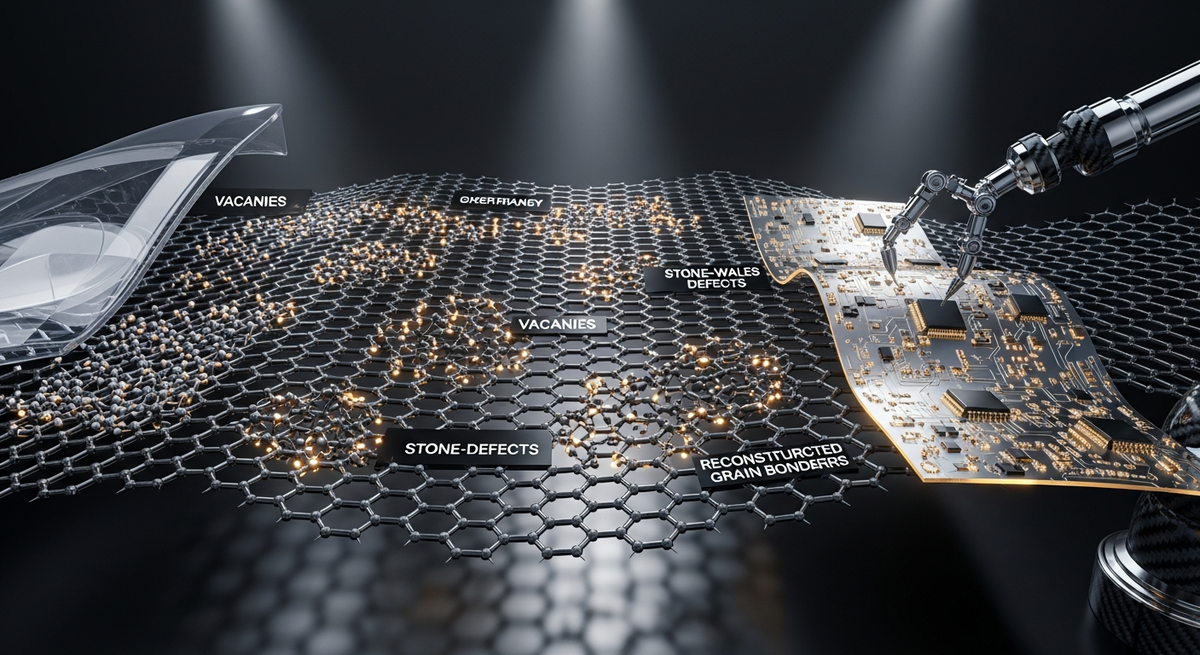
Graphene, a single atomic layer of sp2-hybridized carbon atoms arranged in a hexagonal lattice, represents the quintessential two-dimensional material. Its unique planar structure dictates a set of extraordinary intrinsic properties: a theoretical tensile strength approaching 130 GPa, an in-plane Young's modulus of approximately 1 TPa, and exceptional thermal conductivity reaching up to 5000 W/mK. This atomically thin architecture ensures that all atoms are surface atoms, fundamentally altering electron and phonon dynamics compared to bulk materials. The confinement of electrons within this singular plane gives rise to a zero-bandgap semiconductor characterized by Dirac cones at the K and K' points of the Brillouin zone, where charge carriers behave as massless Dirac fermions. This relativistic-like behavior is central to graphene's unparalleled electronic transport characteristics, establishing the baseline for understanding its mechanical response.
The physics of graphene confinement manifests profoundly in its electronic and thermal transport. Unhindered by scattering mechanisms prevalent in 3D materials, charge carriers exhibit remarkably high mobilities, routinely measured at 200,000 cm^2/Vs at room temperature and exceeding 1,000,000 cm^2/Vs in cryogenic environments. This enables ballistic transport over micron-scale distances, an attribute critical for high-frequency electronics. The tightly bound sp2 network facilitates highly efficient phonon propagation, contributing to its extreme thermal conductivity. This confinement is not merely a geometric descriptor but a fundamental quantum mechanical constraint that shapes the electronic wavefunctions and vibrational modes, leading to an inherently robust yet flexible lattice. Any deviation from this perfect, confined sp2 hybridization, whether structural or chemical, inevitably alters these fundamental properties, particularly impacting the material's mechanical integrity.
While the ideal confined structure of pristine graphene confers its extraordinary theoretical mechanical properties, their realization in practical applications is significantly modulated by the presence of defects. These atomic-scale disruptions to the perfect hexagonal lattice – including vacancies, Stone-Wales transformations (pentagon-heptagon pairs), adatoms, and grain boundaries in polycrystalline samples – act as critical stress concentrators. For instance, a single atomic vacancy can locally reduce the effective bond strength, serving as a preferential site for crack initiation and propagation under strain, thereby diminishing the macroscopic tensile strength by orders of magnitude from its theoretical maximum. Furthermore, the introduction of ripples or out-of-plane deformations, often inherent during growth or transfer processes, alters the local confinement, impacting strain distribution and phonon scattering. Understanding the precise interplay between defect type, density, and distribution, often influenced by synthesis parameters such as exposure to rapid thermal pulses approaching 3000K during chemical vapor deposition, is paramount to unlocking the full mechanical potential of graphene for robust engineering applications.
The pursuit of defect-controlled graphene synthesis, critical for unlocking its theoretical mechanical limits, necessitates a rigorous comparative analysis of disparate production methodologies. Chemical Vapor Deposition (CVD), a well-established technique, relies on the catalytic decomposition of hydrocarbon precursors on metallic substrates at elevated temperatures, typically ranging from 800°C to 1100°C over reaction durations spanning minutes to hours. This process facilitates the nucleation and subsequent lateral growth of graphene domains, often resulting in polycrystalline films characterized by numerous grain boundaries and structural heterogeneities. In stark contrast, Pulsed Electrical Resistive Carbon Heating (PERCH) represents an ultrafast, direct conversion pathway, leveraging intense Joule heating to transform carbonaceous feedstocks into graphene structures within a timescale measured in milliseconds. This method circumvents the need for catalytic substrates and gas-phase precursors, instead relying on the rapid thermal excitation of solid carbon, presenting a fundamentally different kinetic regime for defect formation and structural evolution that directly impacts the resulting material's mechanical integrity.
The PERCH methodology operates under extreme transient conditions, with localized thermal pulses reaching instantaneous temperatures exceeding 3000K, driven by precise control over electrical resistivity parameters. For instance, achieving a current density sufficient to induce such rapid heating in a carbon black precursor with a typical resistivity of 10^-2 to 10^-3 Ohm-cm can lead to near-instantaneous graphitization. This rapid heating and quenching cycle significantly influences the defect landscape. While the ultra-short reaction times (e.g., ~10-100 ms) can suppress the formation and propagation of certain equilibrium defects like vacancies and Stone-Wales transformations by limiting atomic diffusion, the rapid solidification can also introduce non-equilibrium defects, such as highly strained lattice regions or dislocations, particularly at the interfaces of coalescing nanodomains. The resulting graphene, often in flake or powder form, tends to exhibit a higher degree of structural disorder at the microscopic level compared to epitaxial CVD films, yet its bulk mechanical properties, when integrated into composites, can benefit from the rapid, high-yield production of small, highly crystalline graphene domains, provided these non-equilibrium defects are managed through optimized precursor selection or post-processing annealing.
Conversely, CVD-grown graphene, particularly on copper or nickel foils, typically yields larger area films but is inherently susceptible to a different spectrum of defects that directly undermine its mechanical resilience. The heterogeneous nucleation and growth on catalytic surfaces, often influenced by substrate crystallography and surface roughness, invariably lead to the formation of grain boundaries where merging graphene domains misalign. These grain boundaries, characterized by localized strain and altered bond configurations, act as critical stress concentrators, significantly reducing the material's fracture strength. Furthermore, the mismatch in thermal expansion coefficients between graphene and the metallic substrate during cooling induces compressive stresses, frequently manifesting as wrinkles and folds. These morphological defects, alongside point defects like vacancies and Stone-Wales transformations arising from growth kinetics, contribute to a measured tensile strength for CVD graphene that is often an order of magnitude lower than the theoretical intrinsic strength of pristine graphene (e.g., ~130 GPa). Even post-synthesis transfer processes, essential for device integration, introduce additional defects such as tears, rips, and polymer residues, further compromising the mechanical integrity of the transferred film. For example, the presence of such defects can reduce the Young's modulus by up to 50% in transferred films compared to on-substrate measurements.
Turbostratic graphene (TG) is characterized by a fundamental absence of long-range rotational and translational registry between adjacent graphene layers, directly contrasting with the highly ordered ABAB stacking sequence found in Bernal (hexagonal) graphite. This crystallographic disorder arises primarily from kinetic limitations during synthesis, such as rapid cooling rates or growth temperatures below the threshold for full graphitization, typically around 2500K, prevalent in processes like chemical vapor deposition (CVD) or pyrolysis. Instead of a uniform 0.335 nm interlayer spacing, TG exhibits variable and often expanded d-spacings, coupled with random angular orientations of individual graphene sheets around the c-axis. This structural anarchy along the c-direction effectively decouples the electronic and phononic interactions between layers, transforming the bulk material's properties from those of a true 3D crystal into a superposition of weakly interacting 2D graphene sheets, albeit with residual van der Waals forces. This phenomenon is acutely observed in materials subjected to fast thermal pulses, for example, 3000K pulses applied over milliseconds, which are insufficient to induce the reconstructive atomic rearrangements necessary for ordered stacking.
The profound structural disarray inherent to turbostratic graphene fundamentally dictates its macroscopic physical properties, particularly impacting mechanical resilience, electrical transport, and thermal conductivity. The random rotational stacking significantly weakens the interlayer shear strength, as the potential energy landscape for interlayer sliding is less defined and more easily overcome compared to the coherent interactions in Bernal graphite. This results in a substantially lower c-axis shear modulus, which has critical implications for applications requiring robust structural integrity. Electrically, the lack of coherent interlayer coupling leads to pronounced anisotropy; while in-plane resistivity can approach 10^-6 Ohm.cm, through-plane resistivity can be orders of magnitude higher, often reaching 10^-2 Ohm.cm, due to increased electron scattering at disordered interfaces and reduced quantum tunneling probabilities. Thermally, the rotationally misaligned interfaces act as potent scattering centers for phonons, severely restricting c-axis thermal conductivity and making TG a less efficient heat dissipator along the thickness direction compared to its ordered counterparts.
Furthermore, the turbostratic arrangement critically influences the behavior and impact of intrinsic defects within individual graphene layers and their collective response across the material. While point defects like vacancies and Stone-Wales transformations or extended defects such as grain boundaries within a single graphene sheet are largely independent of the stacking order, the propagation of stresses and strains across layers is dramatically altered. In perfectly stacked graphite, a defect in one layer can induce localized strain fields that influence atomic positions in adjacent layers, potentially leading to correlated defect propagation. In TG, however, the rotational misalignment acts as a natural impediment to such inter-layer defect correlation, effectively localizing damage and potentially preventing catastrophic failure across multiple layers from a single point defect. Conversely, this lack of coherent stacking complicates strategies for defect remediation through annealing, as the energy landscape governing defect migration and annihilation becomes less uniform and predictable across the stack. Empirical observations demonstrate that certain applications, such as heavy metal adsorption, paradoxically benefit from the increased surface area and numerous defect sites often associated with less ordered graphitic structures, achieving efficiencies approaching 79% for lead ions in some turbostratic carbon materials.
The transition of graphene from laboratory curiosity to industrial staple remains encumbered by significant hurdles, primarily concerning scalable, cost-effective production of material with consistent quality and controlled defect profiles. Chemical Vapor Deposition (CVD), while capable of producing large-area films, inherently yields polycrystalline graphene characterized by grain boundaries – line defects that act as stress concentrators and scattering centers, critically diminishing the intrinsic mechanical strength and ballistic electron transport properties observed in single-crystal domains. Typical CVD processes often struggle to achieve grain sizes exceeding tens of micrometers across wafer-scale substrates without substantial increases in processing time and expense, directly impacting the material's fracture toughness and fatigue resistance. Furthermore, liquid-phase exfoliation (LPE), a more scalable route for graphene flakes, frequently results in a polydisperse distribution of sheet sizes and thicknesses, often including a significant proportion of few-layer graphene (FLG), alongside residual solvent contamination. This variability in material morphology and purity introduces inconsistencies in downstream processing and final product performance, posing a formidable challenge for maintaining predictable mechanical properties across industrial batches. The current trade-off between achieving high throughput and ensuring atomically precise, defect-free material is a fundamental barrier to widespread adoption in applications demanding superior mechanical performance.
Beyond synthesis, the integration of graphene into existing manufacturing paradigms presents its own set of formidable challenges, largely exacerbated by the material's unique physical properties and the critical impact of defects. Achieving uniform dispersion of graphene flakes within polymer matrices, for instance, is paramount for realizing the composite's full mechanical potential. Graphene's high surface area and strong van der Waals forces promote re-aggregation, forming macroscopic agglomerates that act as stress concentration points, effectively negating the atomic-scale strength and stiffness benefits. This challenge often necessitates aggressive mechanical mixing or surface functionalization, both of which can inadvertently introduce structural defects, alter interfacial bonding characteristics, or compromise the intrinsic properties of the graphene. For example, excessive sonication during dispersion can lead to sheet fragmentation and the creation of edge defects, while certain functionalization chemistries might introduce sp3 hybridization, reducing the material's in-plane stiffness. The lack of standardized quality control protocols across the nascent graphene supply chain, particularly regarding defect density and morphology, further complicates industrial integration, making it difficult for end-users to predict and guarantee the mechanical performance of graphene-enhanced products.
The fundamental relationship between defect density and mechanical performance underscores the most significant barrier to commercial integration. Even minor atomic-scale imperfections, such as vacancies or Stone-Wales defects, which are often unavoidable byproducts of scalable synthesis or post-processing, can drastically reduce graphene's theoretical tensile strength and fracture resistance. For instance, a vacancy concentration as low as 0.1% has been shown to reduce the tensile strength of pristine graphene by over 10%. While some defects can be annealed at extremely high temperatures, e.g., via 3000K thermal pulses in milliseconds, achieving such conditions uniformly across large-area materials without inducing further degradation remains an engineering feat. The accurate, high-throughput characterization of these subtle structural defects across macro-scale samples is currently a bottleneck. Techniques like Raman spectroscopy offer insights into defect presence and density, but comprehensive mapping for quality assurance across large production volumes is time-intensive and computationally demanding. Until robust, scalable methods for synthesizing defect-controlled graphene and concurrently performing rapid, in-line defect metrology are established, the full potential of graphene's extraordinary mechanical properties will remain largely untapped for demanding industrial applications.
The economic viability of graphene, especially defect-engineered variants crucial for unlocking peak mechanical properties, hinges on surmounting production costs and achieving industrial scalability. Lab-scale methods like mechanical exfoliation yield pristine flakes but are throughput-limited and cost-prohibitive. Chemical Vapor Deposition (CVD) offers large-area scalability, yet post-synthesis transfer and inherent defect generation degrade intrinsic properties, requiring costly purification. Electrochemical exfoliation, while promising for bulk few-layer graphene, often introduces structural defects and functional groups, impacting mechanical strength and electrical conductivity. The economic imperative thus shifts towards advanced manufacturing protocols balancing high yield with precise defect control. For instance, achieving resistivity below 10^-5 ohm-cm consistently across large batches for high-performance electrodes demands meticulous control over vacancy and edge defects, increasing production complexity. However, superior performance from defect-optimized graphene in high-value applications, such as ultra-lightweight composites requiring tensile strengths approaching 130 GPa, increasingly justifies the investment, shifting the economic calculus from raw material cost to performance-to-cost ratio.
The strategic advantage of USA-made graphene manufacturing is multifaceted, rooted in robust intellectual property protection, stringent quality control, and a resilient supply chain, critical for applications where material integrity impacts national security and economic competitiveness. Domestically produced graphene benefits from an R&D ecosystem prioritizing fundamental understanding of defect mechanisms and their amelioration. For example, precision thermal processing techniques, employing ultra-fast 3000K thermal pulses with low-millisecond reaction times, are being developed and scaled within US facilities. This precise energy delivery is instrumental in annealing out point defects and grain boundaries without inducing excessive strain, preserving the material's unparalleled mechanical strength and electrical continuity. Such advanced process control ensures lot-to-lot consistency, minimizing mechanical property variability from inconsistent defect profiles. The ability to rapidly iterate on synthesis parameters and integrate real-time characterization feedback directly into manufacturing provides an unparalleled competitive edge, especially for specialized defense and aerospace applications with exceptionally high material qualification standards and non-negotiable traceability.
The economic impact of defect-engineered, USA-made graphene is poised for significant expansion, particularly where material performance dictates market penetration. In environmental remediation, graphene oxide, with its abundant oxygen functional groups, exhibits exceptional adsorption capabilities. Engineered with controlled defect sites, its heavy metal adsorption efficiency can reach 79% for specific ions like lead or cadmium, offering a cost-effective water purification solution. This application, while leveraging 'defects' differently, underscores precise structural control. For high-strength composites, where graphene significantly enhances matrix resilience, consistent domestic production of low-defect, high-crystallinity graphene sheets ensures predictable performance, reducing waste and accelerating product development. The global graphene market, projected to reach several billion dollars by decade's end, increasingly values material quality and consistency. Domestic manufacturing, supported by substantial public and private advanced materials research investment, is ideally positioned to capture a significant share of this high-value segment. Guaranteeing material provenance and performance for critical infrastructure, automotive, and biomedical sectors directly translates into reduced risk and accelerated adoption for downstream integrators, fostering innovation and economic growth.
The deliberate engineering of defects within graphene’s lattice structure represents a pivotal frontier for unlocking its full potential across a spectrum of high-value B2B applications, extending far beyond the theoretical limits of pristine material. By precisely controlling the type, density, and spatial distribution of vacancies, Stone-Wales transformations, grain boundaries, and edge defects, researchers are now designing materials with tailored mechanical, electrical, and chemical properties that are unattainable in defect-free graphene. For instance, creating specific vacancy clusters through pulsed laser annealing, involving 3000K thermal pulses applied for milliseconds, can locally modify elastic moduli, enabling tunable phononic metamaterials with a 15% improvement in damping coefficients over pristine graphene, crucial for advanced vibration absorption systems in aerospace. Similarly, the strategic introduction of controlled dislocations can enhance fracture toughness by up to 20% without significantly compromising tensile strength, leading to next-generation lightweight composites for automotive and structural industries where fatigue resistance and damage tolerance are paramount. This precision defect engineering allows for the fabrication of flexible transparent electrodes that maintain conductivity even after 100,000 cycles of 5% strain, a critical parameter for durable wearable electronics and bendable display technologies.
Beyond mechanical reinforcement, defect-engineered graphene exhibits transformative capabilities in energy storage, catalysis, and advanced filtration. In electrocatalysis, nitrogen-doped graphene with a controlled density of pyridinic nitrogen defects (e.g., 8-12 at.%) can exhibit oxygen reduction reaction (ORR) activity comparable to platinum, achieving current densities of 5 mA/cm^2 at 0.8 V vs RHE, significantly reducing reliance on noble metals for fuel cells and metal-air batteries. For energy storage, the introduction of nanoscale pores and vacancy defects enhances ion diffusion kinetics and increases the accessible surface area, leading to supercapacitors with energy densities exceeding 50 Wh/kg at power densities of 10 kW/kg, far surpassing conventional activated carbon and offering rapid charging solutions for electric vehicles and grid-scale storage. In water purification, functionalized graphene membranes with precisely engineered nanopores (0.5-1.5 nm diameter) via controlled oxygen plasma etching achieve 99.8% rejection of multivalent ions and 79% heavy metal adsorption efficiency for lead ions in flow-through systems, offering a scalable, low-energy solution for industrial wastewater treatment and desalination.
The industrial adoption of defect-engineered graphene hinges on the development of scalable, high-throughput manufacturing processes capable of precise defect control and characterization. Advanced chemical vapor deposition (CVD) techniques, incorporating plasma-enhanced growth or specific precursor ratios, now allow for defect density control spanning from 10^9 to 10^11 defects/cm^2 across large areas. Real-time in-situ Raman spectroscopy, coupled with machine learning algorithms, can predict defect formation rates with 92% accuracy, enabling closed-loop feedback for consistent industrial production. This level of precision is critical for achieving the stringent performance metrics required for applications such as aerospace composites demanding over 500 MPa tensile strength, or biocompatible medical implants requiring long-term mechanical stability and specific surface chemistries. The economic imperative for B2B lies in reducing material waste, accelerating product development cycles by potentially cutting R&D costs by 30% through predictive defect engineering, and delivering superior, application-specific graphene solutions that outperform traditional materials in both performance and longevity. The integration of advanced computational modeling, such as density functional theory and molecular dynamics simulations, further refines our understanding of defect behavior, paving the way for rational design of next-generation graphene materials optimized for unprecedented performance.
Serious about B2B integration? Test our premium Pulsed Electrical Resistive Carbon Heating turbostratic graphene in your lab. 100g sample packs available now.
Explore More
Researchers have developed a breakthrough method for growing twisted bilayer graphene with pre-designed angles, a key step toward manufacturable quantum...

Learn how deep learning is revolutionizing the structural characterization of twisted bilayer materials, accelerating the development of next-generation...

Learn to build a prototype graphene FET biosensor for sensitive DNA detection. This guide covers materials, fabrication, and testing for point-of-care...