The Next Leap in Energy: Solid-State Sodium-Graphene Batteries
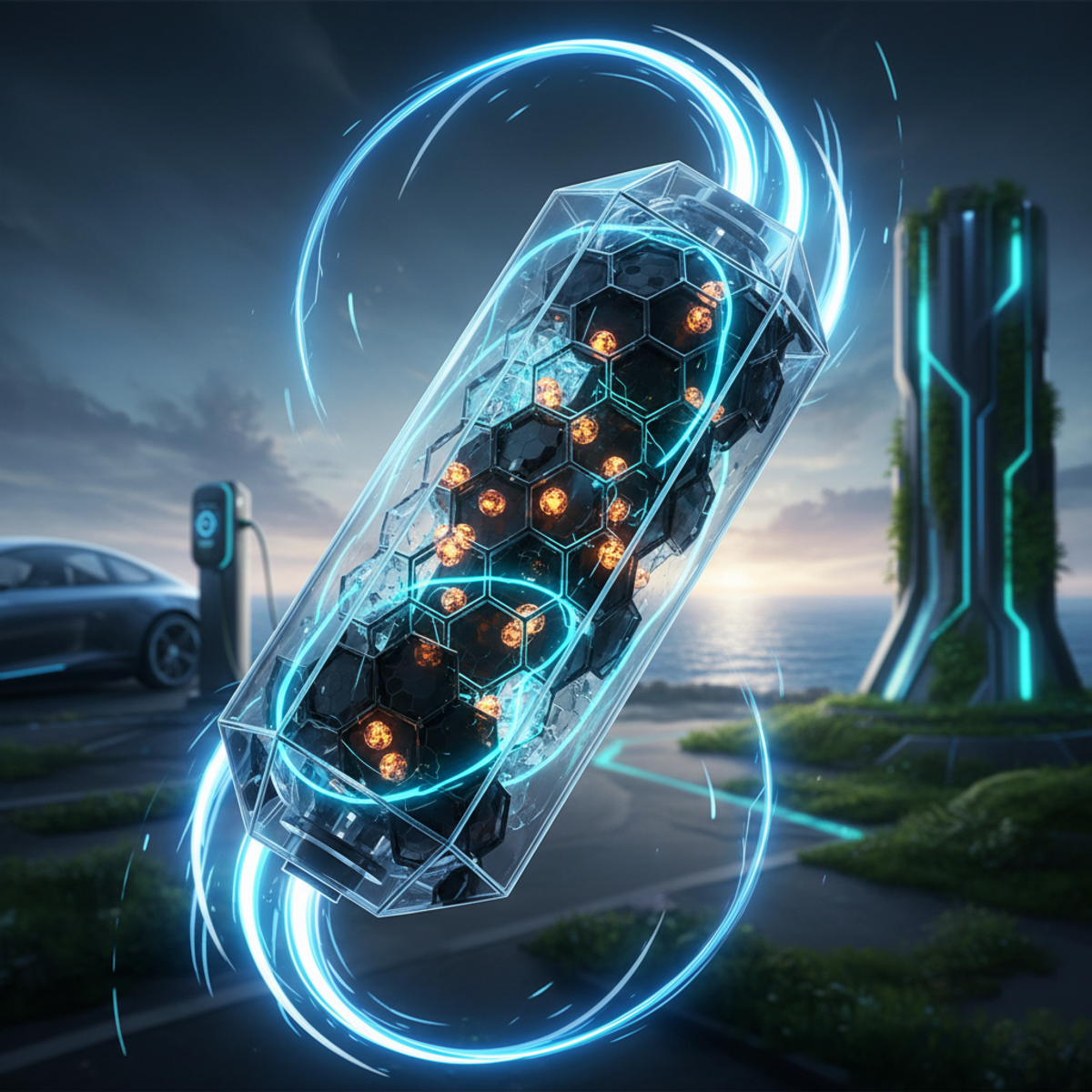
The Next Leap in Energy: Solid-State Sodium-Graphene Batteries
While electric vehicles (EVs) frequently capture public attention, a foundational shift in energy storage—specifically in battery technology—is equally pivotal to the electric future. Advances in solid-state sodium-graphene batteries suggest we are approaching a significant breakthrough in energy storage technology. These innovative power sources propose replacing costly, rare lithium with abundant sodium, readily available from common salt, and integrating graphene, a material recognized for its exceptional strength and electrical conductivity. This powerful combination holds the potential for batteries that are not only considerably safer, mitigating the risks associated with flammable liquid electrolytes, but also more affordable, durable, and capable of rapid charging. Such advancements could reduce our reliance on scarce resources, representing a fundamental shift beyond incremental upgrades, poised to drive transformative progress across sectors, from personal transportation to large-scale energy storage.
The Imperative for a Battery Revolution
The current landscape of energy storage is largely dominated by lithium-ion batteries, which have undeniably propelled the electrification movement over the past few decades. However, the escalating global demand for electric vehicles, consumer electronics, and grid-scale storage solutions is pushing the limits of this established technology. Concerns over the finite and geographically concentrated supply of lithium, cobalt, and nickel are mounting, leading to volatile pricing, geopolitical complexities, and significant environmental footprints associated with their extraction. These challenges highlight an urgent need for sustainable, high-performance alternatives that can decouple our energy future from resource scarcity.
Beyond resource constraints, the inherent safety profile of traditional lithium-ion batteries, which rely on flammable liquid electrolytes, remains a critical area for improvement. The risk of thermal runaway, leading to fires or explosions, continues to be a barrier to widespread adoption in certain high-power applications and raises consumer apprehension. While extensive engineering efforts mitigate these risks, the fundamental chemistry presents a ceiling for safety enhancements. Therefore, the drive for a battery revolution is not merely about incremental gains in energy density or cycle life, but about a paradigm shift that addresses fundamental issues of safety, sustainability, and affordability at scale.
Sodium: The Abundant, Overlooked Element
For decades, lithium has reigned supreme in the rechargeable battery world due to its high electrochemical potential and low atomic weight, translating to high energy density. However, beneath the surface, sodium, lithium’s heavier cousin in the alkali metal group, presents a compelling alternative with distinct advantages. Sodium is the sixth most abundant element on Earth, easily extracted from seawater and common salt deposits, offering a virtually limitless and inexpensive resource base. This stark contrast to lithium's finite and often geopolitically sensitive supply chain makes sodium an incredibly attractive candidate for future energy storage.
The primary historical hurdle for sodium-ion batteries has been sodium’s larger ionic radius compared to lithium. This larger size can lead to slower diffusion kinetics within electrode materials and greater volume changes during charge and discharge cycles, impacting energy density and cycle life in traditional liquid electrolyte systems. However, recent breakthroughs in material science, particularly with the advent of solid-state electrolytes and advanced electrode architectures, have begun to circumvent these limitations. Researchers are now developing novel host materials that can effectively accommodate sodium ions, paving the way for high-performance sodium-ion cells.
The low cost of raw materials for sodium-ion batteries significantly reduces the overall manufacturing expense, making them an economically viable option for a wide range of applications, especially large-scale grid storage where cost per kilowatt-hour is paramount. Moreover, the mature supply chain for sodium compounds means that scaling up production would face fewer logistical and infrastructural barriers than continuously expanding lithium extraction. This abundance and affordability position sodium as a cornerstone element in the next generation of sustainable energy storage. The transition to sodium-based systems promises to democratize access to advanced battery technology, fostering energy independence and stability globally.
Graphene: The Unrivaled Conductor and Structural Backbone
The integration of graphene is not merely an enhancement; it is a transformative component that unlocks the full potential of solid-state sodium batteries. Graphene, a single layer of carbon atoms arranged in a hexagonal lattice, is celebrated for its extraordinary properties. It is the strongest material known, yet remarkably flexible, and possesses unparalleled electrical and thermal conductivity, making it an ideal candidate for pushing battery performance beyond current limits. Its two-dimensional structure offers an exceptionally high surface area, crucial for maximizing ion-electron transfer within battery electrodes.
In solid-state sodium-graphene batteries, graphene plays multiple critical roles. As an active electrode material or a sophisticated additive, it significantly improves the kinetics of sodium-ion diffusion and electron transport, enabling ultra-fast charging and discharging capabilities. Its high electrical conductivity reduces internal resistance, minimizing energy loss as heat and improving overall efficiency. Furthermore, graphene’s mechanical strength and flexibility are vital for accommodating the volume changes that sodium ions undergo during intercalation and deintercalation within electrode structures, which historically has been a challenge for sodium batteries. This structural integrity contributes to vastly improved cycle stability and extends the battery's lifespan.
Graphene also serves as a high-performance current collector and a scaffold within the electrode architecture, providing a robust, lightweight, and conductive network that enhances material utilization. Its thermal conductivity helps dissipate heat efficiently, which is a critical safety feature for high-power battery applications, preventing localized hot spots and contributing to thermal stability. By engineering graphene into various forms, such as porous frameworks or composite structures, researchers are optimizing its interaction with sodium and solid electrolytes, paving the way for batteries that are not only powerful and durable but also inherently safer and more efficient. The unique properties of graphene are therefore indispensable in overcoming the historical limitations of sodium-ion chemistry.
The Solid-State Advantage: Safety and Performance Unleashed
The transition to solid-state electrolytes represents a monumental leap forward in battery technology, fundamentally addressing the safety concerns associated with conventional liquid electrolytes. By replacing flammable organic liquids with non-combustible solid materials such as polymers, ceramics, or sulfides, the risk of thermal runaway, fire, and explosion is virtually eliminated. This inherent safety improvement is a game-changer, particularly for applications like electric vehicles, where battery integrity is paramount, and for large-scale energy storage systems located near population centers. The stability of solid electrolytes also allows for the use of more reactive electrode materials, potentially increasing energy density.
Beyond safety, solid-state electrolytes offer significant performance advantages. They are less prone to dendrite formation—needle-like structures that can grow within liquid electrolytes, causing short circuits and reducing battery life. Solid electrolytes provide a robust physical barrier against dendrite growth, thereby enhancing cycle stability and overall battery durability. This stability is especially beneficial for sodium-ion systems, where sodium's larger ionic radius can exacerbate dendrite formation in liquid systems. The tight packing and high modulus of solid electrolytes enable more uniform ion transport, leading to higher power densities and faster charging rates.
The synergy between solid-state technology and graphene is particularly potent. Graphene’s exceptional conductivity facilitates rapid electron transfer at the electrode-electrolyte interface, complementing the enhanced ion transport within the solid matrix. Its mechanical properties help maintain intimate contact between the solid electrolyte and the electrodes despite volume changes during cycling, ensuring sustained performance. This combination of non-flammable materials and highly conductive, structurally stable components promises to deliver batteries that are not only safer and more reliable but also achieve unprecedented levels of energy density, power delivery, and longevity. The solid-state architecture truly unlocks the full potential of sodium-graphene chemistry.
From Lab to Market: Challenges and the Path Forward
While the promise of solid-state sodium-graphene batteries is immense, their journey from advanced research labs to widespread commercialization involves navigating a series of complex technical and manufacturing challenges. One primary hurdle lies in optimizing the interface between the solid electrolyte and the electrodes. Achieving low interfacial resistance and ensuring stable contact throughout repeated charge-discharge cycles is crucial for high performance and long lifespan. Researchers are actively exploring new materials and fabrication techniques to create seamless, ionically conductive interfaces that can withstand the mechanical stresses of battery operation.
Another significant challenge is the scalability of both graphene production and solid-state battery manufacturing processes. Producing high-quality graphene consistently and cost-effectively on an industrial scale is essential to meet the demands of mass production. Simultaneously, the manufacturing of solid-state cells is inherently more complex than traditional liquid electrolyte batteries, requiring precise control over material deposition and cell assembly. Developing efficient, high-throughput manufacturing methods that can produce reliable and cost-competitive solid-state sodium-graphene batteries is a major focus for research and development efforts globally.
Despite these challenges, significant progress is being made, with numerous research institutions and private companies investing heavily in overcoming these obstacles. Advances in material synthesis, computational modeling, and sophisticated characterization techniques are accelerating the development cycle. Pilot production lines are emerging, demonstrating the feasibility of scaling up some aspects of the technology. Collaborative efforts across academia, industry, and government are vital to pool resources and expertise, pushing this transformative technology closer to commercial reality and ensuring that the future of energy storage is built on a foundation of safety, sustainability, and high performance.
Transformative Impact: Reshaping Industries and the Environment
The potential beneficiaries of this technological leap are extensive. Consumers could see safer electric vehicles due to the non-flammable solid electrolytes, alongside faster charging times enabled by graphene’s high conductivity, and potentially longer-lasting electronic devices resulting from improved durability and cycle stability. Imagine an EV that charges in minutes, travels farther on a single charge, and comes with a significantly lower risk profile, all while being more affordable. This level of innovation will make electric transportation more accessible and appealing to a broader demographic, accelerating the global transition away from fossil fuels.
Industries heavily reliant on energy storage, including automotive manufacturers, consumer electronics companies, and grid operators, stand to gain from expected reductions in cost and enhancements in performance. Automotive manufacturers can design lighter, more efficient vehicles with greater range and improved safety ratings, leading to competitive advantages. Consumer electronics could become thinner, lighter, and offer extended battery life without compromising safety, fostering new design possibilities and user experiences. Grid operators will benefit from more affordable, reliable, and scalable energy storage solutions, crucial for integrating intermittent renewable energy sources like solar and wind into the power grid, enhancing energy security and stability.
Environmentally, the transition to sodium-graphene batteries offers a compelling step towards sustainability by leveraging abundant sodium, thereby mitigating some of the resource scarcity and geopolitical concerns associated with lithium mining. This shift reduces the environmental footprint of battery production by moving away from rare and often controversially sourced materials. While the production of graphene and solid electrolytes also requires energy and resources, a full lifecycle analysis will be essential to truly assess the overall environmental benefits and ensure that the new technology contributes positively to a circular economy. The promise of an affordable, safe, and powerful battery chemistry built on abundant resources represents a fundamental shift towards a more sustainable and resilient energy future for all.
Frequently Asked Questions
What are the main advantages of solid-state sodium-graphene batteries over lithium-ion?
The primary advantages include enhanced safety due to non-flammable solid electrolytes, lower cost owing to abundant sodium, faster charging and discharging rates enabled by graphene’s conductivity, and significantly improved durability and cycle life from graphene's structural integrity and the solid-state design. These batteries also reduce reliance on scarce and geopolitically sensitive lithium resources.
Is sodium-graphene technology ready for commercial use?
Solid-state sodium-graphene battery technology is currently in advanced stages of research and development, with significant progress being made in laboratory settings and pilot projects. While prototypes demonstrate exceptional performance, widespread commercialization and mass production are still several years away. Challenges related to manufacturing scalability and cost-effectiveness need further resolution before market entry.
How does graphene specifically improve these batteries?
Graphene enhances battery performance in several ways: its exceptional electrical conductivity facilitates rapid electron transport for faster charging; its high surface area provides more reaction sites; its mechanical strength and flexibility accommodate volume changes in electrodes, improving durability; and its thermal conductivity helps manage heat, boosting safety and efficiency. Graphene acts as a crucial enabler for high-performance sodium-ion systems.
What are the environmental benefits of using sodium instead of lithium?
Using sodium, an incredibly abundant element readily available from salt, significantly reduces the environmental impact associated with mining and processing scarce materials like lithium and cobalt. This shift lessens resource depletion, mitigates geopolitical concerns over supply chains, and offers a more sustainable pathway for meeting global energy storage demands, contributing to a greener economy.
What are the primary challenges to mass production?
Key challenges include optimizing the interface between the solid electrolyte and electrodes to ensure stable, low-resistance contact over time. Additionally, scaling up the production of high-quality graphene and developing cost-effective, high-throughput manufacturing processes for solid-state battery cells remain significant hurdles. Overcoming these requires continued research, engineering innovation, and substantial investment.
Conclusion
The pursuit of sustainable, safe, and affordable energy storage solutions is not merely an incremental goal; it is a fundamental pillar for the future of our electrified world. Solid-state sodium-graphene batteries emerge as a truly transformative technology poised to redefine the capabilities and accessibility of energy storage. By leveraging the abundance of sodium and harnessing the extraordinary properties of graphene within a solid-state architecture, we are moving beyond the limitations of conventional lithium-ion systems. This innovative approach promises to deliver batteries that are inherently safer, significantly more durable, capable of rapid charging, and ultimately more cost-effective.
The implications of this technological leap are profound, extending across every sector reliant on energy storage. From accelerating the adoption of electric vehicles and enabling longer-lasting consumer electronics to stabilizing national energy grids with robust renewable integration, the impact will be pervasive. While challenges remain on the path to mass commercialization, the rapid advancements in material science and engineering underscore a clear trajectory towards realizing this vision. The synergy of sodium’s abundance, graphene’s unparalleled performance, and the inherent safety of solid-state design positions this technology as the next leap in energy, promising a future of sustainable power for generations to come.
Evaluate Our Quality
Serious about B2B integration? Test our premium Pulsed Electrical Resistive Carbon Heating turbostratic graphene in your lab. 100g sample packs available now.
Explore More
Related Research & Articles


Graphene-Based Solar Cells: Architecture and Efficiency
Explore the molecular theory of graphene chemical modification and discover how precise oxidation framing enhances advanced solar cell efficiency.
