Graphene Applications, Textiles & Consumer
Swedish Startup Grafren AB Turns Graphene Into Smart, Conductive Fabric
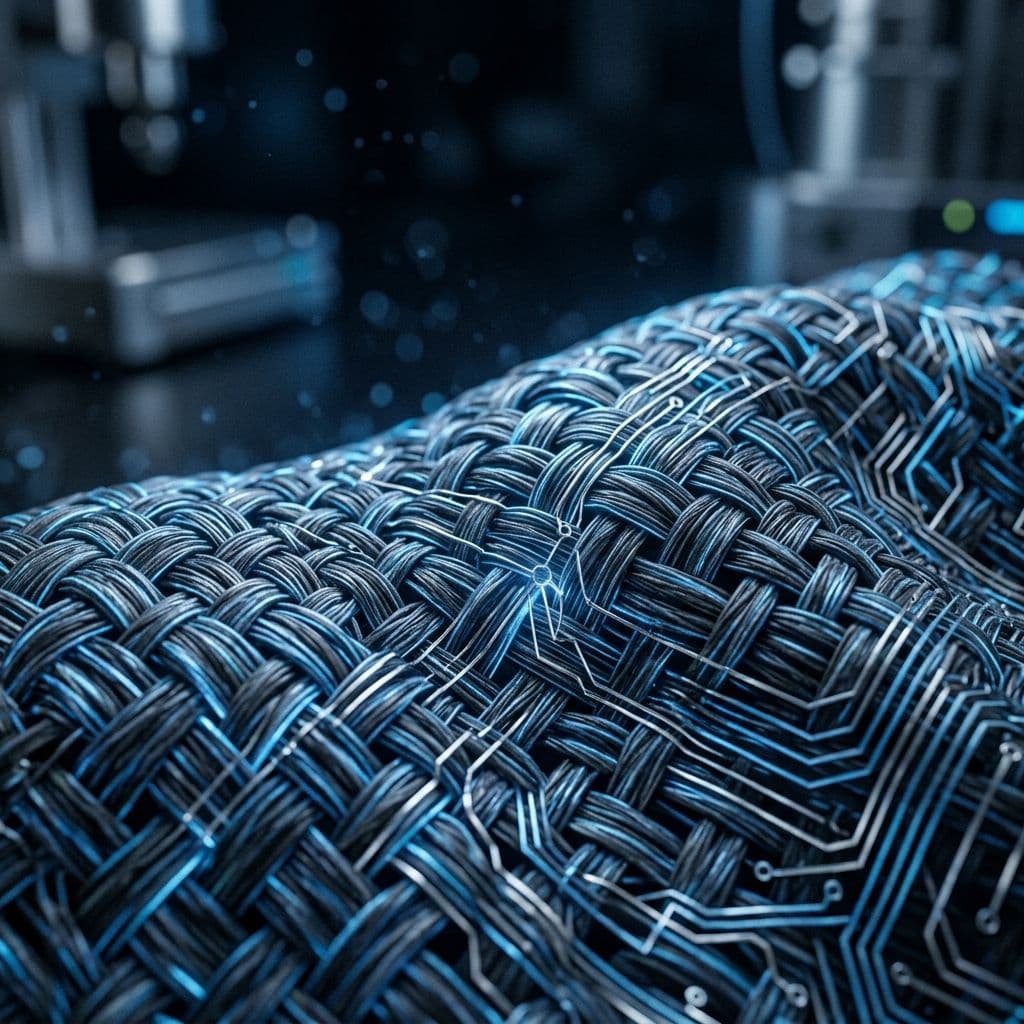
Grafren AB, a Swedish startup spun out of Linkoping University in 2018, has achieved a significant milestone in graphene commercialisation - a newly patented method to separate high-quality graphene flakes at scale, and a second pending patent for embedding those flakes directly into fabric fibers.
The company specialises in graphene flakes and their application to textiles. Their patented separation method uses gravity to sort flakes by thickness and lateral size in large liquid dispersions - a process that is both energy-efficient and viable for industrial production. This solves one of graphene’s biggest commercialisation obstacles: the costly and labour-intensive post-synthesis treatment of graphene dispersions.
The result is an electrically conductive fabric unlike anything on the market. Every individual fiber is coated with the thinnest graphene flakes, creating a conductive “skin” with controlled electrical conductivity. The fabric remains soft, flexible, air-permeable and moisture-permeable - indistinguishable from conventional fabric to the touch. With just two grams of graphene per square meter of polyester fabric, it achieves a resistance of 500 Ohm/m2 - at least 10 times lighter than competing conductive materials.
Grafren’s conductive textiles are already attracting interest from healthcare, sports, aerospace, defence and gaming sectors. A first product for sports equipment was announced in 2021. The company is scaling up manufacturing from 60x40 cm2 panels toward full roll-to-roll production.
Looking ahead, Grafren envisions a Digital Textile Interface (DTI) - garments embedded with invisible electrodes capable of monitoring health metrics, transmitting electrical nerve stimulation for pain control, and enabling seamless human-machine communication. The company is exploring hexagonal boron nitride layering on top of graphene-coated fibers to enable partial insulation, which would allow printed-circuit-board-like structures woven directly into fabric.
Source: Graphene Flagship - https://graphene-flagship.eu/4030