
AI-Powered Characterization of Twisted Bilayer Graphene and 2D Materials
Learn how deep learning is revolutionizing the structural characterization of twisted bilayer materials, accelerating the development of next-generation...
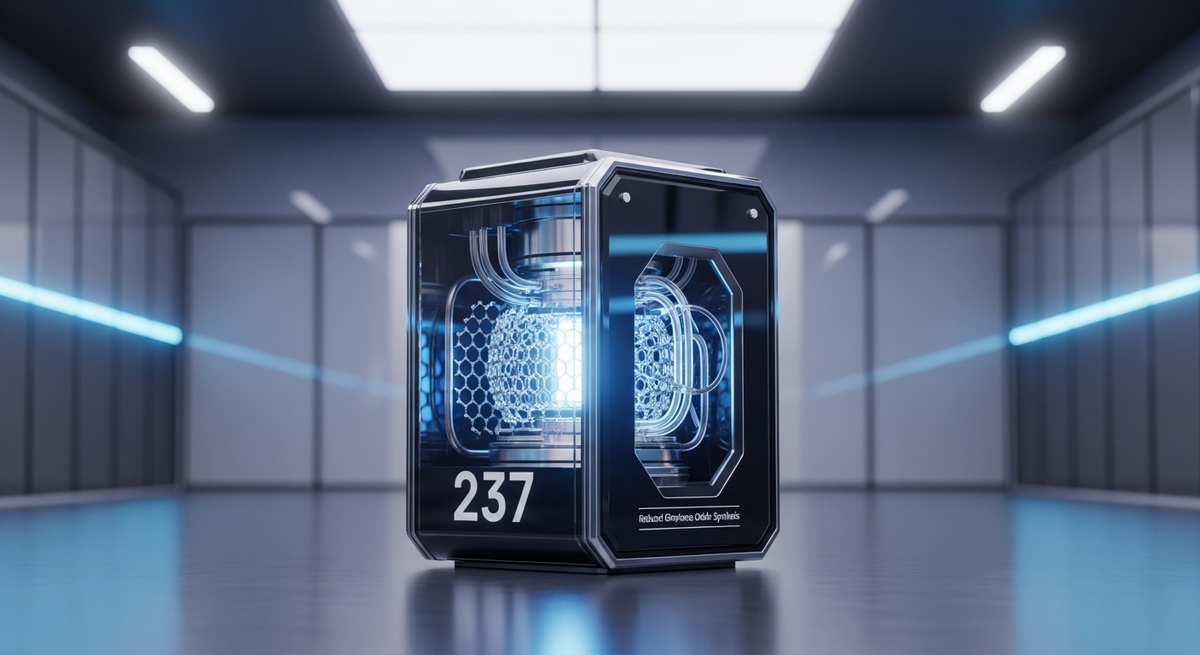
The quest for high-performance materials is a perpetual driver of scientific innovation, and few materials have captivated the imagination of researchers as profoundly as graphene. With its remarkable two-dimensional structure, graphene promises to redefine a multitude of industries, from electronics to energy storage. However, harnessing its full potential often requires careful modification and scalable production methods.
Among the most promising derivatives is Reduced Graphene Oxide (RGO), a material that bridges the gap between the easily processable nature of graphene oxide (GO) and the superior electrical conductivity of pristine graphene. This makes RGO an ideal candidate for diverse applications, particularly in electrocatalysis where its unique properties can significantly enhance reaction efficiencies and material performance. Understanding its synthesis pathways, especially from abundant precursors like multiwalled carbon nanotubes (MWCNTs), is critical for widespread adoption.
This deep dive explores the intricate process of Reduced Graphene Oxide Synthesis from multiwalled carbon nanotubes, delving into the precise chemical and physical transformations required. We will examine the critical steps of oxidation, subsequent reduction, and the rigorous characterization methods that validate its structure and performance. Furthermore, we will unpack the extraordinary electrocatalytic properties that position RGO as a frontrunner for revolutionizing next-generation power sources and advanced electrochemical systems, offering a path to easily produced, low-cost, high-performance electrode materials.
Graphene stands as a planar polynuclear aromatic macromolecule, uniquely characterized by its two-dimensional order of carbon atoms arranged in a hexagonal lattice, mirroring the basal face of graphite crystals. These carbon atoms exist in an sp²π-hybridized state, contributing to graphene's exceptional electronic properties. Structurally, the theoretical thickness of a single graphene sheet is approximately 0.34 nm, a testament to its atomic-scale dimensions. This peculiar structure, where charge carriers enjoy unlimited freedom of movement within the plane, confined only by a narrow space between atomic p-orbitals spaced about 0.3 nm apart, gives rise to its unparalleled electrophysical and electrochemical characteristics.
Carbon, as an element, boasts an incredibly rich allotropy, manifesting in various solid-state structural forms. These include the familiar diamond with its tetrahedral lattice, graphite with its layered hexagonal structure, and lonsdaleite, often referred to as hexagonal diamond. Beyond these, the carbon family encompasses fascinating structures like fullerenes (such as C₆₀ and C₇₀, discovered in 1985), amorphous carbon, and Carbon Nanotubes (CNTs), which were first identified in 1991. Additionally, carbin, a linear chain modification of carbon with either polyine (–C≡C–) or polycumulene (=C=C=) structures, further highlights carbon's versatility. It is important to note that since 1995, the international organization IUPAC decreed that terms like “graphite layers” or “carbon sheets” should be replaced by “graphene,” reserving “graphite” exclusively for the three-dimensional structure.
Initially, thermodynamic analyses based on atomic position fluctuations, championed by Landau and Peierls over 70 years ago, suggested that one- and two-dimensional crystal structures would be inherently unstable. However, the stable existence of graphene sheets in reality is attributed to their equilibrium state not being perfectly flat but rather subtly wavy. These spatial inhomogeneities typically possess a lateral dimension of approximately 5–10 nm and a height of about 1 nm, providing the necessary thermodynamic stability. This fundamental understanding underpins the practical development of materials like RGO, making Reduced Graphene Oxide Synthesis a viable and impactful field of research.
The journey to Reduced Graphene Oxide Synthesis from MWCNTs begins with the challenging process of breaking down these robust structures into graphene oxide precursors. MWCNTs, characterized by their multiple concentric graphite layers, possess strong carbon-carbon bonds that require significant energy to disrupt. The initial step involves careful selection of oxidants, a critical decision guided by a precise understanding of the carbon-carbon bond-breaking energy. This chemical action aims to both break the tubular structure and introduce oxygen-containing functional groups, effectively transforming the hydrophobic MWCNTs into hydrophilic graphene oxide.
Various strategies have been developed to achieve the unzipping and opening of carbon nanotubes, each with its own advantages and mechanisms. These methods include direct chemical action, where powerful oxidizing agents selectively etch and cleave the nanotube walls. Sonochemical unzipping utilizes high-frequency sound waves to create cavitation bubbles, generating localized extreme conditions that mechanically and chemically degrade the nanotubes. Plasma etching employs reactive plasma species to precisely remove carbon atoms and open the nanotube structure, offering a controlled approach.
Further innovative techniques for opening MWCNTs include catalytic opening with metal nanoparticles, where specific metal catalysts facilitate bond cleavage. Microwave opening and laser radiation provide rapid, localized heating to induce structural changes and bond scission. For highly precise manipulation, scanning tunnel microscopy (STM) can be employed to mechanically or electrically unwrap individual nanotubes. Other methods like electrically unwrapping, electrochemical unrolling, and high-temperature hydrogenation offer alternative pathways to prepare graphene oxide precursors, each contributing to the versatility of Reduced Graphene Oxide Synthesis from MWCNTs.
Once multiwalled carbon nanotubes have been effectively oxidized and unzipped to form graphene oxide (GO), the next pivotal step in Reduced Graphene Oxide Synthesis is the reduction process. Graphene oxide, while highly processable due to its hydrophilic nature and abundant oxygen-containing functional groups (such as hydroxyl, epoxy, and carboxyl groups), suffers from significantly diminished electrical conductivity compared to pristine graphene. The primary objective of reduction is to remove these oxygen functionalities, thereby restoring the π-conjugation network and enhancing the electrical and thermal properties of the material.
The selection of appropriate reductants is paramount to achieving the desired degree of reduction and preserving the structural integrity of the graphene sheets. This choice is systematically made by comparing the standard electrochemical redox potentials of various reductants with those of the oxygen-containing functional groups present on the graphene oxide surface. For instance, strong reducing agents like hydrazine, hydroiodic acid, or ascorbic acid are commonly employed, each offering different reduction efficiencies and potential for byproduct formation. The precise control over the reduction conditions—including temperature, reaction time, and reductant concentration—is crucial to tailor the properties of the resulting RGO.
Effective reduction not only restores electrical conductivity but also influences the mechanical strength and surface chemistry of the RGO. An optimized reduction process aims to achieve a high carbon-to-oxygen ratio, mimicking the electronic structure of graphene, while minimizing structural defects and aggregation. The resulting Reduced Graphene Oxide retains a significant portion of graphene's desirable properties, making it an excellent candidate for applications requiring both high conductivity and processability. This careful tailoring during reduction ensures that the synthesized RGO can meet the specific demands of advanced electrochemical systems and catalytic applications.
One of the most challenging yet indispensable aspects of working with two-dimensional materials like graphene and Reduced Graphene Oxide is their accurate identification and comprehensive characterization. The primary difficulty lies not solely in the synthesis but in precisely determining their fundamental parameters, including dimensions, the exact number of layers, and the nature of surface functional groups. Without rigorous characterization, the properties and potential applications of synthesized materials remain largely speculative, making advanced analytical techniques absolutely critical for advancing the field of Reduced Graphene Oxide Synthesis.
To precisely identify graphene and determine the number of layers, Raman spectroscopy is widely employed. This powerful technique not only quantifies the number of layers but also provides insights into their mutual arrangement within the graphene structure, distinguishing between single-layer, few-layer, and multi-layer graphene. Another vital method for determining the number of layers in graphene samples is Low-Energy Electron Diffraction (LEED), which analyzes the diffraction patterns of electrons scattered from the material's surface, revealing its periodicity and layer count. These techniques are foundational for confirming the successful preparation of graphene-like materials from MWCNT precursors.
Beyond layer count, understanding the chemical composition and functional groups is crucial. X-ray Photoelectron Spectroscopy (XPS), in conjunction with Infrared Spectroscopy (IRS), allows for the precise establishment of the nature and quantity of functional groups present on the RGO surface, directly assessing the success of the oxidation and reduction steps. For visualizing structural defects and morphological features, Transmission Electron Microscopy (TEM), Atomic-Force Spectroscopy (AFS), and Scanning Tunnel Microscopy (STM) are indispensable. STM, for instance, can even reveal atomic-scale defects in the obtained graphene, providing invaluable insights into material quality.
Further macroscopic and colloidal characterization methods complement these atomic and molecular scale techniques. The absorption of sols in ultraviolet-visible (UV-Vis) spectroscopy can indicate the dispersion stability and concentration of graphene suspensions. For determining the size of graphene particles in suspensions, the method of dynamic light scattering is utilized. Finally, macroscopic parameters such as electrical conductivity and specific surface area are measured to provide a holistic assessment of the material's potential performance in target applications, ensuring that the Reduced Graphene Oxide Synthesis yields a product with optimized properties for electrocatalysis.
The inherent structural peculiarity of graphene sheets—where charge carriers exhibit an unparalleled freedom of movement within the plane, constrained only by a narrow space of approximately 0.3 nm between atomic p-orbitals—bestows upon them unique electrophysical and electrochemical characteristics. This extraordinary electronic environment translates directly into exceptional catalytic capabilities, making graphene and its derivatives, particularly Reduced Graphene Oxide (RGO), highly attractive for advanced electrochemical applications. This intrinsic advantage positions RGO as a superior material for enhancing the performance of various power sources.
Reduced Graphene Oxide excels as a catalyst support, offering a high specific surface area, excellent electrical conductivity, and tunable surface chemistry—all critical attributes for boosting catalytic activity. Its two-dimensional nature provides abundant active sites for reactant adsorption and facilitates efficient electron transfer, which are prerequisites for high-performance electrocatalysis. When traditional catalysts, often precious metals or metal oxides, are deposited onto RGO, a synergistic effect is observed. The RGO acts not merely as an inert scaffold but actively participates in the catalytic process by promoting charge transfer and stabilizing catalytic nanoparticles, thereby enhancing their efficiency and durability in real-world applications.
The qualitative assessment of the catalytic properties of various materials for possible deposition on RGO underscores its versatility. For instance, in fuel cells, RGO-supported platinum nanoparticles exhibit superior oxygen reduction reaction (ORR) kinetics compared to unsupported platinum. Similarly, in supercapacitors and batteries, RGO's high conductivity and large surface area contribute to enhanced energy and power density. The Reduced Graphene Oxide developed by the authors of the referenced chapter specifically promises much as an electrode material for power sources, not only due to its superior electrochemical performance but also because it can be easily produced and has a remarkably low cost. This combination of performance, accessibility, and economic viability makes RGO a game-changer for sustainable energy technologies.
The practical execution of Reduced Graphene Oxide Synthesis from multiwalled carbon nanotubes involves a meticulously designed procedure for both graphene oxide preparation and its subsequent reduction. The initial oxidation step, as outlined, focuses on breaking the strong carbon-carbon bonds within MWCNTs using carefully selected oxidants, creating a highly functionalized graphene oxide intermediate. This intermediate then undergoes a controlled chemical reduction using reductants chosen based on their electrochemical redox potentials relative to the oxygen-containing groups on GO, ensuring a high degree of deoxygenation and restoration of electronic conductivity.
The experimental investigations into the electrocatalytic properties of the synthesized RGO consistently highlight its significant potential. The material demonstrates enhanced performance as a catalyst support, effectively improving the efficiency of various electrochemical reactions crucial for energy conversion and storage. This is attributed to RGO's unique blend of high electrical conductivity, ample surface area, and the residual functional groups that can further tune its interaction with active catalyst species. The ease of production and low cost associated with the RGO developed by the chapter authors are particularly noteworthy, addressing key barriers to the widespread adoption of advanced materials.
Looking ahead, the future of Reduced Graphene Oxide Synthesis is bright, with continuous advancements expected in refining both the oxidation and reduction methodologies to achieve even greater control over RGO's properties. The ability to produce high-quality, cost-effective RGO from readily available precursors like MWCNTs positions it as a critical enabler for next-generation technologies. From highly efficient fuel cells and advanced batteries to supercapacitors and electrochemical sensors, RGO is poised to drive innovation across the energy landscape, offering sustainable and high-performance solutions. The ongoing research and development in this area will undoubtedly unlock further applications, solidifying RGO's role as a cornerstone material in the pursuit of a more energy-efficient future.
The journey from multiwalled carbon nanotubes to high-performance Reduced Graphene Oxide represents a significant leap in materials science, offering a scalable and cost-effective pathway to advanced electrocatalytic materials. Through meticulous oxidation and precise reduction, RGO emerges as a versatile platform, leveraging graphene's unique electronic and structural properties to revolutionize energy conversion and storage. Its documented efficacy as a catalyst support and electrode material, coupled with its ease of production and low cost, positions RGO as a critical component in the development of next-generation power sources.
The insights provided by leading research, such as the work detailed in the Graphene Science Handbook, underscore the immense promise of RGO. As we continue to push the boundaries of materials engineering, the strategic synthesis and application of RGO will undoubtedly unlock new efficiencies and capabilities across various industries. To explore how these cutting-edge graphene solutions can benefit your research and development, we invite you to discover the innovative materials available at usa-graphene.com, your partner in advanced graphene technology.
Serious about B2B integration? Test our premium Pulsed Electrical Resistive Carbon Heating turbostratic graphene in your lab. 100g sample packs available now.
Explore More
Learn how deep learning is revolutionizing the structural characterization of twisted bilayer materials, accelerating the development of next-generation...

Learn to build a prototype graphene FET biosensor for sensitive DNA detection. This guide covers materials, fabrication, and testing for point-of-care...

Discover how hopping-mediated charge transport explains graphene's electrical behavior beyond the ideal ballistic regime, a key insight for creating...