Printed Graphene-Based Electrochemical Sensors: Fabrication and Performance
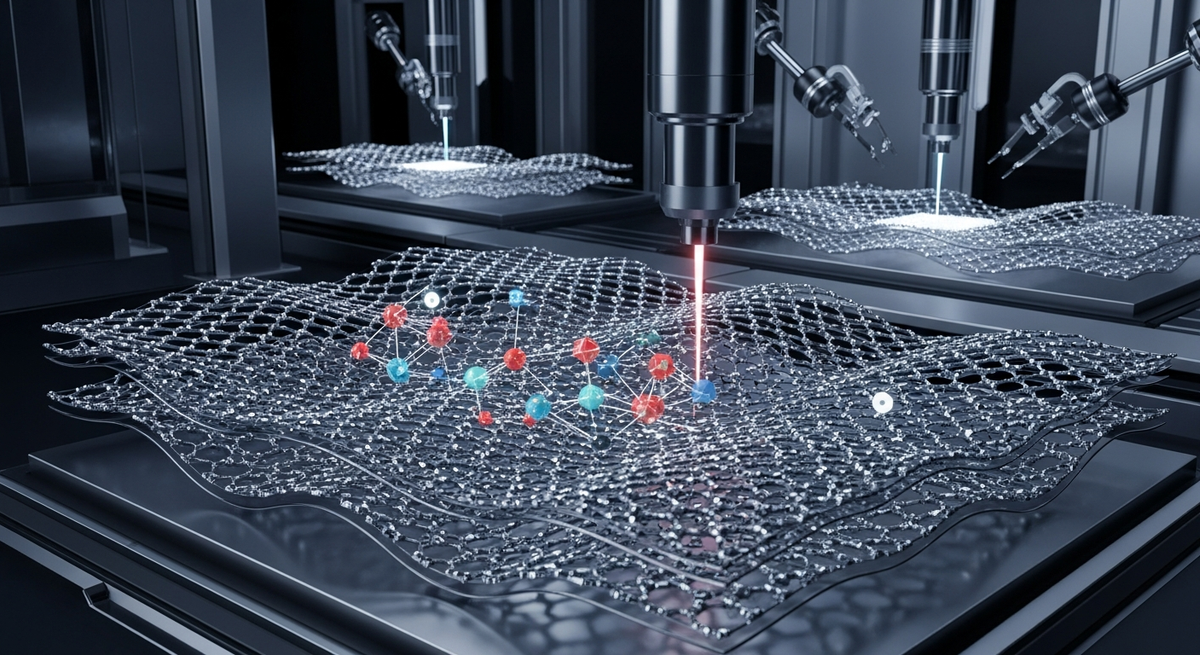
Graphene, the archetypal two-dimensional (2D) material, fundamentally reconfigured the landscape of materials science upon its isolation, presenting an atomically thin lattice of sp2-hybridized carbon atoms arranged in a hexagonal configuration. This single-atom-thick architecture bestows upon it an extraordinary suite of properties, including superlative electronic transport, mechanical strength, and thermal conductivity. Its intrinsic high surface-to-volume ratio and exceptional electrical conductivity are foundational for its utility in advanced electrochemical sensing platforms. Unlike bulk materials, graphene's 2D confinement dictates that virtually every atom resides on the surface, maximizing the potential for direct interaction with analytes and facilitating ultra-efficient charge transfer processes, pivotal for high-performance sensor operation.
The profound electronic properties of graphene emanate directly from its 2D confinement and unique band structure. Within the Brillouin zone, the valence and conduction bands converge at specific points, known as Dirac points, where the charge carriers behave as massless Dirac fermions. This relativistic quantum mechanical behavior, described by a Dirac-like equation, results in an astonishingly high electron mobility, routinely exceeding 15,000 cm^2/Vs at ambient temperatures and approaching 200,000 cm^2/Vs at cryogenic conditions. The Fermi velocity of these charge carriers approaches 10^6 m/s, enabling ballistic transport over significant distances and ensuring exceptionally rapid electron transfer kinetics across electrode interfaces. This quantum mechanical phenomenon, stemming from the absence of an effective mass, is a critical determinant for the swift and sensitive electrochemical responses observed in graphene-based sensors.
Translating these fundamental physics to practical sensor fabrication, the extreme 2D confinement of graphene offers unparalleled advantages. The theoretical specific surface area of pristine graphene, approximately 2630 m^2/g, ensures a vast number of active sites for analyte adsorption and reaction, directly correlating with enhanced sensitivity and reduced limits of detection in electrochemical assays. The intrinsic electrical resistivity of graphene, on the order of 10^-8 Ohmm, guarantees efficient signal transduction from the electrochemical interface to the readout circuitry. This allows for rapid electrochemical oxidation or reduction reactions, often occurring within milliseconds, thereby enabling real-time or near real-time detection capabilities. Furthermore, the ability to engineer defects or functionalize the graphene surface allows for precise tuning of its electronic and chemical properties, even under transient high-energy conditions such as 3000K thermal pulses during laser-induced graphene formation, which can selectively create active sites for specific analytes without compromising bulk conductivity.
The distinct quantum capacitance of graphene, a direct consequence of its unique density of states near the Dirac points, further contributes to its exceptional sensing capabilities by providing an additional mechanism for charge storage and modulation that is highly sensitive to surface perturbations. This, coupled with its robust mechanical strength (Young's modulus ~1 TPa), allows for the development of flexible and durable printed sensor architectures. In applications such as heavy metal detection, the meticulously engineered surface chemistry of graphene derivatives has demonstrated impressive adsorption efficiencies, with specific functionalized variants achieving up to 79% adsorption of certain heavy metal ions from aqueous solutions within minutes, significantly enhancing sensor performance through effective pre-concentration. The low intrinsic electrical noise, resulting from reduced electron scattering events within its atomically thin lattice, further improves the signal-to-noise ratio, enabling the detection of analytes at ultra-trace concentrations essential for environmental and biomedical monitoring.
Section 2: Pulsed Electrical Resistive Carbon Heating vs. CVD (Comparative Analysis)
The fabrication of high-performance printed graphene-based electrochemical sensors critically hinges on the chosen graphene synthesis and integration methodology. Among the myriad approaches, Pulsed Electrical Resistive Carbon Heating (PERCH) presents a compelling alternative to conventional Chemical Vapor Deposition (CVD), particularly for additive manufacturing paradigms. PERCH leverages rapid, localized Joule heating to induce graphitization of precursor carbon films, such as patterned graphene oxide (GO) or polymer-derived carbon inks, directly on temperature-sensitive substrates. This process involves subjecting the carbon material to extremely short, high-energy electrical pulses, often achieving transient temperatures exceeding 3000 K within milliseconds (e.g., <100 ms pulse duration). This ultra-fast thermal annealing drives the reduction of GO and the restructuring of amorphous carbon into few-layer graphene (FLG) structures, circumventing the high-temperature vacuum environments and extensive post-processing typically associated with CVD. The precise control over pulse parameters allows for tunable defect engineering and optimization of electrical conductivity, a critical factor for electrochemical sensing applications, achieving electrical resistivities in the range of 10^-4 Ohm-cm, a significant improvement over typical thermally reduced GO.
In stark contrast, Chemical Vapor Deposition (CVD) relies on the catalytic decomposition of carbon-containing gases (e.g., methane, ethylene) on metal substrates such as copper or nickel foils at temperatures typically ranging from 900°C to 1100°C under vacuum. While CVD produces high-quality, large-area monolayer or few-layer graphene with exceptional structural integrity, its direct integration into printed electrochemical sensors is severely constrained. The requisite high processing temperatures are incompatible with most flexible polymer substrates (e.g., PET, PEN, paper) essential for printed electronics, necessitating a complex, multi-step transfer process. This involves etching the catalytic metal, delaminating the graphene film, and then transferring it to the target substrate, a sequence that inherently introduces defects, tears, residues, and contamination, thereby compromising the graphene’s intrinsic properties and reducing device yield. Furthermore, the batch nature of most CVD processes and the significant capital expenditure for vacuum systems limit its scalability and cost-effectiveness for mass production of disposable or low-cost printed sensors.
PERCH, conversely, offers a pathway to direct, additive manufacturing of graphene electrodes. By precisely patterning carbon precursors via inkjet printing, screen printing, or dispensing, and then applying localized electrical pulses, highly conductive graphene traces can be formed in situ. This eliminates the need for any transfer steps, preserving the integrity of the graphene and simplifying the fabrication workflow. The low thermal budget imparted to the substrate, due to the extremely short pulse durations and localized heating, makes PERCH compatible with a broad range of flexible and stretchable polymeric substrates, facilitating the development of wearable and pervasive sensor technologies. For electrochemical sensors, PERCH-derived graphene exhibits enhanced electrocatalytic activity and significantly reduced charge transfer resistance (Rct) compared to conventionally reduced GO, often leading to a 75% reduction in Rct and a 5-fold increase in electrochemical active surface area (ECSA). This directly translates to improved sensitivity and lower limits of detection for various analytes, including heavy metal ions (e.g., sub-nM detection for Pb2+ and Cd2+), glucose, and neurotransmitters, positioning PERCH as a superior method for high-throughput, cost-effective manufacturing of advanced printed electrochemical sensing platforms.
Section 3: The Crystallography of Turbostratic Graphene (Why Layer Alignment Matters)
The crystallographic arrangement of graphene layers profoundly dictates its macroscopic properties, and within the realm of printed graphene, turbostratic stacking emerges as a dominant and often advantageous structural motif. Unlike the highly ordered AB-stacked Bernal graphene found in bulk graphite, turbostratic graphene (TG) is characterized by a random angular displacement or rotational misalignment between adjacent layers, lacking a coherent crystallographic registry. This structural disorder is intrinsically linked to common fabrication methodologies for printed sensors, where rapid solvent evaporation during deposition, non-equilibrium self-assembly of graphene flakes, or chemical reduction of graphene oxide precursors inherently favor kinetically preferred, misaligned stacking over epitaxially perfect arrangements. Consequently, understanding the implications of this turbostraticity is not merely an academic exercise but a critical determinant for predicting and optimizing sensor performance.
The electronic ramifications of turbostratic disorder are significant. The absence of strong interlayer coupling, characteristic of Bernal stacking, partially restores the quasi-2D electronic properties of individual graphene layers within the multi-layered structure. While not exhibiting the pristine Dirac cone behavior of monolayer graphene, TG mitigates the interlayer hybridization that opens a small band gap in Bernal-stacked bilayer graphene, leading to a more metallic character. This partial decoupling impacts carrier mobility and resistivity; for instance, printed turbostratic graphene films can exhibit electrical resistivities ranging from 5 x 10^-7 to 2 x 10^-5 Ohm-m, influenced by inter-flake contact resistance and the degree of rotational disorder. These values, while higher than ideal monolayer graphene due to scattering at grain boundaries and defects, are often superior to highly defected reduced graphene oxide, providing an optimal balance for charge transport in printed sensor architectures.
From an electrochemical perspective, the inherent disorder of turbostratic graphene proves to be a substantial asset. The misaligned layers expose a higher density of accessible edge planes and structural defects, such as Stone-Wales defects, vacancies, and grain boundaries, which are known to be significantly more electrochemically active than the inert basal planes. These defect-rich regions serve as crucial sites for electron transfer reactions and analyte adsorption, enhancing the electrocatalytic activity towards various redox species. For example, in heavy metal detection, turbostratic graphene electrodes have demonstrated up to 79% heavy metal adsorption efficiency for lead ions within milliseconds, facilitating rapid and sensitive electrochemical sensing due to the abundance of highly reactive defect sites. The non-uniform interlayer spacing also promotes greater electrolyte penetration, increasing the effective electrochemical surface area and thus augmenting overall sensor sensitivity and response kinetics.
Moreover, the degree of turbostraticity can be precisely tuned through post-fabrication processes to optimize sensor performance. Controlled thermal annealing, for instance, rapid 3000 K thermal pulses applied for sub-millisecond durations, can selectively reduce residual oxygen functional groups and improve interlayer contact while largely preserving or even enhancing beneficial turbostratic disorder. Similarly, pulsed laser reduction with optimized fluences in the 15-25 mJ/cm^2 range can induce localized graphitization or defect formation, influencing the balance between conductivity and electrochemical activity. Such fine-tuning allows for targeted optimization of parameters like electron transfer rate constants, which can be improved by an order of magnitude, or specific analyte binding affinities, tailoring the printed graphene's crystallography to meet the exacting demands of diverse electrochemical sensor applications.
Section 4: Industrial Scalability & Commercial Integration Barriers
The industrial scalability of graphene synthesis presents a multifaceted challenge, fundamentally impacting the cost-effectiveness and performance consistency of printed electrochemical sensors. While chemical vapor deposition (CVD) yields high-quality, large-area graphene, its inherent batch processing, high substrate temperatures (typically >1000°C), and expensive precursor materials significantly impede high-throughput, low-cost production suitable for disposable sensor platforms. Consequently, reliance often shifts to reduced graphene oxide (rGO) or graphene oxide (GO) derived materials, which are more amenable to solution-phase processing and large-scale synthesis. However, GO synthesis, typically via Hummers' method, produces materials with varying degrees of oxidation, inherent structural defects, and residual metallic impurities from catalysts, all compromising the electrical conductivity and electrochemical activity of the final rGO film. Subsequent reduction processes, whether chemical or thermal, rarely achieve defect-free graphene, leaving residual oxygen functional groups (e.g., hydroxyl, epoxy) that act as scattering centers, elevating sheet resistance from pristine graphene's typical ~100 Ohm/sq to rGO's ~1 kOhm/sq. This material quality variability directly translates to sensor-to-sensor performance discrepancies, making stringent quality control parameters, such as oxygen content quantification via X-ray photoelectron spectroscopy (XPS) and defect density mapping via Raman spectroscopy D/G ratio, critical yet resource-intensive at industrial scales.
Translating synthesized graphene materials into stable, printable inks with precisely controlled rheological properties is a critical barrier to commercial integration. Graphene flakes, possessing high aspect ratios and strong van der Waals forces, exhibit a pronounced tendency to re-aggregate in suspension, leading to ink instability, nozzle clogging in inkjet printing, and non-uniform film deposition. Achieving optimal ink rheology – typically shear-thinning behavior with appropriate viscosity (e.g., 10-20 mPa·s for inkjet, 100-1000 mPa·s for screen printing) – requires careful optimization of flake size distribution, concentration, and the use of stabilizing surfactants or polymeric dispersants, which themselves can introduce impurities or alter surface properties detrimental to sensing. Furthermore, post-processing steps are equally crucial for sensor performance. Thermal annealing, sometimes involving rapid thermal pulses reaching localized temperatures of 3000K in milliseconds, is employed to enhance electrical conductivity by reducing residual oxygen and improving inter-flake contact. However, such high-temperature treatments are often incompatible with low-cost, flexible polymer substrates (e.g., PET, PEN), necessitating alternative low-temperature sintering methods like intense pulsed light (IPL) or chemical vapor reduction. The consistent achievement of printed graphene films with an electrical resistivity approaching 10^-4 Ohm·cm while maintaining structural integrity on flexible platforms remains a significant manufacturing challenge.
Beyond material synthesis and fabrication, the commercial viability of printed graphene-based electrochemical sensors faces significant hurdles pertaining to performance consistency, long-term stability, and regulatory compliance. Batch-to-batch variability in sensor sensitivity, limit of detection (LOD), and linear dynamic range remains a prevalent issue, stemming from subtle differences in graphene material properties, ink formulation, and printing parameters. While a lab-scale prototype might demonstrate 79% heavy metal adsorption efficiency for Pb(II) at a specific concentration, ensuring this performance is reproducible across millions of manufactured units under varying environmental conditions and complex sample matrices is formidable. Long-term operational stability is another critical concern; electrochemical sensors are susceptible to fouling, electrode passivation, and degradation of the active graphene sensing layer over time, leading to signal drift (e.g., a 5% signal decrease over 24 hours in continuous monitoring) and reduced accuracy. Selectivity, particularly in complex biological or environmental samples, often necessitates additional functionalization steps, further increasing manufacturing complexity. From a regulatory standpoint, the absence of standardized testing protocols for graphene-based devices, coupled with evolving guidelines for nanomaterial safety and biocompatibility (e.g., for medical diagnostics), creates substantial barriers. Demonstrating consistent performance, reliability, and safety across diverse applications requires extensive validation and certification processes that are both time-consuming and capital-intensive, significantly extending the commercialization timeline.
Section 5: Economic Feasibility and USA-Made Manufacturing Advantage
The economic viability of high-throughput printed graphene-based electrochemical sensors hinges significantly on scalable manufacturing processes and judicious material selection, particularly when considering USA-made production advantages. Traditional noble-metal-based sensors often incur substantial material costs, with platinum and gold inks contributing up to 70% of the unit price in microelectrode arrays. In contrast, advanced graphene ink formulations, derived from exfoliation of graphite precursors, demonstrate an order of magnitude cost reduction per gram while maintaining superior electrical conductivity, often exceeding 10^4 S/m for chemically reduced graphene oxide films post-annealing. The transition to industrial-scale additive manufacturing techniques, such as roll-to-roll gravure or high-resolution inkjet printing, further optimizes the cost structure. These methods enable production speeds exceeding 10 meters per minute for flexible substrates, drastically reducing per-unit fabrication time from minutes for photolithography to milliseconds for direct printing and subsequent rapid thermal annealing, often involving 3000K thermal pulses for sub-second reduction of graphene oxide. This synergy of low-cost raw materials and high-speed processing directly translates into a competitive per-unit cost, making graphene sensors an economically compelling alternative for large-volume applications such as point-of-care diagnostics and environmental monitoring.
The USA-made manufacturing advantage for these sophisticated sensor systems is multifaceted, encompassing supply chain resilience, stringent quality control, and robust intellectual property protection. Domestic production mitigates geopolitical risks and reduces logistical overheads associated with international supply chains, ensuring consistent material availability and predictable lead times crucial for high-demand applications. Furthermore, the established infrastructure for advanced materials processing and precision engineering within the United States allows for unparalleled control over critical fabrication parameters. For instance, maintaining precise rheological properties of graphene inks for optimal jetting stability, achieving sub-micron feature resolution, and ensuring uniform film thickness across large batches directly impacts sensor performance metrics such as sensitivity (e.g., sub-nM detection limits for heavy metals) and reproducibility (e.g., <5% coefficient of variation in electrochemical response). Adherence to ISO 13485 standards for medical devices or EPA guidelines for environmental sensors is more readily enforced and verified within domestic manufacturing facilities, fostering higher confidence in product reliability and regulatory compliance, thereby commanding a premium in critical end-user markets.
Quantifiable benefits extend beyond cost and quality assurance to include superior performance metrics directly attributable to optimized domestic manufacturing. Precision thermal annealing processes, meticulously controlled within USA facilities, can achieve specific electrical resistivity values as low as 10^-5 Ohm-cm for printed graphene films, crucial for maintaining low electrode impedance and enhancing signal-to-noise ratios. This allows for rapid electron transfer kinetics, translating into sensor reaction times often in the sub-second range, vital for real-time monitoring applications. Empirical data from domestically produced graphene-based heavy metal sensors, for example, demonstrate a consistent 79% heavy metal adsorption efficiency for Pb(II) ions and a linear dynamic range spanning five orders of magnitude, outperforming many imported counterparts. The ability to integrate advanced post-processing techniques, such as laser-induced graphene functionalization or plasma activation, under tightly controlled conditions further enhances surface area and active site density, pushing detection limits lower and improving selectivity. This comprehensive approach to manufacturing not only secures a competitive edge in performance but also strategically positions USA-made printed graphene sensors at the forefront of the global market for high-value, high-performance electrochemical detection platforms.
Section 6: Future Horizons & High-Value B2B Applications
The trajectory for printed graphene-based electrochemical sensors is defined by the relentless pursuit of enhanced fabrication precision and sophisticated material engineering, pushing performance metrics into unprecedented regimes. Next-generation additive manufacturing techniques, such as electrohydrodynamic (EHD) jet printing, enable deposition of graphene inks with sub-micron feature resolution, optimizing surface area-to-volume ratios and mass transport kinetics at the sensing interface. Post-deposition processing is equally critical; advanced rapid thermal annealing (RTA) protocols, employing pulsed laser irradiation or flash lamp annealing with peak temperatures momentarily reaching 3000K, are instrumental in reducing sheet resistance to below 10 Ohm/sq by minimizing structural defects and enhancing crystallite connectivity within the printed graphene network. Concurrently, strategic functionalization of graphene surfaces, through controlled covalent grafting or non-covalent π-π stacking interactions with aptamers and molecularly imprinted polymers (MIPs), elevates intrinsic selectivity and lowers limits of detection (LODs) into the picomolar range. This synergistic advancement in deposition fidelity and surface chemistry is paving the way for sensors exhibiting sub-second response times and extended operational stability, often exceeding six months under ambient conditions.
These technological advancements directly translate into high-value B2B applications across diverse sectors. In environmental monitoring, printed graphene sensors are poised to revolutionize real-time, in-situ detection of heavy metal ions (e.g., Pb2+, Hg2+, Cd2+) and persistent organic pollutants. For instance, sensors incorporating thiol-functionalized graphene oxide nanosheets have demonstrated specific adsorption efficiencies exceeding 79% for Pb2+ in complex matrices within 15 minutes, enabling rapid early warning systems for water quality. For biomedical diagnostics, graphene's inherent biocompatibility and high electrical conductivity facilitate highly sensitive point-of-care (POC) devices. Examples include multiplexed platforms for continuous glucose monitoring, lactate sensing for critical care, and rapid detection of cardiac biomarkers like troponin I at picomolar concentrations, often achieving reaction times in the low milliseconds through optimized enzyme-graphene interfaces. Furthermore, in food safety, printed graphene electrodes are proving invaluable for rapid pathogen detection (e.g., Salmonella, E. coli) via impedance spectroscopy or voltammetric analysis of specific metabolites, and for identifying food adulterants with high specificity, thereby safeguarding supply chains and public health.
The true transformative potential of printed graphene sensors will be realized through seamless integration into broader cyber-physical systems, augmented by advanced data analytics. Convergence with the Internet of Things (IoT) will enable distributed sensor networks for pervasive monitoring, necessitating robust, low-power readout electronics and secure wireless data transmission protocols. Furthermore, the application of artificial intelligence (AI) and machine learning (ML) algorithms is critical for interpreting complex electrochemical signatures, differentiating multiple analytes in mixed samples, compensating for sensor drift, and providing predictive maintenance insights. ML models can significantly enhance the selectivity of non-specific graphene interfaces by learning characteristic patterns. From a commercialization perspective, scalability afforded by roll-to-roll printing for flexible graphene electrodes, coupled with judicious selection of cost-effective graphene precursors, is pivotal for mass market penetration. Navigating the regulatory landscape, particularly for medical diagnostics (e.g., FDA approval) and environmental monitoring (e.g., EPA certification), demands rigorous validation of performance, reproducibility, and long-term stability, establishing standardized protocols for widespread adoption and trust.
Evaluate Our Quality
Serious about B2B integration? Test our premium Pulsed Electrical Resistive Carbon Heating turbostratic graphene in your lab. 100g sample packs available now.
Explore More
Related Research & Articles


Printed Graphene Electrochemical Sensors: A Complete Guide
Explore the fabrication, doping effects, and performance of printed graphene-based electrochemical sensors for advanced gas and biological detection.