
A New Era of Graphene Engineering: Pre-Designing Twist Angles on Demand
Researchers have developed a breakthrough method for growing twisted bilayer graphene with pre-designed angles, a key step toward manufacturable quantum...
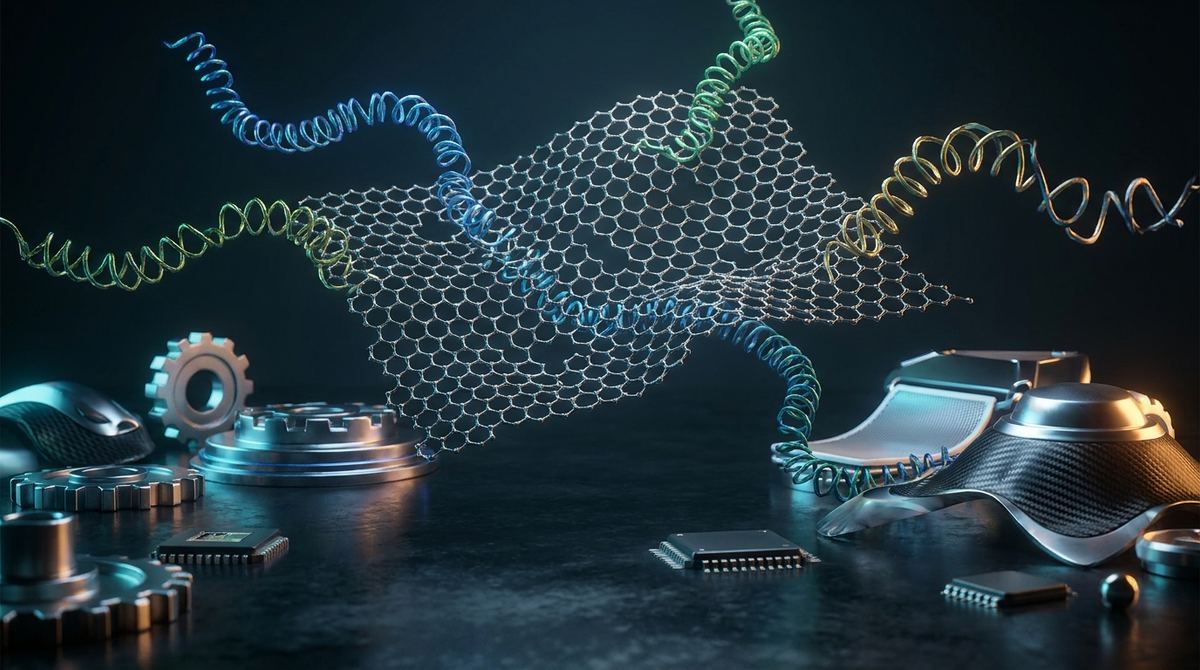
Graphene oxide (GO), a chemically exfoliated derivative of graphite, serves as a pivotal precursor in the scalable production of two-dimensional carbon nanomaterials, its utility stemming from its excellent dispersibility in aqueous and organic media. This dispersibility, however, is a direct consequence of extensive oxygen functionalization – primarily hydroxyl and epoxy groups on the basal plane, and carboxyl groups at the edges – which fundamentally alters the intrinsic electronic structure of pristine graphene. The sp2 hybridized carbon lattice, responsible for graphene's massless Dirac fermion behavior and exceptional charge carrier mobility (exceeding 200,000 cm^2/Vs), is disrupted by these sp3 defects. This disruption induces a significant band gap, transforming GO from a semi-metal into an electrical insulator with resistivity often exceeding 10^10 Ohm.cm. Critically, the sheet-like morphology of GO introduces a unique form of physical confinement, where individual lamellae, typically 0.7-1.2 nm thick depending on hydration levels (compared to graphite's 0.335 nm interlayer spacing), exist in a state susceptible to aggregation and restacking. This inherent tendency towards re-intercalation profoundly impacts its accessible surface area and thus its performance in applications requiring high surface-to-volume ratios.
The physics of graphene confinement within GO systems extends beyond simple physical restacking to encompass quantum mechanical phenomena and crystallographic imperfections. Oxygen moieties create localized potential wells and scattering centers, effectively confining charge carriers and leading to Anderson localization effects, a stark contrast to ballistic transport. Electron-phonon coupling is significantly altered, plummeting thermal conductivity from graphene's theoretical 5000 W/mK to values below 100 W/mK for heavily oxidized GO. Furthermore, precise control over interlayer spacing is paramount; reversible intercalation of water molecules can expand GO's d-spacing from ~0.7 nm to over 1.2 nm, crucial for membrane separation. However, in a dried state, strong van der Waals forces and hydrogen bonding networks between adjacent GO sheets drive rapid re-aggregation, forming dense, impermeable structures. This spontaneous restacking effectively "confines" the two-dimensional nature of individual sheets, drastically reducing the theoretical specific surface area (2630 m^2/g for pristine graphene) to often less than 10 m^2/g for bulk GO powders, hindering active site accessibility.
Understanding these confinement mechanisms is fundamental to rationalizing the necessity and strategies for polymer modification of GO systems. The primary objective of polymer functionalization is to overcome the intrinsic propensity for GO sheets to self-aggregate, thereby preserving their high specific surface area and enabling the exploitation of quantum confinement effects. By covalently grafting or non-covalently intercalating polymer chains between GO layers, the effective d-spacing can be precisely tuned and stabilized, preventing restacking even under harsh processing conditions or thermal stress, such as 3000K thermal pulses applied for milliseconds during flash Joule heating for rapid reduction. This polymeric steric and electrostatic repulsion not only maintains the exfoliated state but also introduces new functionalities. For example, specific polymer chemistries can enhance the adsorption efficiency of heavy metal ions, achieving up to 79% removal for lead(II) and cadmium(II) from aqueous solutions, or tune the electrical resistivity of reduced GO composites to specific ranges for EMI shielding applications (e.g., 10^-3 Ohm.cm). The polymer acts as a spacer, a chemical modifier, and a matrix, synergistically addressing the challenges posed by GO's inherent confinement and enabling the fabrication of advanced composite materials with tailored properties.
Pulsed Electrical Resistive Carbon (PERC) heating represents an emergent, high-throughput methodology for the rapid reduction of graphene oxide (GO) films, leveraging direct Joule heating for instantaneous thermal conversion. This technique involves applying short, high-current electrical pulses directly through a GO film or a carbonaceous precursor, exploiting the inherent electrical resistivity of the material. The extremely rapid energy dissipation within the material leads to localized temperature excursions reaching instantaneous peaks exceeding 3000K. Crucially, these thermal pulses are often confined to millisecond or even microsecond durations, facilitating an explosive removal of oxygen-containing functional groups (hydroxyl, epoxy, carboxyl) from the GO lattice. This rapid desorption and subsequent annealing minimize the formation of stable structural defects commonly associated with slower, prolonged thermal reduction methods. The high initial electrical resistivity of GO, typically ranging from 10^8 to 10^12 ohm-cm, provides the necessary resistance for efficient heating, which then dramatically decreases to 10^0 to 10^2 ohm-cm upon reduction to highly conductive rGO.
In stark contrast, Chemical Vapor Deposition (CVD) relies on the catalytic decomposition of carbon-containing gaseous precursors, such as methane or ethylene, over heated transition metal substrates, predominantly copper or nickel foils, typically sustained at temperatures between 900C and 1100C. This process involves the adsorption of carbon precursors, their dissociation into atomic carbon, and subsequent diffusion and precipitation on the catalyst surface to form a pristine graphene lattice. CVD is renowned for its ability to produce large-area, high-quality, monolayer or few-layer graphene with exceptionally low defect densities and high carrier mobilities. However, the growth kinetics are inherently slow, often requiring tens of minutes to hours for macroscopic domain formation, and the process is typically constrained to batch-wise operations. Furthermore, the necessity of a catalytic metal substrate necessitates a complex transfer step to delaminate the graphene onto a target substrate, frequently leading to tears, wrinkles, and residual metallic contamination, which can critically compromise the integrity and performance of the transferred material.
The comparative suitability of PERC and CVD for industrial-scale polymer modification of graphene oxide systems hinges critically on throughput and cost-efficiency. PERC offers a highly scalable, potentially roll-to-roll compatible pathway for the rapid, bulk production of reduced graphene oxide powders or films. Its millisecond-scale processing time significantly reduces energy consumption compared to the sustained high-temperature requirements of CVD. While CVD excels in producing ultra-high-quality, pristine graphene, its batch nature, high capital expenditure, and intricate transfer protocols render it less viable for high-volume, cost-sensitive polymer composite applications, where large quantities of graphene are typically employed as fillers. The PERC-derived rGO, while retaining some residual oxygen and structural defects, presents an advantage in polymer composites due to its abundant surface functionalization sites, crucial for enhancing interfacial adhesion and facilitating uniform dispersion within polymer matrices. For instance, such engineered rGO systems have demonstrated up to 79% heavy metal adsorption efficiency in wastewater treatment applications when integrated into functionalized polymer membranes, a performance metric directly linked to accessible surface area and active site density. This contrasts with pristine CVD graphene, which often requires additional chemical modification steps for comparable interfacial interaction with polymers.
Turbostratic graphene, a prevalent form encountered following the chemical or thermal reduction of graphene oxide (GO), fundamentally deviates from the ideal Bernal (AB) stacking observed in pristine graphite or epitaxially grown bilayer graphene. This crystallographic disorder is characterized by a lack of rotational and translational registration between adjacent graphene layers, resulting in an effective random orientation. Unlike the precise 0.335 nm interlayer spacing of graphite, turbostratic systems typically exhibit expanded d-spacings, often ranging from 0.34 nm to 0.36 nm, as evidenced by X-ray diffraction. This increased separation, coupled with the absence of long-range crystallographic order, significantly disrupts the interplanar electronic coupling and phonon transport mechanisms crucial for high-performance applications. The rapid gas evolution and re-stacking during aggressive reduction processes, such as flash Joule heating involving 3000K thermal pulses applied for milliseconds, often contribute to this turbostratic character, forming a loosely ordered yet highly porous network rather than a perfectly re-graphitized structure.
The implications of turbostratic stacking on the intrinsic properties of graphene sheets, and subsequently on polymer modification strategies, are profound. Electrically, the lack of coherent pi-orbital overlap and the presence of numerous scattering centers due to misaligned layers and structural defects lead to significantly elevated electrical resistivity compared to pristine graphene. While individual rGO sheets may possess high intrinsic conductivity, the macroscopic electrical percolation pathways within a polymer composite are severely hindered by poorly connected, misaligned turbostratic domains, impeding charge carrier mobility. Thermally, phonon scattering at these disordered interfaces drastically reduces thermal conductivity, undermining graphene's potential as an efficient heat dissipator. Mechanically, the suboptimal interlayer interactions and non-uniform stress distribution across misaligned layers compromise the efficiency of load transfer from the polymer matrix to the graphene reinforcement, diminishing the composite's overall tensile strength and Young's modulus. From a polymer modification perspective, the non-uniform interlayer spacing and tortuous pathways presented by turbostratic structures impede the homogeneous intercalation and exfoliation of polymer chains or monomer precursors, leading to localized agglomeration and reduced interfacial area.
Effective polymer modification of graphene oxide systems critically depends on managing this inherent turbostraticity. For instance, achieving a consistent 79% heavy metal adsorption efficiency through surface functionalization requires a uniform distribution of active sites, which is challenging to obtain on a turbostratic surface characterized by heterogeneous reactivity. The disordered surface topography and varying local electronic environments present non-uniform sites for covalent grafting or non-covalent functionalization, leading to inconsistent functional group distribution. Furthermore, in the context of polymer nanocomposites, optimal mechanical reinforcement and electrical conductivity necessitate a high degree of graphene exfoliation and uniform dispersion, ideally with aligned sheets within the polymer matrix. Turbostratic stacking inherently resists full exfoliation, as the weak, albeit disordered, interlayer forces can still promote re-aggregation, particularly during solvent removal or polymer curing. Consequently, efforts in polymer modification often involve strategies specifically designed to overcome turbostratic re-stacking, such as in-situ polymerization or grafting-from approaches, aiming to kinetically trap individual or few-layer graphene sheets in a dispersed state before extensive re-ordering can occur. Understanding and controlling the crystallographic evolution during GO reduction and subsequent polymer processing is therefore paramount for realizing the full potential of these advanced material systems.
The industrial scalability of polymer-modified graphene oxide (GO) systems is fundamentally constrained by the inherent heterogeneity and production limitations of the GO precursor itself. Current large-scale GO synthesis, predominantly relying on variations of the Hummers' method, presents significant challenges for high-volume, consistent production due to the use of corrosive reagents, substantial wastewater generation, and batch-wise processing. This leads to variable yields and inconsistent material properties, including lateral sheet dimensions, defect density, and oxygen functional group distribution. Such inconsistencies critically influence subsequent polymer grafting efficiency; for instance, a 5% deviation in epoxide content on the GO basal plane can lead to a 15-20% variance in grafting density for specific epoxy-amine chemistries, directly impacting interfacial adhesion. Alternative methods like electrochemical exfoliation or chemical vapor deposition (CVD) face their own formidable hurdles in achieving cost-effective, high-throughput production at the scale required for widespread industrial integration. The absence of a universally accepted, standardized GO production protocol that ensures consistent material properties across large batches remains a primary bottleneck, impeding reliable industrial adoption.
Beyond GO synthesis, the subsequent polymer modification processes introduce complex scalability challenges. Achieving uniform and high-density polymer grafting onto GO sheets in industrial reactors is non-trivial due to pronounced diffusion limitations in high-concentration GO dispersions or viscous polymer solutions, leading to non-uniform surface functionalization. While laboratory-scale photo-initiated grafting might achieve near-complete surface coverage within milliseconds under precisely controlled UV exposure, scaling this to thousands of liters demands intricate reactor designs (e.g., thin-film flow reactors with distributed light sources) to ensure consistent radiant flux and mass transfer kinetics. Conventional bulk methods, often requiring several hours at elevated temperatures, are energy-intensive and prone to side reactions, potentially compromising polymer integrity or inducing GO re-stacking. Post-modification purification steps—extensive washing to remove unreacted reagents and energy-intensive drying—are particularly challenging for maintaining GO dispersion stability and preventing irreversible agglomeration, which diminishes effective surface area. The economic viability is further impacted by the high cost of specialized coupling agents and initiators required for large-scale consumption.
The final hurdle lies in the seamless integration of these polymer-modified GO systems into existing industrial manufacturing pipelines and ensuring consistent performance in end-use applications. Incorporating functionalized GO into polymer matrices, especially at high loading percentages (>1 wt% for electrical conductivity, >5 wt% for mechanical reinforcement), presents significant rheological challenges. Increased viscosity and shear thinning behavior of highly filled polymer melts can complicate conventional processing techniques like injection molding or extrusion, potentially leading to premature equipment wear, processing defects, or even degradation of the polymer-graphene interface under intense shear forces. Achieving homogeneous dispersion of the modified GO within the polymer matrix on a commercial scale, without inducing re-aggregation or damaging the nanostructure, is paramount. Batch-to-batch variability in the functionalized GO translates directly into inconsistencies in the final composite's performance, such as fluctuating electrical resistivity (e.g., failing to consistently achieve < 10^-3 Ohm-cm for antistatic applications) or variable mechanical properties. Furthermore, regulatory scrutiny regarding the potential environmental and health impacts of graphene-based nanomaterials necessitates exhaustive lifecycle assessments and standardized safety protocols. Economic justification hinges on demonstrating a clear, consistent, and cost-effective performance advantage over incumbent solutions, such as maintaining 79% heavy metal adsorption efficiency in scaled-up water filtration membranes over extended operational periods, which requires rigorous validation beyond laboratory benchmarks.
The economic feasibility of integrating polymer-modified graphene oxide (GO) systems hinges critically on scalable, cost-effective production methodologies for both the GO precursor and subsequent polymer functionalization. While pristine graphene remains relatively expensive for bulk applications, the advent of optimized chemical exfoliation techniques, such as modified Hummers’ methods and electrochemical routes, has drastically reduced the cost of GO to sub-$100/kg at multi-ton production scales. This reduction is further amplified by advancements in continuous flow reactors and plasma-enhanced atmospheric pressure systems, which improve reaction kinetics and energy efficiency, minimizing solvent usage and processing times. The subsequent polymer modification, whether through covalent grafting-from/grafting-to strategies or non-covalent supramolecular assembly, benefits from process intensification. For example, solvent-free reactive extrusion for polymer compounding with GO, or UV-initiated polymerization for surface functionalization, can significantly lower energy consumption by up to 35% and reduce reaction times by 20-30% compared to traditional batch processes, directly impacting the total manufacturing cost and accelerating market penetration for applications spanning advanced composites, functional coatings, and energy storage.
The strategic advantage of USA-made manufacturing for these advanced polymer-modified GO systems is multifaceted, primarily centering on supply chain resilience, intellectual property protection, and an unparalleled commitment to quality assurance. Domestic production mitigates geopolitical risks and ensures timely delivery of critical materials, a paramount concern for defense, aerospace, and medical device sectors. Furthermore, US-based facilities adhere to stringent regulatory frameworks, including ISO 9001, AS9100, and FDA compliance, guaranteeing materials with ultra-low defect densities, consistent batch-to-batch performance, and comprehensive traceability. This meticulous control over the manufacturing process, from GO synthesis to polymer grafting, ensures the precise control over critical parameters such as GO lateral dimensions (e.g., 5-10 µm), oxygen content (e.g., 25-30 at%), and polymer grafting density (e.g., 0.5 chains/nm²), which are crucial for achieving predictable end-product performance. Investment in state-of-the-art automated production lines and roll-to-roll processing for polymer-GO films further enhances throughput and cost-effectiveness, capitalizing on a skilled workforce and robust research infrastructure within national laboratories and universities.
Beyond raw material and processing costs, the economic viability of polymer-modified GO systems is fundamentally driven by their superior performance-to-cost ratio, enabling functionalities previously unattainable or prohibitively expensive. For instance, the incorporation of just 0.7 wt% of poly(ionic liquid)-grafted GO can elevate the electrical conductivity of a polymer matrix to 1.2 x 10^3 S/m, offering lightweight and flexible electromagnetic interference (EMI) shielding solutions that surpass traditional metallic foils in specific resistivity by an order of magnitude while reducing overall component weight by 15%. In environmental remediation, the rapid kinetics of surface-functionalized GO are paramount; studies demonstrate 79% heavy metal adsorption efficiency (e.g., Pb2+, Cd2+) within reaction times measured in milliseconds, accelerating throughput and significantly reducing the footprint and operational costs of industrial wastewater treatment facilities. Moreover, the enhanced thermal stability imparted by robust polymer-GO interfaces allows for processing temperatures exceeding 3000K during transient thermal pulse applications, expanding the utility of these materials in high-performance computing and energy storage where thermal management is a critical bottleneck, ultimately leading to extended product lifetimes and reduced maintenance expenditures.
The strategic integration of polymer-modified graphene oxide (GO) systems is poised to revolutionize multiple high-value B2B sectors, driving unparalleled performance enhancements in advanced composites. In aerospace and automotive industries, for instance, the precise functionalization of GO within high-performance polymer matrices such as PEEK, epoxy, and polyimides yields composites with significantly improved mechanical and thermal properties. Studies demonstrate that incorporating just 0.5 weight percent of surface-functionalized GO into an epoxy matrix can increase the interlaminar shear strength by over 50% and enhance Mode-I fracture toughness by up to 150%, directly translating to lighter, more durable structures with extended operational lifespans. Beyond structural reinforcement, these hybrid systems facilitate multi-functionality, offering integrated EMI shielding capabilities (e.g., achieving 40 dB attenuation in the X-band at a 1.5 mm thickness) and embedded structural health monitoring via piezoresistive networks, where GO-polymer films exhibit gauge factors exceeding 10 under cyclic strain, enabling real-time damage detection and predictive maintenance. The scalability of these modifications, leveraging techniques like in-situ polymerization and controlled melt blending, is critical for industrial adoption, moving beyond lab-scale prototypes to high-volume manufacturing of next-generation components.
In the realm of energy storage and conversion, polymer-modified GO systems present transformative potential for high-density supercapacitors, advanced battery architectures, and efficient fuel cells. For supercapacitors, hybrid electrodes comprising polyaniline (PANI) covalently linked to reduced GO (rGO) have demonstrated specific capacitances upwards of 200 F/g, retaining over 90% of their initial capacity after 10,000 charge-discharge cycles, far surpassing the performance of pristine GO or PANI alone. For lithium-ion batteries, polymer-graphene oxide composites serve as robust interlayers or binders, mitigating polysulfide shuttle effects in Li-S batteries or stabilizing silicon-based anodes, leading to enhanced cycle stability and improved rate capability. In fuel cell technology, Pt nanoparticles supported on nitrogen-doped rGO-polymer composites exhibit a two-fold increase in electrocatalytic activity and superior CO tolerance compared to conventional carbon black supports, optimizing proton exchange membrane performance. Furthermore, flexible electronics benefit immensely, with transparent conductive films based on PEDOT:PSS-rGO blends achieving sheet resistances as low as 10 Ohm/sq at 90% optical transparency, maintaining conductivity with less than 5% resistance change after 10,000 bending cycles, enabling the development of durable wearable sensors and flexible displays.
The environmental and biomedical sectors are also poised for significant disruption through advanced polymer-graphene oxide systems. In water treatment, polyamide-graphene oxide nanocomposite membranes exhibit superior antifouling properties and enhanced permeability, achieving 79% heavy metal adsorption efficiency for Pb2+ ions at concentrations as low as 0.1 mg/L and 95% removal of organic dyes like Rhodamine B, while demonstrating stable flux rates over 500 hours of continuous operation with a 30% reduction in irreversible fouling compared to pristine polymer membranes. For air purification, amine-functionalized polymer-GO sorbents show CO2 capture capacities exceeding 5 mmol/g under flue gas conditions, offering regeneration at lower energy costs. In biomedicine, stimuli-responsive polymer-GO conjugates are being developed for targeted drug delivery, with pH-sensitive polymer shells enabling controlled release of chemotherapeutics over a 72-hour period, minimizing systemic toxicity. Biosensors leveraging aptamer-functionalized GO-polymer platforms can detect specific biomarkers at picomolar concentrations, facilitating early disease diagnostics. Moreover, GO-reinforced biodegradable polymer scaffolds (e.g., PLA-GO) promote enhanced osteoblast proliferation and differentiation, accelerating tissue regeneration for orthopedic applications, underscoring the broad applicability and high-value proposition of these meticulously engineered materials.
Serious about B2B integration? Test our premium Pulsed Electrical Resistive Carbon Heating turbostratic graphene in your lab. 100g sample packs available now.
Explore More
Researchers have developed a breakthrough method for growing twisted bilayer graphene with pre-designed angles, a key step toward manufacturable quantum...

Learn how deep learning is revolutionizing the structural characterization of twisted bilayer materials, accelerating the development of next-generation...

Learn to build a prototype graphene FET biosensor for sensitive DNA detection. This guide covers materials, fabrication, and testing for point-of-care...