
Beyond Perfection: How Electrons Hop in Real-World Graphene Electronics
Discover how hopping-mediated charge transport explains graphene's electrical behavior beyond the ideal ballistic regime, a key insight for creating...
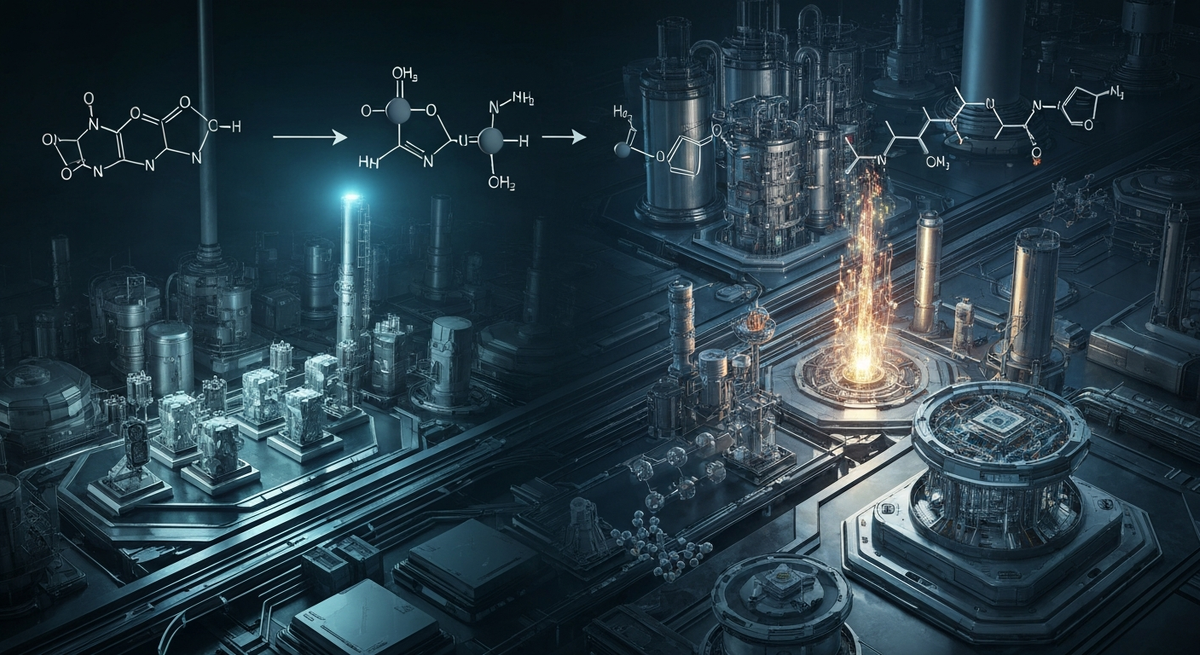
The landscape of advanced materials science has been dramatically reshaped by the advent of graphene, a single-atom-thick sheet of carbon atoms arranged in a hexagonal lattice. Its extraordinary properties, including exceptional electrical conductivity, mechanical strength, and thermal conductivity, position it as a foundational material for a new generation of technologies. From ultra-fast electronics and robust composites to advanced energy storage and sophisticated biomedical devices, graphene promises to revolutionize numerous industries. However, unlocking its full potential hinges on the ability to produce high-quality, large-area graphene consistently and cost-effectively, a challenge that has spurred intense research into various synthesis methodologies.
One particularly promising and increasingly sophisticated approach involves chemical vapor deposition (CVD) utilizing metallocene precursors, a method refined by the precise integration of chlorination techniques. This synergistic strategy offers unparalleled control over the graphene growth process, enabling the production of material with tailored properties crucial for demanding applications. Our exploration delves into the intricate mechanisms and critical optimizations of metallocene chlorination, demonstrating its pivotal role in advancing the industrial viability of graphene. This technique is not merely a production method; it represents a sophisticated engineering pathway to precisely control atomic-scale structures, moving beyond rudimentary growth to highly refined material fabrication.
Metallocenes are a class of organometallic compounds characterized by a metal atom sandwiched between two cyclopentadienyl rings. Ferrocene, with an iron atom at its core, is a prime example and has emerged as a particularly effective precursor for graphene synthesis via CVD. The inherent stability and high vapor pressure of metallocenes make them excellent candidates for delivering metal catalysts and carbon sources in a controlled gas-phase environment. Unlike solid catalysts, metallocene precursors can be introduced precisely into the reaction chamber, allowing for superior control over catalyst distribution and concentration during growth.
This precise delivery translates directly into more uniform graphene films and enhanced control over nucleation density. The metal center of the metallocene acts as a catalyst, facilitating the decomposition of carbon-containing gases (or even the metallocene itself serving as a carbon source) and promoting the subsequent formation of graphene layers on a chosen substrate. The ability to fine-tune the metallocene structure, by varying the metal or modifying the organic ligands, offers a direct pathway to influence catalytic activity and thereby the characteristics of the resulting graphene. This adaptability underscores why metallocenes are at the forefront of advanced graphene manufacturing techniques.
The use of metallocenes allows for lower growth temperatures compared to many other CVD methods, a significant advantage for integrating graphene with temperature-sensitive substrates and reducing overall energy consumption. Furthermore, the decomposition products of metallocenes can be managed to minimize unwanted carbon species, contributing to cleaner, higher-quality graphene films. The controlled release of the metal catalyst is central to achieving large single-crystal domains of graphene, which are essential for maximizing the material's inherent electronic and mechanical properties. This level of atomic precision is what sets metallocene-based CVD apart in the pursuit of industrial-scale, high-performance graphene.
Integrating chlorination into metallocene-catalyzed CVD introduces a powerful suite of control mechanisms that dramatically enhance graphene quality and yield. Chlorine, typically introduced as a precisely controlled gas such as hydrogen chloride (HCl) or other chlorinated compounds, plays multiple critical roles within the growth environment. It acts as a highly effective etchant for amorphous carbon species and other undesirable defects that can form during the deposition process, ensuring that only high-quality graphitic structures persist and grow. This selective etching ability is fundamental to improving the crystallinity and purity of the final graphene product.
Beyond its role as a purifier, chlorine also significantly influences the catalytic activity of the metal nanoparticles derived from the metallocene precursors. It can modify the surface chemistry of these catalyst particles, preventing their agglomeration and maintaining their optimal size and distribution for graphene nucleation. This stabilization effect leads to a more uniform growth across the substrate, preventing the formation of multi-layered graphene in areas where the catalyst might otherwise become overly active or dense. The judicious introduction of chlorine thus ensures a more consistent and monolayer-rich graphene film.
Furthermore, chlorine can influence the kinetics of carbon precursor decomposition and adsorption on the catalyst surface, thereby controlling the graphene growth rate and defect density. By adjusting the chlorine concentration, researchers can fine-tune the balance between etching and deposition, optimizing conditions to promote the formation of large, defect-free graphene domains. This delicate interplay makes chlorination not just an additive but an intrinsic part of the process, enabling a level of precision engineering previously unattainable with conventional CVD methods. The impact of chlorine extends to minimizing grain boundaries and enhancing the overall structural integrity of the graphene.
Achieving optimal graphene properties through metallocene chlorination requires meticulous control over a multitude of interconnected process parameters. Each variable plays a critical role in determining the nucleation, growth, and final characteristics of the graphene film. The first crucial parameter is temperature, which dictates the decomposition rate of the metallocene precursor and the reactivity of the carbon source and chlorine. An ideal temperature window exists where the metallocene decomposes efficiently, the metal catalyst is active, and chlorine performs its etching and modifying functions without excessively degrading the growing graphene or the catalyst.
Pressure within the CVD reactor is another vital control point, influencing the mean free path of gas molecules and therefore their interaction with the substrate and catalyst. Lower pressures generally favor longer mean free paths, which can lead to more uniform growth and reduced gas-phase reactions that might otherwise produce unwanted byproducts. The flow rates and precise concentrations of the metallocene vapor, carbon source, chlorine, and carrier gases (like hydrogen or argon) are paramount. These dictate the availability of reactants, the etching efficacy of chlorine, and the overall growth kinetics, directly impacting graphene thickness, domain size, and defect density.
The specific metallocene precursor chosen profoundly affects the process. Different metal centers (e.g., iron in ferrocene, nickel in nickelocene, cobalt in cobaltocene) exhibit distinct catalytic activities and decomposition pathways, necessitating tailored optimization for each. Similarly, the choice of substrate material, typically copper or nickel foils, significantly influences graphene nucleation and growth. Substrate surface preparation, including annealing and etching, is also critical for providing an atomically clean and uniform surface for graphene deposition. Collectively, the precise manipulation of these parameters allows for the targeted synthesis of graphene with specific electronic, mechanical, and structural attributes.
While metallocene chlorination offers significant advantages, translating laboratory success into industrial-scale production necessitates overcoming several inherent challenges. A primary concern is metal contamination. Despite the catalytic role, residual metal nanoparticles from the metallocene precursor can become embedded within or beneath the graphene film, potentially compromising its electronic performance. Thorough post-growth purification steps, such as acid etching, are often required to remove these metallic impurities, which adds complexity and cost to the overall process.
Achieving large-area uniformity, particularly for monolayer graphene, remains a formidable task. Variations in temperature, gas flow, and catalyst activity across a large substrate can lead to inconsistent film thickness, non-uniform domain sizes, and differing defect densities. Advanced reactor designs incorporating sophisticated gas distribution systems and precise temperature mapping are being developed to mitigate these issues. The continuous monitoring of growth parameters using *in situ* spectroscopic techniques provides real-time feedback, enabling dynamic adjustments to maintain optimal conditions throughout the deposition process.
Scalability is perhaps the most critical hurdle for industrial adoption. Current batch processes, while effective for research, are often too slow and expensive for mass production. Efforts are focused on developing roll-to-roll CVD systems that can continuously feed metal foils through a metallocene chlorination reactor, drastically increasing throughput. Furthermore, optimizing precursor utilization and minimizing waste products are essential for economic viability and environmental sustainability. Addressing these challenges requires a multidisciplinary approach, combining materials science, chemical engineering, and advanced manufacturing techniques to unlock the full potential of this sophisticated graphene synthesis method.
The ongoing evolution of metallocene chlorination for graphene production points towards several exciting future frontiers. One area of intense investigation involves the development of novel metallocene structures with tailored properties. Researchers are exploring alternative metal centers and designing more complex organic ligands to fine-tune catalytic activity, lower growth temperatures, and enhance the selectivity for monolayer graphene. The goal is to create "designer" metallocenes that can precisely control nucleation and growth kinetics, leading to even higher quality and more specialized graphene materials.
Another significant direction is the integration of metallocene chlorination with other advanced CVD techniques, such as plasma-enhanced CVD (PECVD). Plasma can provide additional energy to activate precursors at even lower temperatures, potentially reducing thermal budgets and enabling graphene growth on a wider range of substrates. The synergistic effects of plasma and chlorine in modifying catalyst surfaces and etching defects could unlock unprecedented levels of control over graphene crystallinity and domain size. This hybrid approach promises to push the boundaries of current synthesis capabilities.
The advent of machine learning and artificial intelligence is poised to revolutionize the optimization of metallocene chlorination processes. By collecting vast datasets from experimental runs, AI algorithms can identify complex correlations between process parameters and graphene properties, far beyond human intuitive capabilities. This allows for predictive modeling and automated optimization, significantly accelerating the discovery of ideal growth conditions for specific applications. Computational modeling also plays a crucial role, providing atomistic insights into the mechanisms of metallocene decomposition, chlorine interaction, and graphene growth, guiding experimental design and reducing trial-and-error. These advancements collectively pave the way for highly efficient, customized, and scalable graphene production.
What are metallocenes and why are they used in graphene production?
Metallocenes are organometallic compounds where a metal atom is bonded between two organic ring structures, with ferrocene (iron) being a common example. They are favored in graphene production via CVD because they offer a stable, high-vapor-pressure source for delivering metal catalysts and carbon precursors in a controlled gas phase. This allows for precise control over catalyst distribution and activity, leading to more uniform and higher-quality graphene films.
How does chlorination specifically enhance graphene synthesis using metallocenes?
Chlorination acts as a multifaceted precision tool. It selectively etches away amorphous carbon and other defects, improving the purity and crystallinity of the graphene. Chlorine also modifies the surface of the metal catalyst nanoparticles, preventing their agglomeration and maintaining optimal size and distribution for nucleation. Furthermore, it influences carbon precursor decomposition and adsorption, allowing for fine-tuning of growth rates and defect density.
Is metallocene chlorination a scalable method for industrial graphene production?
While current laboratory-scale methods have proven effective, scalability for industrial production remains a key challenge. However, significant research is underway to develop advanced reactor designs, including roll-to-roll CVD systems, that can continuously process large substrates. Optimizations in precursor utilization and waste management are also being pursued to enhance economic viability and accelerate the transition to mass production.
What kind of graphene does this optimized process typically produce?
Optimized metallocene chlorination processes are designed to produce high-quality, large-area graphene, often with controlled numbers of layers (typically monolayer or few-layer). The emphasis is on achieving high crystallinity, low defect density, and excellent uniformity across the substrate. Such graphene is highly suitable for demanding applications in electronics, sensors, and composites where material integrity and performance are paramount.
Are there environmental concerns associated with using metallocenes and chlorine in graphene production?
Like any industrial chemical process, environmental considerations are important. Metallocenes and chlorinated compounds require careful handling and waste management to prevent release into the environment. Research is focused on developing greener synthesis routes, including the use of less toxic precursors and more efficient capture and recycling of process gases. The aim is to balance high-performance material production with rigorous environmental responsibility.
The journey to industrial-scale, high-quality graphene production is paved with innovative scientific and engineering advancements. Among these, the optimization of metallocene chlorination stands out as a particularly sophisticated and effective strategy. By precisely harnessing the catalytic power of metallocenes and the refining capabilities of chlorine, researchers are achieving unprecedented control over graphene’s atomic structure, purity, and uniformity. This method represents a significant leap from rudimentary deposition to advanced materials engineering, enabling the fabrication of graphene tailored for specific high-performance applications.
The continuous refinement of process parameters, coupled with the development of novel metallocene systems and the integration of cutting-edge technologies like AI-driven optimization, promises to further elevate the capabilities of this technique. As we move closer to overcoming the remaining challenges of scalability and cost-effectiveness, metallocene chlorination will undoubtedly play a pivotal role in realizing graphene's transformative potential across numerous sectors. This advanced synthesis approach is not merely about making graphene; it is about engineering the future of materials science, setting new benchmarks for performance and industrial viability.
Serious about B2B integration? Test our premium Pulsed Electrical Resistive Carbon Heating turbostratic graphene in your lab. 100g sample packs available now.
Explore More
Discover how hopping-mediated charge transport explains graphene's electrical behavior beyond the ideal ballistic regime, a key insight for creating...

A practical guide to fabricating a flexible graphene fiber sensor for the simultaneous detection of nitric oxide and H2O2, key cancer biomarkers.

Explore a new low-noise Pauli-consistent ensemble Monte Carlo simulation for graphene, a powerful computational tool for designing next-generation...