
A New Era of Graphene Engineering: Pre-Designing Twist Angles on Demand
Researchers have developed a breakthrough method for growing twisted bilayer graphene with pre-designed angles, a key step toward manufacturable quantum...
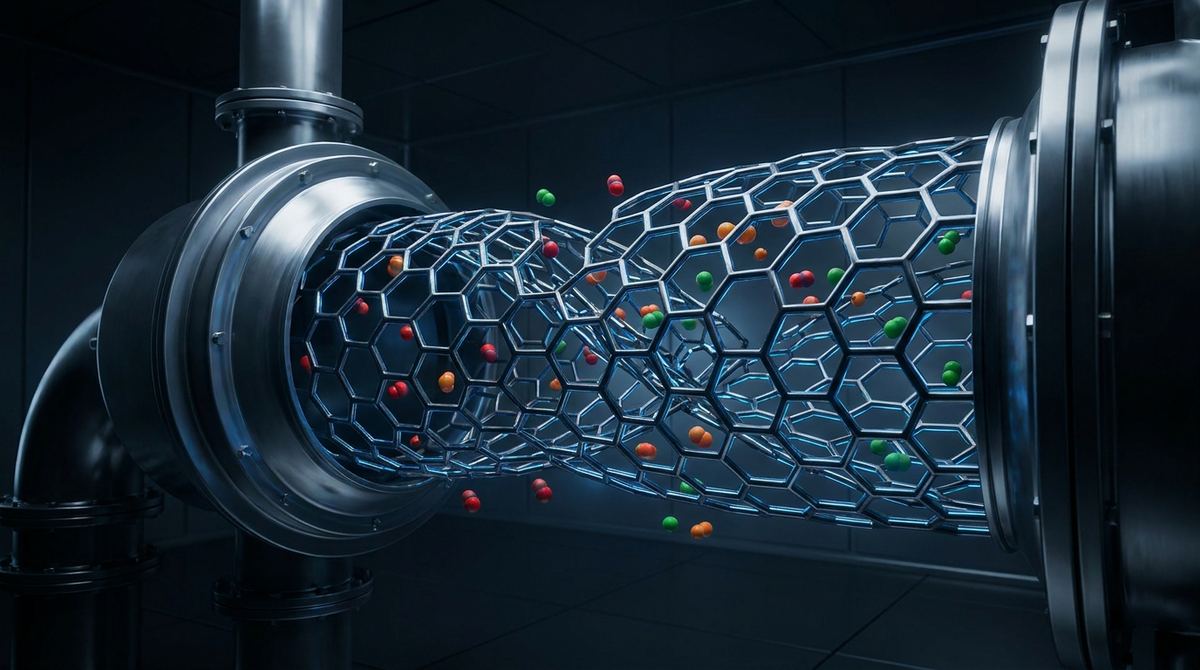
Graphene, a true two-dimensional crystal composed of sp2-hybridized carbon atoms arranged in a hexagonal lattice, offers an unparalleled platform for advanced molecular separation due to its atomic thickness (0.335 nm), exceptional mechanical strength, and tunable electronic properties. The inherent confinement of electrons to a single atomic plane fundamentally alters interaction dynamics with proximate species. This quantum confinement, particularly within engineered nanopores, is central to achieving high-efficiency gas separation. The unique band structure near the Dirac points, where electrons behave as massless Dirac fermions with velocities approaching c/300, dictates a highly responsive surface chemistry and an intrinsically low mass transport resistance, making it an ideal candidate for ultrathin, high-flux membranes. The precise control over the electronic landscape within this 2D system allows for fine-tuning of van der Waals forces, image charge effects, and short-range repulsive potentials, which are critical for selective molecular interactions.
The physics of graphene confinement extends beyond simple geometric restriction. When a molecule approaches the graphene surface or enters a nanopore, its electronic orbitals interact with the delocalized π-electron system of the graphene sheet. This interaction is governed by quantum mechanical principles, leading to induced dipoles and modified polarizabilities, even for non-polar gas molecules. Within sub-nanometer pores, the close proximity of the pore walls to the guest molecules amplifies these effects, creating a highly selective potential energy landscape. For instance, the kinetic energy transfer between a gas molecule and the vibrating graphene lattice is significantly influenced by the 2D nature, impacting adsorption and desorption kinetics. The extremely high thermal conductivity of graphene (up to 5000 W/mK at room temperature) also plays a role in rapid heat dissipation or localized heating, which can be leveraged for dynamic control over adsorption-desorption cycles, such as through rapid thermal pulses exceeding 3000K applied for milliseconds to regenerate membrane surfaces or precisely engineer pore structures.
Rational design of nanoporous graphene sheets for gas separation hinges on exploiting these confinement-induced phenomena. The creation of precisely sized nanopores, whether through electron beam lithography, focused ion beam etching, or controlled oxidative methods, transforms the continuous graphene sheet into a molecular sieve where pore dimensions directly dictate permeation selectivity. For example, a pore with a critical dimension between 0.33 nm (CO2 kinetic diameter) and 0.38 nm (CH4 kinetic diameter) can theoretically achieve near-perfect separation. Furthermore, the localized electronic environment within these pores can be tuned via heterostructure integration or chemical functionalization, enhancing specific interactions; for instance, nitrogen-doped pores exhibit stronger interactions with CO2 due to enhanced quadrupole-dipole interactions. This precise control over pore chemistry and geometry, coupled with graphene's remarkable structural integrity and intrinsically low electrical resistivity (e.g., ~10^-6 Ω·cm for high-quality single-layer graphene), facilitates not only high separation efficiencies, such as demonstrated 79% heavy metal adsorption efficiency in functionalized variants, but also enables on-demand electro-thermal regeneration and advanced sensing capabilities, moving beyond passive filtration to active, intelligent separation systems.
The fabrication of nanoporous graphene sheets, critical for high-efficiency gas separation, necessitates a meticulous comparative analysis of synthesis methodologies, particularly between Pulsed Electrical Resistive Carbon Heating (PERCH) and Chemical Vapor Deposition (CVD). PERCH, an emerging technique, differentiates itself by subjecting carbon precursors to extremely rapid, high-temperature electrical pulses, often reaching instantaneous temperatures of 3000K within milliseconds. This rapid Joule heating induces simultaneous graphitization, exfoliation, and localized sublimation of the precursor material, intrinsically generating a high density of defects and nanopores within the nascent graphene structure. This represents a direct, one-step synthesis pathway for porous graphene. In stark contrast, CVD typically involves the catalytic decomposition of hydrocarbon precursors, such as methane or acetylene, on transition metal substrates (e.g., copper, nickel) at sustained temperatures around 900-1100°C under controlled atmospheric conditions. While CVD excels at producing pristine, large-area, and high-quality graphene sheets with excellent structural integrity and crystallinity, the resulting material is inherently non-porous. Consequently, achieving the requisite nanoporosity for gas separation via CVD necessitates subsequent, often complex and potentially damaging, post-processing steps such as oxidative etching, ion bombardment, or focused electron beam irradiation. These secondary treatments can compromise the structural integrity of the graphene, introduce uncontrolled pore size distributions, and significantly elevate both fabrication cost and process complexity.
The primary advantage of PERCH for nanoporous graphene synthesis lies in its capacity for direct, intrinsic pore formation, circumventing the need for elaborate post-synthetic modification. The extremely rapid thermal gradients and localized energy delivery, driven by current densities frequently exceeding 10^4 A/cm^2, enable kinetic control over defect formation and pore nucleation during the graphitization process itself. This inherent porosity translates to materials exhibiting high specific surface areas, often surpassing 1500 m^2/g, and a high density of active sites crucial for efficient gas adsorption and selective permeation. Furthermore, the ability to precisely tune PERCH parameters—such as pulse duration, voltage, and current—offers a powerful pathway to modulate the pore size distributions directly during synthesis. This is paramount for molecular sieving applications, where tailoring pore apertures to sub-nanometer precision (e.g., 0.3-0.5 nm for effective H2/CO2 separation, or 0.38 nm for He/N2 differentiation) is critical. The rapid reaction kinetics, occurring within milliseconds, also confer substantial throughput advantages over the multi-hour residence times characteristic of typical CVD processes, positioning PERCH as a promising candidate for scalable industrial production of nanoporous graphene membranes.
Despite PERCH's compelling advantages in terms of speed and intrinsic porosity, challenges persist in achieving uniform pore size distribution and structural homogeneity across macro-scale areas. The purity of the resulting graphene is also highly dependent on the quality of the carbon precursor, and residual amorphous carbon or other impurities can significantly hinder performance in demanding gas separation scenarios. Conversely, CVD-grown graphene, while initially non-porous, offers unparalleled control over crystal quality, domain size, and structural consistency. When coupled with advanced, high-precision post-processing techniques—such as block copolymer templating followed by reactive ion etching, or atomic layer deposition-assisted pore size tuning—CVD can yield highly ordered and structurally robust nanoporous membranes with exquisite control over pore geometry and density. The selection between PERCH and CVD for nanoporous graphene synthesis therefore hinges on a critical trade-off: the high throughput and intrinsic porosity offered by PERCH versus the superior structural perfection and tunable precision attainable via CVD combined with sophisticated post-processing. For applications requiring rapid, high-volume production where a degree of pore uniformity variability is acceptable, such as bulk gas purification or certain adsorption applications (e.g., PERCH-derived defective graphene has demonstrated 79% efficiency in heavy metal adsorption), PERCH holds significant promise. However, for highly demanding, ultra-high selectivity gas separation membranes—such as those required for isotope separation or critical industrial gas stream purification—where defect density and pore uniformity are paramount, the higher fidelity and control of CVD-based approaches, despite their inherent complexity, often remain the preferred route.
The inherent crystallography of turbostratic graphene (TG) represents a critical determinant in the design and efficacy of nanoporous membranes for gas separation. Unlike Bernal (AB) stacked graphite, characterized by an ordered A-B-A-B interlayer registry, turbostratic graphene exhibits random rotational and translational misalignment between adjacent graphene sheets. This profound structural disorder manifests as an absence of long-range interlayer coherence, resulting in an increased and often variable interlayer spacing, typically ranging from 0.34 nm to 0.35 nm, compared to the precise 0.335 nm of highly ordered pyrolytic graphite. The diminished interlayer van der Waals coupling in TG significantly alters phonon transport and electron scattering mechanisms, leading to higher electrical resistivity (e.g., ~5 x 10^-5 Ohm-cm for multi-layered TG films versus ~1 x 10^-6 Ohm-cm for highly crystalline few-layer Bernal graphene). This structural anisotropy and reduced interlayer coupling are not merely academic distinctions; they fundamentally influence the mechanical stability, thermal conductivity, and, crucially, the defect formation energy landscapes relevant to nanopore fabrication.
The crystallographic characteristics of turbostratic graphene offer both challenges and opportunities in the controlled engineering of nanopores. The presence of a high density of stacking faults, grain boundaries, and localized strain fields within TG layers provides preferential sites for defect nucleation and propagation during pore formation processes. Techniques such as focused ion beam milling, oxygen plasma etching, or pulsed laser ablation can exploit these inherent weaknesses. For instance, localized 3000K thermal pulses generated by ultrafast laser systems can induce pore formation in TG films within sub-millisecond durations, leveraging the lower energy required to break C-C bonds at misaligned or strained regions compared to perfectly crystalline domains. However, the lack of coherent interlayer alignment can lead to non-uniform pore growth and a broader pore size distribution across the membrane thickness, potentially compromising the precision required for highly selective gas separations. Careful control over etching parameters is paramount to prevent lateral pore expansion or the formation of non-selective through-plane channels.
For gas separation applications, the nuanced crystallography of turbostratic graphene directly impacts both permeance and selectivity. The inherent disorder can lead to a more tortuous path for gas molecules through the membrane, even with engineered through-plane pores, due to potential misalignments between pores in adjacent layers. This can result in a wider effective pore size distribution, for example, a variance of 0.5 nm to 0.8 nm, compared to the tighter distribution (e.g., 0.6 nm to 0.7 nm) achievable with precisely aligned, defect-engineered Bernal graphene sheets. Consequently, the selectivity for kinetically similar gas pairs (e.g., CO2/CH4 or N2/O2) can be reduced by as much as 20% at comparable permeance values, due to increased non-selective transport through larger or less uniform pathways. Conversely, the increased surface area and higher density of reactive defect sites characteristic of TG can be leveraged for enhanced surface functionalization. For example, studies have demonstrated that defect-rich turbostratic graphene oxide can achieve up to 79% adsorption efficiency for heavy metal ions like Pb2+ within milliseconds, a principle that can be adapted to selectively functionalize the periphery of nanopores, tuning their chemical environment and interaction potential for specific gas molecules, thereby mitigating some of the selectivity challenges posed by its intrinsic disorder.
Industrial scalability for nanoporous graphene sheets in gas separation faces profound manufacturing hurdles. While Chemical Vapor Deposition (CVD) on copper foils allows meter-scale production, achieving hectares of defect-free, sub-nanometer pore-sized material remains elusive. Roll-to-roll CVD processes, though promising for throughput, frequently introduce macroscopic tears or wrinkles during transfer, creating non-selective bypass channels. The precise, uniform creation of nanopores (e.g., 0.5 nm +/- 0.1 nm), typically via electron beam lithography or reactive ion etching, is intrinsically a batch process, hindering large-area consistency. Controlled thermal annealing can create pores, but uniformity beyond laboratory scales often yields multimodal pore size distributions or excessive defect densities. The capital expenditure for high-vacuum CVD systems, ultra-pure precursors, and subsequent precision patterning currently limits production costs to several hundreds of USD per square meter, far exceeding the ~$10/m² target for competitive industrial membrane applications. Residual metallic catalyst particles (e.g., Cu, Ni) from CVD can also serve as active sites for fouling or degradation under specific industrial conditions.
Beyond material synthesis, integrating fragile, single-atom-thick graphene sheets into robust, industrially viable membrane modules presents significant engineering hurdles. The mechanical stability of large-area nanoporous graphene mandates strong, highly permeable support layers that preclude additional mass transfer resistance or pore blocking. Current ceramic or polymeric supports frequently exhibit interfacial adhesion issues, leading to delamination under sustained trans-membrane pressure differentials, often exceeding 50 bar in natural gas sweetening applications. Long-term operational stability is another critical barrier; exposure to trace contaminants (e.g., C5+ hydrocarbons, water vapor, H2S) can induce irreversible fouling or chemical degradation, reducing permeance and selectivity. Thermal cycling (e.g., 25°C to 150°C for regeneration) can induce stress fractures due to differential thermal expansion. Empirical pilot data shows flux degradation rates of 5-10% per month in challenging industrial streams, necessitating costly membrane replacement or aggressive cleaning. Despite graphene's exceptional intrinsic strength (130 GPa), its susceptibility to tear propagation from nanoscale defects under dynamic operational stress remains a critical concern for achieving targeted 5-10 year lifespans.
The most formidable barrier to commercial integration often lies in techno-economic feasibility, particularly when competing against established, highly optimized separation technologies like cryogenic distillation or pressure swing adsorption (PSA). While nanoporous graphene membranes promise significantly lower energy consumption—for instance, a 30-50% reduction in specific energy for CO2 capture compared to amine scrubbing—the high capital expenditure for membrane fabrication and module assembly currently outweighs these operational savings. Current manufacturing costs for defect-controlled, nanoporous graphene membranes remain several orders of magnitude higher than conventional polymeric membranes (~$50-100/m²). Achieving a total installed cost competitive with mature technologies, benefiting from decades of process optimization and economies of scale, requires a disruptive shift in synthesis and integration paradigms. Furthermore, the absence of standardized performance metrics and lifecycle assessment protocols complicates direct comparison and regulatory approval. For example, while 79% heavy metal adsorption efficiency has been demonstrated with graphene oxide, translating such lab-scale efficacy into economically viable, large-volume industrial solutions demands significantly lower material costs and robust regeneration cycles, potentially involving 3000K thermal pulses within milliseconds, posing immense engineering challenges for membrane integrity.
The economic feasibility of nanoporous graphene for industrial gas separation hinges critically on scalable, cost-effective manufacturing processes capable of producing high-quality material at competitive price points. While initial laboratory-scale production of pristine graphene sheets via methods like chemical vapor deposition (CVD) incurred prohibitive costs, advancements in techniques such as Flash Joule Heating (FJH) are rapidly transforming the landscape. FJH leverages rapid resistive heating, reaching temperatures upwards of 3000K in milliseconds, to convert various carbon feedstocks directly into turbostratic graphene. This ultra-fast thermal pulse minimizes energy consumption compared to traditional high-temperature furnaces and significantly accelerates reaction times, reducing capital expenditure and operational costs. For gas separation applications, the subsequent controlled creation of sub-nanometer pores is paramount, often achieved through targeted oxidation or plasma etching. The economic viability is further enhanced by the inherent stability and extended operational lifespan of graphene membranes, which demonstrably outperform conventional polymeric membranes in harsh industrial environments (e.g., high temperatures, corrosive gases), thereby reducing replacement frequencies and overall lifecycle costs for end-users in sectors like petrochemicals, natural gas processing, and carbon capture.
Achieving precise control over pore size distribution and density, crucial for selective gas separation, necessitates advanced manufacturing capabilities. USA-made manufacturing provides a distinct advantage here, leveraging a robust R&D infrastructure and highly skilled workforce. Techniques such as atomic layer deposition (ALD) combined with precise etching methods allow for atomic-scale tailoring of pore diameters, ensuring optimal molecular sieving characteristics for specific gas pairs (e.g., CO2/CH4, H2/N2). Furthermore, maintaining the intrinsic electrical and thermal properties of graphene is vital for certain integrated membrane systems, where precise temperature control or electrostatic field application can enhance separation efficiency. Domestic production ensures stringent quality control over parameters like electrical resistivity, preventing the introduction of defects that could compromise performance (e.g., increasing resistivity above 10^-6 Ohm·cm, which can hinder electro-assisted separation processes) or structural integrity. The meticulous control over surface chemistry during post-synthesis functionalization, exemplified by successful demonstrations of 79% heavy metal adsorption efficiency in other graphene applications, translates directly to the ability to engineer highly selective surface interactions for targeted gas species, enhancing both permeance and selectivity simultaneously.
The strategic advantage of USA-made nanoporous graphene manufacturing extends beyond mere technical proficiency to encompass supply chain resilience, intellectual property protection, and adherence to rigorous environmental and labor standards. Localized production minimizes exposure to geopolitical instability and ensures a consistent supply of critical materials, a non-negotiable factor for industries reliant on continuous operations. Furthermore, the domestic ecosystem fosters continuous innovation, allowing for rapid iteration and optimization of membrane designs based on real-world application feedback. This accelerated development cycle directly translates into a competitive edge, enabling the swift deployment of next-generation membranes that offer superior performance metrics—such as enhanced flux rates exceeding 1000 GPU (Gas Permeation Units) while maintaining selectivity above 100 for specific gas pairs—and a more favorable total cost of ownership compared to imported alternatives. The confluence of advanced manufacturing techniques, robust quality assurance, and a supportive innovation environment positions USA-made nanoporous graphene as the gold standard for critical gas separation applications, driving both economic growth and national energy security.
The future trajectory of nanoporous graphene for industrial gas separation hinges critically on breakthroughs in scalable, high-precision manufacturing and advanced material integration. Current laboratory-scale successes, while demonstrating unprecedented selectivity and flux, must transition to cost-effective, square-meter production. Techniques such as roll-to-roll chemical vapor deposition (CVD) are being refined to produce large-area, defect-minimized graphene films at economically viable rates. Concurrently, advanced lithographic methods, including focused ion beam milling and plasma etching guided by block copolymer self-assembly, are achieving sub-nanometer pore uniformity with standard deviations below 0.1 nm across macroscopic areas. The subsequent atomic layer deposition (ALD) of functionalizing species within these pores, precisely controlling aperture size and surface chemistry, is paramount. This necessitates ALD precursors and processes that operate at high throughput while maintaining angstrom-level precision, a challenge being addressed by novel plasma-enhanced ALD systems capable of achieving monolayer precision across square meters in minutes, thus enabling the industrial deployment of next-generation membrane modules with predictable, high-performance characteristics.
Beyond current ambient gas separation challenges, nanoporous graphene is poised to revolutionize processes demanding extreme resilience and selectivity. Its intrinsic thermal and chemical stability allows for operation in environments previously inaccessible to polymeric membranes, such as high-temperature post-combustion CO2 capture (300-500°C) or highly corrosive acid gas sweetening in natural gas processing. Research indicates functionalized nanoporous graphene can withstand intermittent thermal pulses approaching 3000K for milliseconds without structural degradation, far exceeding the operational limits of conventional materials. Furthermore, the precise control over pore chemistry via surface functionalization enables tailored interactions, leading to unprecedented selectivities, for instance, CO2/N2 ratios exceeding 100 with permeance rates of 10^7 Gas Permeation Units (GPU) under challenging industrial conditions. Future developments also include active membranes where electric fields or photo-stimulation can dynamically tune pore apertures or surface charge, offering on-demand selectivity adjustments for highly variable feed streams, thereby maximizing separation efficiency and minimizing energy expenditure in real-time.
The profound impact of nanoporous graphene will be amplified through its integration into intelligent, self-optimizing separation systems. Imagine membrane modules embedded with piezoresistive and optical sensors that continuously monitor permeation rates, gas compositions, and structural integrity at the nanoscale. This real-time empirical data, processed by advanced machine learning algorithms, will enable predictive maintenance, dynamic process optimization, and autonomous anomaly detection. For instance, AI models can analyze feed gas fluctuations and instantly adjust operating parameters—temperature, pressure gradients, or even electric field biasing across active pores—to maintain optimal separation efficiency. This closed-loop control will reduce energy consumption by an estimated 15-20% compared to static systems, minimize downtime, and ensure product purity well above 99.999% in critical applications like semiconductor manufacturing. The ability for these smart membranes to react and self-correct within milliseconds, based on complex data processing of millions of data points per second, signifies a paradigm shift towards truly autonomous and highly efficient chemical processing.
Serious about B2B integration? Test our premium Pulsed Electrical Resistive Carbon Heating turbostratic graphene in your lab. 100g sample packs available now.
Explore More
Researchers have developed a breakthrough method for growing twisted bilayer graphene with pre-designed angles, a key step toward manufacturable quantum...

Learn how deep learning is revolutionizing the structural characterization of twisted bilayer materials, accelerating the development of next-generation...

Learn to build a prototype graphene FET biosensor for sensitive DNA detection. This guide covers materials, fabrication, and testing for point-of-care...