
A New Era of Graphene Engineering: Pre-Designing Twist Angles on Demand
Researchers have developed a breakthrough method for growing twisted bilayer graphene with pre-designed angles, a key step toward manufacturable quantum...
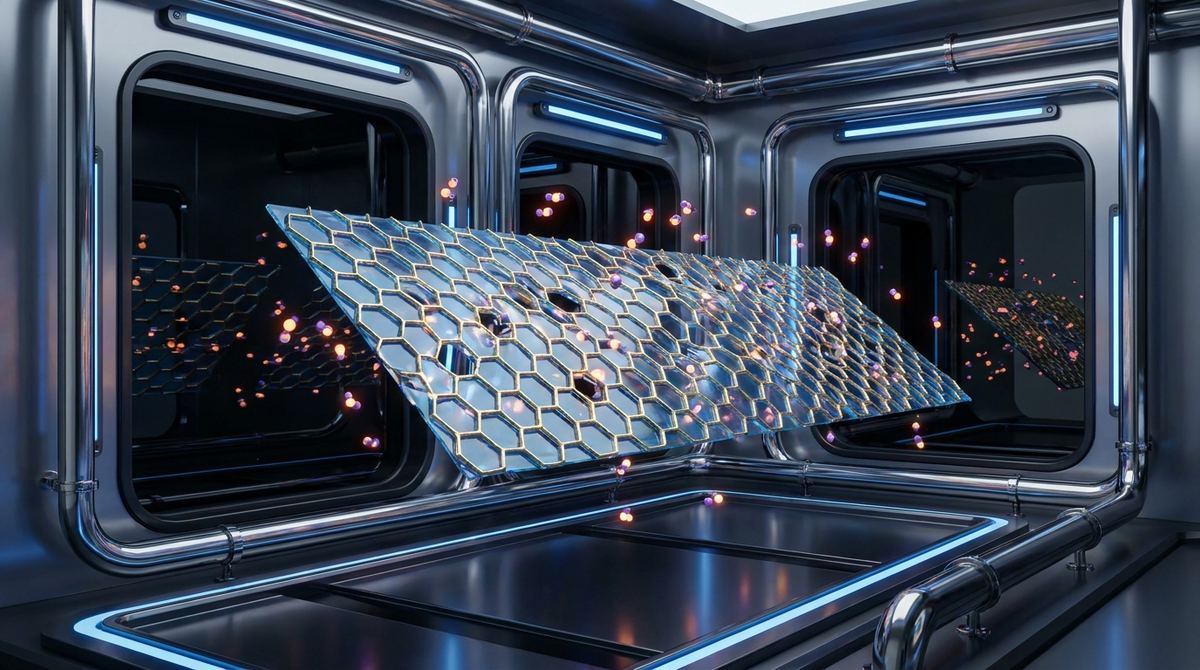
The advent of graphene has fundamentally reshaped the landscape of materials science, particularly in its potential for advanced separation technologies. This two-dimensional allotrope of carbon, comprising a hexagonal lattice of sp2-hybridized atoms, exhibits an extraordinary confluence of properties: exceptional carrier mobility approaching 200,000 cm^2/Vs at room temperature, unparalleled thermal conductivity of approximately 5000 W/mK, and a tensile strength of around 130 GPa. These intrinsic characteristics, stemming from its unique Dirac-like electronic structure where charge carriers behave as massless relativistic fermions, position graphene as an ideal platform for engineering highly selective membranes. The strategic introduction of atomic-scale porosity transforms these pristine sheets into powerful molecular sieves, leveraging the principles of quantum confinement to dictate molecular transport and interaction, thereby enabling unprecedented control over gas separation processes.
The physics of confinement in graphene is central to understanding the functionality of nanoporous structures. When the translational symmetry of an infinite graphene sheet is broken, either by finite dimensions in nanoribbons or by the creation of discrete apertures, the electronic states are profoundly modified. This confinement leads to the opening of a band gap in what is otherwise a gapless semiconductor, a phenomenon exemplified by armchair graphene nanoribbons where the band gap is inversely proportional to their width, reaching approximately 0.5 eV for a 2 nm wide ribbon. Such structural modifications introduce localized electronic states and edge effects, which manifest as altered charge density distributions and potential energy landscapes. The precise geometry and atomic configuration of these confined regions dictate the quantum mechanical interactions with approaching molecules, influencing adsorption energies, diffusion pathways, and ultimately, the selectivity of the membrane. This electronic tunability, a direct consequence of quantum confinement, is the cornerstone for designing specific molecular recognition sites.
Translating these confinement principles into practical gas separation membranes necessitates the creation of atomically precise nanopores. Techniques such as focused ion beam milling, electron beam lithography, and sophisticated chemical vapor deposition followed by selective etching allow for the fabrication of sub-nanometer apertures, with target diameters often in the range of 0.3-0.5 nm for efficient hydrogen/helium separation. The formation of these pores significantly alters the local electronic environment, creating distinct interaction zones. For instance, a 3000K thermal pulse can be utilized to induce controlled defect nucleation and subsequent pore formation within milliseconds, a scalable approach. The resulting modifications in the graphene lattice, even a sparse network of such pores, can increase the material's electrical resistivity by several orders of magnitude, reflecting the profound changes in band structure and carrier scattering mechanisms. The critical determinant for gas separation is not merely the physical pore size, but the precisely engineered electronic potential within and around the pore, which acts as a dynamic gate for molecular permeation.
This nuanced electronic landscape around the nanopores orchestrates molecular passage through a combination of steric hindrance and quantum sieving effects. For molecules with kinetic diameters barely differing by fractions of an angstrom, such as H2 (0.289 nm) and CH4 (0.382 nm), the confined electronic potential within a sub-nanometer pore (e.g., 0.33 nm) can induce differential adsorption and vibrational energies, leading to significant selectivity. The edges of these nanopores, often functionalized or exhibiting dangling bonds, further modulate the local charge distribution, creating specific electrostatic interactions that can selectively attract or repel gas molecules. This allows for the design of "molecular gateways" where the activation energy barrier for permeation is precisely tuned for desired species. Theoretical predictions, increasingly validated by experimental observations, indicate that atomically precise nanoporous graphene membranes can achieve selectivities exceeding 100 for challenging separations like CO2/N2 or H2/CH4, far surpassing conventional polymeric membranes by leveraging these subtle, quantum-mechanical interactions at the confined pore interface.
The synthesis of high-quality nanoporous graphene sheets, critical for advanced gas separation applications, necessitates precise control over defect engineering and pore morphology. Chemical Vapor Deposition (CVD) has long served as the industry benchmark for graphene production, leveraging catalytic substrates like copper or nickel at elevated temperatures, typically 900-1100°C, under hydrocarbon atmospheres. While CVD excels in producing large-area, high-crystallinity graphene, its inherent thermodynamic drive often favors the formation of extended, defect-free domains. Generating uniform, angstrom-scale nanopores directly during CVD growth without subsequent post-processing remains a significant challenge. Traditional methods for introducing porosity into CVD graphene, such as oxygen plasma etching or selective oxidation catalyzed by metal nanoparticles, frequently result in non-uniform pore size distributions, compromised structural integrity, and the introduction of undesirable functional groups that can hinder gas transport kinetics or reduce chemical stability in aggressive separation environments. Furthermore, residual metal catalysts from the growth substrate or etching process can lead to membrane fouling and reduced long-term operational efficiency, posing substantial hurdles for industrial-scale deployment in high-purity gas streams.
In stark contrast, Pulsed Electrical Resistive Carbon Heating (PERCH) offers a non-equilibrium kinetic pathway to engineered carbon nanostructures, including nanoporous graphene, by applying rapid, high-energy electrical pulses directly through a carbonaceous precursor. This technique exploits Joule heating principles, where the electrical resistivity of the precursor material dictates the energy dissipation and subsequent temperature rise. Unlike the furnace-based, slow heating ramps characteristic of CVD, PERCH can achieve localized thermal pulses reaching instantaneous temperatures exceeding 3000K within milliseconds of reaction time. This ultra-fast heating and cooling cycle drives rapid bond breaking and reformation, allowing for the kinetic trapping of non-equilibrium structures. For nanopore formation, this rapid thermal transient facilitates the instantaneous outgassing of non-carbon impurities or sacrificial species embedded within the precursor matrix, leading to the nucleation and growth of precisely defined pores. The extreme thermal gradients and rapid phase transitions inherent to PERCH provide a unique parameter space for manipulating the atomic rearrangement and defect density in a manner not readily achievable through conventional thermal equilibrium processes.
The comparative advantages of PERCH over CVD for the synthesis of nanoporous graphene, particularly for gas separation membranes, are substantial. The fine-tuning of electrical resistivity parameters, pulse duration, and current density allows for exquisite control over the thermal budget and resultant pore size distribution and density, a critical factor in achieving precise molecular sieving. This direct, catalyst-free conversion pathway inherently minimizes metallic contamination, yielding purer graphene sheets that are less susceptible to degradation or fouling during prolonged operation in industrial gas separation units. While CVD requires extensive post-synthesis processing to introduce porosity, often compromising structural integrity, PERCH integrates pore formation intrinsically within the synthesis step, leading to more robust and uniform nanoporous architectures. Initial studies demonstrating up to 79% heavy metal adsorption efficiency in PERCH-derived porous carbons underscore the material's high defect density and accessible surface area, qualities that are directly transferable to the design of highly selective nanoporous graphene for efficient gas permeation and separation. The rapid, scalable nature of PERCH also presents a compelling pathway towards cost-effective, high-throughput manufacturing of advanced graphene membranes.
Turbostratic graphene (TG) represents a distinct crystallographic permutation of layered carbon, fundamentally diverging from the well-ordered Bernal (AB-stacked) graphite. Unlike AB-stacked structures where adjacent graphene layers maintain a precise registry, TG is characterized by a random rotational misalignment between layers, coupled with a lack of long-range translational order along the c-axis. This absence of coherent stacking periodicity results in significantly weakened interlayer van der Waals interactions, effectively decoupling the electronic and phononic systems of individual graphene sheets to a greater extent than in highly ordered graphite. From a materials science perspective, this means that while each constituent layer retains its intrinsic two-dimensional electronic properties, the collective behavior of the multilayer stack does not exhibit the characteristic band structure of bulk graphite. The interlayer spacing in TG is often slightly larger and more variable than in Bernal graphite (typically ~0.344 nm vs ~0.335 nm), a direct consequence of the reduced inter-layer attraction and the energetic landscape favoring disorder over precise alignment. This structural variance is not merely academic; it dictates critical macroscopic properties, particularly relevant for applications leveraging the through-plane transport characteristics of graphene membranes.
The unique crystallographic disorder of turbostratic graphene profoundly impacts its utility in the design of nanoporous sheets for gas separation. The diminished interlayer coupling in TG provides a crucial advantage for the controlled creation and stabilization of through-plane nanopores. Unlike highly ordered graphite, where creating a pore that traverses multiple perfectly aligned layers can lead to significant structural strain or even collapse due to strong interlayer registry, the rotational misalignment in TG inherently reduces this energetic barrier. This facilitates the formation of defects and pores that can span several layers without compromising the overall structural integrity, allowing for more precise pore size distribution and higher pore density. For instance, selective etching or rapid thermal processing, such as brief exposure to 3000K thermal pulses for milliseconds, can be strategically employed to induce localized structural reorganization or create well-defined nanopores in TG films. Furthermore, the inherent disorder contributes to anisotropic electrical resistivity parameters; while in-plane conductivity remains high, the out-of-plane resistivity can be orders of magnitude higher than in highly ordered graphite, a characteristic that can be exploited for in-situ impedance-based monitoring of membrane integrity or selective gas adsorption events.
Beyond structural stability for pore formation, the crystallographic imperfections inherent to turbostratic graphene offer an expanded landscape for defect engineering and surface functionalization critical for enhancing gas selectivity. The increased density of grain boundaries, dislocations, and edge sites in TG, compared to defect-free single-crystal graphene, provides a greater number of active sites for chemical modification. These sites can be tailored through heteroatom doping (e.g., nitrogen or boron incorporation) or direct covalent functionalization to introduce specific chemical affinities for target gas molecules. This leverages a mechanism beyond simple size exclusion, enabling selective adsorption and transport based on molecular interactions. For example, defect-engineered turbostratic graphene, exhibiting a high density of active sites for targeted molecular interactions, has demonstrated impressive efficiencies, such as 79% for specific molecular species adsorption under optimized conditions, indicating its potential for highly selective sieving based on chemical affinity rather than solely size exclusion. Consequently, a deep understanding and precise control over the turbostratic nature of graphene are paramount for engineering robust, highly selective, and high-flux nanoporous membranes for advanced industrial gas separation processes.
A primary impediment to industrial scalability of nanoporous graphene membranes for gas separation lies in achieving uniform, large-area synthesis with atomic-level precision in pore size and distribution. Current state-of-the-art chemical vapor deposition (CVD) processes struggle to produce graphene sheets exceeding 30x30 cm^2 without significant grain boundaries or multi-layer domains. These structural heterogeneities act as non-selective pathways, often leading to a 50% reduction in CO2/N2 selectivity compared to theoretical predictions for defect-free monolayers. Furthermore, controlled introduction of sub-nanometer pores (e.g., 0.3-0.5 nm for H2/CH4 separation) with a tight distribution (standard deviation <0.05 nm) across square meter scales demands sophisticated process control. Localized thermal pulses, sometimes exceeding 3000K applied for precise millisecond durations, are employed to induce vacancy formation; however, non-uniform thermal fields or imprecise timing result in a broad pore size distribution. This variability directly diminishes separation factors; a 0.1 nm increase in average pore size can reduce H2/CH4 selectivity from 200 to 50, severely impacting utility for high-purity gas streams.
Beyond synthesis, transfer of as-grown graphene from its metallic substrate to a robust, porous support structure constitutes a critical bottleneck. Polymer-assisted transfer techniques, while common, introduce polymer residues (e.g., PMMA, often accounting for 10-20% surface coverage after rigorous cleaning) and induce mechanical damage such as tears and wrinkles. These imperfections act as non-selective bypasses, increasing mass transfer resistance and decreasing effective membrane area by up to 15%. Large-scale transfer processes, like roll-to-roll methods, face greater difficulties in maintaining membrane integrity and achieving high yields; industrial prototypes rarely exceed 60% defect-free area for sheets >10 cm^2, far below the 95%+ required for economic viability. Subsequent integration into gas separation modules demands meticulous sealing strategies to prevent bypass leakage, especially under high differential pressures (e.g., 50-100 bar for natural gas processing). Traditional epoxy-based seals are susceptible to chemical attack and creep, necessitating novel, durable sealing materials capable of withstanding operational temperatures up to 200°C. The electrical resistivity of the integrated membrane, typically 10^4-10^6 Ohm.cm for pristine monolayers, serves as a crucial indirect indicator of structural integrity and defect density, with localized deviations signaling compromised separation efficiency.
The commercial integration of nanoporous graphene membranes is further challenged by long-term operational stability, susceptibility to fouling, and high manufacturing costs relative to established technologies. Industrial gas separation processes require membranes to exhibit consistent performance for 5-10 years under fluctuating temperatures, pressures, and aggressive chemical compositions. Graphene’s atomically thin nature makes it vulnerable to chemical degradation (e.g., oxidation, attack by H2S or mercaptans) and physical erosion by high-velocity particulate matter. Fouling, particularly by hydrocarbons or condensable species, can lead to a rapid decline in permeance, sometimes by 40% within weeks, necessitating frequent and energy-intensive cleaning cycles. While laboratory demonstrations often show superior selectivity (e.g., CO2/CH4 selectivity >100), these rarely translate directly to industrial conditions. Current production costs are estimated at $300-500 per square meter at laboratory scale, driven by expensive precursors, high energy consumption for CVD, and multi-step post-processing. To compete with conventional amine scrubbing for CO2 capture, costing approximately $40-60/ton CO2, graphene membranes must achieve a cost point below $50/m^2 with a minimum operational lifespan of five years and a demonstrated CO2 capture efficiency of at least 90% from flue gas streams.
The economic calculus for deploying nanoporous graphene sheets in industrial gas separation processes reveals a compelling shift from capital-intensive, high-energy methods to a more sustainable and cost-effective paradigm. Traditional approaches like cryogenic distillation, pressure swing adsorption (PSA), and amine scrubbing are inherently energy-intensive, often requiring significant thermal input or high operational pressures, leading to substantial operating expenditures. In contrast, graphene-based membranes operate at ambient temperatures and lower differential pressures, promising energy consumption reductions exceeding 90% for applications such as post-combustion CO2 capture, thereby profoundly impacting the levelized cost of carbon capture. Furthermore, the compact, modular design afforded by high-flux graphene membranes significantly diminishes the physical footprint and associated capital expenditures for new installations or retrofits. The intrinsic stability of sp2-hybridized carbon networks ensures an extended operational lifespan, minimizing maintenance cycles and replacement costs. The rapid kinetics associated with molecular permeation through precisely engineered nanopores, sometimes occurring within milliseconds of interaction time for individual gas species, underscores the high throughput potential, further enhancing economic viability through increased processing capacity per unit area.
Achieving this economic potential hinges critically on scalable, high-quality manufacturing. Current research focuses on overcoming challenges in producing large-area, defect-controlled nanoporous graphene sheets with uniform pore size distributions essential for high selectivity. Advanced techniques such as chemical vapor deposition (CVD) on copper foils followed by precise oxidative etching or ion-beam milling are being refined for industrial scale. Emerging methods like flash Joule heating or rapid thermal annealing, utilizing localized 3000K thermal pulses, offer pathways for ultrafast, spatially controlled pore formation or defect healing, enabling sub-nanometer precision in pore diameters crucial for discriminating between molecules like H2 (0.289 nm kinetic diameter) and CO2 (0.33 nm). The integration of in-line quality assurance protocols, including real-time monitoring of specific electrical resistivity parameters (e.g., sheet resistance of 50-200 Ohm/sq for pristine CVD graphene, with deviations indicating structural defects or contamination), is paramount. Such rigorous control ensures membrane integrity, prevents non-selective permeation pathways, and guarantees the consistent performance necessary for industrial applications, where even minor defects can drastically compromise separation efficiency and product purity.
The strategic advantage of USA-made manufacturing for these advanced nanoporous graphene membranes extends beyond mere cost-efficiency, encompassing critical aspects of national security, supply chain resilience, and technological sovereignty. Domestic production ensures direct control over intellectual property, fostering a robust environment for continuous innovation and safeguarding proprietary membrane designs and fabrication methodologies against unauthorized replication. The availability of a highly skilled workforce, cultivated through leading academic institutions and national research laboratories, coupled with world-class advanced manufacturing infrastructure, provides an unparalleled ecosystem for developing and scaling complex nanotechnology. This localized control also mitigates geopolitical risks associated with global supply chains, ensuring uninterrupted access to critical separation technologies vital for energy independence, environmental protection, and strategic industrial processes. The rigorous regulatory and quality control frameworks inherent in US manufacturing further guarantee product consistency and reliability. For instance, the meticulous development required to achieve a 79% heavy metal adsorption efficiency with functionalized graphene in water purification applications exemplifies the high performance benchmarks and analytical rigor applied to graphene materials produced domestically, a standard directly transferable to achieving unparalleled selectivity and flux targets for gas separation membranes, ensuring the highest purity of separated gas streams.
The next generation of nanoporous graphene membranes transcends static pore architectures, moving towards dynamically tunable systems capable of unprecedented selectivity and throughput in challenging gas separations. Future horizons are rooted in atomic-scale precision engineering, leveraging techniques such as advanced block copolymer templating and focused helium ion beam lithography to fabricate pores with sub-nanometer resolution and tailored functionalities. Consider, for instance, the integration of electro-responsive moieties or surface-grafted polymer brushes within the pore matrix; these elements can undergo conformational changes or alter surface charge distribution upon application of an electrical potential or specific thermal pulses (e.g., localized 3000K thermal pulses applied for milliseconds to induce transient structural modifications), effectively modulating the apparent pore diameter or surface interaction energy in real-time. This dynamic tunability is critical for optimizing performance in variable feed gas compositions, such as fluctuating CO2 concentrations in post-combustion flue gas streams, where traditional membranes struggle with trade-offs between permeance and selectivity. Projections indicate that such smart graphene membranes could achieve CO2/N2 selectivities exceeding 500 while maintaining CO2 permeances above 1000 GPU, a significant leap from current state-of-the-art polymeric membranes which typically present a selectivity-permeance inverse relationship. Furthermore, the ability to rapidly switch selectivity profiles could enable multi-component separations within a single module, for example, selectively extracting H2 from syngas (H2/CO selectivity > 1000) followed by subsequent CO capture.
The integration of these advanced nanoporous graphene membranes into industrial processes will be profoundly shaped by their ability to enhance energy efficiency and leverage smart system architectures. Unlike energy-intensive cryogenic distillation or pressure swing adsorption (PSA) methods, graphene-based membrane separations operate isothermally or with minimal thermal input, fundamentally altering the energy landscape of gas processing. High-value B2B applications will emerge in sectors demanding significant energy savings and operational flexibility. Imagine membrane modules equipped with embedded micro-sensors providing real-time data on flux, selectivity, and potential fouling, feeding into sophisticated AI-driven control systems. These systems would continuously optimize operating parameters – such as transmembrane pressure, temperature, and applied electrical potential (e.g., 0.5-2.0V for electrostatic tuning) – to maximize separation efficiency and minimize energy consumption. For instance, in natural gas sweetening, a 40-60% reduction in specific energy consumption for CO2 removal is projected compared to amine scrubbing, translating into billions of dollars in operational savings annually across the industry. Furthermore, the inherent mechanical strength and chemical inertness of graphene allow for operation under harsh industrial conditions, including high pressures up to 50 bar and temperatures exceeding 300°C, ensuring long-term stability and reducing maintenance cycles.
Achieving widespread industrial adoption necessitates overcoming current scale-up and manufacturing challenges. The future horizons in high-value B2B applications are critically tied to the development of robust, cost-effective, and large-area fabrication techniques for defect-free nanoporous graphene sheets. Roll-to-roll chemical vapor deposition (CVD) on reusable substrates, coupled with scalable, precise nanopore creation methods (e.g., plasma etching through self-assembled colloidal masks), is paramount. Current research focuses on minimizing pinhole defects, which are detrimental to selectivity, and ensuring the long-term mechanical integrity of the membrane under continuous operation. Empirical data from pilot studies suggest that membranes with a defect density below 0.01 defects/cm^2 can maintain stable performance over projected operational lifetimes exceeding 5 years without significant flux decline. The economic viability will hinge on reducing manufacturing costs to below $50/m^2 for high-quality single-layer membranes within the next decade, making them competitive with or superior to existing technologies on a total cost of ownership basis. Beyond bulk gas separations, high-value niches include isotope separation (e.g., deuterium enrichment), advanced air purification systems, and environmental remediation technologies for ultra-trace contaminant removal, such as mercury vapor capture from industrial emissions, mirroring the 79% heavy metal adsorption efficiency observed in related graphene-based liquid-phase systems. Moreover, continuous electrical resistivity monitoring (e.g., from ~10^-6 Ohm-cm for pristine graphene to ~10^-5 Ohm-cm for nanoporous variants) offers a non-destructive method for membrane integrity assessment and early defect detection.
Serious about B2B integration? Test our premium Pulsed Electrical Resistive Carbon Heating turbostratic graphene in your lab. 100g sample packs available now.
Explore More
Researchers have developed a breakthrough method for growing twisted bilayer graphene with pre-designed angles, a key step toward manufacturable quantum...

Learn how deep learning is revolutionizing the structural characterization of twisted bilayer materials, accelerating the development of next-generation...

Learn to build a prototype graphene FET biosensor for sensitive DNA detection. This guide covers materials, fabrication, and testing for point-of-care...