
A New Era of Graphene Engineering: Pre-Designing Twist Angles on Demand
Researchers have developed a breakthrough method for growing twisted bilayer graphene with pre-designed angles, a key step toward manufacturable quantum...
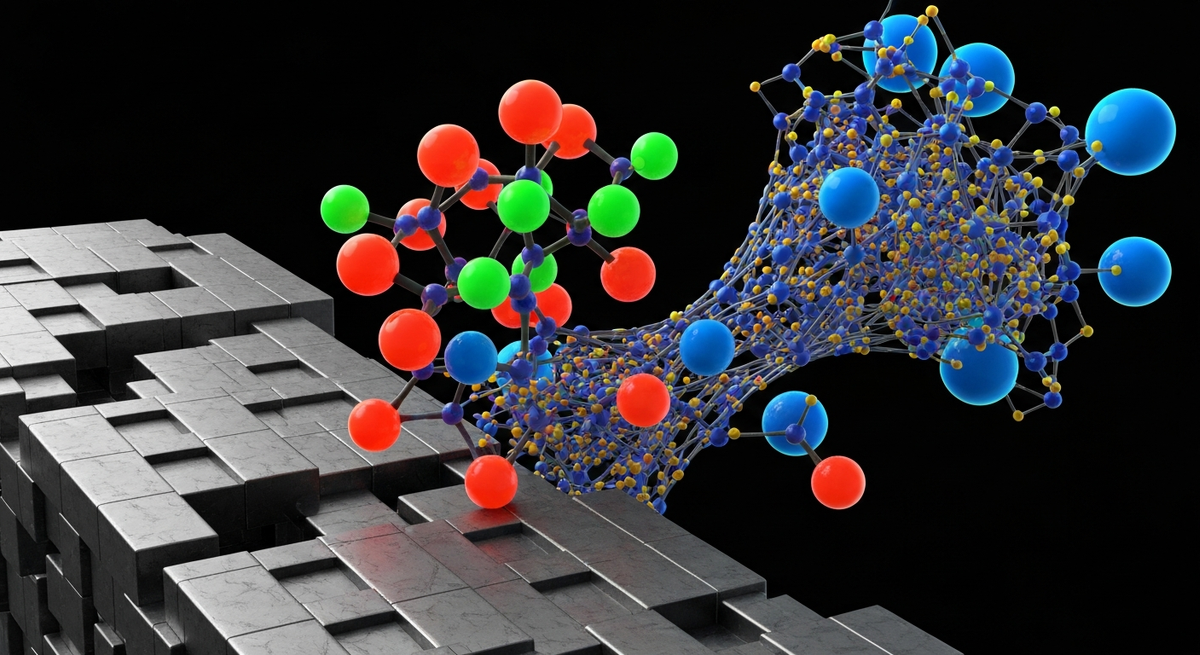
The imperative for efficient and cost-effective gas separation technologies has never been more pressing. Industries worldwide grapple with challenges ranging from energy purification to environmental remediation, demanding advanced materials capable of precise molecular sieving. Traditional membrane technologies often face limitations in selectivity, permeability, and robustness under harsh operating conditions, prompting the search for next-generation solutions.
Among the array of emerging materials, graphene stands out as a uniquely promising candidate for revolutionizing gas separation. Its exceptional chemical inertness, remarkable mechanical strength, and, crucially, its atomically thin, two-dimensional structure present an unparalleled foundation for creating highly efficient separation membranes. The ability to precisely engineer nanoscale pores within this ultimate membrane material opens avenues for unprecedented control over gas permeation, addressing critical needs in hydrogen purification, carbon capture, and natural gas processing.
However, unlocking the full potential of graphene for these applications requires a deep understanding of molecular interactions at the sub-nanometer scale. The transmission of gas molecules through these ultra-small pores transcends classical size-exclusion principles, venturing into the complex realm of quantum mechanics. Engineers and materials scientists must therefore consider phenomena such as surface adsorption, pore geometry deformation, and even quantum tunneling to design truly optimized and selective nanoporous graphene gas separation membranes.
Graphene's inherent properties make it an exceptional material for membrane science. Its single-atom thickness ensures the lowest possible resistance to molecular flow, theoretically leading to the highest possible permeation rates if appropriately porous. Furthermore, its chemical inertness guarantees stability across a wide range of chemical environments, while its robustness allows operation under high temperatures and pressures, outperforming many polymer-based membranes.
Paradoxically, pristine, defect-free graphene is entirely impermeable, even to the smallest gas atoms like helium. The electron density of the aromatic rings creates a formidable barrier, requiring an energetic input of 11.67 eV for a helium atom to pass through an intact graphene sheet. This impermeability, while initially a challenge, underscores graphene's potential as a perfect blank canvas for engineered porosity, ensuring that any gas transmission is precisely controlled by the introduced apertures.
Creating these necessary nanopores can be achieved through various methods, each with its own advantages and challenges for industrial scalability. Post-synthesis treatments include highly precise techniques like electron beam cutting, which can sculpt pores with atomic precision. Other approaches involve UV-induced oxidative etching or ion bombardment, which offer pathways for creating pores in existing graphene sheets. Alternatively, porous carbon materials can be directly synthesized through self-assembling approaches, designing the porosity into the material from its inception.
The fundamental principle behind using nanoporous graphene for gas separation hinges on controlling molecular passage based on size. By introducing pores of appropriate diameters, membranes can be designed to selectively allow certain gas species to pass while blocking others. This size-based selectivity makes the pore diameter the most critical parameter for fine-tuning the separating behavior of these advanced membranes.
Achieving highly efficient separation, however, demands extreme precision in pore engineering, particularly in the sub-nanometer regime. For instance, separating closely sized molecules or isotopes requires pore diameters that are often on the order of a few angstroms. This level of control goes far beyond what is typically achievable with conventional membrane fabrication techniques, necessitating innovative approaches to both pore creation and characterization.
Computational chemistry, particularly density functional theory (DFT), becomes an indispensable tool in this context. It allows researchers to accurately model the interaction of gas molecules with pores at the atomic level, predicting how different pore geometries and functionalizations will impact selectivity and permeation rates. This theoretical insight guides experimental efforts, accelerating the development of optimized nanoporous graphene membranes for specific gas separation tasks.
When gas molecules traverse graphene pores in the sub-nanometer size range, their behavior can no longer be adequately described by classical mechanics alone. The interactions become intrinsically quantum-mechanical, requiring sophisticated computational approaches to accurately predict transmission probabilities. This paradigm shift from simple physical sieving to quantum-influenced transport is central to designing highly selective membranes.
Several key quantum-mechanical effects play a significant role. Surface adsorption, for example, can dramatically influence a molecule's passage. Molecules might temporarily bind to the pore edges, altering their effective transit time or even blocking the pore for other species. The strength and nature of these adsorption forces, which can extend beyond simple van der Waals interactions, are crucial determinants of permeation behavior.
Geometry deformation of the pore itself during molecular penetration is another important consideration. While graphene is robust, the subtle flexibility of the carbon lattice at the atomic scale means that a pore's effective diameter might dynamically change as a molecule attempts to pass. This dynamic interaction further complicates the classical picture of a rigid pore and requires detailed quantum chemical simulations to capture accurately.
For sufficiently small gases, such as hydrogen (H2) or helium (He), the phenomenon of quantum tunneling becomes a critical factor. Instead of requiring enough classical kinetic energy to overcome a potential energy barrier, these light molecules can 'tunnel' through the barrier even if their energy is insufficient to surmount it classically. This non-classical transport mechanism offers unique opportunities for isotope separation, which is often challenging through conventional means.
Traditional gas separation models often rely on the concept of kinetic diameters, which approximates molecules as hard spheres with a defined effective size. This classical picture suggests that molecules larger than the pore diameter are simply blocked, while smaller ones pass through. For many macro- and mesoporous membranes, this approximation holds sufficiently well, guiding the design of separation systems.
However, for nanoporous graphene membranes operating at the sub-nanometer scale, the classical concept of kinetic diameters often becomes inadequate. The interactions between the gas molecules and the pore walls are far more complex than simple steric hindrance. As discussed, attractive forces beyond basic van der Waals interactions can occur, significantly influencing a molecule's ability to traverse the pore.
When strong attractive forces are present, a molecule that is nominally larger than the pore might still pass if it can deform the pore, or if the attractive interaction pulls it through. Conversely, a molecule smaller than the pore might be hindered if it strongly adsorbs to the pore entrance or walls. This nuanced interplay means that a simple comparison of molecular and pore diameters is insufficient for predicting accurate permeation rates and selectivity in advanced nanoporous graphene systems.
Therefore, understanding these deviations from classical behavior is paramount for rational membrane design. Researchers must move beyond simplified models and employ advanced computational techniques like density functional theory to account for the full spectrum of quantum-mechanical interactions. This ensures that the designed pores truly achieve the desired selectivity for industrially relevant gases such as methane (CH4), nitrogen (N2), oxygen (O2), and carbon dioxide (CO2).
One of the most compelling demonstrations of quantum-mechanical effects in nanoporous graphene gas separation is the potential for separating helium isotopes, 3He and 4He. These isotopes possess nearly identical kinetic diameters, making their separation extremely challenging through conventional size-exclusion membranes. However, their mass difference, despite being small, leads to distinct quantum tunneling probabilities.
For pores sufficiently small, both 3He and 4He can exhibit quantum tunneling. Crucially, the lighter 3He isotope has a higher tunneling probability than the heavier 4He. This difference in quantum-mechanical behavior, rather than a classical size difference, forms the basis for their effective separation using specifically designed nanoporous graphene sheets. The ability to differentiate between isotopes based on such subtle quantum effects represents a significant advancement in separation science.
This principle extends beyond just helium isotopes. The potential usage of graphene sheets for the separation of bosonic (4He) from fermionic (3He) helium has profound implications for various scientific and technological fields, including cryogenics and quantum computing. Such highly specialized separations highlight the unique capabilities of atomically precise nanoporous graphene membranes, pushing the boundaries of what is possible in molecular sieving.
Furthermore, the understanding gained from helium isotope separation can be extrapolated to other light gases, such as hydrogen and its isotopes. This research underscores the necessity of considering quantum tunneling and zero-point energy effects when designing pores for ultra-light molecules, opening new frontiers for highly specific and challenging gas separation applications that are otherwise intractable with existing technologies.
The theoretical insights into nanoporous graphene's gas separation capabilities are rapidly paving the way for tangible industrial applications. The ability to precisely tune pore sizes and leverage quantum phenomena offers solutions to some of the most pressing challenges in energy and environmental sectors. Imagine highly efficient membranes for purifying hydrogen fuel, capturing carbon dioxide emissions from industrial sources, or upgrading natural gas by separating methane from impurities like hydrogen sulfide.
Unlike many conventional membrane materials, graphene's inherent robustness against high temperatures, high pressures, and corrosive chemical environments makes it an ideal candidate for demanding industrial processes. This stability translates into longer membrane lifetimes, reduced maintenance costs, and improved process reliability, presenting a compelling economic case for its adoption once scalable fabrication methods are fully developed.
While the science of pore design and molecular interaction is well-established through advanced computational methods like DFT, the transition from laboratory-scale studies to widespread industrial implementation still presents challenges. Developing cost-effective and scalable techniques for creating atomically precise, uniformly distributed nanopores across large-area graphene sheets remains a key area of ongoing research and development.
Despite these fabrication hurdles, the fundamental understanding of how nanoporous graphene interacts with various gas species – from the classical considerations of kinetic diameters to the nuanced quantum-mechanical effects of tunneling and adsorption – firmly establishes its position as a transformative material for future gas separation technologies. The ongoing research promises to unlock new efficiencies and capabilities across critical industrial processes.
Nanoporous graphene is ideal due to its single-atom thickness, offering minimal resistance to molecular flow, and its exceptional chemical inertness and mechanical robustness. When precisely engineered with sub-nanometer pores, it allows for highly selective molecular sieving based on size and quantum-mechanical interactions. This combination of properties makes it superior to many traditional membrane materials.
For pores in the sub-nanometer regime, gas molecule transmission is an intrinsically quantum-mechanical process. Effects such as surface adsorption, pore geometry deformation during penetration, and quantum tunneling significantly influence a molecule's passage. Ignoring these phenomena would lead to inaccurate predictions of permeation rates and selectivity.
Nanopores can be introduced through various methods, including post-synthesis techniques like electron beam cutting, UV-induced oxidative etching, or ion bombardment for precise hole drilling. Alternatively, porous carbon materials can be directly synthesized via self-assembling approaches, where the desired pore structures are formed during the material's creation.
Nanoporous graphene can separate a wide array of gases, including industrially relevant mixtures like hydrogen from methane, carbon dioxide from nitrogen or methane, and oxygen from nitrogen. It also shows promise for highly challenging separations such as helium from other noble gases and even the separation of helium isotopes (3He and 4He) based on quantum tunneling effects.
Density Functional Theory (DFT) is a crucial computational chemistry method used to simulate molecular interactions at the atomic level. It allows researchers to accurately calculate transmission barriers for different gases through various pore models, providing insights into surface adsorption, geometry deformation, and tunneling probabilities. This theoretical data is essential for predicting permeation rates and designing optimal pore types for specific gas separation purposes.
The journey to highly efficient and selective gas separation membranes is fundamentally intertwined with our ability to engineer materials at the atomic scale and understand the quantum mechanics governing molecular transport. Nanoporous graphene, with its unparalleled properties and the potential for atomically precise pore design, represents a pinnacle in this pursuit. The insights gained from advanced computational chemistry, particularly in elucidating phenomena like quantum tunneling and complex adsorption, are not merely academic curiosities but critical components for real-world engineering solutions.
As we continue to refine the techniques for creating and controlling these sophisticated membranes, the vision of cost-effective hydrogen purification, significantly reduced carbon emissions, and enhanced industrial processes moves closer to reality. The ongoing research and development in nanoporous graphene gas separation will undoubtedly unlock new capabilities for a sustainable and energy-efficient future. Discover more about the latest innovations and applications of graphene technologies by exploring the resources available at usa-graphene.com.
Serious about B2B integration? Test our premium Pulsed Electrical Resistive Carbon Heating turbostratic graphene in your lab. 100g sample packs available now.
Explore More
Researchers have developed a breakthrough method for growing twisted bilayer graphene with pre-designed angles, a key step toward manufacturable quantum...

Learn how deep learning is revolutionizing the structural characterization of twisted bilayer materials, accelerating the development of next-generation...

Learn to build a prototype graphene FET biosensor for sensitive DNA detection. This guide covers materials, fabrication, and testing for point-of-care...