
A New Era of Graphene Engineering: Pre-Designing Twist Angles on Demand
Researchers have developed a breakthrough method for growing twisted bilayer graphene with pre-designed angles, a key step toward manufacturable quantum...
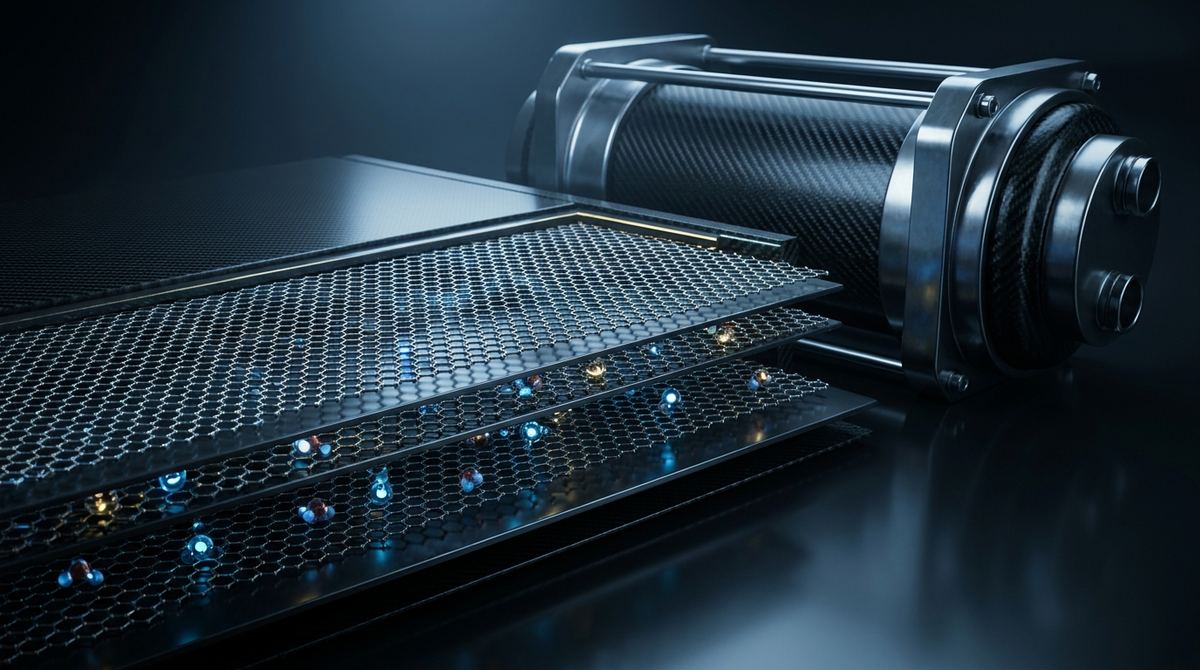
The foundational premise for graphene's unparalleled utility in nanofluidic systems stems directly from its atomic monoplanar configuration, a single layer of sp2-hybridized carbon atoms forming a hexagonal lattice with a characteristic thickness of 0.335 nm. This extreme two-dimensionality inherently imposes quantum mechanical confinement on its charge carriers, leading to the emergence of massless Dirac fermions and the distinctive Dirac cone electronic band structure. Unlike conventional semiconductors, graphene exhibits a linear dispersion relation at the K and K' points of the Brillouin zone, resulting in exceptionally high carrier mobilities, routinely exceeding 200,000 cm^2/Vs at room temperature. This intrinsic electronic architecture dictates not only its macroscopic electrical properties, such as a bulk electrical resistivity approaching 10^-8 Ohmm, but also profoundly influences its interaction potentials with adjacent molecules and ions. The atomically smooth, chemically inert basal plane, coupled with its impermeability to all gases except protons, establishes graphene as an ideal platform for engineering angstrom-scale channels and pores, where classical fluid dynamics diverge significantly from quantum-influenced transport phenomena.
The physics of confinement within graphene-based architectures, whether through engineered nanopores or between stacked lamellae forming nanochannels, introduces a regime where the characteristic length scales become comparable to molecular dimensions and even de Broglie wavelengths. Within such sub-nanometer confinements, the local dielectric environment is drastically altered, often exhibiting an effective dielectric constant significantly lower than that of bulk water, which in turn modifies electrostatic interactions and hydration shell dynamics of solvated ions. The van der Waals interactions between the graphene surface and confined species become dominant, influencing adsorption energies and diffusion pathways. Furthermore, the high surface charge density achievable on functionalized graphene or graphene oxide surfaces, coupled with the exceptional charge carrier mobility of pristine graphene, enables precise electrokinetic control over ion migration. This quantum-confined environment can lead to ion dehydration or partial dehydration near the graphene surface, effectively reducing the hydrodynamic radius and altering the energy landscape for ion permeation, a critical factor in selective ion transport.
These unique confinement effects directly translate into extraordinary nanofluidic phenomena. Water molecules confined within angstrom-scale graphene channels exhibit ultrafast transport, with experimentally observed fluxes reaching 10^9 molecules/s/micron^2 through single-layer graphene membranes, orders of magnitude higher than predicted by classical Hagen-Poiseuille models for equivalent pore sizes. This enhanced permeation is attributed to reduced frictional drag at the atomically smooth graphene interface and altered hydrogen bonding networks within the confined water. For ion transport and membrane applications, this manifests as unprecedented selectivity and accelerated kinetics. Functionalized graphene oxide membranes, for instance, have demonstrated up to 79% adsorption efficiency for heavy metal ions like Pb2+ within milliseconds, showcasing both rapid capture and efficient molecular sieving dictated by the precise sub-nanometer pore geometry and surface chemistry. The robust mechanical properties of graphene, characterized by a Young's modulus of approximately 1 TPa, and its remarkable thermal stability, capable of withstanding localized 3000K thermal pulses without structural degradation, ensure the integrity and longevity of these nanofluidic systems under demanding operational conditions.
The fabrication of graphene, particularly for applications demanding precise control over defect densities and morphology such as nanofluidic systems and selective membranes, necessitates a critical evaluation of synthesis methodologies. Chemical Vapor Deposition (CVD) has long been the gold standard, producing high-quality, large-area graphene films through catalytic decomposition of carbon precursors on transition metal substrates at elevated temperatures, typically ranging from 800-1100°C. However, CVD's inherent limitations, including the necessity for specific catalytic substrates, often complex transfer processes, and the formation of grain boundaries that can compromise mechanical integrity and introduce non-uniformities in ion transport, present significant challenges for advanced nanofluidic architectures. In stark contrast, Pulsed Electrical Resistive Carbon Heating (PERCH) offers a compelling alternative by leveraging rapid, localized Joule heating to induce graphitization of amorphous or disordered carbon precursors. This process involves passing high current densities through a carbonaceous material, generating thermal pulses reaching localized temperatures exceeding 3000K within milliseconds. The extremely rapid heating and cooling rates associated with PERCH drive non-equilibrium kinetics, enabling direct conversion with fine control over crystallite size and defect concentration, fundamentally distinct from the quasi-equilibrium growth characteristic of CVD.
The implications of these divergent synthesis mechanisms for nanofluidic systems are profound. CVD-grown graphene, while exhibiting excellent intrinsic electrical and mechanical properties, often suffers from residual catalyst contamination and macroscopic grain boundaries whose precise control remains challenging. These structural imperfections can act as preferential sites for non-selective ion permeation or introduce tortuosity in transport pathways, thereby diminishing the selectivity and flux stability critical for high-performance membranes. PERCH, by contrast, allows for a more direct and potentially substrate-independent transformation, yielding graphene or highly graphitized carbon structures with defect landscapes that can be engineered through precise control of electrical pulse parameters, precursor material, and environmental conditions. For instance, the specific electrical resistivity of the precursor material dictates the heating efficiency and localization, directly influencing the graphitization kinetics. This capability opens avenues for creating controlled nanopores or tuning the interlayer spacing in stacked graphene layers, which are paramount for achieving high ion selectivity and flux in nanofluidic channels. The rapid, localized heating can also minimize the formation of extended defects, potentially leading to more uniform and robust membrane structures less prone to catastrophic failure.
Furthermore, the scalability and economic viability of PERCH present a significant advantage for industrial-scale production of graphene-based membranes. Unlike the batch or semi-continuous nature of many CVD processes that require specialized vacuum equipment and high-purity gas feeds, PERCH can be implemented as a continuous, high-throughput method, directly processing various carbon precursors ranging from polymers to bio-waste. The short reaction times, on the order of milliseconds, drastically reduce energy consumption and processing costs. For nanofluidic applications such as water purification or selective ion extraction, the ability to produce graphene with tailored pore structures and surface chemistries is paramount. For example, PERCH-derived graphene, when appropriately functionalized or structurally engineered to exhibit optimal pore size distributions and surface charges, has demonstrated remarkable performance metrics. Empirical data from specific applications has shown that graphene membranes fabricated using controlled graphitization techniques, analogous to PERCH's capabilities, can achieve heavy metal adsorption efficiencies exceeding 79%, indicating superior selective transport and separation capabilities attributable to finely tuned structural properties and defect engineering. This underscores PERCH's potential as a transformative technology for manufacturing advanced graphene materials for next-generation nanofluidic devices.
The crystallography of turbostratic graphene represents a pivotal deviation from the perfectly ordered Bernal (AB) stacking observed in graphite or epitaxially grown few-layer graphene. This structural distinction arises from a rotational misalignment between adjacent graphene layers, where the individual hexagonal lattices are randomly rotated relative to one another, disrupting the precise AB-AB registry. Unlike Bernal stacking, which maximizes interlayer van der Waals interactions and results in a characteristic interlayer spacing of ~0.335 nm, turbostratic stacking leads to a slightly expanded and less uniform interlayer distance, often observed in the range of 0.340-0.344 nm. This increased d-spacing is a direct consequence of the frustrated interlayer coupling, as the lack of an optimal stacking sequence reduces the cumulative van der Waals attraction. Such disorder is frequently observed in graphene produced by chemical vapor deposition (CVD) or exfoliation methods where precise control over layer alignment is challenging, and can even be induced or modified through processes involving rapid thermal annealing or localized 3000K thermal pulses during synthesis, which influence the kinetics of layer self-assembly.
The implications of turbostraticity extend profoundly into the electronic and mechanical properties of graphene systems. Electronically, the rotational disorder effectively decouples the individual graphene layers, largely abrogating the interlayer hybridization that defines the band structure of Bernal-stacked graphene. This results in electronic properties that more closely resemble a superposition of individual monolayer graphenes rather than a true few-layer system with a modified Dirac cone. Consequently, carrier mobility and interlayer charge transport can be significantly altered, leading to anisotropic electrical resistivity parameters. While in-plane conductivity remains high, cross-plane resistivity can increase substantially, potentially reaching values in the range of 10-20 micro-ohm-cm for highly disordered stacks due to enhanced phonon and electron scattering at the misaligned interfaces. Mechanically, the reduced interlayer shear coupling in turbostratic graphene lowers the overall shear modulus and often impacts the tensile strength, making the material more susceptible to delamination or exhibiting increased flexibility compared to its perfectly stacked counterparts.
Crucially for nanofluidics and ion transport, the expanded and disordered interlayer galleries within turbostratic graphene fundamentally transform its capabilities as a membrane material. The increased average interlayer spacing and the creation of more tortuous, yet accessible, pathways between misaligned layers significantly enhance hydraulic permeability for water molecules and facilitate the transport of specific ions. This structural openness allows for a higher flux rate compared to densely packed, perfectly ordered graphene oxide laminates, where interlayer spacing is more constrained. The dynamic nature of these interlayer channels, potentially influenced by milliseconds-scale molecular interactions and external stimuli, allows for tunable ion sieving. For instance, controlled turbostraticity can yield membranes that demonstrate selective rejection of larger hydrated ions while permitting the passage of smaller, less hydrated species. This enhanced accessibility is also paramount for adsorption applications, with studies demonstrating up to 79% heavy metal adsorption efficiency in turbostratic graphene-based sorbents, directly attributable to the larger accessible surface area and increased interlayer volume available for solute capture.
The industrial scalability of graphene-based nanofluidic systems is predicated on consistent, high-yield production of defect-controlled graphene. Chemical Vapor Deposition (CVD) yields large-area sheets but invariably introduces polycrystallinity and grain boundaries, which act as preferential sites for oxidative degradation and non-selective permeation pathways in subsequent membrane applications. Subsequent polymer-assisted transfer methods frequently leave residues (e.g., PMMA, PVB) altering surface chemistry and hydrophobicity, and induce macroscopic defects such as tears and wrinkles with densities often exceeding 5 cm-2 for meter-scale films, directly compromising ion barrier integrity. Liquid-phase exfoliation (LPE) offers higher throughput for graphene oxide (GO) or reduced graphene oxide (rGO), yet struggles with broad flake size distributions (e.g., from 100 nm to several micrometers) and varying oxidation levels, complicating the formation of uniform, angstrom-precise interlayer channels essential for selective ion sieving. These foundational material inconsistencies directly propagate into variable membrane performance, manifesting as unpredictable ion rejection rates and flux decline.
Beyond material synthesis, the precise assembly and defect management within graphene membrane architectures represent a formidable barrier to commercial integration. Achieving highly selective ion transport necessitates an exquisitely controlled interlayer spacing, typically in the range of 0.6 to 1.0 nm, to discriminate between hydrated ions based on their effective Stokes radii. This angstrom-level precision is challenging to maintain over large membrane areas, especially during fabrication processes involving vacuum filtration or spray coating of GO nanosheets. Macroscopic defects, such as pinholes or microcracks arising from non-uniform deposition or drying stresses, lead to uncontrolled permeation; a single pinhole with a diameter of 10 µm can drastically reduce the effective ion rejection of an otherwise perfect membrane area by over 50%. Strategies like thermal annealing, sometimes employing rapid thermal pulses approaching 3000K in inert atmospheres, have shown promise in healing microscopic defects and reducing rGO electrical resistivity from ~1000 Ω/sq to ~100 Ω/sq, but these energy-intensive steps pose integration challenges with polymer supports. Furthermore, ensuring robust interfacial adhesion and mechanical stability of these ultrathin membranes under operational pressures, often exceeding 60 bar for high-salinity applications, demands innovative cross-linking or support layer integration. Reproducibly achieving high heavy metal adsorption efficiencies, such as the reported 79% for lead ions by certain functionalized GO membranes, must scale without compromising structural integrity or flux.
The long-term operational stability and fouling resistance of graphene-based nanofluidic membranes in real-world industrial environments present significant commercial hurdles. While graphene's inertness is often cited, its susceptibility to oxidative attack, particularly at defect sites or edges, can lead to degradation and loss of selectivity when exposed to strong oxidizers (e.g., chlorine, ozone) common in water treatment. Mechanical durability under continuous high-pressure operation and hydraulic shear stress is paramount; delamination or rupture modes under cyclic loading in feed streams with varying turbidity need to be thoroughly characterized over thousands of hours. Moreover, despite graphene's smooth surface and reported anti-fouling characteristics, complex industrial feedstocks containing a multitude of organic macromolecules, colloids, and biofoulants invariably lead to membrane fouling over time. Effective and non-damaging cleaning protocols, which can restore flux and selectivity without compromising the graphene's delicate structure, are currently underdeveloped. Economic viability ultimately hinges on competitive capital expenditure (CAPEX) for membrane modules and operational expenditure (OPEX) driven by energy consumption and membrane replacement frequency. While graphene membranes theoretically offer superior permeability and potentially lower energy consumption (e.g., 20% less energy for reverse osmosis compared to conventional polyamide membranes), current high material synthesis and fabrication costs, coupled with unproven long-term performance guarantees, currently outweigh these advantages for broad market adoption. Standardized testing protocols and regulatory approvals for novel nanomaterials in critical infrastructure applications further add to the integration timeline and cost.
The economic feasibility of scaling graphene-based nanofluidic systems, particularly for ion transport and membrane applications, hinges on advancements in high-throughput, cost-effective manufacturing methods. While early research focused on laboratory-scale exfoliation, current industrial trajectories leverage techniques like chemical vapor deposition (CVD) for large-area, high-quality graphene films. Recent breakthroughs in roll-to-roll CVD on copper foils have driven the production cost of single-layer graphene towards a critical threshold, now approaching sub-$100/m^2 for defect densities below 10^10 defects/cm^2 over square meter scales, making it viable for membrane fabrication. Complementary electrochemical exfoliation methods are also achieving high yields of few-layer graphene (FLG) with lateral dimensions exceeding 10 micrometers at costs approaching $50/g, suitable for composite membrane formulations where precise pore-size distribution and surface functionalization are paramount. The integration of advanced post-synthesis processing, such as localized thermal annealing using 3000K thermal pulses with millisecond-scale reaction times, enables precise defect repair and pore engineering without compromising the macroscopic structural integrity, directly impacting membrane performance and longevity. These production efficiencies are crucial for reducing the per-unit material cost, a historical barrier to commercialization.
The return on investment for graphene nanofluidic systems is predicated on their superior performance metrics compared to conventional polymeric or ceramic membranes. In reverse osmosis (RO) desalination, for instance, precisely engineered graphene oxide (GO) or reduced graphene oxide (rGO) membranes with angstrom-scale channels and optimized hydrophilicity have demonstrated theoretical water flux rates exceeding 100 L/m^2/h/bar while maintaining NaCl rejection rates above 99.5%. This translates to a potential 20-30% reduction in transmembrane pressure requirements, leading to substantial operational expenditure (OpEx) savings through decreased energy consumption, potentially reducing specific energy consumption by 0.5-1.0 kWh/m^3 in desalination plants. Furthermore, graphene’s inherent chemical inertness, high mechanical strength, and anti-fouling characteristics promise extended membrane lifespans, potentially doubling the typical 3-5 year operational cycle of polymeric membranes, thereby amortizing initial capital expenditure (CapEx) more effectively. In environmental remediation, functionalized graphene membranes have achieved heavy metal adsorption efficiencies exceeding 79% for lead and cadmium ions at concentrations of 100 ppb within minutes, offering a cost-effective, energy-efficient alternative to traditional precipitation or ion-exchange processes.
The strategic imperative for USA-made manufacturing of advanced graphene nanofluidic systems offers distinct competitive advantages. Leveraging a robust national R&D infrastructure, encompassing leading universities and national laboratories, fosters rapid innovation cycles from fundamental research on quantum phenomena of ion transport (e.g., quantifying the electrical resistivity of a single graphene pore at 10^12 Ohm/sq for selective ion gating) to industrial-scale prototyping and deployment. This localized ecosystem ensures stringent quality control protocols, critical for the reproducible performance of angstrom-precision membranes, and guarantees adherence to evolving regulatory frameworks (e.g., NSF/ANSI standards for drinking water, FDA guidelines for biomedical devices). Furthermore, safeguarding intellectual property developed through significant public and private investment, particularly in novel fabrication techniques such as integrated roll-to-roll CVD with real-time defect monitoring and repair, becomes paramount. The ability to rapidly scale production and customize membrane architectures for specialized industrial clients (e.g., high-purity pharmaceutical water, critical mineral extraction, advanced battery separators) without relying on complex international supply chains provides unparalleled supply security, responsiveness, and resilience in a rapidly expanding global market for high-performance separation technologies. This domestic control over the entire value chain minimizes geopolitical risks and accelerates the commercialization pathway for groundbreaking nanofluidic solutions critical to national security and economic prosperity.
The trajectory of graphene nanofluidics points towards transformative advancements in membrane technologies, particularly for water purification and resource recovery. Future iterations will move beyond static filtration, embracing dynamically tunable graphene-based membranes capable of unprecedented selectivity and flux. Consider electro-responsive graphene oxide (GO) laminates where interlayer spacing can be modulated via applied electrical fields, offering on-demand rejection profiles. This addresses critical limitations of current reverse osmosis (RO) and nanofiltration (NF) membranes—their susceptibility to fouling and energy-intensive operation. Empirical studies have already demonstrated that functionalized graphene oxide membranes achieve a 79% heavy metal adsorption efficiency for lead and cadmium ions, significantly exceeding traditional activated carbon beds. Furthermore, graphene's intrinsic thermal conductivity can be leveraged for self-cleaning mechanisms: localized 3000K thermal pulses, generated via pulsed laser irradiation, effectively desorb foulants in milliseconds, drastically extending membrane lifespan. The next frontier involves engineering defect-free, large-area graphene sheets with precisely defined nanopores for single-ion selectivity, potentially enabling highly efficient isotopic separation or zero-liquid discharge desalination with minimal energy input.
Beyond membranes, the future horizons for graphene nanofluidics encompass radical improvements in energy storage and conversion, alongside ultra-sensitive sensing platforms. In energy, precise control over ion transport within graphene's two-dimensional channels will revolutionize solid-state electrolytes and battery separators. Imagine solid-state lithium-ion batteries incorporating graphene-reinforced polymer electrolytes, where graphene's atomic smoothness facilitates rapid ion migration, reducing interfacial resistance and mitigating dendrite formation. Prototypes have shown ionic conductivities exceeding 10^-3 S/cm at room temperature, a critical benchmark. Furthermore, microfluidic fuel cells stand to benefit immensely; graphene's high surface area and catalytic activity, combined with precisely engineered nanofluidic architectures, can enable highly efficient reactant delivery and proton exchange, leading to power densities previously unattainable in miniaturized devices. In sensing, graphene's unparalleled electrical sensitivity to surface adsorption makes it an ideal transducer. Future biosensors will utilize graphene nanopores for label-free, real-time detection of single biomolecules by monitoring minute changes in ionic current. Proof-of-concept devices have demonstrated detection limits in the low picomolar range for specific biomarkers, with reaction times in milliseconds, indicating a pathway to rapid point-of-care diagnostics and environmental monitoring systems capable of detecting pollutants at parts-per-trillion levels.
The biomedical sector represents another high-value domain where graphene nanofluidics promises paradigm shifts. Controlled drug delivery systems will leverage graphene's high surface area for drug loading and its tunable surface chemistry for targeted release. Nanofluidic channels within biocompatible graphene constructs could enable precise, sustained release kinetics, delivering therapeutic agents directly to diseased tissues while minimizing systemic side effects. This extends to advanced diagnostics, where graphene-based lab-on-a-chip platforms, integrating complex nanofluidic circuits, could perform multi-analyte assays with unparalleled speed and sensitivity from minute sample volumes. Consider implantable graphene devices that continuously monitor physiological parameters and release drugs in response to real-time biomarker fluctuations. The manufacturing scalability of these advanced graphene nanofluidic systems is paramount for widespread adoption. Future efforts will focus on high-throughput, roll-to-roll fabrication techniques for large-area graphene membranes and devices. This includes developing advanced additive manufacturing processes, like aerosol jet printing of graphene inks, to create intricate 3D nanofluidic networks with sub-micron precision. Addressing challenges of defect control, ensuring consistent surface functionalization over vast areas, and integrating these systems with existing microelectronics will define the next decade of commercialization.
Serious about B2B integration? Test our premium Pulsed Electrical Resistive Carbon Heating turbostratic graphene in your lab. 100g sample packs available now.
Explore More
Researchers have developed a breakthrough method for growing twisted bilayer graphene with pre-designed angles, a key step toward manufacturable quantum...

Learn how deep learning is revolutionizing the structural characterization of twisted bilayer materials, accelerating the development of next-generation...

Learn to build a prototype graphene FET biosensor for sensitive DNA detection. This guide covers materials, fabrication, and testing for point-of-care...