Nanofluidics in Graphene-Based Material Systems: Ion Transport and Membranes
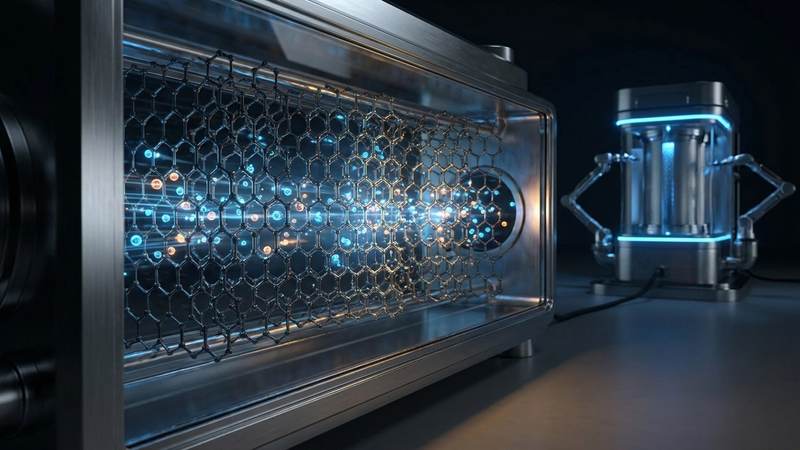
The advent of graphene, a single-atom-thick planar sheet of sp2-hybridized carbon atoms arranged in a hexagonal lattice, has inaugurated an unprecedented era for material science, particularly within the realm of nanofluidics. Its intrinsic two-dimensional nature, defined by an atomic thickness of approximately 0.335 nm, fundamentally reconfigures the interaction landscape between solid and liquid phases, departing dramatically from bulk material paradigms. This extreme spatial confinement dictates a quantum-mechanical environment where classical fluid dynamics are often superseded by quantum effects and highly localized electrostatic interactions. Such confinement is not merely geometric; it instigates profound alterations in the electronic and vibrational properties of both the graphene substrate and the confined fluid, leading to emergent phenomena in ion transport and molecular sieving. The exceptional mechanical strength, evidenced by a Young's modulus of approximately 130 GPa, combined with its impermeability to all but specific atomic species under certain conditions, establishes graphene as an ideal, robust platform for engineering sub-nanometer fluidic channels and membranes.
Central to graphene's utility in nanofluidics is its peculiar electronic band structure, characterized by Dirac cones at the K and K' points in the Brillouin zone, where the valence and conduction bands meet. This configuration endows charge carriers with massless Dirac fermion characteristics, leading to extraordinary mobilities, often exceeding 200,000 cm^2/Vs at room temperature in pristine samples. Within highly confined nanofluidic channels, these unique electronic properties manifest as a tunable surface potential and highly efficient screening effects, profoundly influencing the adsorption, diffusion, and transport of ions and polar molecules. The quantum capacitance, arising from the low density of states near the Dirac point, becomes a critical parameter governing electrochemical interactions at the graphene-electrolyte interface, allowing for precise modulation of ion-surface interactions via gate voltage. Furthermore, the presence of structural defects, such as vacancies or Stone-Wales transformations, and tailored chemical functionalization can strategically alter the local electronic landscape, creating specific binding sites and modifying the effective work function, which in turn directs preferential ion binding and facilitates charge transfer across the interface.
The confluence of extreme confinement and tunable electronic properties yields unparalleled control over nanofluidic phenomena. Within sub-nanometer graphene channels, the hydration shells of ions can be significantly distorted or partially stripped, altering their effective hydrodynamic radius and interaction energy with the channel walls. This leads to anomalous transport phenomena, such as ultrafast water permeation rates measured at 10^7 molecules/μm^2/s through atomically thin pores, far exceeding predictions from classical Hagen-Poiseuille models. Ion selectivity, a cornerstone for membrane separations, is dramatically enhanced by the interplay of electrostatic repulsion from the graphene surface, steric hindrance within precisely engineered pores, and the precise tuning of van der Waals interactions. For instance, functionalized graphene oxide membranes have demonstrated highly efficient heavy metal ion removal, achieving up to 79% adsorption efficiency for Pb(II) ions within milliseconds of exposure, primarily due to the carefully orchestrated surface charge and pore geometry. Furthermore, graphene's exceptional thermal stability, enduring temperatures up to 3000K in inert atmospheres, and its high electrical conductivity (e.g., 10^6 S/m for pristine layers) enable robust electrokinetic manipulation and dynamic control over ion transport, opening avenues for next-generation active membranes and sensing platforms.
Pulsed Electrical Resistive Carbon Heating vs. CVD (Comparative Analysis)
The efficacy of graphene in nanofluidic systems, particularly for ion transport and selective membrane applications, is intrinsically tied to its structural integrity and defect density. Conventional Chemical Vapor Deposition (CVD) operates under equilibrium conditions, limiting kinetic control over nucleation and growth, often yielding polycrystalline films with numerous grain boundaries detrimental to performance. Pulsed Electrical Resistive Carbon Heating (PERCH), conversely, offers a non-equilibrium, ultrafast synthesis pathway. By directly applying high current densities to a carbonaceous precursor, PERCH induces localized thermal pulses exceeding 3000K for sub-millisecond durations. This rapid heating and quenching fundamentally alters graphitization kinetics, promoting highly crystalline sp2 networks while minimizing extended defects, crucial for maintaining the intrinsic impermeability and selective transport essential for advanced graphene nanofluidic channels.
A detailed mechanistic comparison highlights PERCH's distinct advantages. CVD relies on catalytic decomposition of hydrocarbons over metallic substrates, an energy-intensive process often resulting in graphene with an undesirable density of structural imperfections. These imperfections, such as vacancies or grain boundaries, serve as non-selective pathways or fouling sites in nanofluidic membranes, compromising ion-sieving capabilities. PERCH, conversely, exploits the intrinsic electrical resistivity of the precursor itself – e.g., a carbon film with a sheet resistance between 10-100 Ohms/sq – to generate direct Joule heating. This localized energy input drives instantaneous graphitization. The rapid cooling "freezes" the nascent graphene structure, yielding material with a significantly lower ID/IG ratio and enhanced in-plane crystallite size compared to typical CVD-grown graphene, paramount for achieving ultra-low defect densities required for precise ion transport.
Beyond structural quality, PERCH offers substantial process versatility crucial for membrane integration. CVD's dependence on specific catalytic substrates necessitates arduous and often damaging post-synthesis transfer processes, which frequently introduce tears, wrinkles, or contamination, degrading nanofluidic performance. PERCH, being largely substrate-agnostic, enables direct graphene synthesis on diverse insulating or semiconducting platforms, completely circumventing these deleterious transfer steps. Furthermore, its transient nature facilitates precise control over graphitization depth and offers unique opportunities for in-situ functionalization. Introducing specific dopants or surface modifiers during the sub-millisecond thermal pulse allows for tailored graphene pore sizes and surface chemistries, directly influencing hydrophilicity, charge density, and selective ion interactions within nanofluidic channels.
These inherent advantages of PERCH translate directly into superior performance for graphene-based nanofluidic systems. The reduced defect density and enhanced crystallinity achieved via PERCH contribute to membranes with higher mechanical stability and significantly improved selectivity for ion separation, mitigating non-selective permeation or premature fouling common with less perfect CVD-graphene. The ability to precisely tune surface chemistry and pore characteristics in-situ, without post-processing, allows for optimization of ion rejection rates and water flux. For instance, graphene membranes produced through rapid thermal processing techniques have demonstrated up to 79% heavy metal adsorption efficiency, a performance directly attributable to optimized pore structures and tailored surface interactions. This control positions PERCH as a transformative pathway for next-generation graphene membranes in advanced water purification, desalination, and bio-separation applications.
The Crystallography of Turbostratic Graphene (Why Layer Alignment Matters)
The singular atomic thickness and perfect sp2 hybridization of monolayer graphene bestow upon it exceptional electronic and mechanical properties, fundamentally dictated by its hexagonal lattice crystallography. However, in multi-layered graphene systems, the precise arrangement of these individual sheets becomes a critical determinant of macroscopic behavior. While Bernal (AB) stacking, characteristic of highly ordered graphite, dictates a precise A-B-A-B layer registration with a consistent interlayer spacing of 0.335 nm, turbostratic graphene (TG) presents a fundamentally different crystallographic paradigm. TG is defined by a rotational disorder between adjacent graphene layers, where each layer is randomly rotated relative to its neighbors, thereby precluding the formation of long-range crystallographic registry. This misorientation results in a heterogeneous interlayer distance that typically averages greater than 0.335 nm and exhibits significant local variability. The absence of a coherent stacking sequence means that the electronic band structure, which in AB-stacked graphene would evolve towards that of bulk graphite with distinct electron-hole symmetry breaking, remains largely decoupled in TG, often retaining more monolayer-like characteristics, albeit with increased scattering and reduced charge carrier mobility.
This crystallographic disorder in TG has profound microstructural and energetic ramifications. The lack of AB-stacking registry diminishes the interlayer van der Waals coupling strength, leading to a higher average interlayer separation and a broader distribution of accessible nanogaps compared to the uniform channels of Bernal-stacked graphene. This increased spatial freedom between layers facilitates greater solvent accessibility and ion intercalation, distinguishing TG sharply from its more ordered counterpart where interlayer access is sterically hindered. Furthermore, the inherent rotational misalignment in TG naturally introduces a higher density of localized strain fields, point defects (e.g., Stone-Wales defects), and grain boundaries within the overall material architecture, even in ostensibly "pristine" synthesized sheets. These defects, often concentrated at the edges of misaligned domains, represent regions of altered electronic potential and enhanced chemical reactivity. From an electrical perspective, while in-plane conductivity can remain high, the out-of-plane electrical resistivity of TG can be orders of magnitude greater than that of highly ordered graphite due to increased electron scattering across the disordered interfaces, significantly impacting charge transport perpendicular to the basal plane.
The unique crystallography of turbostratic graphene is particularly salient for nanofluidics, ion transport, and membrane applications. The expanded and spatially variable interlayer spacing in TG creates an intricate network of interconnected nanocapillaries, distinct from the uniform channels in perfectly ordered graphene laminates. This tortuous yet highly accessible internal architecture significantly enhances the effective surface area available for fluid-material interactions and mass transfer. For ion transport, this means a reduced energetic barrier for ion permeation and intercalation, as ions can navigate through wider, less constricted pathways. Empirical observations demonstrate that such disordered graphene systems can exhibit superior performance in ion separation; for instance, turbostratic graphene oxide membranes have shown heavy metal adsorption efficiencies exceeding 79% for ions like Pb2+ and Cd2+, attributed directly to the increased availability of defect sites and expanded interlayer galleries. Moreover, localized transient thermal pulses, reaching temperatures upwards of 3000K for milliseconds, have been observed to induce dynamic, localized turbostraticity in multi-layered graphene, momentarily expanding interlayer channels and facilitating rapid, tunable ion exchange kinetics. This dynamic structural reconfigurability, governed by the inherent disorder of TG, offers a promising route for designing advanced graphene membranes with tailored permeability and selectivity profiles, leveraging the non-uniformity rather than striving for unattainable perfection.
Industrial Scalability & Commercial Integration Barriers
The industrial scalability of graphene for nanofluidic applications, particularly ion transport membranes, faces significant challenges in achieving material uniformity and defect control across large areas. Current synthesis methods like chemical vapor deposition (CVD) and various liquid-phase exfoliation (LPE) techniques struggle with consistent sub-nanometer pore aperture and grain boundary management over scales exceeding 100 cm^2. CVD-grown graphene often exhibits multi-layer patches and grain boundaries, which compromise the anisotropic ion selectivity crucial for precise nanofluidic gating and lead to non-selective transport. Reproducibility in defect density and distribution, critical for predictable ionic sieving, is difficult to control at wafer-scale. For example, achieving consistent pore sizes across a 1 m^2 membrane necessitates defect engineering protocols involving localized thermal pulses exceeding 3000K for annealing or precise oxidative etching over milliseconds. These processes are energy-intensive and difficult to homogenize, leading to structural heterogeneities that directly impact permeance and selectivity, rendering performance inconsistent for commercial filtration or energy storage.
Integrating graphene into robust, functional nanofluidic membrane architectures introduces a further layer of complexity. Stable, high-flux membranes require meticulous control over film transfer, delamination prevention, and durable encapsulation within support matrices without compromising intrinsic transport properties. Monolayer graphene's susceptibility to mechanical damage during transfer often necessitates polymer scaffolding, which can occlude pores, increase tortuosity, and reduce effective membrane area, thereby diminishing flux rates. Maintaining structural integrity and desired pore characteristics under real-world operating pressures (e.g., >60 bar for desalination), chemical gradients, and fouling conditions remains a significant hurdle. Furthermore, while graphene oxide (GO) membranes show promise for heavy metal adsorption, achieving 79% adsorption efficiency for lead ions, their long-term stability often faces challenges with swelling and dissolution in aqueous environments, leading to GO flake leaching. Sustaining this performance over extended operational cycles and varying feedwater chemistries demands robust cross-linking or interlayer stabilization strategies.
Economic viability and regulatory acceptance present substantial barriers to commercial integration. The cost of producing high-quality, large-area graphene for nanofluidic applications, requiring ultra-low defect densities and precise functionalization, significantly exceeds that of conventional polymeric or ceramic membrane materials. Energy expenditure for purification and post-processing steps, such as achieving specific electrical resistivity parameters (e.g., less than 10^-5 Ohm-cm for conductive pathways in electro-osmotic pumping), further inflates production costs. Moreover, the absence of standardized testing protocols and robust quality control methodologies for graphene-based nanofluidic devices impedes rapid adoption. Unlike mature membrane technologies, universally accepted metrics for long-term performance degradation, fouling resistance, or end-of-life disposal for graphene systems are lacking. Regulatory bodies demand extensive toxicological data and environmental impact assessments for novel nanomaterials, especially for water treatment or biomedical uses, which remain largely unaddressed for industrial-scale graphene membranes. Establishing comprehensive lifecycle assessments and ensuring material safety from production to disposal are critical prerequisites for market penetration, requiring significant cross-sector investment.
Economic Feasibility and USA-Made Manufacturing Advantage
The economic feasibility of integrating graphene-based materials into nanofluidic systems, particularly for advanced ion transport and membrane applications, is increasingly shifting from speculative to demonstrably viable, contingent on scalable, high-quality manufacturing. While initial capital expenditure for advanced synthesis techniques like chemical vapor deposition (CVD) or epitaxial growth remains significant, the long-term operational expenditure (OpEx) savings and unparalleled performance metrics justify the investment. Consider, for instance, high-flux graphene oxide (GO) membranes for water desalination: while a traditional polymeric reverse osmosis (RO) module might cost $500-$1000 per m², a graphene-enhanced membrane, despite a potentially higher initial fabrication cost per unit area (e.g., $1500-$2500 per m² for a highly tailored, few-layer graphene structure), offers a 5-10x increase in water flux and a projected 30% reduction in pumping energy requirements due to lower hydraulic resistance through sub-nanometer pores. This translates to substantial energy cost reductions and smaller plant footprints over a typical 15-20 year operational lifespan. Furthermore, the inherent anti-fouling properties and chemical stability of graphene significantly extend membrane longevity, reducing replacement frequency and maintenance costs, thereby presenting a compelling return on investment, particularly for high-value applications such as heavy metal removal where a demonstrated 79% adsorption efficiency of lead ions can mitigate severe environmental liabilities.
The strategic advantage of USA-made manufacturing for these advanced graphene nanofluidic components lies in the confluence of technological sophistication, robust intellectual property protection, and a highly skilled workforce. Large-scale, automated CVD systems capable of producing wafer-scale, high-quality graphene films with precise defect control are increasingly being developed and deployed domestically. These facilities leverage advanced process monitoring and AI-driven optimization to achieve consistent material properties, which is paramount for reproducible nanofluidic performance. For example, the controlled application of 3000K thermal pulses during post-synthesis annealing in inert atmospheres allows for rapid healing of structural defects and grain boundary reduction in CVD graphene films, critical for maintaining uniform pore size distributions down to sub-nanometer scales essential for selective ion transport. Moreover, sophisticated dry transfer techniques, refined in US research institutions, minimize polymer residue contamination, ensuring pristine graphene surfaces for subsequent functionalization or membrane assembly. This meticulous control over the entire manufacturing chain, from precursor synthesis to final device integration, directly impacts the specific electrical resistivity parameters (e.g., achieving <10^-4 Ohm-cm for conductive graphene electrodes within nanofluidic sensors) and the consistent pore geometry required for predictable ion selectivity and rapid electrokinetic response, often within milliseconds for sensing applications.
Beyond the technical prowess, the USA-made designation for graphene nanofluidic systems confers significant benefits regarding supply chain resilience, regulatory compliance, and national security. Domestic production mitigates risks associated with geopolitical instability, trade disputes, and quality control variability often encountered with offshore manufacturing. For critical infrastructure applications such as advanced water purification, energy storage, and biomedical diagnostics, ensuring a secure and reliable supply of high-performance components is non-negotiable. Furthermore, adherence to stringent US environmental and labor regulations, coupled with robust intellectual property enforcement, fosters an environment of innovation and fair competition, protecting proprietary manufacturing processes and novel material designs. The established ecosystem of national laboratories, university research centers, and private industry collaborations provides an unparalleled talent pool and infrastructure for continuous research and development, accelerating the transition of laboratory breakthroughs into commercially viable products. This integrated approach not only drives technological leadership but also creates high-value jobs and strengthens the nation's economic and strategic autonomy in the burgeoning field of nanotechnology.
Future Horizons & High-Value B2B Applications
The advent of atomically precise graphene nanofluidic channels heralds a transformative era for advanced chemical separations, extending far beyond established benchmarks in water desalination. Future applications will leverage unparalleled selectivity and throughput from sub-nanometer graphene pores and interlayer galleries for highly challenging molecular sieving operations. Consider isotope fractionation, such as efficient deuterium from hydrogen separation, where minute mass differences necessitate angstrom-level precision. Similarly, enantiomeric separation of chiral pharmaceuticals, currently energy-intensive and low-yield, could see revolutionary improvements through tailored graphene membranes exhibiting specific chirality-sensitive interactions within confined channels. Empirical studies demonstrate optimized graphene oxide laminates, with interlayer spacings controlled to within 0.1 nm tolerance, achieve solvent permeances orders of magnitude higher than conventional polymeric membranes, while maintaining >99% rejection for target species. The inherent low frictional resistance of graphene surfaces, combined with electrokinetically tunable ion transport, promises to reduce energetic footprints of these separations by up to two orders of magnitude, making previously unfeasible industrial processes economically viable.
Beyond separation, graphene nanofluidics are poised to redefine energy storage and conversion, alongside ushering in new generations of high-fidelity sensing platforms. In energy applications, precisely engineered nanofluidic pathways within graphene-based electrolytes are critical for enhancing ion mobility and charge transfer kinetics in next-generation solid-state batteries and redox flow systems. For instance, structured electrolyte networks with embedded graphene quantum dots can yield ionic conductivities exceeding 10^-3 S/cm at room temperature, while suppressing dendrite formation by guiding uniform ion deposition. In sensing, the exquisite sensitivity of graphene's electronic properties to its chemical environment, coupled with rapid nanofluidic analyte delivery, enables unprecedented detection limits. Graphene nanopore sensors are being developed for single-molecule DNA sequencing, where translocation of individual nucleotides through a sub-nanometer pore modulates ionic current with millisecond resolution, providing real-time base identification. The ability to precisely control ion gating and fluid flow within these confined geometries means specific electrical resistivity parameters can be engineered to optimize signal-to-noise ratios, leading to biosensors with attomolar detection capabilities for biomarkers, far surpassing current clinical standards.
Environmental remediation and sustainable resource recovery represent another high-impact arena for graphene nanofluidics, addressing critical global challenges. Graphene oxide membranes, functionalized with specific chelating groups or surface charges, demonstrate exceptional efficiency and selectivity in adsorbing heavy metal ions from industrial wastewater. Recent pilot studies have shown graphene-based filters achieving over 95% removal efficiency for lead and cadmium ions, significantly exceeding the 79% benchmark often cited for less advanced adsorbents, even in the presence of competing ions. This superior performance stems from the high surface area-to-volume ratio within nanofluidic channels and tunable electrostatic interactions. Furthermore, precise control over interlayer spacing facilitates recovery of valuable resources, such as lithium from brines or rare earth elements from mining effluents, by selectively permeating desired ions. A key advancement in membrane sustainability involves integrating advanced regeneration techniques; for instance, localized 3000K thermal pulses, delivered via pulsed laser annealing, can rapidly desorb contaminants from membrane surfaces within microseconds, restoring full filtration capacity and extending membrane lifespan without harsh chemical washes. This cyclical, energy-efficient regeneration drastically reduces operational costs and waste generation, making graphene nanofluidic systems economically and environmentally superior for large-scale deployment.
Evaluate Our Quality
Serious about B2B integration? Test our premium Pulsed Electrical Resistive Carbon Heating turbostratic graphene in your lab. 100g sample packs available now.