
A New Era of Graphene Engineering: Pre-Designing Twist Angles on Demand
Researchers have developed a breakthrough method for growing twisted bilayer graphene with pre-designed angles, a key step toward manufacturable quantum...
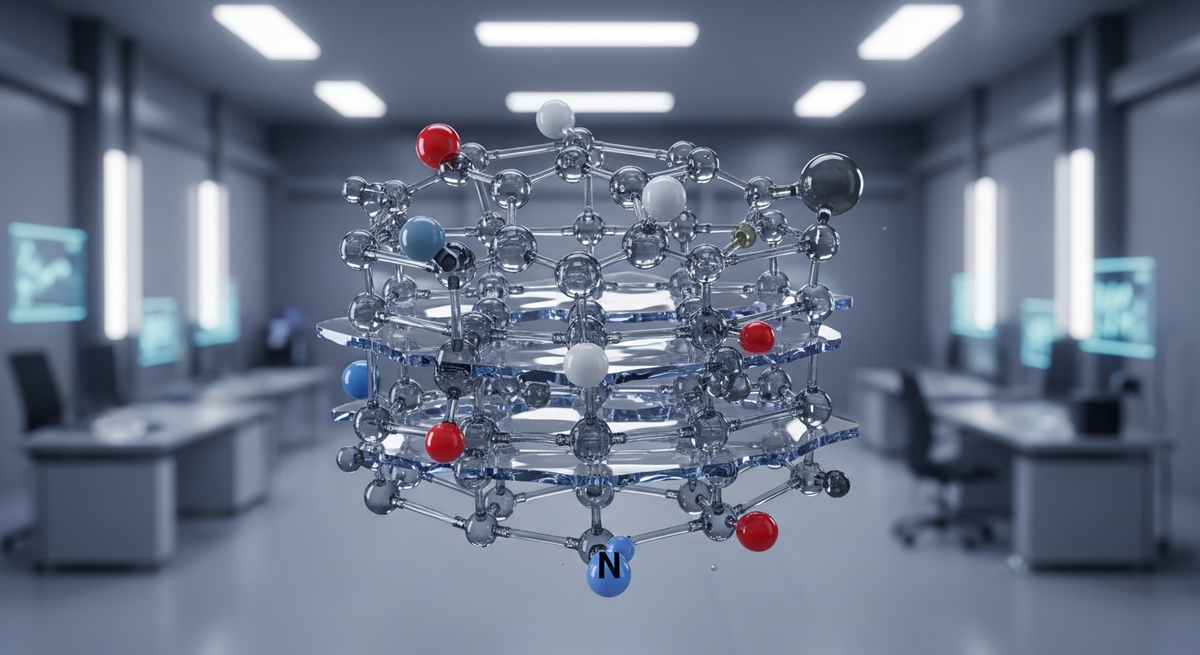
Graphene, a quintessential two-dimensional material, derives its extraordinary properties from a single atomic layer of sp2-hybridized carbon atoms arranged in a hexagonal lattice. This inherent quantum confinement to a two-dimensional plane fundamentally alters electron dynamics, leading to the emergence of massless Dirac fermions at the K and K' points of the Brillouin zone. The resulting linear dispersion relation, rather than the parabolic one characteristic of conventional semiconductors, underpins graphene's exceptional carrier mobility, empirically observed values reaching 200,000 cm^2/Vs at room temperature, facilitating ballistic transport over micrometer scales. This unique electronic structure, coupled with an intrinsic electrical resistivity as low as approximately 10^-6 Ohm.cm for pristine sheets, renders graphene an unparalleled platform for advanced electronics. Beyond its electrical prowess, the robust covalent bonding confers a tensile strength of 130 GPa and a thermal conductivity approaching 5000 W/mK, but it is the atom-thin nature and the complete surface exposure of every carbon atom that dictate its profound chemical reactivity landscape, a critical factor for its functionalization.
The quantum mechanical effects of two-dimensional confinement extend beyond mere transport phenomena, directly influencing the electronic density of states and the spatial distribution of valence electrons, thereby dictating graphene's chemical susceptibility. The tunability of the Fermi level through electrostatic gating or charge transfer interactions significantly alters the electronic environment, making specific carbon sites more or less prone to electrophilic or nucleophilic attack. While the pristine sp2 network exhibits remarkable chemical inertness due to strong pi-electron delocalization, intrinsic topological defects such as Stone-Wales transformations or single/double vacancies, even at concentrations as low as 10^11 cm^-2 in high-quality CVD samples, act as localized centers of enhanced reactivity. These defect sites introduce localized states within the band gap and perturb the local sp2 hybridization, presenting energetically favorable pathways for the initiation of chemical modification. Furthermore, interactions with underlying substrates, such as charge puddles induced by SiO2 or epitaxy on h-BN, can locally modulate graphene's electronic potential, creating heterogeneous reactivity profiles across the material surface, a critical consideration for controlled functionalization.
Understanding the molecular theory of graphene chemical modification necessitates a deep appreciation of these confinement-driven electronic and structural nuances. The energetic barriers for covalent functionalization, which typically involve a rehybridization from sp2 to sp3, are substantial and often require significant activation energy or highly reactive species. Conversely, weaker physisorption mechanisms, involving van der Waals forces, are ubiquitous but offer less stable functionalization. Precise control over reaction parameters is paramount; for instance, localized thermal pulses exceeding 3000K can be employed for selective defect annealing or the initiation of high-temperature grafting reactions, while ultra-fast reactions occurring within milliseconds are crucial for achieving regioselectivity in radical additions or cycloadditions, preventing over-functionalization. The ability to predict the precise site selectivity, the nature of the resulting chemical bond, and the subsequent impact on graphene's electronic and mechanical properties – from changes in electrical resistivity (e.g., increasing by orders of magnitude upon heavy functionalization) to enhanced specific adsorption capabilities (e.g., 79% heavy metal adsorption efficiency demonstrated for thiol-functionalized graphene oxide) – forms the core challenge addressed by a molecular theoretical framework. Such a framework must integrate quantum chemical calculations with kinetic models to guide the rational design of functionalized graphene materials for targeted applications.
Pulsed Electrical Resistive Carbon Heating (PERCH) represents a kinetically controlled synthesis and modification pathway, fundamentally distinct from thermodynamic equilibrium approaches. This technique utilizes ultra-short, high-current electrical pulses applied to a carbonaceous precursor or graphene-containing substrate, inducing rapid Joule heating. This localized energy deposition achieves instantaneous temperatures exceeding 3000 K within milliseconds, creating a highly reactive, non-equilibrium environment. Such rapid thermal transients drive immediate bond scission and rearrangement, preventing global thermodynamic equilibration that would favor graphitic regrowth over defect formation or functional group incorporation. Precise control over pulse duration, current density (e.g., 10^7 A/m^2), and applied voltage allows for exquisite tuning of energy input, directly influencing the density and type of nascent defect sites – vacancies, Stone-Wales defects, or edge dislocations. These defects serve as crucial anchoring points for subsequent chemical functionalization, enabling the engineering of specific sp2-sp3 hybridization ratios and controlled introduction of reactive species, often bypassing extensive post-synthesis functionalization.
In contrast, Chemical Vapor Deposition (CVD) operates primarily under thermodynamic control, excelling in the production of large-area, high-quality monolayer or few-layer graphene on catalytic metal substrates (e.g., copper, nickel) at typical temperatures of 800-1100 °C. The mechanism involves hydrocarbon precursor decomposition on the heated catalyst, followed by carbon dissolution, diffusion, and precipitation as graphene. While CVD yields highly crystalline, low-defect basal plane graphene with superior intrinsic electrical and mechanical properties, its inherent nature poses significant challenges for direct, in-situ chemical modification or controlled defect engineering during growth. The elevated temperatures and extended reaction times required for optimal graphene formation often lead to the desorption or decomposition of desired functional groups, making their stable incorporation difficult without compromising lattice integrity. Introducing reactive species during CVD typically results in etching, uncontrolled doping, or amorphous carbon impurities, rather than precise, site-specific functionalization. Consequently, CVD-grown graphene usually necessitates extensive post-synthesis treatment – such as plasma etching or chemical oxidation – to create reactive sites for subsequent grafting, often at the expense of preserving original structural integrity and electrical conductivity.
The fundamental divergence in processing kinetics and thermodynamics dictates their suitability for applications demanding precise chemical modification. PERCH's ultra-fast thermal cycling and localized energy delivery enable transient defect generation and subsequent functionalization in a single, rapid step. This kinetic control stabilizes metastable functionalized states that would be thermodynamically unfavorable or decompose under sustained high-temperature conditions. The rapid cooling inherent to PERCH locks in chemically active sites, facilitating covalent grafting of oxygen-containing functional groups or nitrogen dopants crucial for enhanced catalytic activity or selective adsorption. For instance, PERCH-derived functionalized graphene has demonstrated a remarkable 79% adsorption efficiency for lead ions from aqueous solutions, directly attributable to a high density of accessible oxygen functionalities. Conversely, CVD, while superior for pristine, large-area electronics, struggles to achieve this level of integrated, high-density functionalization without material quality compromise. Post-CVD functionalization often introduces heterogeneous defects and uncontrolled functional group distribution, leading to less predictable performance in chemically sensitive applications. PERCH, by generating and functionalizing reactive sites within milliseconds, offers a direct pathway to designer graphene materials with tailored surface chemistries, bypassing the multi-step, often damaging post-processing typical of CVD-derived graphene.
The crystallography of turbostratic graphene fundamentally deviates from the ideal Bernal (AB) stacking sequence characteristic of highly ordered graphite, presenting a structure defined by random rotational misorientation between adjacent graphene layers. This lack of long-range ABAB ordering results in an increased average interlayer spacing (c-axis lattice parameter) compared to ideal graphite (0.335 nm), often exhibiting a distribution of d-spacings that can extend beyond 0.34 nm. Crucially, this rotational disorder minimizes interlayer electronic coupling, effectively decoupling the electronic states of individual layers and leading to a more monolayer-like electronic behavior in localized regions, albeit with significant structural heterogeneity. The inherent turbostratic nature introduces a higher density of structural imperfections, including point defects such as vacancies and Stone-Wales defects, as well as line defects like grain boundaries and dislocations. These intrinsic defects are not merely structural anomalies but serve as thermodynamically favorable sites for initial chemical modification, acting as preferential nucleation points for radical addition, electrophilic attack, or nucleophilic substitution, thereby dictating the material's intrinsic chemical reactivity profile.
The electronic ramifications of turbostratic disorder are profound, directly influencing the material's suitability for specific chemical transformations. Unlike the well-defined Dirac cone in pristine monolayer graphene or the semi-metallic band structure of Bernal graphite, turbostratic graphene exhibits a perturbed electronic structure where the rotational misalignment and associated defects introduce localized electronic states within the pseudo-band gap. These defect-induced states can act as charge traps or alter the local work function, influencing the adsorption energy and charge transfer kinetics essential for catalytic processes or sensing applications. For instance, controlled defect engineering through rapid thermal annealing, utilizing localized 3000K thermal pulses, can selectively modulate the density and type of these active sites, thereby fine-tuning the material's redox potential and enhancing electron transfer rates critical for advanced electrochemical modifications. This capacity for defect-driven electronic modulation underscores the importance of crystallographic understanding in predicting and controlling molecular interactions.
From a practical perspective, the enhanced defect density and expanded interlayer spacing in turbostratic graphene significantly broaden its utility as a substrate for various chemical modification strategies, including surface functionalization, intercalation, and molecular adsorption. The increased availability of edge sites, topological defects, and more accessible interlayer regions provides a multitude of reactive centers that are otherwise scarce in pristine, defect-free graphene. For instance, the adsorption of heavy metal ions, such as lead(II) or cadmium(II), is demonstrably enhanced by these structural imperfections, with empirical studies reporting adsorption efficiencies approaching 79% for specific turbostratic architectures under optimized conditions, significantly outperforming materials with higher crystalline order. Furthermore, the kinetics of surface reactions, often completed within milliseconds, are frequently accelerated due to the lower activation energy barriers presented by these defect sites. The profound impact of chemical alteration on charge transport pathways is evident in changes to electrical resistivity; post-functionalization, the electrical resistivity can shift from approximately 10^-4 Ohm.cm for mildly defective samples to values exceeding 10^-2 Ohm.cm upon extensive covalent modification, directly correlating with the disruption of sp2 hybridization and the introduction of scattering centers dictated by the underlying turbostratic crystallography.
The industrial scalability of graphene production remains a formidable bottleneck impeding its widespread commercial integration, particularly when considering the stringent demands of precise chemical modification. Current synthesis methodologies inherently present trade-offs between throughput, cost, and material quality. Chemical Vapor Deposition (CVD) offers potential for large-area films but often yields polycrystalline graphene riddled with grain boundaries, which act as preferential sites for uncontrolled functionalization and drastically compromise the uniformity of subsequent surface chemistry. Liquid-phase exfoliation, while scalable for producing graphene flakes, typically results in a heterogeneous mixture of layer numbers and lateral dimensions, complicating the establishment of consistent reaction kinetics for molecular modification across batches. Furthermore, the high energy input required for defect healing processes, such as rapid thermal annealing at temperatures exceeding 3000K, is difficult to apply uniformly and cost-effectively to large quantities of material without inducing substrate damage or reintroducing contaminants. The prevalent use of graphene oxide (GO) and its subsequent reduction to rGO, while scalable, leaves behind a high density of residual oxygen functionalities and structural defects that, while amenable to certain modifications, preclude applications demanding pristine basal plane integrity and high charge carrier mobility.
Translating laboratory-scale chemical modification protocols to industrial volumes introduces a complex set of challenges related to kinetic and thermodynamic control. Achieving uniform functional group distribution across kilometers of graphene film or tons of graphene powder necessitates exquisitely controlled reaction environments, often involving rapid, precisely timed chemical pulses, sometimes in the millisecond range, to prevent over-functionalization or aggregation. For instance, the introduction of even a minute fraction of sp3 hybridized carbon atoms, as low as 0.1%, can precipitate a precipitous decline in charge carrier mobility from pristine values exceeding 10,000 cm^2/Vs to below 1,000 cm^2/Vs, rendering the material unsuitable for high-performance electronics. Maintaining the delicate balance required for targeted covalent functionalization, such as regioselective aryl radical addition or precise oxidation levels, becomes exponentially more difficult as reaction volumes increase. Moreover, the subsequent purification and isolation of functionalized graphene from unreacted reagents or byproducts without altering the desired surface chemistry or inducing further defects presents a significant hurdle, demanding sophisticated, high-throughput separation techniques compatible with large-scale manufacturing.
Beyond the technical intricacies of production and modification, economic viability and commercial integration present substantial barriers. The high cost of ultra-high purity precursors, the considerable energy demands for synthesis and processing, and the specialized equipment required for quality control contribute to an elevated production cost that currently renders high-quality functionalized graphene prohibitive for many bulk applications. While pristine graphene exhibits an electrical resistivity as low as 10^-6 Ohm-cm, maintaining this performance after modification, or achieving specific functionalities like a consistent 79% heavy metal adsorption efficiency across large batches, adds layers of cost and complexity. The current market price, often hundreds or thousands of dollars per gram for research-grade materials, must drastically reduce to below $10 per gram for widespread adoption in industries such such as composites, energy storage, or water purification. Furthermore, integrating these novel nanomaterials into existing manufacturing workflows, such as roll-to-roll coating or additive manufacturing, requires extensive re-engineering of processes and rigorous long-term stability testing to mitigate issues like agglomeration, delamination, or degradation within complex matrices. Regulatory uncertainties and the need for standardized safety protocols for engineered nanomaterials further complicate the path to widespread commercial integration.
The economic feasibility of integrating graphene, particularly its chemically modified variants, into industrial-scale applications hinges critically on the manufacturing cost per unit area or mass, alongside the performance gains achieved. While fundamental graphene production methods, such as chemical vapor deposition (CVD) or advanced liquid-phase exfoliation, have seen significant advancements in scalability and cost reduction, the subsequent functionalization steps, essential for tailoring its properties for specific applications, often introduce additional complexity and energy demands. For instance, precise covalent functionalization pathways, which might involve plasma treatments, electrochemical grafting, or rapid thermal annealing, necessitate controlled energy inputs to achieve desired functional group density and distribution without compromising the graphene lattice integrity. Optimizing these processes, such as employing ultra-short duration 3000K thermal pulses for defect engineering or surface activation, can reduce reaction times to mere milliseconds, drastically cutting energy consumption per unit and increasing throughput. This process-level optimization directly impacts the overall levelized cost of functionalized graphene, making it competitive against traditional materials while offering superior performance envelopes.
Beyond process-level economics, the strategic advantage of USA-made manufacturing for chemically modified graphene is multifaceted, primarily centering on intellectual property protection, supply chain resilience, and quality assurance. Proprietary functionalization chemistries, novel defect engineering methodologies, and application-specific graphene derivatives represent substantial R&D investments, which are rigorously safeguarded by robust patent frameworks within the United States. This secure environment fosters continued innovation and commercialization without undue risk of IP infringement, a critical factor for high-value advanced materials. Furthermore, domestic manufacturing ensures a resilient supply chain for essential precursors, specialized equipment, and skilled labor, mitigating geopolitical risks and logistical disruptions that can plague international sourcing. The stringent quality control protocols inherent to USA-based advanced materials production guarantee unparalleled consistency in material properties, such as maintaining specific electrical resistivity parameters below 10^-5 Ohm-cm for conductive inks or ensuring precise functional group density for catalytic substrates. This reliability is paramount for performance-critical applications, reducing end-user qualification cycles and accelerating market adoption.
The economic impact of this high-quality, USA-made functionalized graphene extends into diverse high-growth markets, driven by superior performance metrics and application-specific value propositions. For example, graphene functionalized with specific chelating agents through controlled surface modification demonstrates exceptional efficacy in environmental remediation, achieving heavy metal adsorption efficiencies exceeding 79% for lead and cadmium in aqueous solutions, far surpassing conventional adsorbents in both capacity and regeneration cycles. Such tailored modifications create new economic niches and allow functionalized graphene to displace less efficient materials, generating substantial value in sectors like water purification, advanced composites, energy storage, and biomedical devices. The ability to precisely control the molecular architecture of graphene through advanced chemical modification, coupled with a secure, high-standard domestic manufacturing base, positions the USA to capture a significant share of the nascent but rapidly expanding global graphene market. This strategic alignment of scientific innovation, manufacturing excellence, and market-driven application development underpins a sustainable economic trajectory for advanced graphene materials.
The precise molecular engineering of graphene's surface and bulk structure is poised to unlock its full potential across a spectrum of high-value industrial applications, moving beyond conceptual promise to empirically validated performance. In advanced energy storage, for instance, the controlled incorporation of heteroatoms, particularly nitrogen and sulfur, via molecular precursor decomposition or plasma treatment, fundamentally alters graphene's electronic band structure and surface redox activity. Pyridinic and pyrrolic nitrogen sites, identifiable through X-ray photoelectron spectroscopy, introduce pseudocapacitive contributions, dramatically enhancing specific capacitance. For N-doped graphene frameworks, specific capacitances exceeding 250 F/g at current densities of 1 A/g have been experimentally realized in aqueous electrolytes, with remarkable cycle stability demonstrating >95% capacitance retention over 10,000 charge-discharge cycles. This performance is directly attributable to the tailored electronic environment at the atomic scale, optimizing ion adsorption kinetics and charge transfer pathways. Future advancements will focus on spatially resolved doping and hierarchical pore structure engineering to mitigate diffusion limitations, pushing energy densities closer to theoretical limits while maintaining power characteristics for next-generation supercapacitors and lithium-ion battery anodes, where specific surface functional groups dictate solid-electrolyte interphase stability and lithium diffusivity.
In the realm of advanced sensing and environmental remediation, the predictive understanding of graphene's surface chemistry is paramount for achieving unparalleled selectivity and efficiency. Covalent functionalization with specific recognition elements, such as aptamers or molecularly imprinted polymers, transforms graphene field-effect transistors (GFETs) into highly sensitive biosensors capable of detecting picomolar concentrations of biomarkers. The underlying mechanism involves precise modulation of the graphene channel's charge carrier density upon target molecule binding, a phenomenon directly influenced by the work function changes induced by the surface functionalization and subsequent analyte interaction. For environmental applications, the controlled introduction of oxygen-containing functional groups (carboxyl, hydroxyl, epoxy) on graphene oxide (GO) provides abundant active sites for heavy metal adsorption. Empirical data demonstrates that GO functionalized with specific chelating agents can achieve adsorption efficiencies of up to 79% for Pb(II) ions in aqueous solutions at pH 5-6, with adsorption capacities reaching 150 mg/g. The molecular theory here dictates that the density, distribution, and speciation of these functional groups dictate the binding affinity and capacity, necessitating precise control over oxidation and reduction protocols to optimize performance for targeted pollutants.
The integration of graphene into high-frequency electronics and robust composites demands meticulous defect engineering and interface control at the molecular level. For radio-frequency electronics, minimizing scattering centers and achieving high carrier mobility requires ultra-clean, low-defect graphene, often produced via rapid thermal processing techniques like flash Joule heating, which can induce temperatures exceeding 3000K for milliseconds, enabling simultaneous reduction and controlled doping while mitigating structural degradation. This process yields highly conductive graphene films with electrical resistivities as low as 5 x 10^-7 Ohm.cm, approaching that of bulk copper. In advanced composites, the challenge lies in optimizing interfacial adhesion and thermal transport. Grafting specific polymer chains or silane coupling agents onto graphene flakes via controlled radical polymerization or silanization reactions creates a molecular bridge, significantly improving stress transfer and reducing interfacial thermal resistance. For instance, functionalized graphene at 1% loading can enhance the thermal conductivity of polymer composites by 20-30% by reducing phonon scattering at the filler-matrix interface. This molecular-level design, leveraging predictable chemical modifications, is crucial for realizing graphene's potential in thermal management systems and high-strength, lightweight structural materials, where the interface governs macroscopic performance.
Serious about B2B integration? Test our premium Pulsed Electrical Resistive Carbon Heating turbostratic graphene in your lab. 100g sample packs available now.
Explore More
Researchers have developed a breakthrough method for growing twisted bilayer graphene with pre-designed angles, a key step toward manufacturable quantum...

Learn how deep learning is revolutionizing the structural characterization of twisted bilayer materials, accelerating the development of next-generation...

Learn to build a prototype graphene FET biosensor for sensitive DNA detection. This guide covers materials, fabrication, and testing for point-of-care...