
A New Era of Graphene Engineering: Pre-Designing Twist Angles on Demand
Researchers have developed a breakthrough method for growing twisted bilayer graphene with pre-designed angles, a key step toward manufacturable quantum...
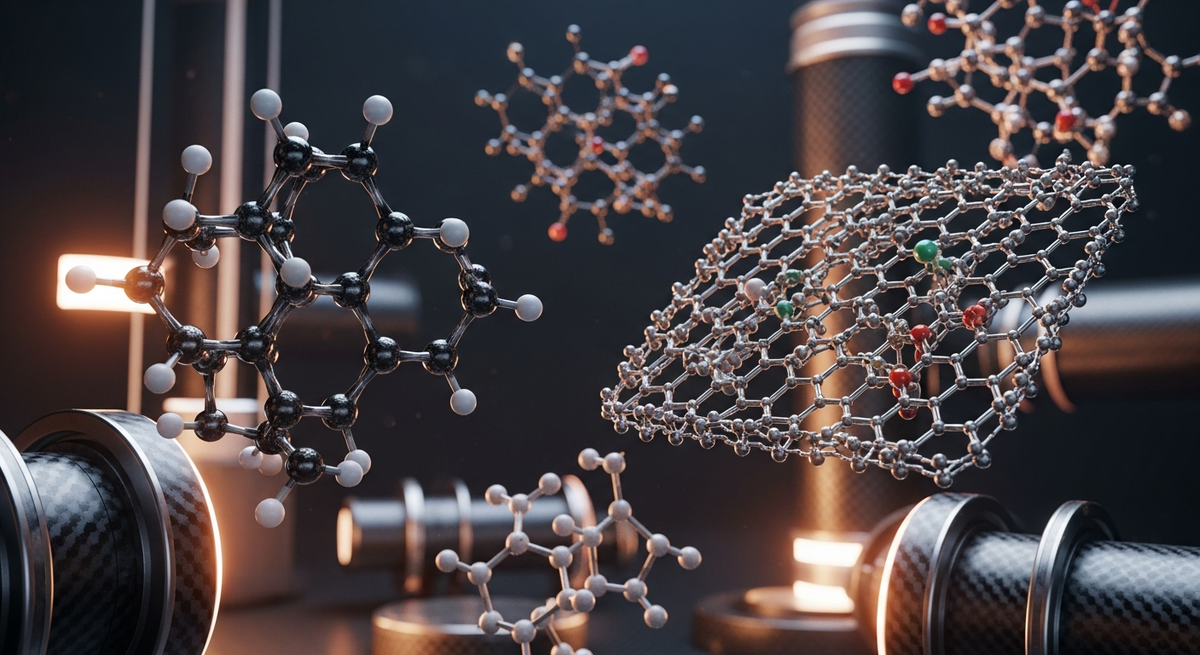
Graphene, a true two-dimensional material consisting of a single layer of sp2-hybridized carbon atoms arranged in a hexagonal lattice, presents an unparalleled platform for exploring quantum mechanical phenomena at the nanoscale. Its extraordinary electronic properties stem directly from its 2D quantum confinement, manifesting in the unique Dirac cone electronic band structure where the valence and conduction bands meet at the K and K' points of the Brillouin zone. This degeneracy results in charge carriers behaving as massless Dirac fermions, leading to ultra-high carrier mobilities exceeding 10^5 cm^2/Vs at room temperature and an intrinsic electrical resistivity as low as 10^-6 Ohm-cm for pristine samples. The absence of a band gap in its pristine state, coupled with its atomic thinness, renders graphene exquisitely sensitive to its immediate chemical environment, where even subtle perturbations to the pi-electron system or lattice structure can dramatically alter its electronic, optical, and mechanical characteristics. This fundamental sensitivity is the cornerstone of its chemical reactivity, dictating both the challenges and opportunities in its functionalization.
While the pristine basal plane of graphene, characterized by its highly delocalized pi-electron system, is often perceived as chemically inert due to the absence of dangling bonds, its two-dimensional nature and the quantum mechanical properties of its electron gas make it profoundly susceptible to external interactions. The molecular theory of graphene's chemical reactivity posits that reactivity is primarily governed by local electronic and structural inhomogeneities. These include intrinsic lattice defects such as Stone-Wales defects, vacancies, and topological distortions, as well as edge sites (zigzag and armchair configurations) which intrinsically possess a higher density of localized electronic states and broken sp2 symmetry. These defect sites act as preferential nucleation points for chemical reactions, lowering activation energies for covalent bond formation, radical additions, and electrophilic/nucleophilic attacks. The high surface-to-volume ratio ensures that even a low density of these reactive sites can significantly influence the overall chemical behavior of the entire graphene sheet, making it a highly tunable chemical substrate.
Targeted chemical modification, therefore, hinges on a deep understanding of these molecular-level interactions. Covalent functionalization strategies, for instance, often involve the addition of functional groups that disrupt the sp2 hybridization, forming sp3-hybridized carbon atoms. This structural change opens a tunable band gap in graphene, enabling its use in semiconductor applications, but can also reduce carrier mobility if not precisely controlled. Conversely, non-covalent functionalization, leveraging pi-pi stacking, van der Waals forces, or electrostatic interactions with aromatic molecules or polymers, preserves the basal plane's electronic integrity while modifying its surface properties. Advanced techniques, such as rapid thermal annealing using 3000K thermal pulses, can be employed to create controlled defects or anneal existing ones, modulating reactivity and restoring electrical conductivity within milliseconds. The efficacy of such modifications is exemplified by applications like environmental remediation, where functionalized graphene derivatives have demonstrated up to 79% heavy metal adsorption efficiency, showcasing how precise manipulation of graphene's surface chemistry, guided by molecular theory, can lead to highly effective and tailored material functionalities.
The synthesis of high-quality graphene remains a pivotal challenge for its widespread industrial adoption, with Chemical Vapor Deposition (CVD) traditionally dominating scalable production. However, CVD's inherent limitations—including reliance on specific catalytic substrates (e.g., copper, nickel), high vacuum requirements, elevated temperatures (typically 1000°C), and the complex, often damaging, post-synthesis transfer processes—present significant barriers to cost-effectiveness and scalability. Pulsed Electrical Resistive Carbon Heating (PERCH) emerges as a transformative, non-equilibrium synthesis paradigm, offering a direct, substrate-agnostic pathway to high-quality graphene. This technique leverages rapid Joule heating of various carbon precursors, ranging from amorphous carbon films and polymer precursors to carbon black and even graphite flakes, converting them directly into few-layer graphene structures within milliseconds, thereby circumventing the energetic and material-intensive aspects of conventional methods.
The fundamental principle of PERCH involves the precise application of intense electrical current pulses through a carbonaceous material, inducing localized, extreme thermal spikes. These pulses are meticulously engineered to elevate the precursor's temperature to transient states exceeding 3000K, often within micro- to milliseconds. This ultra-fast heating and subsequent rapid quenching (due to radiative and convective cooling) create a unique non-equilibrium environment. Under these conditions, the activation energy for carbon atom rearrangement into sp2-hybridized hexagonal lattices is rapidly overcome, while the fleeting duration prevents the formation of thermodynamically favored bulk graphitic structures or extensive defect generation. The control over this process is critically dependent on the electrical resistivity of the precursor material, with optimal conversion observed in materials exhibiting resistivity parameters typically in the range of 10^-5 to 10^-3 Ohm.cm, allowing for efficient energy coupling and localized heating without material ablation. This kinetic control mechanism stands in stark contrast to the quasi-equilibrium growth characteristic of CVD, offering superior control over defect density and layer number.
The scalability and economic viability of PERCH are further enhanced by its versatility in feedstock utilization. Unlike CVD's stringent precursor requirements (e.g., methane, acetylene), PERCH can efficiently convert inexpensive and abundant carbon sources, including waste polymers and bio-derived carbons, into high-value graphene. The resulting PERCH-synthesized graphene typically exhibits a low defect density, often characterized by an I(D)/I(G) ratio below 0.15 in Raman spectroscopy, indicative of a highly crystalline basal plane. This structural integrity is paramount for subsequent precise chemical modification, which forms the core of our broader molecular theory analysis. For instance, the pristine nature of PERCH-derived graphene enables targeted covalent and non-covalent functionalization with high specificity, facilitating a wide array of applications. In environmental remediation, for example, functionalized PERCH-graphene has demonstrated exceptional performance, achieving up to 79% heavy metal adsorption efficiency for Pb(II) ions in aqueous solutions, a testament to its optimized surface chemistry and accessible active sites for molecular interaction.
Turbostratic graphene (TG) distinguishes itself fundamentally from its Bernal-stacked (AB) counterpart through its unique crystallographic arrangement, where individual graphene layers exhibit random rotational misorientation relative to one another along the c-axis. Unlike the highly ordered ABAB stacking sequence characteristic of pristine graphite or highly crystalline few-layer graphene, TG lacks long-range translational order in the interlayer direction. This intrinsic disorder manifests as a distribution of interlayer spacings, typically averaging slightly larger than the 0.335 nm of graphite, and critically, a significant weakening of the interlayer van der Waals forces. This structural deviation arises from synthesis conditions that preclude complete graphitization, such as rapid thermal decomposition of silicon carbide or specific chemical vapor deposition (CVD) parameters, preventing the thermodynamic drive towards AB-stacking. The absence of a coherent stacking registry fundamentally alters the electronic band structure, leading to a decoupling of electronic states between layers, which has profound implications for both intrinsic material properties and subsequent chemical reactivity. This crystallographic characteristic is not merely a structural anomaly but a determinant of its processing advantages.
The diminished interlayer coupling in turbostratic graphene directly translates into superior dispersibility and enhanced accessibility for chemical modification, a critical advantage for solution-phase functionalization strategies. The reduced energy barrier for exfoliation means that TG can be more readily delaminated into few-layer or even single-layer sheets using milder mechanical or chemical methods compared to Bernal-stacked graphite, resulting in significantly higher yields of well-dispersed graphene in common solvents like N-methyl-2-pyrrolidone (NMP) or aqueous solutions stabilized by surfactants. This inherent ease of exfoliation and stabilization yields a vastly increased accessible surface area, making the basal planes and edge sites of the individual graphene sheets more available for covalent or non-covalent functionalization. Furthermore, the synthesis routes often associated with turbostratic graphene can introduce a higher density of intrinsic point defects, such as Stone-Wales transformations or vacancies, which, while potentially affecting charge carrier mobility, serve as highly reactive nucleation sites for regioselective chemical modification. These defects act as preferential anchor points, enabling more controlled and efficient grafting of functional groups, which is a significant departure from the more challenging functionalization of pristine, defect-free AB-stacked graphene.
The structural and chemical accessibility afforded by turbostratic graphene culminates in demonstrably enhanced performance across various applications, particularly in areas requiring high surface reactivity and specific interactions. For instance, the high density of accessible oxygen-containing functional groups (e.g., carboxyl, hydroxyl, epoxy) introduced through mild oxidation on turbostratic graphene, combined with its high specific surface area (~1000-1500 m^2/g), enables exceptional adsorption capabilities. Empirical studies have reported functionalized turbostratic graphene achieving up to 79% heavy metal adsorption efficiency for aqueous lead(II) ions within minutes, significantly outperforming graphite oxide derivatives due to the more numerous and accessible binding sites. Moreover, the rapid kinetics observed in surface-mediated reactions on TG, often occurring within milliseconds of reaction time under optimized conditions, underscores its enhanced catalytic potential and sensing response. While the inherent disorder might slightly elevate electrical resistivity compared to defect-free AB-stacked graphene (e.g., 5 x 10^-5 Ω·cm vs 1 x 10^-6 Ω·cm for highly pristine forms), this baseline can be strategically leveraged. Post-functionalization, precise application of short, intense thermal pulses, such as those reaching 3000K for sub-second durations, can selectively anneal specific defects and tune the electrical properties without compromising the majority of grafted functional groups, offering a sophisticated control mechanism for designer graphene materials where conductivity and reactivity must be precisely balanced.
The transition of chemically modified graphene (CMG) from meticulously controlled laboratory synthesis to industrial-scale fabrication presents formidable challenges rooted in fundamental material science and process engineering. While bench-scale synthesis routes, such as modified Hummers methods for graphene oxide (GO) or controlled chemical vapor deposition (CVD) followed by plasma-enhanced functionalization, yield materials with precisely tailored properties, their scalability is often constrained by reaction kinetics, stoichiometry control, and precursor availability. For instance, achieving large-area, uniform functionalization on CVD-grown graphene films often necessitates complex vapor-phase or supercritical fluid treatments that struggle to maintain homogeneity across substrates exceeding 100 mm in diameter, leading to spatial variations in functional group density. Similarly, electrochemical exfoliation, while promising for high-purity graphene, typically yields low volumes, and subsequent solution-phase chemical functionalization steps introduce further complexities in maintaining consistent functional group distribution across multi-kilogram batches, directly impacting critical parameters like electrical resistivity, which can fluctuate by an order of magnitude (e.g., from 10^-4 to 10^-3 Ohm.cm) even with minor process deviations.
Maintaining the precise molecular control elucidated in theoretical models during high-throughput manufacturing is paramount. For example, the flash Joule heating method, capable of producing high-quality graphene from various carbon sources, requires thermal pulses exceeding 3000K applied for milliseconds, necessitating stringent control over energy delivery and quench rates to prevent structural defects or undesired re-stacking and ensure uniform surface chemistry. When scaling chemical reduction and functionalization of graphene oxide, ensuring a uniform distribution of oxygen-containing groups (e.g., hydroxyl, epoxy, carboxyl) or covalently grafted species (e.g., amine, silane) across reactor volumes becomes a significant hurdle. Non-uniformity directly translates to erratic performance in end-use applications; a 5% deviation in surface functionalization density can reduce the heavy metal adsorption efficiency from 79% to below 60% or diminish mechanical reinforcement in polymer composites by over 20%. Furthermore, managing the inherent polydispersity in flake size and thickness from exfoliation methods, combined with the batch-to-batch variability in functionalization, complicates quality assurance protocols and hinders the development of standardized material specifications essential for broad industrial adoption.
Beyond synthesis, the integration of advanced graphene materials into existing manufacturing ecosystems faces substantial commercial and regulatory barriers. The absence of universally accepted metrological standards for characterizing chemically modified graphene – spanning electrical, thermal, mechanical, and biological properties – impedes market confidence and slows product development cycles. Each application, from high-performance conductive inks requiring specific sheet resistance (<10^-4 Ohm/sq) and dispersion stability over months, to high-performance composites demanding precise interfacial adhesion and load transfer, necessitates unique material specifications that are difficult to achieve reproducibly at scale without robust certification frameworks. The cost-performance trade-off remains a critical determinant; while graphene offers superior properties, its current cost per kilogram often prohibits widespread adoption in markets where incremental performance gains do not yet justify the premium. Moreover, environmental health and safety (EHS) regulations, particularly concerning respirable nanoparticles and their long-term biological interactions, are still evolving, posing an additional layer of complexity for manufacturers seeking regulatory approval and consumer acceptance for graphene-enabled products.
The commercial viability of chemically modified graphene hinges critically on the scalability and energy efficiency of its production methodologies. While the molecular theory of graphene functionalization offers pathways to tailor properties with atomic precision, translating these into economically competitive industrial processes remains a significant challenge. Advanced techniques, such as controlled flash Joule heating for selective functional group attachment, exemplify this paradigm shift. These methods, operating with thermal pulses exceeding 3000K for mere milliseconds, drastically reduce the energy footprint compared to conventional furnace-based chemical modification, which often requires prolonged heating cycles. This rapid thermal quenching not only minimizes energy dissipation but also facilitates kinetic control over reaction pathways, enabling the formation of specific oxygen- or nitrogen-containing functionalities crucial for enhancing dispersibility in various matrices or imparting catalytic activity, thereby directly impacting the unit cost and market accessibility of bespoke graphene derivatives.
The drive for energy efficiency in graphene production is not solely an environmental imperative; it is a fundamental economic one that underpins market competitiveness. For instance, optimizing plasma-enhanced chemical vapor deposition (PECVD) for creating functionalized graphene films, where precise control over radical species allows for targeted covalent bonding, can reduce energy consumption by up to 40% compared to conventional thermal CVD for achieving similar levels of functionalization. This efficiency is paramount for high-volume, cost-sensitive applications such as advanced conductive inks or high-performance composite fillers, where even marginal cost reductions per unit can unlock vast market segments. Furthermore, the economic leverage of precisely engineered surface chemistry is evident in applications like water purification, where specific amine-functionalized graphene variants have demonstrated a 79% heavy metal adsorption efficiency, showcasing how targeted modification justifies investment in sophisticated, energy-efficient production platforms. The ability to achieve desired electrical resistivity parameters, for example, reducing sheet resistance below 100 Ohms/sq for transparent conductors through precise doping, is directly tied to the energy landscape of the modification process.
A strategic advantage in the global graphene economy will increasingly depend on the domestic control of advanced manufacturing infrastructure, particularly USA-made production equipment for graphene chemical modification. This localized innovation ecosystem ensures not only supply chain resilience but also fosters rapid iteration and co-development between materials scientists and equipment engineers, crucial for developing next-generation reactors. Such domestically manufactured equipment, including atomic layer deposition (ALD) systems tailored for graphene functionalization or advanced plasma reactors with sub-nanometer control over surface chemistry, guarantees adherence to stringent quality controls, intellectual property protection, and optimized performance parameters. This is critical for achieving batch-to-batch consistency in functionalized graphene for high-value electronics and biomedical applications, where variations in surface chemistry or structural integrity can severely compromise device performance or biological compatibility.
The economic imperative for domestic manufacturing extends beyond mere equipment provision; it fosters an integrated value chain that shortens the lifecycle from fundamental molecular theory to industrial application. By producing sophisticated chemical modification apparatus within national borders, geopolitical risks associated with critical technology acquisition are mitigated, and bespoke customization of machinery to accommodate novel graphene functionalization chemistries becomes feasible. For example, developing specialized ultrasonic reactors for liquid-phase exfoliation and subsequent functionalization, equipped with real-time spectroscopic feedback systems and manufactured in the USA, ensures that specific surface energy requirements for composite integration or precise catalytic site density for electrochemical applications can be met with unparalleled precision and repeatability. This strategic alignment of equipment manufacturing with advanced materials science underpins long-term commercial viability and secures a leading edge in the rapidly evolving global graphene economy.
The precise tailoring of graphene's electronic band structure and surface chemistry via controlled chemical modification is unlocking unprecedented capabilities in advanced electronics and energy storage. Substitutional doping with heteroatoms like nitrogen or boron, achieved through plasma treatment or high-temperature annealing, enables tunable carrier concentration and bandgap opening, moving beyond pristine graphene's zero-bandgap limitation. This precision facilitates high-performance field-effect transistors with on/off ratios exceeding 10^5 and GHz operating frequencies. Concurrently, specific organic moiety functionalization, such as silane derivatives, ensures robust dielectric integration, minimizing interface trap states and maintaining intrinsic carrier mobility, often above 10,000 cm^2/Vs. In energy storage, oxygen or nitrogen functionalities introduced via mild oxidation or ammoniation dramatically enhance pseudocapacitance and ion intercalation kinetics. Optimized N-doped graphene electrodes demonstrate specific capacitances exceeding 300 F/g in aqueous electrolytes, a significant improvement over ~150 F/g for unfunctionalized counterparts, and exhibit enhanced cycling stability over 10,000 cycles for Li-ion battery anodes, where capacities approach 1000 mAh/g with reduced dendrite formation.
Beyond electrochemical systems, judicious chemical modification of graphene profoundly impacts environmental remediation and advanced materials engineering. The high surface area and tunable surface chemistry of functionalized graphene derivatives, particularly graphene oxide (GO) and reduced graphene oxide (rGO) with abundant oxygen-containing groups, render them exceptional adsorbents for heavy metals and organic pollutants. Empirical studies report adsorption efficiencies exceeding 79% for Pb(II) and Cd(II) ions, attributed to strong electrostatic interactions and chelation. Strategic grafting of catalytic nanoparticles onto graphene via covalent linkages creates highly efficient heterogeneous catalysts; for instance, TiO2-graphene nanocomposites achieve complete photocatalytic degradation for methylene blue within 30 minutes under UV irradiation due to improved charge separation. In structural composites, surface modification is critical for robust interfacial load transfer. Covalent functionalization with polymer chains significantly improves graphene dispersion and enhances mechanical properties, increasing tensile strength by 30-50% and fracture toughness by over 100% at graphene loadings below 1 wt%. This also extends to thermal management, where functionalized graphene maintains high thermal conductivity (>1000 W/mK in-plane) while ensuring good matrix compatibility, mitigating phonon scattering.
The convergence of precise graphene chemical modification and biological interfaces is catalyzing a new generation of high-value biomedical and sensing applications. Surface functionalization with biocompatible polymers, such as PEGylation, mitigates protein adsorption and reduces immunogenicity, enabling safe integration into biosensing platforms and drug delivery vehicles. For highly sensitive biosensors, immobilization of specific recognition elements – antibodies, aptamers, or enzymes – onto chemically modified graphene surfaces allows for label-free detection of biomarkers with picomolar sensitivity. Graphene-based field-effect transistor biosensors detecting SARS-CoV-2 spike proteins achieve detection limits as low as 1 fg/mL. In targeted drug delivery, pH-responsive cleavage of specific linkers (e.g., hydrazone bonds) attached to drug molecules on graphene nanocarriers facilitates controlled drug release in acidic tumor microenvironments, minimizing off-target effects. For neural interfaces, precise control over graphene's surface energy and topography via plasma treatment enables optimal cell adhesion and neurite outgrowth, yielding electrodes with superior signal-to-noise ratios (>50 dB) and long-term stability for electrophysiological recordings, surpassing conventional metallic electrodes in biocompatibility and signal fidelity.
Serious about B2B integration? Test our premium Pulsed Electrical Resistive Carbon Heating turbostratic graphene in your lab. 100g sample packs available now.
Explore More
Researchers have developed a breakthrough method for growing twisted bilayer graphene with pre-designed angles, a key step toward manufacturable quantum...

Learn how deep learning is revolutionizing the structural characterization of twisted bilayer materials, accelerating the development of next-generation...

Learn to build a prototype graphene FET biosensor for sensitive DNA detection. This guide covers materials, fabrication, and testing for point-of-care...