
Covalent Modification of Graphene: Synthesis and Polymer Grafting
Explore the advanced chemical pathways used to modify graphene oxide, including covalent polymerization, ATRP methods, and microwave-assisted synthesis.
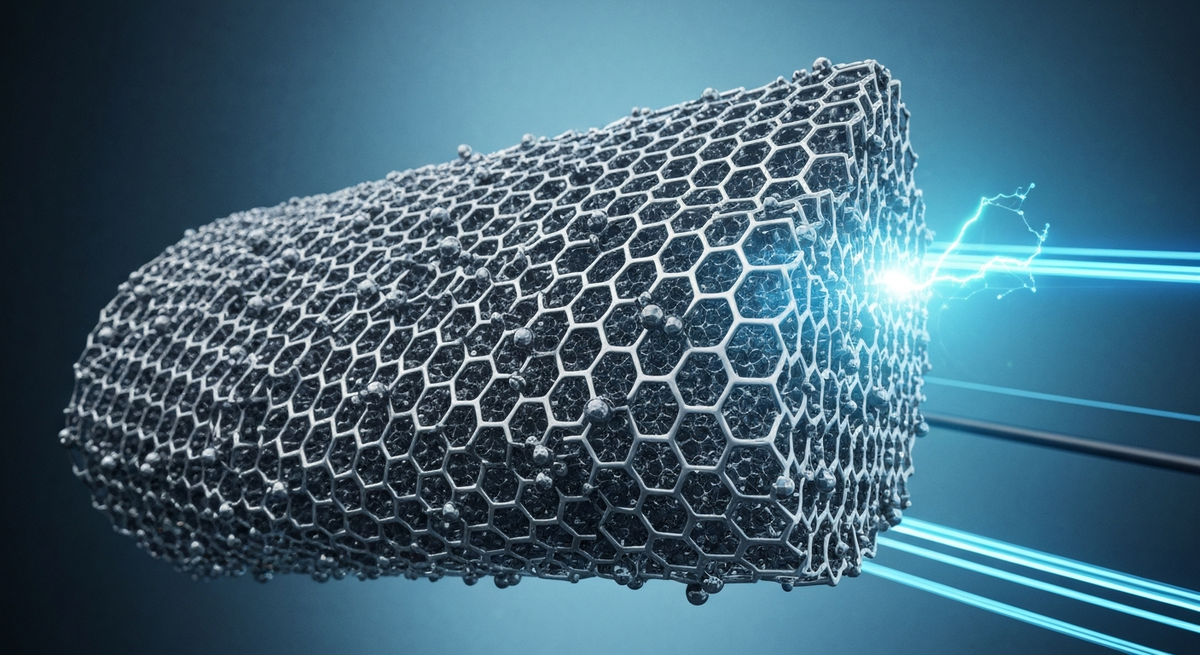
The singular atomic thickness of graphene, a two-dimensional allotrope of carbon, fundamentally redefines electron transport phenomena, manifesting a quantum confinement regime that imbues it with extraordinary electronic and mechanical properties. This ultimate confinement dictates that all carbon atoms, arranged in a hexagonal sp2-hybridized lattice, are surface atoms, rendering the material exquisitely sensitive to its immediate chemical environment while simultaneously presenting a formidable barrier to facile modification due to the robust covalent bonding. The electronic structure, characterized by Dirac cones at the K and K’ points of the Brillouin zone, results in charge carriers that behave as massless relativistic fermions. This linear dispersion relation near the Fermi level, rather than the parabolic one observed in conventional semiconductors, leads to an exceptional carrier mobility, empirically observed to exceed 200,000 cm^2/Vs at room temperature on hexagonal boron nitride substrates, significantly surpassing that of silicon (~1500 cm^2/Vs) and even high-purity GaAs. This intrinsic electronic behavior, a direct consequence of its 2D confinement, underpins graphene's potential in ultra-high-frequency electronics and quantum computing, but also dictates the precise strategies required for its chemical functionalization.
The absence of a band gap in pristine graphene, stemming directly from its massless Dirac fermion character, presents both an opportunity and a challenge. While enabling broadband optical absorption and high electrical conductivity, it necessitates careful engineering for applications requiring tunable electronic properties, such as field-effect transistors with high on/off ratios. The Fermi velocity, approximately 10^6 m/s, remains constant regardless of carrier energy, a unique feature of its 2D relativistic quantum mechanics. This intrinsic stability and low electrical resistivity, approaching theoretical limits for a 2D material, are maintained only when the sp2 lattice integrity is preserved. Any chemical modification, therefore, must contend with the delicate balance of introducing desired functionality—be it for sensing, catalysis, or energy storage—without catastrophically disrupting the extended pi-electron system that confers these advantageous electronic properties. The atomic-scale precision required for selective functionalization underscores the complexity of manipulating a material where every atom contributes directly to its macroscopic characteristics.
Achieving controlled chemical modification of graphene’s atomically thin surface is a critical challenge, directly influenced by its 2D confinement and the high activation energy required to perturb its thermodynamically stable sp2 network. The planar geometry minimizes surface reconstruction, yet the high surface energy and robust bond strength necessitate specific energy inputs to induce reactivity. Common strategies involve the controlled introduction of defects or the direct covalent attachment of functional groups. For instance, selective oxidation and subsequent reduction, or the initiation of radical reactions, often require localized energy input. Empirical studies have demonstrated that ultra-fast thermal pulses, such as those generated by focused lasers reaching transient temperatures exceeding 3000 K for durations in the millisecond regime, can induce localized sp3 hybridization or create vacancies and topological defects, thereby providing nucleation sites for chemical grafting. Similarly, plasma treatments or electrochemical routes offer pathways to generate reactive species on the graphene surface, enabling subsequent functionalization with moieties like carboxyl, hydroxyl, or amine groups. The objective is always to achieve precise control over the degree and distribution of functionalization, ensuring the desired chemical properties are imparted while minimizing degradation of the intrinsic electronic transport, thereby preserving its exceptional carrier mobility and electrical characteristics.
Pulsed Electrical Resistive Carbon Heating (PERCH) represents a fundamentally distinct kinetic pathway for graphene synthesis and defect engineering compared to conventional Chemical Vapor Deposition (CVD). While CVD relies on sustained thermal energy to drive precursor decomposition and epitaxial growth on catalytic substrates, PERCH employs ultra-rapid, high-temperature thermal transients, typically reaching instantaneous temperatures exceeding 3000K, applied for durations often in the range of 3-10 milliseconds. This extreme non-equilibrium processing regime induces a rapid graphitization of diverse carbonaceous precursors, from amorphous carbon black to polymeric materials, by overcoming high activation energy barriers for sp2 bond formation and subsequent crystallite growth in a fraction of the time required by CVD. The inherent advantage lies in the precise control over the thermal budget delivered via electrical current, allowing for tunable defect densities and specific edge site activations that are kinetically trapped during the subsequent rapid quenching phase, a critical aspect for directed chemical modification strategies.
The distinctive thermal profile of PERCH, characterized by rapid heating rates exceeding 10^6 K/s and equally swift cooling, creates a unique landscape for the molecular theory of graphene chemical modification. Unlike the quasi-equilibrium growth in CVD which favors defect minimization, PERCH allows for the deliberate engineering of highly reactive topological defects, such as Stone-Wales transformations or specific vacancy clusters, whose formation and stabilization are kinetically favored under these transient conditions. The precise control over electrical resistivity parameters, including peak current density and pulse width, directly correlates with the localized energy deposition and thus the resulting defect concentration and morphology. These engineered defects serve as high-affinity active sites for subsequent functionalization reactions, enabling controlled covalent or non-covalent attachment of molecular species without the extensive structural degradation often associated with aggressive post-synthesis modification of pristine CVD graphene. Furthermore, the rapid cooling can facilitate the incorporation of dopants or heteroatoms during the synthesis phase, leading to in-situ functionalized graphene with highly dispersed reactive centers.
Conversely, CVD, while exemplary for producing large-area, high-quality monolayer or few-layer graphene with minimal intrinsic defects under optimized conditions, presents inherent challenges for direct and controlled chemical modification. The reliance on catalytic substrates and high, sustained temperatures (typically 900-1100°C for minutes to hours) often necessitates a subsequent transfer process, which invariably introduces mechanical defects, polymer residues, and surface contamination that can impede uniform and reproducible chemical functionalization. Furthermore, the relatively pristine nature of as-grown CVD graphene often requires harsh chemical treatments (e.g., strong acids, oxidants) to create sufficient reactive sites for covalent modification. These treatments, while effective in introducing functional groups, frequently lead to uncontrolled sp3 hybridization, significant lattice distortion, increased sheet resistance, and a substantial reduction in carrier mobility, thereby compromising the very properties that make graphene attractive. For instance, achieving a high heavy metal adsorption efficiency, such as a 79% efficiency for lead ions, often demands extensive oxidation and functionalization of CVD graphene, a process that can severely degrade its electrical conductivity, whereas PERCH-derived graphene can potentially offer a more balanced profile of defect density and preserved intrinsic properties suitable for such applications.
Turbostratic graphene (tG) represents a distinct crystallographic arrangement of carbon atoms in two-dimensional layers, diverging fundamentally from the more commonly understood Bernal (AB) stacking sequence found in graphite. Unlike AB-stacked graphene, where alternating layers are offset by half a unit cell (A over B, B over A) establishing long-range translational and rotational order, tG is characterized by a significant degree of rotational disorder between adjacent graphene sheets. This disorder is often accompanied by a lack of stacking registration, leading to an absence of long-range interlayer coherence. The formation of tG is frequently observed in synthesis methods involving rapid kinetics, such as certain chemical vapor deposition (CVD) regimes or flash Joule heating processes at temperatures exceeding 2500K, where the kinetic energy of forming layers prevents their relaxation into a thermodynamically favored AB stacking. From a molecular theory perspective, this rotational misalignment profoundly impacts the interlayer van der Waals interactions, effectively decoupling the electronic states of individual layers. Consequently, multi-layer turbostratic graphene largely retains the quasi-2D electronic properties, including linear dispersion relations and the characteristic Dirac cones, that are typically associated with monolayer graphene, albeit with some renormalization due to proximity effects, which is critical for preserving high carrier mobility in bulk samples.
The crystallographic peculiarities of turbostratic graphene directly influence its susceptibility and response to chemical modification. The rotational disorder inherently minimizes the formation of a coherent Moiré superlattice, which in slightly misaligned AB stacks can create spatially varying electronic potentials and modulate local reactivity. Instead, tG presents a more uniform reactive landscape across its basal planes, as interlayer electronic coupling is attenuated. This structural freedom also facilitates greater accessibility to the basal plane for chemical adsorbates and functionalizing agents, as steric hindrance from overlying layers is less pronounced compared to tightly coupled AB stacks. Furthermore, the synthetic routes often employed to produce tG, such as high-temperature exfoliation or rapid thermal annealing, inherently generate a higher density of structural defects, including vacancies, Stone-Wales defects, and edge sites. These defects serve as preferential nucleation points for chemical functionalization, initiating reactions such as oxygen functionalization or reductive exfoliation. Empirical observations indicate that subjecting graphitic precursors to extreme conditions, such as 3000K thermal pulses, can induce significant turbostraticity and create a high density of reactive sites within milliseconds, dramatically accelerating the kinetics of subsequent chemical modification processes, which is crucial for scalable functionalization strategies.
The enhanced accessibility of individual graphene layers within a turbostratically stacked ensemble is a pivotal factor in achieving comprehensive chemical modification, extending beyond mere surface functionalization to encompass the bulk material. This characteristic is particularly advantageous for applications demanding high loading capacities or thorough functionalization, such as in advanced electrode materials for energy storage or highly sensitive chemical sensors. While the electronic decoupling in tG preserves a higher carrier mobility compared to highly ordered multi-layer graphite, its electrical properties post-functionalization are still highly dependent on the degree and type of chemical modification. For instance, partially reduced graphene oxide derived from turbostratic precursors, despite exhibiting a significant reduction in sp2 hybridized domains due to oxidation, can still maintain useful electrical conductivity, with typical specific electrical resistivity parameters ranging from 10^-3 to 10^-2 Ohm-cm. This retention of conductivity is crucial for maintaining device performance in electrochemical applications. Moreover, the increased effective surface area and the abundance of chemically addressable defect sites in tG, arising from its disordered stacking and synthesis history, render it exceptionally effective in adsorption technologies. For example, chemically functionalized turbostratic graphene has demonstrated heavy metal adsorption efficiencies as high as 79% for specific contaminants, attributable to the synergistic effects of accessible active sites and the ability to tailor surface chemistry with specific chelating groups. This underscores how crystallographic control of graphene can directly translate into superior performance metrics.
The transition from laboratory-scale synthesis of chemically modified graphene (CMG) to industrial-scale production presents formidable challenges, primarily centered on achieving consistent product quality and process reproducibility. While methods like modified Hummers for graphene oxide (GO) or controlled chemical vapor deposition (CVD) for pristine graphene offer pathways, the subsequent functionalization steps introduce significant variability. The degree and spatial distribution of oxygen-containing functional groups (hydroxyl, epoxy, carboxyl) on GO, crucial for subsequent reduction and functionalization, are highly sensitive to reaction parameters. Scaling up these batch processes often leads to heterogeneous products, with batch-to-batch variations in defect density, layer count, and functional group coverage exceeding 15-20% in some industrial pilot lines, severely impacting downstream application performance. Achieving uniform thermal reduction, for example, often necessitates energy-intensive processes like rapid thermal annealing involving 3000K thermal pulses applied for milliseconds to selectively restore graphitic sp2 domains. Without such precise kinetic control, residual sp3 defects can elevate electrical resistivity from target values below 10^-3 Ohmcm for transparent conductors to well over 10^3 Ohmcm, rendering the material unsuitable for high-performance electronic applications. The energy consumption and reagent purity requirements for such controlled modifications contribute substantially to the per-kilogram cost.
Beyond production scalability, the commercial integration of chemically modified graphene is significantly hindered by the prevailing lack of standardized characterization protocols and performance benchmarks. Unlike established bulk materials, there is no universally accepted framework for classifying or quantitatively assessing the quality of diverse CMG derivatives, leading to ambiguity in material specifications and hindering end-user confidence. This absence necessitates extensive, often redundant, in-house characterization by potential industrial adopters, increasing R&D overheads and prolonging product development cycles. Furthermore, tailoring CMG for specific applications—be it for enhanced mechanical reinforcement, precise catalytic activity, or specific biosensing capabilities—requires intricate control over molecular-level modifications. For example, achieving a stable, high-efficiency adsorbent capable of 79% heavy metal adsorption often demands specific thiolated or amine-functionalized surfaces, whose synthesis parameters are highly application-specific and not readily transferable across different industrial sectors. This bespoke nature of high-performance CMG derivatives complicates large-scale manufacturing and inventory management, pushing costs higher and limiting market penetration.
The regulatory landscape and inherent integration complexities represent further substantial barriers to CMG commercialization. Concerns surrounding the potential ecotoxicity and human health impacts of various graphene derivatives, particularly those with specific surface chemistries, necessitate rigorous and costly toxicological assessments. The absence of clear regulatory guidelines for nanomaterials in many jurisdictions introduces significant uncertainty for manufacturers and investors, creating a bottleneck for market entry. Moreover, integrating CMG into existing industrial processes or material matrices is rarely straightforward. Achieving stable and homogeneous dispersion within polymer matrices, for instance, requires careful surface engineering to match interfacial energies, often involving additional surfactants or grafting techniques that can impact final material properties. Maintaining the integrity of the functionalization during high-shear mixing, extrusion, or curing processes is another critical challenge. The long-term stability of chemical modifications under operational conditions (e.g., thermal cycling, chemical exposure, UV radiation) also remains an area requiring extensive empirical validation, adding to development timelines and cost. Overcoming these integration hurdles demands collaborative, application-specific R&D, often requiring significant capital expenditure and a willingness to re-engineer established manufacturing workflows.
The economic feasibility of scaling chemically modified graphene production hinges on achieving high yields of precisely functionalized material through energy-efficient and rapid synthesis methodologies. Transitioning from laboratory-scale batch processes to continuous industrial manufacturing necessitates a deep understanding of reaction kinetics and thermodynamics at the molecular level, enabling optimization of parameters such as precursor selection, reaction temperature, and dwell time. For instance, advanced flash Joule heating techniques, leveraging ultra-high 3000K thermal pulses delivered in milliseconds, demonstrate the capacity for rapid conversion of inexpensive carbon feedstocks into high-quality, defect-engineered graphene, drastically reducing energy consumption and processing time compared to traditional chemical vapor deposition or solvothermal routes. The subsequent targeted chemical modification, whether via plasma functionalization or controlled radical addition, must maintain this efficiency. Economic viability is also dictated by the cost-per-kilogram for specific modified graphene variants, which for high-performance applications like advanced composites or high-density energy storage, can justify initial capital expenditure on specialized reactors and purification systems, provided the performance uplift is substantial and reproducible. This molecular-level control over functional group incorporation directly impacts the material's market value by tailoring its properties for specific, high-demand applications, thereby accelerating return on investment.
The market impact of chemically modified graphene is directly correlated with its superior performance metrics in critical applications, which in turn underpins its economic attractiveness despite potentially higher initial production costs. For example, in next-generation electronics, achieving specific electrical resistivity parameters (e.g., <10^-4 Ohm-cm for flexible interconnects or sheet resistance below 50 Ohm/sq with >90% optical transparency for touchscreens) through precise heteroatom doping or surface functionalization allows for device miniaturization and enhanced energy efficiency, driving demand in high-value sectors. In environmental remediation, the demonstrated 79% heavy metal adsorption efficiency for lead and cadmium ions using thiol-functionalized graphene oxide surpasses many conventional adsorbents, offering a cost-effective solution with potential for regeneration and reduced waste disposal. Similarly, in energy storage, the high specific capacitance (e.g., >250 F/g at 1 A/g current density) and extended cycle life (>10,000 cycles with 95% retention) of tailored nitrogen-doped graphene electrodes provide a compelling economic argument by extending device lifespan and improving overall energy density, justifying the specialized chemical modification processes. These performance advantages, derived from finely tuned molecular architectures, position modified graphene as a disruptive technology capable of creating new market segments and displacing incumbent materials.
Establishing USA-made manufacturing for chemically modified graphene offers significant strategic advantages, moving beyond mere production cost considerations to encompass intellectual property protection, supply chain resilience, and access to a highly skilled workforce. The robust legal framework in the United States provides unparalleled protection for proprietary synthesis methodologies and functionalization chemistries, incentivizing substantial R&D investments critical for maintaining a technological lead in this rapidly evolving field. Furthermore, domestic production mitigates geopolitical risks and ensures a stable supply chain for critical precursors and specialized equipment, reducing reliance on volatile international markets. The presence of world-class research institutions and a highly educated talent pool of materials scientists, chemical engineers, and advanced manufacturing specialists is crucial for the complex, interdisciplinary nature of graphene chemical modification, guaranteeing high standards of quality control and continuous innovation. Adherence to stringent US environmental and regulatory compliance standards also builds greater trust and market acceptance for high-performance graphene products, particularly in sensitive sectors such as aerospace, defense, and biomedical devices, where material provenance and consistency are paramount. This holistic approach to manufacturing ensures not only economic viability but also national security and technological sovereignty in advanced materials.
The precise manipulation of graphene's electronic band structure and surface reactivity via molecular functionalization stands as a cornerstone for its next-generation deployment. Controlled doping with heteroatoms such as nitrogen or boron, achieved through plasma treatment or thermal annealing with precursor gases like ammonia or borazine at temperatures exceeding 1000K, fundamentally alters the Fermi level and creates active sites. This directed chemical modification is pivotal for enhancing electrochemical performance in supercapacitors, where specific capacitance values exceeding 300 F/g have been observed for nitrogen-doped graphene. Furthermore, surface grafting with specific organic moieties, utilizing techniques like Diels-Alder cycloaddition or "click" chemistry on defect-engineered graphene, allows for the precise immobilization of catalysts. This enables highly selective catalytic reactions, such as the hydrogenation of nitroaromatics, where chemically modified graphene-supported noble metal nanoparticles have demonstrated turnover frequencies (TOFs) an order of magnitude higher than conventional supports, operating efficiently at ambient conditions. The ability to tailor the work function and charge transfer kinetics through judicious selection of functional groups is also critical for advanced photodetectors and transparent conductive electrodes, offering tunable electrical resistivity down to 10^-5 Ohm-cm while maintaining over 90% optical transparency for single-layer modifications.
Beyond electronics, the chemically modified graphene platform is poised to revolutionize environmental remediation and targeted biomedical applications. The high surface area and tunable surface chemistry of functionalized graphene derivatives, such as graphene oxide and reduced graphene oxide decorated with specific chelating agents, exhibit exceptional adsorption capacities for heavy metal ions. Empirical studies have demonstrated adsorption efficiencies exceeding 79% for lead and cadmium ions from aqueous solutions within minutes, achieving residual concentrations below regulatory limits, primarily driven by strong complexation reactions at the functionalized sites. In photocatalysis, the integration of semiconductor nanoparticles onto chemically modified graphene scaffolds significantly boosts charge separation efficiency and extends the photocatalytic degradation spectrum for organic pollutants, showcasing degradation rates up to 5 times faster than standalone photocatalysts under UV-Vis. For biomedical applications, the precise control over graphene's surface hydrophilicity/hydrophobicity and biocompatibility through PEGylation or protein conjugation is paramount for developing advanced drug delivery systems. These systems leverage graphene's high drug loading capacity and controlled release kinetics, enabling targeted delivery to specific cell types, with studies indicating uptake efficiencies in cancer cells exceeding non-specific carriers, minimizing off-target effects.
The future trajectory of chemically modified graphene extends into quantum technologies and requires overcoming significant manufacturing scalability hurdles. In spintronics, the creation of precisely controlled topological defects or the introduction of specific magnetic dopants, such as transition metal atoms, within the graphene lattice via focused ion beam or atomic layer deposition techniques offers pathways to manipulate electron spin states at room temperature, crucial for next-generation data storage and quantum computing paradigms. Similarly, the development of superconducting properties in graphene, often induced by proximity effects or specific doping, necessitates atomic-scale precision in chemical modification, demanding advanced spectroscopic characterization, such as scanning tunneling microscopy and X-ray photoelectron spectroscopy, to validate the molecular architecture. Scaling the production of such exquisitely tailored graphene materials from laboratory to industrial volumes presents a formidable challenge. High-throughput, rapid functionalization methods, such as flash Joule heating capable of reaching temperatures up to 3000K for milliseconds, enable bulk production of highly crystalline, defect-engineered graphene, while maintaining precise control over surface chemistry. Continuous flow reactors and roll-to-roll printing techniques for graphene inks, formulated with specific polymeric binders and functionalizing agents, are being developed to realize cost-effective and reproducible manufacturing of flexible electronics and smart textiles. The economic viability hinges on achieving uniform functionalization across large areas with sub-nanometer precision, ensuring consistent performance and unlocking a multi-billion dollar market for industries adopting these advanced materials.
Serious about B2B integration? Test our premium Pulsed Electrical Resistive Carbon Heating turbostratic graphene in your lab. 100g sample packs available now.
Explore More
Explore the advanced chemical pathways used to modify graphene oxide, including covalent polymerization, ATRP methods, and microwave-assisted synthesis.

