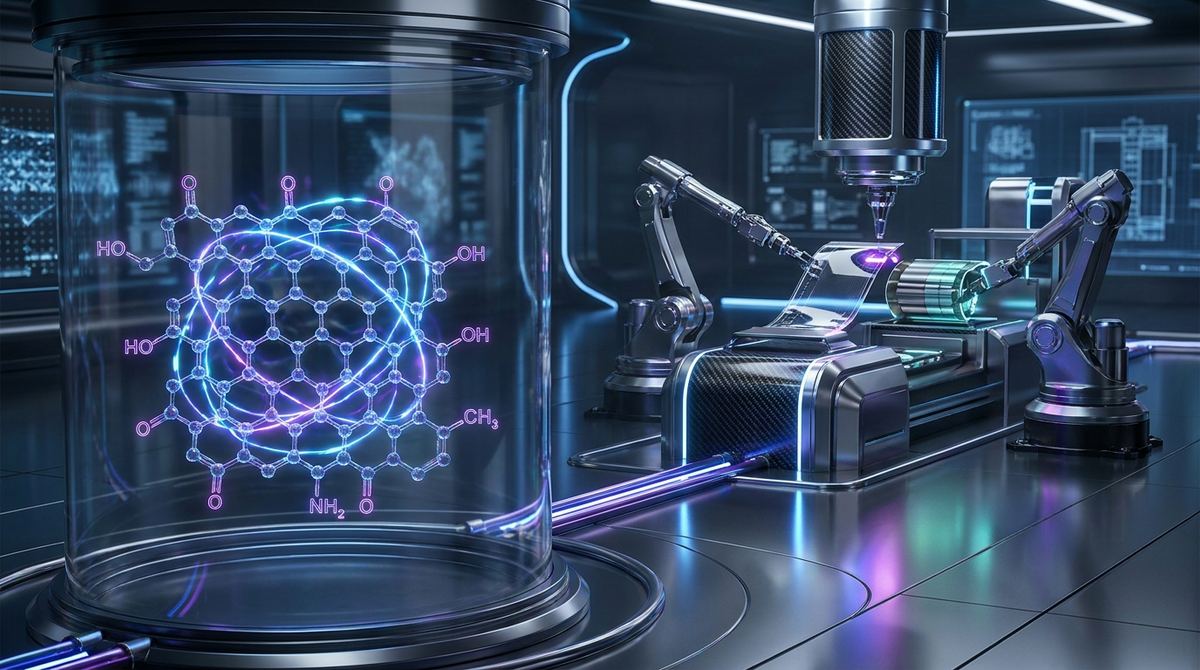
In the exciting realm of two-dimensional materials, graphene stands as a paragon of exceptional electronic and mechanical properties. Yet, while pristine graphene exhibits remarkable semimetallic characteristics, the ability to precisely tailor its electrical behavior for specific applications remains a paramount challenge and a frontier of innovation. This is where graphene oxide (GO) emerges as a pivotal material, offering an unparalleled platform for engineering diverse electronic responses through the strategic modification of its surface chemistry.
Graphene oxide, essentially a single layer of graphite oxide, represents a fascinating derivative of graphene. Unlike its parent material, GO's electronic properties are not fixed; instead, they are profoundly influenced by the rich tapestry of oxygen functional groups strategically arranged across its basal plane and edges. These modifications allow for a remarkable tunability, transforming GO from a staunch insulator to a versatile semiconductor, and even to a semimetal through controlled reduction. This blog post, drawing insights from the 'Graphene Science Handbook – Electrical and Optical Properties (Volume 3, 2016),' will delve into the modified electronic properties of graphene oxide, exploring its fundamental nature, synthesis advantages, and transformative applications in advanced electronic devices. We aim to provide engineers and scientists with a comprehensive understanding of how this adaptable material is shaping the future of materials science and device engineering.
The Genesis of Graphene Oxide: A Foundation for Tunable Electronics
The journey of graphene oxide begins with graphite, a layered material composed of stacked graphene sheets. While graphene itself, a monolayer of carbon atoms arranged in a hexagonal lattice, was theoretically conceived long before its experimental isolation by Novoselov et al. in 2004, its industrial-scale production and functionalization posed significant hurdles. This is where graphene oxide enters the picture, serving as an indispensable precursor material for the chemical synthesis of graphene and, critically, offering a versatile platform for achieving modified electronic properties of graphene oxide through functionalization.
Defined as a monolayer of graphene adorned with various oxygen-containing functional groups, GO possesses a unique chemical fingerprint. On its basal plane, one typically finds hydroxyl (-OH) and epoxy (-O-) groups, while carboxyl (-COOH), carbonyl (-C=O), and phenol (-C6H5OH) groups predominantly reside at its edges. This deliberate functionalization, primarily achieved through the oxidation of graphite, offers two key advantages. Firstly, the covalent bonding of oxygen functional groups both on the surface and at the edges of individual graphite layers significantly increases the separation between these layers, thereby suppressing the strong van der Waals forces that typically bind them together. This enhanced interlayer spacing facilitates exfoliation into single or few-layer GO sheets.
Secondly, the introduction of these oxygen groups renders graphite oxide hydrophilic, meaning it readily disperses in a wide variety of solvents, including deionized water. This property is crucial for large-area and flexible applications, enabling the production of stable GO dispersions that can be processed into thin films or integrated into composites with relative ease. Historically, the synthesis of graphite oxide dates back over a century, with early pioneers like B.C. Brodie (1859) and Staudenmaier (1898) refining oxidation processes before the advent of more scalable methods such as Hummers'. These historical advancements paved the way for controlled functionalization, which is fundamental to understanding and leveraging the modified electronic properties of graphene oxide for diverse technological advancements. The ability to precisely control the distribution and density of these oxygen groups during synthesis is a critical factor in dictating the final electrical characteristics of the material.
Unlocking Conductivity: The Tunable Electrical Properties of Graphene Oxide
One of the most compelling aspects of graphene oxide is its remarkable ability to exhibit a wide spectrum of electrical properties, ranging from that of an insulator to a semiconductor, and ultimately to a semimetal. This extraordinary tunability is directly attributable to its nature as a nonstoichiometric compound, meaning its exact chemical composition and thus its properties are highly dependent on the synthesis process and ambient conditions. The fundamental mechanism underpinning these modified electronic properties of graphene oxide lies in the profound influence of its oxygen functional groups on the material's electronic band structure and charge carrier transport.
In its pristine, highly oxidized form, GO often behaves as an electrical insulator. This insulating behavior stems from the disruption of the graphene's extended sp2 hybridized carbon network by the covalently bonded oxygen functional groups. These groups introduce sp3 hybridized carbon atoms, breaking the delocalized π-electron system that is responsible for graphene's high conductivity. As a result, charge carriers face significant barriers to movement, leading to very low electrical conductivity. However, by carefully adjusting the ratio of carbon to oxygen atoms, primarily through a process known as reduction, the band gap of GO can be precisely tuned. This chemical transformation progressively restores the sp2 network, leading to a gradual transition in electrical behavior.
When the oxygen content is partially reduced, GO can behave as a semiconductor. In this state, a measurable band gap exists, allowing for controlled charge carrier injection and transport, typically influenced by factors like temperature and electric fields. The transport mechanism in such partially reduced GO often involves variable range hopping or other defect-mediated conduction pathways, which are highly temperature-dependent. At higher levels of reduction, the material approaches the semimetallic characteristics reminiscent of pristine graphene, albeit often with structural defects that can impact charge carrier mobility. Field-effect transport properties in GO are complex, often showing ambipolar behavior or distinct n-type/p-type characteristics depending on the oxygen content and environmental conditions, offering avenues for designing advanced transistors.
Furthermore, the chapter highlights that when GO is used in its pristine form or as a composite with semiconducting materials like zinc oxide (ZnO), its intrinsic insulating or semiconducting properties can be leveraged or enhanced. This approach enables the induction of desired electrical activity, extending the utility of GO beyond a mere graphene precursor. The ability to control the electrical properties of graphene oxide through varying the oxygen functionalization is a cornerstone of its application in numerous cutting-edge technologies, making it a highly attractive material for innovation in electronics.
Revolutionizing Devices: Graphene Oxide in Nonvolatile Memory and Transistors
The unique and tunable electrical properties of graphene oxide have positioned it as a material of immense interest for the next generation of electronic devices, particularly in areas requiring novel memory solutions and high-performance transistors. The inherent versatility of GO, specifically its capacity for modified electronic properties of graphene oxide and structural adaptability, makes it an excellent candidate for these advanced applications.
One significant application highlighted in the source material is the use of GO as an active material in resistive-switching nonvolatile memory (NVM) devices. Resistive switching, a phenomenon where the resistance of a material can be reversibly switched between high and low states by applying an external voltage, is crucial for developing memory cells that retain data even when power is off. GO’s structure, with its network of oxygen functional groups and localized defects, provides ideal conditions for this phenomenon. The formation and rupture of conductive filaments, often involving oxygen vacancies or the movement of oxygen ions, within the GO layer allow for the binary switching states. Memory cells constructed with structures like Al/GO/Si or Al/GO/Ge exhibit robust resistive-switching characteristics, demonstrating the efficacy of GO in foundational memory technologies. The stability, speed, and energy efficiency offered by GO-based NVMs are actively being explored to surpass the limitations of conventional memory architectures.
Beyond memory, graphene oxide also shows promise in transistor technologies. Although briefly mentioned, GO can function effectively as a gate dielectric in Field-Effect Transistors (FETs). In this role, its insulating properties, particularly in its pristine form, are critical for separating the gate electrode from the semiconductor channel and enabling efficient electrostatic control over charge carriers. This leverages its high dielectric strength and chemical stability. However, an even more exciting prospect involves GO-based nanocomposites as channel materials in thin-film transistors (TFTs), which are vital for flexible displays and large-area electronics.
For instance, the integration of GO with semiconducting materials like ZnO forms nanocomposites that can act as highly effective channel materials. In these GO–ZnO-based nanocomposites, the GO component can enhance charge transport, provide structural stability, or even modify the electronic band structure of the ZnO, leading to improved transistor performance. The ability to tune the conductivity of the GO component within the composite allows for fine-tuning the transistor's characteristics, such as mobility and on/off ratio. This demonstrates how the careful engineering of GO’s inherent properties, coupled with synergistic material combinations, is driving the development of high-performance, flexible, and cost-effective electronic devices, further expanding the reach of modified electronic properties of graphene oxide into commercial applications.
The Transformative Journey to Reduced Graphene Oxide: Enhancing Conductivity
While pristine graphene oxide excels in applications requiring insulating or semiconducting properties, many advanced electronic devices demand materials with higher electrical conductivity. This is where the concept of reduced graphene oxide (rGO) becomes paramount. The transformation from GO to rGO represents a critical step in restoring the electrical conductivity of the material, effectively bridging the gap between insulating GO and highly conductive pristine graphene. This process of reduction is fundamental to unlocking a wider range of the modified electronic properties of graphene oxide.
Reduced graphene oxide is essentially graphene oxide that has undergone a process to remove a significant portion of its oxygen-containing functional groups. This removal, or deoxygenation, leads to the partial restoration of the sp2 hybridized carbon network, which is crucial for electron delocalization and high electrical conductivity. As these oxygen groups are stripped away, the structural defects that initially led to insulating behavior begin to heal, allowing for more efficient charge carrier transport. It's important to note, however, that during reduction, some carbon atoms might also be removed, leading to structural defects in the rGO lattice. Consequently, while rGO is significantly more conductive than pristine GO, its charge carrier mobility is typically moderate compared to ideal pristine graphene due to these residual defects.
Various methods have been developed for the reduction of GO, each with its own advantages and implications for the resulting material's properties. Chemical reduction of GO involves treating GO with reducing agents such as hydrazine, sodium borohydride, or ascorbic acid. These chemical methods are often highly effective in removing oxygen groups, making them suitable for large-scale production of rGO dispersions. The specific reducing agent and reaction conditions can influence the degree of reduction and the presence of residual functional groups, thus tailoring the electrical properties of chemically r-GO.
Another prominent method is thermal reduction of GO, which involves heating GO at elevated temperatures. High temperatures cause the oxygen groups to decompose and evolve as CO, CO2, and H2O, leaving behind a more graphene-like structure. This method is often preferred for creating films of rGO directly. More recently, low-temperature thermal reduction of GO has gained attention, offering a milder approach that can reduce material damage and enable integration with temperature-sensitive substrates. Regardless of the method, the goal is to carefully control the extent of oxygen removal to achieve the desired balance between conductivity and other material properties, underscoring the precise engineering involved in manipulating the modified electronic properties of graphene oxide to suit diverse technological demands. The ability to tune the reduction process provides an unparalleled degree of control over the final material characteristics.
Conclusion: Graphene Oxide – A Cornerstone of Future Electronics
The profound journey through the landscape of graphene oxide reveals a material of extraordinary versatility and untapped potential. From its origins as a precursor to graphene, GO has carved out its own unique niche, primarily due to its remarkable modified electronic properties of graphene oxide achieved through deliberate functionalization. The precise control over the carbon-to-oxygen ratio, enabled by various synthesis and reduction techniques, allows GO to span the entire spectrum of electrical behaviors, from an efficient insulator to a tunable semiconductor and, upon reduction, a promising semimetal.
We have explored how the strategic arrangement of oxygen functional groups dictates GO's conductivity, enabling its application as an active material in cutting-edge resistive-switching nonvolatile memory devices and as a crucial component in high-performance thin-film transistors, often in synergistic nanocomposites with materials like ZnO. The ability to transform GO into reduced graphene oxide further expands its utility, offering a pathway to enhance conductivity for myriad applications where charge carrier transport is critical. Graphene oxide is not merely a derivative; it is a foundational material shaping the future of flexible, large-area electronics, and advanced memory solutions.
As research continues to unravel the intricate mechanisms governing its behavior, the opportunities for innovation with graphene oxide are boundless. Its adaptable nature makes it a key player in the ongoing revolution in materials science and device engineering. To explore how these advanced materials can power your next breakthrough or to delve deeper into the fascinating world of graphene and its derivatives, we invite you to visit usa-graphene.com today. Discover our range of high-quality graphene materials and solutions designed for the most demanding scientific and industrial applications.