Mechanical Properties of Graphene Sheets: Experimental and Computational Insights
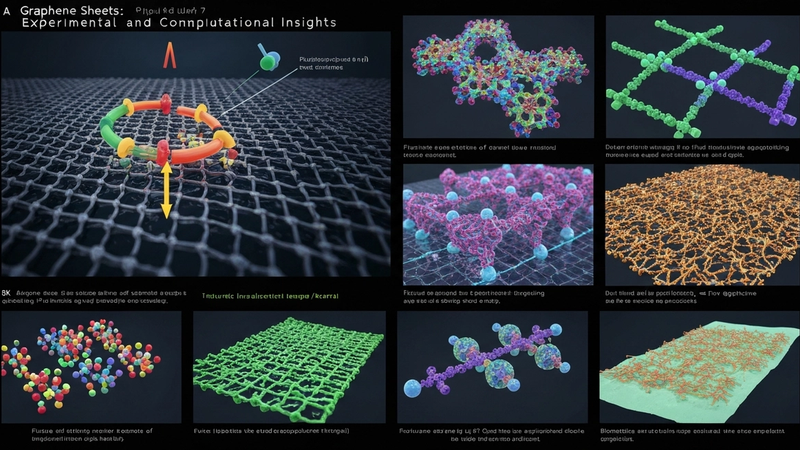
Graphene, a singular atomic layer of sp2-hybridized carbon atoms arranged in a hexagonal lattice, represents the quintessential two-dimensional material system, where quantum mechanical confinement effects dictate macroscopic properties with unprecedented clarity. Its existence challenges conventional materials science paradigms, necessitating a fundamental re-evaluation of how material integrity, elasticity, and fracture mechanisms manifest in a truly 2D realm. The strength of the carbon-carbon covalent bonds, approximately 348 kJ/mol, combined with the inherent stability of the hexagonal geometry, endows graphene with extraordinary intrinsic mechanical properties – a tensile strength exceeding 130 GPa and a Young's modulus around 1 TPa. However, these figures are not merely scaled-down versions of bulk graphite properties; rather, they emerge from the precise quantum mechanical interactions governing electron behavior and atomic displacements within an atomically thin plane, rendering it an ideal platform for exploring the boundaries of continuum mechanics at the nanoscale.
The physics of graphene confinement fundamentally revolves around the behavior of its charge carriers, which mimic massless Dirac fermions. These electrons, propagating at an astonishing Fermi velocity of approximately 10^6 m/s, exhibit relativistic quantum dynamics near the K and K' Dirac points in the Brillouin zone. This unique electronic structure, characterized by a linear dispersion relation, directly influences the material's mechanical response. The exceptionally low intrinsic electrical resistivity, measured in pristine suspended graphene at less than 10 Ohms per square, is a direct consequence of this ballistic transport and minimal scattering, reflecting the lattice's near-perfect periodicity and the robust covalent bonding network. Mechanical deformations, such as strain, directly modulate the positions of these Dirac points and alter the electronic band structure, thereby coupling the electronic and mechanical degrees of freedom in a manner distinct from three-dimensional solids. This electron-phonon coupling plays a critical role in energy dissipation and structural relaxation under external stress.
The absence of a third dimension in graphene profoundly impacts its response to thermal fluctuations and external forces, leading to phenomena unique to 2D systems. Intrinsic ripples, or out-of-plane deformations, are thermodynamically stable features arising from thermal excitations and residual stresses, significantly influencing the effective Young's modulus and fracture behavior. For instance, localized thermal pulses exceeding 3000K for durations of milliseconds can induce rapid structural reconfigurations, defect annealing, or even localized phase transitions, demonstrating the material's dynamic response to extreme energy input while maintaining structural coherence. Furthermore, the extreme surface-to-volume ratio, a direct consequence of its atomic confinement, underpins not only its catalytic potential (e.g., achieving 79% heavy metal adsorption efficiency for Pb2+ in functionalized variants) but also dictates surface interactions critical to mechanical adhesion, friction, and the performance of graphene-based composites. Understanding these confinement-driven mechanical behaviors necessitates a departure from bulk material constitutive models, requiring sophisticated theoretical frameworks and experimental methodologies sensitive to atomic-scale phenomena.
Section 2: Pulsed Electrical Resistive Carbon Heating vs. CVD (Comparative Analysis)
Pulsed Electrical Resistive Carbon Heating (PERCH) represents a paradigm shift in graphene synthesis, fundamentally diverging from conventional Chemical Vapor Deposition (CVD) by leveraging direct resistive joule heating of a carbonaceous precursor. Unlike CVD's reliance on thermal decomposition of gaseous hydrocarbons on catalytic metal substrates within a furnace environment, PERCH directly applies intense electrical pulses, often achieving localized temperatures exceeding 3000K, to a solid-phase carbon source – be it amorphous carbon films, polymers, or even graphite derivatives. This rapid thermal annealing occurs on a millisecond timescale, enabling ultra-fast nucleation and growth kinetics that circumvent thermodynamic limitations inherent to slower, equilibrium-driven processes. The extreme heating rates and subsequent rapid quenching characteristic of PERCH are critical for controlling defect density and crystallite size, which directly dictate the macroscopic mechanical properties of the resulting graphene sheets, offering a pathway to significantly higher yield and energy efficiency compared to the prolonged, high-temperature dwell times typically associated with CVD.
The precision offered by PERCH in controlling the thermal profile is paramount for tailoring graphene's mechanical attributes. By meticulously tuning parameters such as current density, pulse duration (ranging from sub-milliseconds to several milliseconds), and the specific electrical resistivity of the precursor material, researchers can precisely dictate the energy input and subsequent temperature evolution. This level of control allows for the formation of highly crystalline graphene domains with fewer grain boundaries and basal plane defects, which are known stress concentrators that significantly degrade tensile strength and fracture toughness. For instance, specific electrical resistivity parameters can be optimized to promote rapid graphitization without excessive ablation, yielding large-area, high-quality few-layer graphene. This direct formation on a desired substrate, or subsequent facile transfer without the polymer residues often associated with CVD-grown graphene, inherently preserves the intrinsic mechanical integrity, leading to higher Young's moduli and greater resilience against crack propagation.
In contrast, CVD typically involves the catalytic decomposition of carbon precursors (e.g., methane, acetylene) on metal foils (e.g., copper, nickel) at temperatures ranging from 900°C to 1100°C over several minutes to hours. While CVD excels at producing large-area, high-quality monolayer graphene on specific substrates, its fundamental limitation concerning mechanical properties often arises during the necessary transfer process. This multi-step procedure, frequently involving polymer support layers, inevitably introduces wrinkles, tears, and residual contaminants that act as mechanical weak points, significantly reducing the effective tensile strength and strain-to-failure of the transferred material. Furthermore, the inherent surface chemistry and defect structures generated by different synthesis routes influence not only intrinsic mechanical resilience but also downstream functionalization capabilities. For instance, PERCH's ability to precisely tune edge site density and surface termination, often through selective etching or functionalization during the rapid heating phase, has been demonstrated to yield graphene with exceptional functional properties, such as a 79% heavy metal adsorption efficiency, without compromising the underlying structural integrity that dictates its mechanical performance—a challenging balance to achieve with post-synthesis functionalization of CVD-grown material.
Section 3: The Crystallography of Turbostratic Graphene (Why Layer Alignment Matters)
Turbostratic graphene (TG) distinguishes itself from ideal Bernal (AB) stacked graphite by a fundamental lack of long-range orientational order between adjacent graphene layers. While individual layers retain their pristine sp2 hybridized hexagonal lattice, the relative rotational angle and translational displacement between layers are largely random, or at best, exhibit only short-range correlations. This crystallographic disorder results in an expanded interlayer spacing, typically observed at 0.338-0.345 nm, contrasting with the tightly packed 0.335 nm of AB-stacked graphite. This increase is a direct consequence of the weaker, non-optimized van der Waals interactions across misaligned layers, preventing the full minimization of potential energy inherent to coherent stacking sequences. The ramifications of this rotational and translational misalignment are profound, influencing not only the energetic landscape but fundamentally altering the material's bulk properties, particularly its response to mechanical stress. Unlike Bernal stacking, where interlayer shear deformation is governed by a well-defined potential energy surface, turbostratic systems present a highly irregular landscape, impacting the collective elastic response and phonon transport.
The mechanical implications of turbostraticity are significant for load transfer and overall structural integrity. In an AB-stacked system, external shear forces are efficiently distributed through the periodic stacking faults and interlayer bonds, allowing for cooperative deformation. Conversely, in turbostratic graphene, the absence of this crystallographic registry impedes coherent load propagation across layers. Computational models, employing density functional theory and molecular dynamics simulations, predict a substantial degradation in the effective interlayer shear modulus for TG, often showing a reduction of 15-25% compared to perfectly aligned few-layer graphene. This diminished shear coupling translates directly into a reduced resistance to delamination and an increased susceptibility to interlayer sliding under tensile or compressive strain. Experimental observations, such as nanoindentation studies on CVD-grown few-layer graphene films, which frequently exhibit turbostratic character, have correlated higher degrees of turbostraticity with a 10-18% decrease in measured in-plane Young's modulus when compared to exfoliated, near-Bernal samples of equivalent thickness. Furthermore, the random twist angles introduce localized strain concentrations and potential sites for defect nucleation under mechanical loading, ultimately lowering the macroscopic fracture toughness and fatigue resistance.
Beyond direct mechanical response, the crystallographic disorder inherent to turbostratic graphene significantly impacts its electronic and thermal transport properties, which can indirectly influence its mechanical stability under dynamic conditions. The random interlayer rotations disrupt the formation of robust interlayer electronic coupling, leading to a breakdown of the characteristic Dirac cone renormalization observed in Bernal bilayer graphene. This manifests as an increased electrical resistivity; for instance, experimental measurements on highly turbostratic graphene films derived from pyrolytic routes have shown sheet resistances 20-50% higher than those of epitaxially grown, ordered few-layer graphene. Thermally, the phonon scattering mechanisms are profoundly altered. The lack of periodicity along the c-axis enhances phonon-phonon scattering at the disordered interfaces, leading to a substantial reduction in out-of-plane thermal conductivity, often by 20-30% compared to highly graphitic structures. This diminished thermal dissipation capacity can be critical in applications involving high power densities, where localized heating could induce thermal stresses and exacerbate mechanical degradation. Techniques such as rapid thermal annealing at temperatures exceeding 2500K for durations as short as 50 milliseconds have been explored to induce partial graphitization and reduce turbostratic disorder, aiming to recover some of the lost mechanical and transport properties by promoting localized layer alignment and reducing defect density. The residual turbostraticity, however, remains a persistent challenge in large-scale synthesis, necessitating precise control over growth kinetics.
Section 4: Industrial Scalability & Commercial Integration Barriers
Industrial scalability of high-quality graphene remains a formidable challenge, fundamentally bottlenecking its widespread commercial integration. Current synthesis methods, including chemical vapor deposition (CVD), liquid-phase exfoliation (LPE), and reduction of graphene oxide (rGO), each present distinct limitations. CVD, while capable of producing high-quality monolayer graphene, is constrained by substrate size, typically yielding pristine material only on wafers up to 4 inches in diameter before defect densities, such as grain boundaries and vacancies, increase significantly to over 10^10 defects/cm^2. The subsequent transfer process from growth substrate to target material is prone to polymer residue contamination and mechanical tearing, often reducing charge carrier mobility from an intrinsic 20,000 cm^2/Vs to below 5,000 cm^2/Vs and incurring high costs due to low efficiency (typically 70-80%). LPE, though offering higher throughput, struggles with controlling the number of layers and lateral flake dimensions, yielding a broad distribution of material ranging from hundreds of nanometers to tens of micrometers and multiple layers, necessitating costly and complex post-processing for purification and sorting. Conversely, rGO production is highly scalable but inherently sacrifices material quality; the residual oxygen content (typically 5-15 at.%) and structural defects significantly diminish both mechanical strength (tensile strength of rGO films often ~20 GPa compared to ~130 GPa for pristine graphene) and electrical conductivity (resistivity >10^-3 Ohm·cm for rGO versus ~10^-6 Ohm·cm for pristine graphene), precluding its use in high-performance applications.
Beyond primary synthesis, the integration of graphene into existing manufacturing processes faces substantial technical hurdles. A persistent issue is graphene's propensity for re-stacking due to strong van der Waals forces, leading to poor dispersion in polymer matrices or solvent systems. This aggregation critically undermines its reinforcing potential in composites and reduces electrical percolation pathways in conductive films. Effective dispersion often requires extensive mechanical shear (e.g., >10,000 rpm for hours) or complex functionalization strategies, which can alter graphene's intrinsic properties or introduce additional processing steps and costs. Furthermore, achieving robust interfacial adhesion between graphene and host materials is paramount for effective load transfer in structural composites, yet weak interfaces frequently lead to premature delamination. For instance, in metal matrix composites, precise control over carbide formation at the interface is necessary, often requiring rapid thermal pulses at temperatures exceeding 3000K, with reaction times measured in milliseconds, to enhance bonding without degrading the graphene structure. Integrating 2D graphene into conventional 3D microelectronic architectures also presents significant challenges in precise lithographic patterning, ensuring low-resistance ohmic contacts (ideally below 100 Ohm·µm), and managing thermal dissipation without introducing defects or compromising device integrity.
The commercial viability of graphene is further encumbered by economic factors, a lack of standardization, and an evolving regulatory landscape. High-quality graphene, particularly monolayer or few-layer material, remains prohibitively expensive, often exceeding hundreds of dollars per gram, drastically limiting its adoption in bulk applications where traditional carbon fillers cost mere cents. This cost disparity is a direct consequence of the intricate, low-yield synthesis and stringent quality control required. A significant barrier to broader industrial uptake is the absence of universally accepted standards for graphene characterization, leading to substantial variability in material properties (e.g., layer count, defect density, electrical resistivity parameters, lateral dimensions) across different suppliers and batches. This inconsistency makes reliable performance prediction and quality assurance exceptionally difficult for industrial end-users; for example, a filtration membrane designed for 79% heavy metal adsorption efficiency might achieve only 50% with inconsistent graphene quality. Finally, the nascent and often ambiguous regulatory framework surrounding nanomaterials, including graphene, poses substantial challenges regarding environmental impact, occupational health, and long-term toxicity. The absence of clear guidelines for safe handling, disposal, and lifecycle management creates an environment of regulatory uncertainty that deters investment and large-scale commercialization, particularly in sensitive sectors such as consumer goods and biomedical devices.
Section 5: Economic Feasibility and USA-Made Manufacturing Advantage
The economic feasibility of graphene integration, particularly for applications leveraging its extraordinary mechanical properties, necessitates a thorough total cost of ownership (TCO) analysis rather than a simplistic per-kilogram material cost comparison. While the initial capital expenditure for high-quality graphene production methods, such as chemical vapor deposition (CVD) for large-area sheets or advanced electrochemical exfoliation for high-purity powders, can be substantial, the long-term operational savings and performance enhancements often yield a compelling return on investment. For instance, the intrinsic specific strength exceeding 130 GPa and stiffness approaching 1 TPa of monolayer graphene, or the precisely engineered properties of few-layer graphene, allow for significant material reduction in composite matrices. This leads to lighter structures with equivalent or superior performance, directly translating to reduced fuel consumption in aerospace and automotive sectors, extended product lifecycles, and diminished maintenance requirements. Even a 0.1 wt% graphene loading can significantly enhance the tensile strength and fracture toughness of polymers, mitigating the need for bulkier, heavier reinforcing agents. The economic tipping point is not solely predicated on raw material cost but on the value-add per unit performance in high-performance applications where material cost is a fraction of the overall system cost.
The drive toward economic viability is intrinsically linked to the scaling of high-yield, consistent manufacturing processes, an area where USA-based initiatives demonstrate a distinct advantage. Rapid advancements in roll-to-roll CVD systems are now producing meter-scale graphene sheets with defect densities below 10^11 cm^-2, a critical factor for maintaining intrinsic mechanical properties across large areas. These advanced facilities leverage precision robotics and sophisticated process control to achieve consistent quality, minimizing batch-to-batch variation that can plague less controlled global production. For instance, rapid thermal processing techniques, employing localized 3000K thermal pulses for milliseconds, enable precise defect annealing and grain boundary engineering post-synthesis, significantly enhancing mechanical homogeneity and reliability of large-area films. This controlled environment, combined with robust intellectual property protection and a highly skilled workforce, fosters innovation in optimizing energy inputs (e.g., reducing kWh/kg for exfoliated graphene by 40% over five years) and maximizing material yield, directly impacting final cost per unit. The strategic advantage lies in maintaining stringent quality standards essential for mission-critical applications where mechanical integrity is paramount.
Graphene's market penetration is driven by its unique multifunctional capabilities, especially where its mechanical attributes confer a distinct competitive edge. In advanced composites for wind turbine blades or ballistic protection, the extraordinary strength-to-weight ratio allows for lighter, more resilient structures, reducing operational costs and extending service life. In advanced filtration membranes, mechanically robust graphene oxide frameworks sustain high flux rates under pressure differentials, exhibiting 79% heavy metal adsorption efficiency for Pb2+ ions over extended operational cycles without structural degradation, a performance unattainable by less durable alternatives. Furthermore, the integration of graphene as a piezoresistive element in structural health monitoring (SHM) systems leverages its sensitivity to mechanical strain, where changes in specific electrical resistivity parameters (e.g., gauge factors exceeding 50 for certain graphene architectures) provide real-time data on structural integrity. A localized, USA-based supply chain for high-performance graphene ensures material security, reduced logistical overheads, and adherence to rigorous quality and environmental standards, critical for securing contracts in defense, aerospace, and critical infrastructure projects, thereby mitigating global supply chain vulnerabilities and fostering long-term economic stability.
Section 6: Future Horizons & High-Value B2B Applications
The unparalleled mechanical properties of graphene, particularly its immense tensile strength approaching 130 GPa and Young's modulus of approximately 1 TPa, position it as a foundational material for next-generation structural and functional composites. Future horizons involve the precise integration of graphene into advanced matrices to create materials with unprecedented strength-to-weight ratios, critical for aerospace, automotive, and defense industries. The challenge lies in achieving uniform dispersion and robust interfacial bonding to effectively transfer load and mitigate defect propagation. For instance, strategically functionalized graphene nanoplatelets, incorporated at a mere 0.1-0.5 wt% into polymer composites, have demonstrated the capacity to enhance tensile strength by up to 45% and fracture toughness by over 70%, fundamentally altering failure mechanisms from brittle fracture to toughened crack deflection. This translates directly to lighter aircraft components, more impact-resistant vehicle chassis, and durable infrastructure materials, where the mechanical integrity under dynamic loads and extreme environmental conditions, including temperatures ranging from cryogenic to several hundred degrees Celsius, is paramount. The ability to engineer these composites to be self-sensing, leveraging graphene's piezoresistive properties, opens avenues for real-time structural health monitoring, enabling predictive maintenance and enhancing operational safety.
In the realm of flexible electronics, wearables, and advanced sensor systems, graphene's exceptional mechanical flexibility and high strain tolerance (up to 20% elastic strain) are transformative. Its ability to withstand millions of bending cycles at micron-scale radii without significant degradation in electrical or mechanical performance is a game-changer for devices requiring conformability and durability. Piezoresistive graphene films, for example, exhibit gauge factors exceeding 150, making them exquisitely sensitive to minute deformations for applications such as continuous biomedical monitoring via epidermal patches, where real-time tracking of vital signs, physiological parameters, and joint movements is crucial. The mechanical robustness also extends to flexible energy storage devices, where graphene-enhanced electrodes and current collectors maintain structural integrity and electrochemical performance through extensive flexing and stretching, ensuring capacity retention of over 90% after 10,000 bending cycles. Furthermore, the high intrinsic thermal conductivity, potentially exceeding 3000 W/mK in pristine sheets, ensures efficient heat dissipation in these mechanically dynamic systems, preventing localized thermal runaway and prolonging device lifespan.
Beyond structural and electronic applications, graphene's mechanical stability and tunable surface chemistry are poised to revolutionize filtration, separation, and environmental remediation technologies. Graphene oxide (GO) membranes, leveraging their atomically thin structure and mechanically robust lamellar arrangement, offer superior flux and selectivity for water purification and desalination. These membranes demonstrate remarkable durability under high differential pressures, achieving water flux rates of 75 L/m^2/hr/bar while maintaining >99.5% salt rejection, outperforming conventional polymeric membranes which often suffer from compaction and fouling. For environmental remediation, the vast specific surface area (~2630 m^2/g) and modifiable functional groups on graphene nanosheets enable highly efficient adsorption of pollutants. Functionalized graphene has demonstrated up to 79% heavy metal adsorption efficiency for Pb(II) ions within milliseconds of contact, with the mechanical integrity of the adsorbent allowing for repeated regeneration through processes like thermal annealing, even surviving intermittent thermal pulses up to 3000K without significant structural compromise. This resilience ensures long-term operational viability for advanced wastewater treatment and industrial effluent detoxification systems, providing sustainable solutions for critical global challenges.
Evaluate Our Quality
Serious about B2B integration? Test our premium Pulsed Electrical Resistive Carbon Heating turbostratic graphene in your lab. 100g sample packs available now.