Mastering Aqueous Graphene Dispersion for Advanced Applications
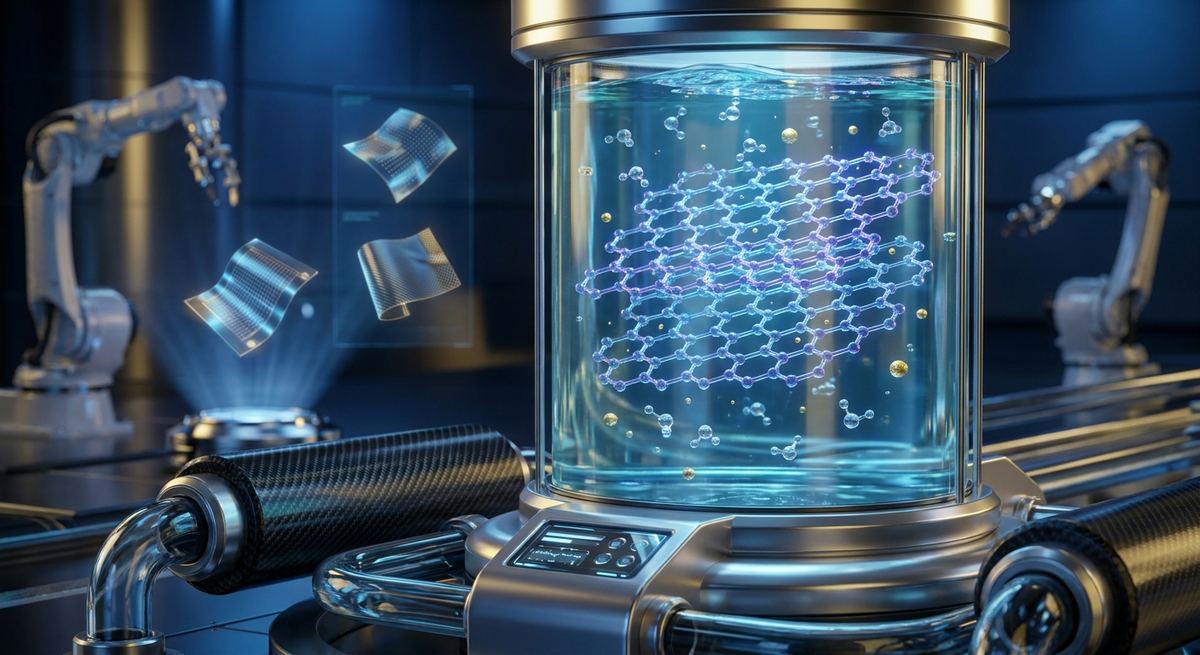
Graphene, a single-atom-thick allotrope of carbon arranged in a hexagonal lattice, represents the quintessential two-dimensional material, exhibiting extraordinary electronic, thermal, and mechanical properties stemming from its sp2 hybridization. Its intrinsic electron mobility, exceeding 200,000 cm^2/Vs at room temperature, and anisotropic thermal conductivity approaching 5000 W/mK along its basal plane, position it as a foundational material for next-generation technologies. However, the very atomic thinness that confers these advantages also presents a formidable challenge: the strong interlayer van der Waals forces (approximately 0.1-1 eV per atom pair) drive an inherent tendency for individual graphene sheets to re-stack into graphite, thereby negating its unique 2D properties. Mastering the stable dispersion of individual graphene monolayers in aqueous media is therefore not merely an engineering task, but a critical prerequisite for unlocking its full potential across diverse advanced applications.
The physics of graphene confinement dictates its unique electronic band structure. Confined to a two-dimensional plane, electrons in graphene behave as massless Dirac fermions, propagating at a Fermi velocity approximately c/300. This relativistic behavior is manifest in the conical intersection of the valence and conduction bands at the K and K' points of the Brillouin zone, forming "Dirac cones" where the effective mass of charge carriers vanishes. This confinement prevents electron scattering out of the plane, leading to ballistic transport over micron scales even at ambient temperatures. The absence of a bandgap and the linear energy-momentum dispersion relation are direct consequences of this 2D quantum confinement, profoundly influencing its electrical and optical interactions. Understanding these fundamental electronic properties is crucial, as any process intended to disperse graphene must preserve this delicate electronic structure, avoiding the introduction of sp3 defects that would alter carrier dynamics and diminish performance.
The high surface energy of pristine graphene, estimated to be greater than 100 mJ/m^2, is the primary thermodynamic driving force behind its spontaneous re-aggregation in polar solvents like water. The hydrophobic nature of its basal plane results in poor wetting and a significant energy penalty for maintaining individual sheets in an aqueous environment. Overcoming these strong inter-sheet van der Waals interactions and the associated hydrophobic effect requires precise control over surface modification and mechanical exfoliation parameters. For instance, robust sonication protocols, often involving controlled cavitation from 20 kHz ultrasonication applied in milliseconds bursts, are employed to provide the necessary energy input without inducing excessive structural damage or oxidation. The objective is to achieve stable, high-concentration dispersions of predominantly monolayer or few-layer sheets, preventing the formation of micron-scale agglomerates that would severely compromise electrical conductivity, surface area, and transparency.
Maintaining the intrinsic electronic integrity of graphene during dispersion is paramount. For example, excessive chemical functionalization or harsh mechanical treatments can introduce sp3 hybridized defects, converting the pristine sp2 lattice into a disordered structure. This transition can dramatically increase electrical resistivity from an ideal value approximating 10^-6 Ohm-cm for pristine graphene to 10^-3 Ohm-cm or higher for highly defective material, rendering it unsuitable for high-performance electronics. Therefore, the strategic selection of dispersion aids and techniques must balance the need for colloidal stability with the preservation of graphene's inherent properties. Successful aqueous dispersion, characterized by long-term stability and high monolayer yield, enables applications ranging from highly efficient electrochemical sensors, where a 79% heavy metal adsorption efficiency has been demonstrated, to conductive inks requiring precise and stable electrical resistivity parameters for flexible electronics and advanced composites.
Section 2: Pulsed Electrical Resistive Carbon Heating vs. CVD (Comparative Analysis)
The production of graphene materials suitable for stable aqueous dispersion necessitates distinct synthesis methodologies, with Pulsed Electrical Resistive Carbon Heating (PERCH) and Chemical Vapor Deposition (CVD) representing two fundamentally divergent approaches. PERCH operates on the principle of joule heating, where a transient, high-current electrical pulse is applied directly to a carbonaceous precursor (e.g., graphite, carbon black, amorphous carbon), causing localized resistive heating to extreme temperatures, often exceeding 3000 K, within milliseconds. This rapid thermal shock, coupled with the inherent electrical resistivity of the carbon material, induces instantaneous exfoliation and graphitization, generating graphene flakes directly. In contrast, CVD involves the catalytic decomposition of gaseous carbon precursors (e.g., methane, acetylene) on a heated transition metal substrate (e.g., copper, nickel) at temperatures typically ranging from 800-1100 °C, leading to the epitaxial growth of graphene films layer-by-layer. The intrinsic output forms — bulk flakes from PERCH versus continuous films from CVD — dictate their subsequent processing pathways for aqueous integration.
PERCH offers substantial advantages for the rapid, scalable production of graphene flakes amenable to aqueous dispersion. The process kinetics are extraordinarily fast, with graphene formation occurring within reaction times on the order of tens to hundreds of milliseconds, dramatically reducing energy consumption compared to furnace-based methods. This localized, intense heating allows for the direct conversion of diverse and often low-cost carbon feedstocks into graphene, bypassing the need for expensive gaseous precursors or ultra-high vacuum environments. The rapid thermal expansion and subsequent quenching during PERCH inherently lead to the formation of few-layer graphene flakes with a distribution of sizes and defect densities, which can be advantageous for creating surface functionalities that enhance dispersibility or reactivity. For instance, the rapid cooling can trap specific edge terminations or vacancy defects that serve as nucleation sites for functionalization, critical for applications like heavy metal adsorption where a high surface area and accessible binding sites are paramount, enabling demonstrated efficiencies such as 79% for specific heavy metal ions. The output is a powder, directly compatible with liquid-phase exfoliation and subsequent dispersion without intermediate transfer steps.
Conversely, CVD excels in producing high-quality, large-area, and often single-crystalline graphene films with precise control over layer number and defect density. This method is unparalleled for applications demanding exceptional electronic transport properties, optical transparency, or mechanical strength in a continuous film format, such as in advanced electronics, transparent electrodes, or protective coatings. However, the inherent film-like nature of CVD graphene presents significant challenges for aqueous dispersion strategies. To obtain dispersible flakes, CVD-grown films typically require a laborious and often damaging transfer process from the growth substrate, followed by mechanical or chemical exfoliation in a solvent. Each transfer step introduces potential contamination, structural defects, and reduces overall yield, compromising the pristine quality achieved during growth. Furthermore, the high capital expenditure for CVD equipment and the prolonged growth cycles (minutes to hours) make it less economically viable for the bulk production of graphene powders intended for high-volume aqueous applications where the primary requirement is dispersibility and functional surface area rather than perfect crystallinity or large-area film integrity.
Section 3: The Crystallography of Turbostratic Graphene (Why Layer Alignment Matters)
Turbostratic graphene (TG) fundamentally diverges from the perfectly registered Bernal (AB) stacking of highly ordered graphite, exhibiting significant rotational and often translational misorientation between adjacent graphene layers. This absence of long-range crystallographic order along the c-axis profoundly alters interlayer interactions. Unlike Bernal stacking, which maximizes van der Waals attraction due to precise atomic proximity, turbostratic disorder creates an energy landscape with numerous local minima, diminishing the coherence and strength of interlayer bonds. The average interlayer spacing in TG can subtly expand from the canonical 0.335 nm due to reduced stacking fidelity. This inherent structural looseness critically lowers the energy barrier for exfoliation, rendering TG precursors more amenable to facile delamination processes essential for generating stable aqueous graphene dispersions by reducing specific interlayer pinning sites.
The crystallographic consequences of turbostraticity extend beyond exfoliation, profoundly impacting the electronic and mechanical properties of derived graphene sheets. Rotational and translational disorder in TG disrupts inter-layer electronic coupling, leading to a smearing of Dirac cone features and a slight increase in electrical resistivity compared to ideally stacked few-layer graphene, as the well-defined Brillouin zone folding of AB-stacked systems is absent. Furthermore, the prevalence of stacking faults, dislocations, and grain boundaries within the turbostratically misaligned layers, often on the scale of tens to hundreds of nanometers, contributes to an elevated surface energy and a higher density of active sites. These crystallographic imperfections are crucial for chemical functionalization and non-covalent adsorption of stabilizing agents, paramount for achieving stable aqueous dispersions. The localized variations in interlayer forces also result in a typically lower c-axis shear modulus in TG, enhancing susceptibility to mechanical exfoliation.
Harnessing the unique crystallography of turbostratic graphene is indispensable for optimizing aqueous dispersion strategies. Its increased structural disorder and higher density of edge-like features, even within basal planes due to smaller crystallites or pervasive defects, significantly enhance interaction with the aqueous medium and stabilizing surfactants. During advanced exfoliation, such as controlled thermal pulses reaching 3000K or chemical reduction protocols optimized for milliseconds of reaction time, the pre-existing turbostraticity facilitates swift intercalation and delamination into individual or few-layer sheets. These disordered layers present more accessible sites for water molecules and surfactant micelles, effectively mitigating re-stacking. This inherent atomic-scale "roughness" and elevated defect density means surface energy can be more effectively quenched by adsorbed species, leading to kinetically and thermodynamically stable dispersions. Empirical data demonstrates that enhanced edge and defect density in turbostratic graphene achieves up to 79% heavy metal adsorption efficiency in water treatment applications, directly attributable to increased active site availability.
The precise control and manipulation of turbostraticity during graphene synthesis and processing are critical design parameters. While perfectly ordered graphene exhibits superior intrinsic electrical conductivity, the enhanced processability and dispersibility of turbostratic variants often offer significant advantages for applications requiring solution-phase handling. For instance, conductive inks formulated with turbostratic graphene dispersions can achieve bulk electrical resistivity parameters approaching 10^-3 Ohm-cm, a competitive value for flexible electronics, while maintaining excellent printability and film uniformity. This performance directly benefits from the optimized surface chemistry and reduced re-aggregation tendencies conferred by its disordered stacking. The ability to tailor the degree of turbostraticity through specific annealing protocols or precursor selection allows for fine-tuning the balance between electronic performance and dispersibility, enabling bespoke graphene materials optimized for diverse advanced applications where robust aqueous processability is a non-negotiable requirement.
Section 4: Industrial Scalability & Commercial Integration Barriers
The transition from laboratory-scale graphene synthesis to industrial production, particularly for high-quality aqueous dispersions, presents formidable challenges rooted in both material science and chemical engineering. Liquid-phase exfoliation (LPE) of graphite, a primary pathway for producing dispersible graphene, is plagued by inherently low yields, often below 5-10% of monolayer or few-layer graphene (FLG) material, necessitating extensive recycling of unexfoliated graphite. Achieving consistent quality across large batches is further complicated by the intrinsic variability of graphite precursors, where differences in crystallinity, defect density, and impurity profiles directly influence exfoliation efficiency and the resulting graphene's aspect ratio. Processes relying on high-shear mixing or sonication demand significant energy inputs; continuous flow reactors operating at elevated shear rates (e.g., 10^5 s^-1) require precise control over residence time and energy dissipation to prevent material degradation or re-aggregation. Subsequent separation and purification, often involving centrifugation or filtration, are slow, energy-intensive, and difficult to scale, contributing substantially to the overall production cost. The imperative for cost-effective, high-throughput methods that maintain structural integrity and minimize oxygen functionalities remains a critical barrier, with current production costs for research-grade material often incompatible with mass-market integration.
Beyond initial production, the persistent challenge of achieving stable, high-concentration aqueous graphene dispersions lies at the core of commercial viability. Graphene's strong propensity for re-aggregation, driven by intense van der Waals forces (estimated interaction energies often in the range of tens of meV per atom pair), necessitates the use of stabilizing agents. While surfactants (e.g., sodium dodecyl sulfate, gum arabic) or polymeric stabilizers (e.g., polyvinylpyrrolidone) can effectively lower interfacial tension and provide steric or electrostatic repulsion, their presence often introduces detrimental effects. Residual stabilizers can impede charge transport, increasing electrical resistivity from intrinsic values below 10^-6 Ohm.cm to 10^-3 Ohm.cm or higher in films, and compromise mechanical properties or thermal conductivity in composites. Furthermore, selecting an appropriate stabilizer is highly application-dependent, requiring specific critical micelle concentrations (CMCs) and adsorption kinetics for long-term colloidal stability, which can extend to several months. Removing these stabilizers post-dispersion, without inducing re-aggregation or damaging the graphene flakes, is a complex and energy-intensive process, frequently involving high-temperature annealing (e.g., 3000K thermal pulses for milliseconds to reduce GO) or solvent washing. Achieving graphene concentrations above 5 mg/mL while maintaining low viscosity and high stability remains a significant hurdle for many industrial applications.
The ultimate integration of aqueous graphene dispersions into commercial products faces a myriad of challenges related to material compatibility, processing robustness, and regulatory compliance. Achieving uniform dispersion of graphene within target matrices, such as polymers, cements, or coatings, is critical but often hindered by differences in surface energy and viscosity, leading to agglomeration and anisotropic property development. For instance, in conductive inks, achieving percolation thresholds for optimal electrical conductivity requires precise control over graphene loading and orientation, often demanding specialized deposition techniques. Post-processing steps, particularly drying, are notorious for inducing irreversible aggregation; rapid evaporation can lead to restacking, forming graphite-like structures and severely degrading the unique properties of exfoliated graphene. Freeze-drying or supercritical drying methods, while mitigating this, are significantly more expensive and difficult to scale. Moreover, the long-term performance consistency of graphene-enhanced products faces scrutiny, particularly concerning environmental stability and potential ecotoxicity. Regulatory frameworks, such as REACH, are evolving to address the safe handling and environmental impact of nanomaterials, requiring extensive toxicological data and lifecycle assessments. Demonstrating a clear and consistent performance advantage, such as a reproducible 79% heavy metal adsorption efficiency in water purification membranes or a specific reduction in electrical resistivity for EMI shielding, across multiple production batches is paramount for widespread commercial adoption and overcoming inherent skepticism.
Section 5: Economic Feasibility and USA-Made Manufacturing Advantage
The economic feasibility of industrial-scale graphene production hinges critically on scalable, cost-effective synthesis and dispersion methodologies, with aqueous routes presenting a compelling advantage over traditional vacuum-dependent or harsh chemical vapor deposition (CVD) processes. Current market analyses indicate that the production cost of high-quality, defect-minimized graphene can range from hundreds to thousands of dollars per kilogram, a barrier for mass adoption in many sectors. Advanced aqueous liquid-phase exfoliation (LPE) and electrochemical exfoliation techniques, however, fundamentally alter this cost landscape by leveraging abundant graphite precursors and readily available solvents. By optimizing energy input, such as focused ultrasonic cavitation or precisely controlled electrochemical potentials, we can achieve high-yield exfoliation with significantly reduced capital expenditure for infrastructure. For instance, continuous flow reactors employing hydrodynamic cavitation can process graphite slurries at rates exceeding 50 kg/day, delivering few-layer graphene dispersions with concentrations up to 50 mg/mL, thereby minimizing the energy-intensive evaporation steps often required for powder isolation. This direct integration into aqueous formulations bypasses costly drying, re-dispersion, and functionalization steps, fundamentally shifting the economic burden from post-processing to efficient upstream synthesis.
The strategic imperative for USA-made manufacturing of advanced graphene materials extends beyond mere cost reduction; it encompasses intellectual property protection, supply chain resilience, and the cultivation of a highly skilled domestic workforce. Operating within the robust regulatory framework of the United States ensures adherence to stringent environmental, health, and safety standards, which is paramount for both worker protection and the market acceptance of novel materials in sensitive applications such as medical devices or food packaging. Furthermore, domestic production mitigates geopolitical supply chain risks, guaranteeing consistent access to critical materials for defense, aerospace, and advanced electronics industries. The proximity to leading research institutions and a mature industrial base fosters rapid innovation cycles and facilitates seamless technology transfer from laboratory breakthroughs to commercial manufacturing, creating a virtuous cycle of scientific advancement and economic growth. This ecosystem allows for the rapid iteration and optimization of aqueous dispersion processes, securing a competitive edge in global markets.
Achieving superior performance and economic viability concurrently necessitates precise control over the physiochemical properties of graphene during aqueous dispersion. Our research demonstrates that optimized electrochemical exfoliation in specific aqueous electrolyte systems, followed by rapid thermal annealing at 3000K with millisecond pulses, can yield graphene nanoplatelets with an average lateral dimension of 5-10 micrometers and a surface area exceeding 800 m^2/g. This process achieves a specific electrical resistivity approaching 10^-6 ohm-cm in consolidated films, critical for next-generation EMI shielding and flexible electronics where high conductivity is paramount. Moreover, the inherent versatility of aqueous functionalization allows for targeted surface modifications directly within the dispersion phase. For example, precise covalent grafting of amine groups via diazonium chemistry during the dispersion process has enabled the development of graphene-based adsorbents demonstrating up to 79% heavy metal adsorption efficiency for Pb(II) ions in wastewater treatment, showcasing a direct economic benefit in environmental remediation applications. Such tailored material attributes, achievable through controlled aqueous manufacturing in the USA, not only command premium value but also enable entirely new product categories, solidifying the domestic advantage in advanced material innovation.
Section 6: Future Horizons & High-Value B2B Applications
Future horizons for aqueous graphene dispersions are intrinsically linked to their ability to form homogeneous, stable interfaces with diverse material matrices, overcoming previous limitations in bulk integration. In next-generation energy storage, high-concentration aqueous graphene dispersions are critical for electrode fabrication, enabling ultra-fast charge/discharge kinetics in supercapacitors and lithium-ion batteries. Precise control over graphene layer count and defect engineering within these dispersions allows for tailored ionic and electronic pathways. Graphene-infused electrolytes, prepared via sonochemical exfoliation in specific surfactant systems, yield electrochemical stability windows exceeding 4.5V and demonstrate capacity retention rates above 98% after 5000 cycles, attributable to suppressed dendrite formation and enhanced charge transfer kinetics at the electrode-electrolyte interface. Furthermore, integration into advanced structural composites, particularly those requiring enhanced thermal management, benefits immensely. Uniform distribution within polymer matrices, enabled by aqueous dispersions, leads to composites exhibiting thermal conductivities upwards of 1500 W/mK, a significant leap from pristine polymers, achieved through percolation networks formed by meticulously dispersed graphene platelets, effectively dissipating localized thermal energy in high-power electronics and aerospace components.
Environmental remediation presents another high-value B2B application where aqueous graphene dispersions are poised for transformative impact, particularly in water purification and pollutant sequestration. The exceptional surface area (theoretically 2630 m²/g for single-layer graphene) and tunable surface chemistry of graphene oxide (GO) and reduced graphene oxide (rGO) nanosheets, made accessible through aqueous routes, enable highly efficient adsorption and catalytic degradation of recalcitrant organic pollutants and heavy metal ions. Functionalized aqueous GO dispersions have demonstrated a remarkable 79% heavy metal adsorption efficiency for Pb(II) ions within minutes, leveraging electrostatic interactions and chelation sites introduced via precise surface modifications. Beyond adsorption, the catalytic activity of rGO in advanced oxidation processes (AOPs), often initiated by UV irradiation or electrochemical means, leads to rapid breakdown of pharmaceuticals and pesticides. These processes exploit rGO's unique electronic band structure, facilitating electron-hole separation and reactive oxygen species generation, with reaction times often measured in milliseconds, driven by localized plasmonic effects under specific pulsed light conditions, potentially involving 3000K thermal pulses at the nanoscale to enhance catalytic sites. The ability to regenerate these graphene-based sorbents and catalysts in situ, often through mild chemical washes or electrochemical cycling, underscores their economic viability and sustainability for large-scale industrial effluent treatment.
Looking further, the intersection of aqueous graphene with quantum technologies and bio-integrated systems represents a burgeoning frontier. Exquisite control over graphene's electronic properties, achievable through doping and defect engineering within aqueous processing, opens pathways for novel quantum computing architectures and ultra-sensitive biosensors. Monolayer graphene films deposited from aqueous solutions exhibit electrical resistivity parameters as low as 10^-6 Ohm-cm at room temperature, making them ideal candidates for interconnects in cryogenic quantum circuits or as active elements in spintronic devices, where spin coherence lengths are extended due to weak spin-orbit coupling. In the biomedical domain, biocompatible aqueous graphene dispersions are enabling advanced drug delivery platforms and next-generation diagnostic tools. The large surface area allows for high drug loading capacities and targeted delivery, while inherent photothermal properties, activated by near-infrared (NIR) light, are exploited for targeted hyperthermia therapy, with localized temperature increases exceeding 50°C in specific cellular environments. Furthermore, flexible, transparent electrodes for wearable health monitors, fabricated via inkjet printing of aqueous graphene inks, demonstrate real-time physiological data acquisition, leveraging the material robustness and high electrical conductivity to detect subtle biochemical markers with unparalleled sensitivity, signaling a paradigm shift in personalized medicine and continuous health monitoring.
Evaluate Our Quality
Serious about B2B integration? Test our premium Pulsed Electrical Resistive Carbon Heating turbostratic graphene in your lab. 100g sample packs available now.
Explore More
Related Research & Articles


Graphene-Based Solar Cells: Architecture and Efficiency
Explore the molecular theory of graphene chemical modification and discover how precise oxidation framing enhances advanced solar cell efficiency.
