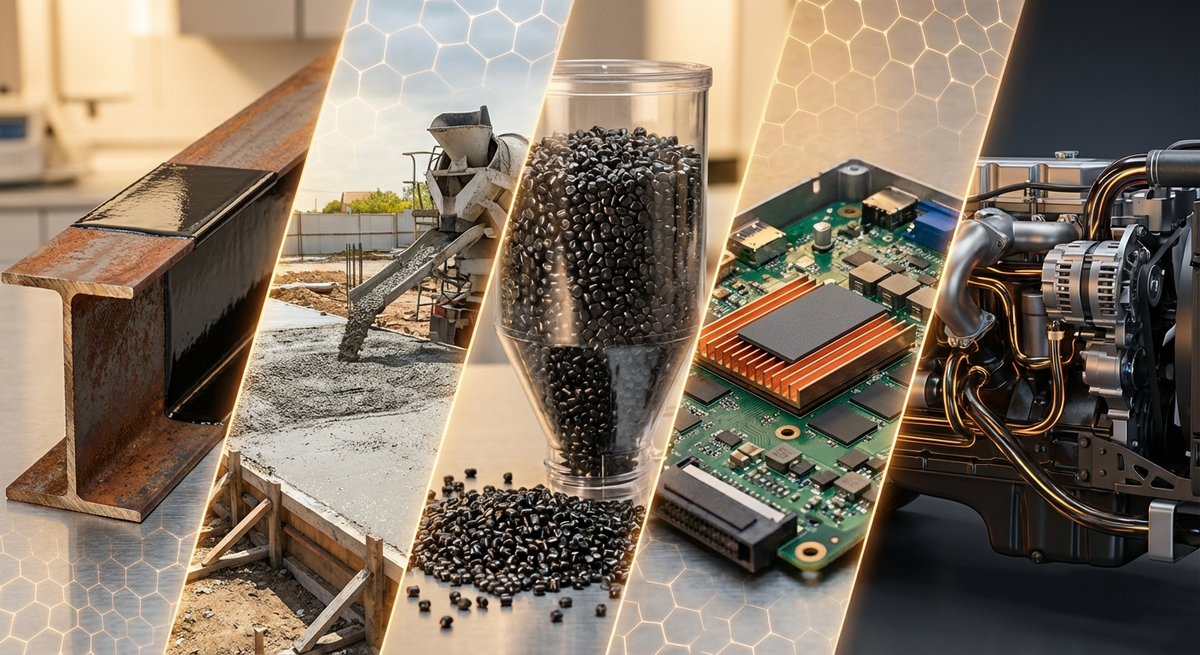
For years, graphene has been described as a miracle material. In reality, most companies do not fail because graphene lacks potential—they fail because they pick applications that are too complex, over-regulated, or too expensive to qualify in the first sales cycle. Success in commercializing novel materials like graphene hinges on strategic market entry. The initial goal should always be to generate revenue and prove value quickly, building momentum for more ambitious projects down the line.
If the goal is near-term revenue, the right question is not “What is the most advanced graphene use case?” The right question is: “Where can graphene be added today with minimal process change and a clear ROI story?” This pragmatic approach distinguishes successful graphene ventures from those that get bogged down in protracted development cycles. Focusing on immediate, tangible benefits allows businesses to establish a foothold and demonstrate graphene’s practical utility.
Based on current market signals and existing commercial products, five categories stand out as true low-hanging fruit. These applications represent opportunities where graphene can deliver immediate, measurable improvements without requiring a complete overhaul of existing manufacturing processes or supply chains. They offer a clear pathway to market adoption and revenue generation, capitalizing on existing customer needs and infrastructure.
What “low-hanging fruit” means in graphene commercialization
A low-hanging-fruit graphene application usually has five traits:
1. Drop-in adoption (no major equipment redesign)
2. Existing customer pain (corrosion, heat, wear, recycled polymer weakness, etc.)
3. Easy pilot pathway (small trial, measurable KPI)
4. Procurement-ready buyers (maintenance, plant managers, converters, fleets)
5. Fast ROI narrative (cost savings, durability, lower failures, ESG value)
With that lens, these five markets are the most accessible right now. They represent sectors where graphene can seamlessly integrate into current workflows, addressing critical issues that customers are actively seeking solutions for. The ability to demonstrate a rapid return on investment is paramount, making these applications particularly attractive for early commercialization efforts.
1) Anti-corrosion primer coatings (automotive + metal maintenance)
Why it is easy:
Graphene-enhanced primer can be used in nearly the same workflow as conventional primer. This means body shops, industrial painting contractors, and maintenance teams do not need to retrain around a brand-new application process or invest in specialized equipment. The graphene is typically incorporated as an additive into existing resin systems, maintaining familiar viscosity and drying characteristics. This seamless integration drastically reduces the barrier to adoption, allowing for swift implementation.
Why customers buy:
Corrosion is a daily cost center for countless industries—leading to expensive rework, frequent repaint cycles, critical asset downtime, and significant warranty risk. If coating life can be extended by a substantial margin, the value proposition becomes immediately obvious and compelling. Graphene’s impermeable structure and barrier properties create a superior protective layer, dramatically slowing down the corrosive ingress of oxygen and moisture. This translates directly into tangible cost savings and enhanced asset longevity.
Practical buyer profile:
• Auto body repair shops looking for competitive edge and reduced callbacks.
• Fleet maintenance teams responsible for trucks, buses, and heavy equipment, aiming to extend vehicle lifespan and reduce operational costs.
• DIY and light industrial metal maintenance users seeking superior protection for infrastructure, machinery, and various metal assets.
• Manufacturers of metal components requiring enhanced durability and corrosion resistance for their products.
Commercial proof:
Graphene anti-corrosion primers are already sold in standard channels, available from established distributors and specialty coating suppliers. This category has unequivocally crossed from a speculative "R&D idea" to a proven, shelf-ready product that customers are actively purchasing and applying. The existence of multiple commercial offerings validates the market demand and technical feasibility, marking it as a mature low-hanging fruit.
2) Graphene concrete admixtures for ready-mix slabs
Why it is easy:
Integrating graphene into concrete is remarkably straightforward, typically achieved by dispersing it into existing admixture formulations. Ready-mix concrete plants can then incorporate these enhanced admixtures into their standard batching processes without requiring any significant modifications to their equipment or operational protocols. This means no capital expenditure for new mixers or specialized handling systems, making adoption frictionless for a traditionally conservative industry. The familiarity of the process accelerates acceptance and scales deployment.
Why customers buy:
Graphene-enhanced concrete offers substantial improvements in compressive and tensile strength, durability, and resistance to water ingress and cracking. This translates directly into more robust and longer-lasting structures, requiring less material for equivalent performance or providing superior longevity for the same volume. For customers, this means reduced construction costs, lower long-term maintenance expenses, and a significantly smaller carbon footprint due to extended service life and potentially less material usage. The environmental, social, and governance (ESG) benefits are also a strong selling point, aligning with modern corporate sustainability goals.
Practical buyer profile:
• Ready-mix concrete suppliers seeking to differentiate their products with superior performance and offer value-added solutions to their clients.
• Civil engineering firms and large-scale construction project managers focused on infrastructure development (bridges, roads, buildings) where durability and longevity are paramount.
• Developers of commercial and residential properties looking for advanced materials that reduce lifecycle costs and enhance structural integrity.
• Government entities and public works departments responsible for maintaining critical infrastructure and demanding materials with extended service intervals.
Commercial proof:
Several pioneering companies globally already market and supply graphene-enhanced concrete admixtures, demonstrating successful real-world applications in various construction projects. These products have moved beyond experimental phases, appearing in commercial buildings, road surfaces, and specialized industrial flooring. The growing portfolio of completed projects and available products provides compelling evidence of market readiness and commercial viability for this application.
3) Graphene-Enhanced Polymer Composites
Why it is easy:
Graphene can be seamlessly compounded into a vast array of thermoplastic and thermoset resins using existing polymer processing equipment, such as twin-screw extruders or injection molding machines. The integration typically involves adding graphene as a masterbatch or directly dispersing it into the polymer matrix. This "drop-in" approach eliminates the need for significant capital investment in new manufacturing lines or complex process re-engineering for plastic compounders and product manufacturers. The simplicity of adoption is a key driver for its commercial appeal.
Why customers buy:
The primary motivation for customers is the ability to significantly upgrade the properties of their existing polymer products. Graphene can impart enhanced mechanical strength, stiffness, thermal conductivity, electrical conductivity, and improved barrier properties against gases and liquids. Crucially, it offers a powerful solution for improving the mechanical integrity and overall performance of recycled polymers, elevating them to near-virgin material quality. This not only provides a cost-effective alternative to new resins but also contributes significantly to sustainability goals and the circular economy.
Practical buyer profile:
• Plastic compounders and masterbatch producers looking to create advanced materials with superior performance characteristics for their diverse customer base.
• Automotive component manufacturers requiring lighter, stronger, and more durable plastics for interior and exterior parts, contributing to fuel efficiency and safety.
• Packaging producers seeking improved barrier properties for food and beverage containers, extending shelf life and reducing waste.
• Manufacturers of consumer electronics and goods where enhanced durability, thermal management, or lightweighting are critical design considerations.
• Construction material suppliers developing advanced polymer-based solutions for pipes, profiles, and structural elements with extended service life.
Commercial proof:
The market for graphene-enhanced polymer masterbatches and finished composite parts is robust and rapidly expanding. Numerous suppliers offer graphene-infused filaments for 3D printing, high-performance automotive parts, and specialized industrial components. These products demonstrate that graphene can effectively enhance a wide range of polymers, providing tangible benefits that justify its inclusion and confirming its status as a commercially viable additive in the polymer industry.
4) High-Performance Graphene Lubricants and Greases
Why it is easy:
Graphene’s integration into lubricants and greases is a classic example of a "drop-in" additive application. It can be finely dispersed into existing oil and grease formulations using standard blending equipment, without necessitating any new or specialized machinery for lubricant manufacturers. This ease of incorporation allows for rapid product development and market deployment, bypassing the prohibitive costs and delays associated with radical process changes. The compatibility with current production lines is a significant advantage.
Why customers buy:
Customers invest in graphene-enhanced lubricants and greases for a direct and measurable return on investment through improved operational efficiency and reduced maintenance. Graphene significantly reduces friction and wear within machinery, leading to extended equipment lifespan, lower energy consumption due to less resistance, and reduced frequency of lubrication and part replacement. These benefits translate into substantial cost savings, minimized downtime, and enhanced overall productivity for industrial operations and vehicle fleets. The superior performance in extreme conditions also offers a crucial reliability advantage.
Practical buyer profile:
• Industrial machinery operators in sectors like manufacturing, mining, and heavy industry, seeking to optimize asset performance and extend the life of critical components.
• Fleet managers for transportation and logistics companies, aiming to reduce fuel consumption, minimize engine wear, and extend vehicle service intervals.
• Automotive service centers and specialty shops offering premium lubrication solutions for enhanced engine protection and performance.
• Heavy equipment maintenance teams responsible for construction, agricultural, and earth-moving machinery, where reliability and reduced wear are paramount.
• Manufacturers producing components with demanding lubrication requirements, such as bearings, gears, and hydraulic systems.
Commercial proof:
A growing number of graphene-enhanced engine oils, industrial lubricants, and specialty greases are already available on the commercial market. These products have undergone rigorous performance testing and are being adopted by a diverse range of users, from individual consumers to large industrial enterprises. The positive feedback and repeat purchases validate the efficacy and commercial viability of graphene as a performance-enhancing additive in the vast lubricants market.
5) Graphene for Advanced Thermal Management
Why it is easy:
Graphene can be readily integrated into various thermal management solutions using established manufacturing techniques. This includes its use in thermal interface materials (TIMs), heat sinks, thermally conductive coatings, or as an additive in polymer composites designed for heat dissipation. The processes typically involve dispersion, coating, or compounding, which are familiar to manufacturers in the electronics and materials sectors. This adaptability to existing production methods significantly lowers the barrier to entry, allowing for quick deployment of enhanced products.
Why customers buy:
In an increasingly miniaturized and powerful world, managing heat is a critical challenge. Customers seek graphene solutions because its exceptional thermal conductivity enables superior heat dissipation, preventing overheating, extending the operational life of sensitive electronic components, and improving overall device performance. Effective thermal management also allows for more compact designs and greater power density, which are highly valued in consumer electronics, automotive systems, and data center infrastructure. The reduction in thermal stress leads to greater reliability and fewer failures.
Practical buyer profile:
• Electronics manufacturers (e.g., laptops, smartphones, LEDs, gaming consoles) requiring highly efficient heat dissipation to prevent throttling and extend product lifespan.
• Automotive electronics suppliers developing advanced driver-assistance systems (ADAS) and electric vehicle components that generate significant heat.
• Data center operators and server manufacturers striving to improve cooling efficiency, reduce energy consumption, and enhance the reliability of their computing infrastructure.
• Industrial equipment designers working on power electronics, motors, and machinery where precise temperature control is essential for optimal performance and safety.
• Aerospace and defense contractors needing lightweight and highly effective thermal solutions for mission-critical systems operating in extreme environments.
Commercial proof:
Graphene-based thermal interface materials (TIMs), thermally conductive films, and heat spreaders are already commercially available from specialized suppliers. These products are being adopted in high-performance electronics and demanding industrial applications, showcasing their ability to effectively address critical heat management challenges. The ongoing demand for smaller, more powerful, and more reliable devices continues to drive the market for graphene-enhanced thermal solutions, solidifying its position as a valuable commercial application.
Frequently Asked Questions about Graphene Commercialization
Q1: What makes graphene a "miracle material" and how does it achieve these improvements?
A1: Graphene earned its "miracle material" moniker due to its extraordinary combination of properties, including exceptional strength, electrical conductivity, thermal conductivity, and impermeability, all within a single-atom-thick structure. It achieves these improvements by enhancing the fundamental properties of the host material at a nanoscale. For instance, in coatings, its barrier properties prevent corrosion; in polymers, it creates strong linkages to improve mechanical strength; and in thermal management, its atomic lattice efficiently conducts heat away. Its unique two-dimensional structure allows it to interact with materials in ways that bulk additives cannot.
Q2: How does graphene typically improve existing products without requiring major process changes?
A2: Graphene's strength lies in its ability to function as an additive, often in very small quantities, integrating seamlessly into existing material formulations and manufacturing workflows. For example, it can be dispersed into liquids like paints or lubricants, or compounded into solid polymers. This "drop-in" approach means manufacturers do not need to retool their entire production line or retrain their workforce extensively. The improvements come from graphene’s nanoscale interaction with the host material, enhancing its properties without altering the macro-level processing steps.
Q3: What are the main challenges in commercializing graphene, despite these "low-hanging fruit" opportunities?
A3: Despite the clear opportunities, commercializing graphene still faces challenges, primarily related to ensuring consistent quality and scalability of production, achieving effective and uniform dispersion in host materials, and educating the market on its specific benefits and ROI. The perception of graphene as a high-cost material, even when used in small quantities, can also be a hurdle. Overcoming these requires robust quality control, advanced dispersion techniques, and clear communication of the value proposition to target industries. Regulatory pathways, while less complex for "low-hanging fruit," still require diligence.
Q4: Is graphene expensive for these "low-hanging fruit" applications, and how does the cost justify its use?
A4: While graphene itself can appear to have a high per-kilogram price, its effectiveness often requires very small loading percentages (e.g., 0.05% to 1% by weight) in these "low-hanging fruit" applications. This means the actual cost addition per unit of finished product is often negligible, especially when weighed against the significant performance benefits. The justification comes from the clear return on investment: extended product lifespan, reduced maintenance, lower energy consumption, improved reliability, and enhanced sustainability all contribute to substantial long-term cost savings that far outweigh the initial material expense.
Q5: What is the environmental impact of using graphene in these applications, particularly in terms of sustainability?
A5: Graphene’s environmental impact is generally positive, particularly in the context of these low-hanging fruit applications. By enhancing durability and performance, it helps extend the lifespan of products, reducing waste and the need for frequent replacements. In concrete, it can allow for less material usage while maintaining strength, lowering embodied carbon. In polymers, it can upgrade recycled plastics, promoting circular economy principles. While the production of graphene itself requires energy, the overall lifecycle benefits—such as reduced material consumption, lower energy use in operations, and minimized waste—often lead to a net positive environmental outcome.
Conclusion
The path to widespread graphene adoption is not paved with theoretical breakthroughs alone, but with tangible, market-ready solutions. By focusing on "low-hanging fruit" applications, the graphene industry can bypass common commercialization pitfalls, demonstrating immediate value and securing near-term revenue streams. The five categories outlined—anti-corrosion coatings, concrete admixtures, polymer composites, lubricants, and thermal management—represent strategic entry points where graphene's unique properties translate into clear, measurable benefits for existing industries.
These applications exemplify how graphene can be integrated as a high-impact additive with minimal disruption to current manufacturing processes. They address pervasive customer pain points, offer straightforward pilot pathways, and provide compelling ROI narratives. As companies continue to prove the commercial viability of these accessible applications, the foundation for more advanced and transformative graphene technologies will be firmly established. The future of graphene is not just about its potential, but about its immediate, practical utility in solving today's industrial challenges.