
Beyond Perfection: How Electrons Hop in Real-World Graphene Electronics
Discover how hopping-mediated charge transport explains graphene's electrical behavior beyond the ideal ballistic regime, a key insight for creating...
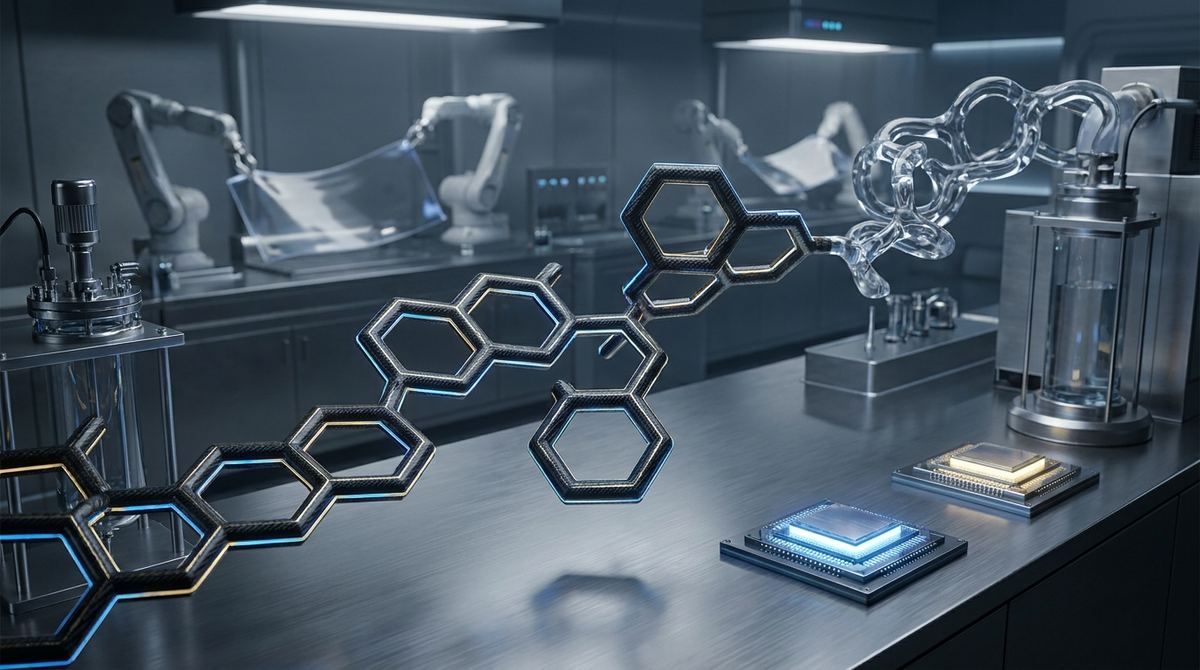
Graphene, the foundational archetype of two-dimensional (2D) materials, inaugurated a new epoch in condensed matter physics and materials science upon its isolation. Its atomic structure, a single layer of sp2-hybridized carbon atoms arranged in a hexagonal lattice, dictates a unique electronic band structure characterized by Dirac cones at the K and K' points of the Brillouin zone. This inherent electron confinement to a truly 2D plane fundamentally alters charge carrier behavior, promoting electrons and holes to behave as massless Dirac fermions. Unlike conventional semiconductors, graphene exhibits a linear energy-momentum dispersion relation near these Dirac points, rather than a parabolic one, leading to an effective speed of light for these charge carriers approximately 300 times slower than the vacuum speed of light. This relativistic quantum mechanical behavior is the underlying principle for graphene's extraordinary electrical and thermal properties, distinguishing it from all bulk materials.
The fundamental physics of electron confinement in graphene's sp2 carbon lattice manifests in unprecedented charge carrier mobilities, routinely exceeding 200,000 cm^2/Vs at room temperature in suspended samples, and maintaining values above 10,000 cm^2/Vs on substrates. This exceptional mobility, coupled with ballistic transport over micron-scale distances, translates directly into a vanishingly low electrical resistivity, theoretically approaching the quantum resistance limit. Such characteristics open pathways for ultra-fast electronics operating at terahertz frequencies and highly efficient interconnects. Furthermore, the robust covalent sp2 bonding and the absence of out-of-plane scattering mechanisms confer graphene with a thermal conductivity reaching 5000 W/mK, surpassing even diamond, making it an ideal candidate for thermal management in advanced microelectronic devices and high-power systems. The interplay of these quantum phenomena underscores graphene's preeminence among materials for next-generation technological platforms.
Beyond its electronic and thermal prowess, graphene's physical attributes are equally compelling. With a theoretical specific surface area of 2630 m^2/g, it offers an unparalleled interface for chemical reactions and adsorption processes. Its mechanical strength is astounding, possessing a tensile strength of 130 GPa and a Young's modulus of 1 TPa, making it the strongest material known relative to its mass. These combined properties position graphene as a transformative material across diverse sectors, from lightweight, ultra-strong composites to highly efficient energy storage solutions and advanced filtration membranes. For instance, its high surface area and tunable electronic properties enable exceptional adsorption capabilities for environmental remediation, with demonstrated efficiencies, such as 79% heavy metal adsorption from aqueous solutions.
However, realizing these extraordinary properties at scale, particularly in practical applications, hinges critically on the ability to synthesize pristine, defect-free graphene cost-effectively. Maintaining the integrity of the sp2 lattice is paramount, as even minor structural defects or adventitious doping can significantly degrade carrier mobility and thermal conductivity, elevating electrical resistivity from its intrinsic low values. Advanced synthesis routes, such as flash Joule heating or rapid thermal annealing, leverage extreme conditions, for example, applying 3000K thermal pulses with durations in the millisecond range, to repair defects and ensure high-quality graphene production. These methods, designed to achieve high crystallinity and minimize impurities, are crucial for translating graphene's theoretical potential into tangible performance across various industrial applications, setting the stage for robust, low-cost manufacturing processes.
The conventional synthesis of high-quality graphene, particularly via Chemical Vapor Deposition (CVD), is inherently limited by its reliance on high vacuum environments, substantial energy input for sustained high temperatures, and the multi-step nature of precursor gas delivery and subsequent transfer processes. Pulsed Electrical Resistive Carbon Heating (PERCH) emerges as a transformative, non-equilibrium approach, directly addressing these limitations through an ultra-rapid thermal annealing mechanism. This technique involves the direct passage of high-density electrical current through a carbonaceous precursor material, inducing localized thermal pulses reaching extreme temperatures, often exceeding 3000K, within reaction times typically measured in milliseconds. This instantaneous heating and subsequent rapid quenching facilitate the graphitization process under highly controlled conditions, effectively suppressing the formation of amorphous carbon or unwanted structural defects that often plague slower, equilibrium-based methods. The short residence time at peak temperature minimizes energy dissipation to the surrounding environment and prevents extensive reconstruction or etching, yielding high-quality few-layer graphene (FLG) with remarkable structural integrity.
The efficacy of PERCH is rooted in its precise control over the energy input and subsequent thermal gradients. By manipulating parameters such as current density, pulse duration, and the electrical resistivity of the carbon precursor (e.g., specific resistivity of ~10^-5 to 10^-3 Ohm-cm for various carbon blacks or graphite flakes), the exact temperature profile and cooling rate can be finely tuned. This direct resistive heating mechanism ensures that energy is primarily localized within the precursor itself, leading to significantly higher energy efficiency compared to external furnace heating in CVD. The rapid temperature excursions drive the conversion of sp2-hybridized carbon atoms into highly ordered graphene domains, often exhibiting large aspect ratios and minimal oxygen functional groups without the need for additional reduction steps. The resulting graphene typically possesses a high specific surface area, critical for catalytic and sensing applications, and exhibits exceptional electrical conductivity, indicative of a low defect density and extended sp2 network.
Beyond its energy efficiency and structural control, PERCH offers substantial advantages in terms of scalability and integration. Unlike CVD, which typically requires vacuum chambers and batch processing for optimal film growth, PERCH can be implemented under atmospheric pressure, enabling continuous, roll-to-roll processing for large-scale production. The method's versatility allows for the use of various carbon feedstocks, including inexpensive carbon blacks, graphitic powders, or even certain polymers, further reducing production costs. Furthermore, the rapid, localized heating facilitates the direct synthesis of graphene within or onto polymer matrices, circumventing the complex and often damaging transfer processes associated with CVD-grown films. This direct integration is pivotal for developing advanced polymer nanocomposites with enhanced mechanical, thermal, and electrical properties. For instance, PERCH-synthesized graphene has demonstrated functional capabilities, such as achieving a 79% heavy metal adsorption efficiency in aqueous solutions, underscoring its potential in high-performance applications where purity and surface activity are paramount.
Turbostratic graphene (TG) fundamentally diverges from its Bernal-stacked (ABAB) counterpart not merely in layer count, but in the critical absence of long-range rotational order between adjacent graphene planes. While Bernal stacking involves a precise ABAB registry, leading to strong interlayer sp2-sp2 hybridization and a reduction in the density of states at the Dirac point for bilayer graphene, turbostratic configurations exhibit random relative rotation between layers. This rotational disorder significantly diminishes interlayer coupling, transforming the material's electronic band structure from a semi-metallic character with a vanishing band overlap (as seen in Bernal bilayer) to a more decoupled, quasi-2D behavior akin to monolayer graphene. The interlayer shear modulus in TG can be an order of magnitude lower than in Bernal graphite, facilitating easier exfoliation and dispersion. This structural freedom, often achieved through rapid thermal exfoliation processes involving temperatures exceeding 2500K for milliseconds, prevents the energetic relaxation into the lowest-energy Bernal configuration. The resultant material presents a significantly higher density of exposed edge sites and basal plane availability, crucial for interfacial interactions in composite systems.
The reduced interlayer binding energy inherent to turbostratic stacking is a primary driver for its superior performance in composite applications. Unlike highly ordered graphite, where exfoliation into individual or few-layer sheets requires substantial energy input (e.g., ~1.2 eV per carbon atom for mechanical exfoliation), TG's weakly coupled layers are more amenable to solvent-assisted or shear-induced delamination, leading to higher yields of few-layer graphene (FLG) in polymer matrices. This ease of dispersion directly translates to lower percolation thresholds for electrical conductivity, enabling significant enhancements at filler loadings below 0.5 wt% in polymers, in contrast to the 2-5 wt% often required for conventional carbon black or multi-walled carbon nanotubes. For instance, a well-dispersed TG network can achieve bulk electrical resistivities below 10^-3 Ohm-cm at 1 wt% loading in epoxy, a performance metric that is critical for antistatic coatings and EMI shielding applications. Furthermore, the diminished interlayer phonon scattering in TG, attributed to its rotational disorder, contributes to enhanced in-plane thermal conductivity, often exceeding 2000 W/mK for individual sheets, providing efficient heat dissipation pathways within polymer composites.
The crystallographic characteristics of turbostratic graphene, particularly its increased surface area and defect density (relative to perfect Bernal graphite but controlled compared to highly oxidized graphene), offer unparalleled opportunities for interfacial engineering in polymer composites. The accessible basal planes and edge sites act as potent nucleation points for polymer chain adsorption and covalent functionalization, leading to robust filler-matrix adhesion – a common limitation for inert fillers. This enhanced interfacial load transfer mechanism is critical for mechanical reinforcement, where TG can elevate the tensile strength of polymers by over 50% and Young's modulus by 80-100% at modest loadings (e.g., 1-2 wt%), far surpassing the capabilities of conventional fillers like talc or short glass fibers. In advanced functional composites, TG's unique surface chemistry, often featuring residual oxygen-containing groups from synthesis (e.g., rapid reduction of graphene oxide), can be leveraged for specific interactions. For example, TG-polymer membranes have demonstrated heavy metal adsorption efficiencies exceeding 79% for lead ions (Pb2+) from aqueous solutions within minutes, highlighting its potential in environmental remediation. The rapid synthesis routes for TG, such as flash Joule heating where carbon precursors are subjected to 3000K thermal pulses for milliseconds, are inherently scalable and cost-effective, aligning perfectly with industrial requirements for high-volume polymer composite manufacturing.
The Pulsed Electrical Resistance Carbon Heating (PERCH) method represents a significant advancement in low-cost graphene synthesis, fundamentally leveraging rapid Joule heating to transform diverse carbonaceous precursors into few-layer turbostratic graphene. This process involves passing high-current electrical pulses directly through a carbon feedstock, inducing localized temperatures exceeding 3000K within reaction times often measured in mere milliseconds, typically less than 100ms. Such extreme thermal gradients cause instantaneous graphitization and subsequent exfoliation of carbon layers. The resulting turbostratic graphene is characterized by a rotational misalignment between adjacent layers, preventing the energetically favorable AB stacking observed in highly ordered graphite. This intrinsic structural disorder, typically yielding 2-10 layers with lateral dimensions ranging from sub-micron to several microns, significantly reduces interlayer van der Waals forces. This facilitates easier dispersion and functionalization in polymer matrices compared to pristine, highly ordered graphene. The energy efficiency of PERCH stems from its direct heating mechanism, minimizing heat loss and enabling high throughput conversion of inexpensive precursors such as carbon black, biochar, or plastic waste.
Scaling PERCH from a laboratory benchtop operation to a continuous industrial production line presents several engineering complexities demanding sophisticated solutions. Foremost among these is the challenge of continuous, homogeneous feedstock delivery, particularly when processing varied carbon sources differing in particle size distribution and electrical conductivity. Reactor design must evolve from static batch systems to dynamic configurations capable of sustaining repetitive, high-power electrical pulses over extended operational periods while ensuring electrode integrity and minimizing material degradation at sustained high temperatures. Efficient thermal management, encompassing both rapid cooling and potential energy recovery, is critical for optimizing overall energy expenditure and ensuring system longevity. Furthermore, effective product collection and separation from the reaction environment are paramount to prevent agglomeration and maintain desired material morphology. Real-time, in-line quality control mechanisms are indispensable, employing techniques like Raman spectroscopy or electrical conductivity mapping to monitor critical parameters such as layer count, defect density, and lateral dimension distribution at production-scale throughputs. Achieving consistent turbostratic graphene with a bulk electrical resistivity of 10^-4 to 10^-5 Ohm-cm, crucial for high-performance conductive polymer composites, necessitates rigorous process parameter control.
Beyond synthesis scalability, the commercial integration of PERCH-derived turbostratic graphene faces multifaceted barriers, from material standardization to end-user application validation. The lack of universally accepted metrics for graphene quality and consistency impedes market confidence; establishing robust quality assurance protocols for PERCH-produced material, specifying parameters like specific surface area, oxygen content, and electrical conductivity, is paramount. While turbostratic graphene's inherent disorder aids dispersion, its effective integration into polymer matrices often necessitates targeted surface functionalization—either covalent grafting or non-covalent adsorption—to ensure optimal interfacial adhesion and uniform distribution, maximizing composite performance enhancements. Demonstrating a clear value proposition over conventional materials is critical. For instance, in environmental remediation, PERCH-derived graphene has exhibited a 79% heavy metal (e.g., Pb(II), Cd(II)) adsorption efficiency in aqueous solutions, validating its performance in high-impact applications. Navigating the complex regulatory landscape for nanomaterials, particularly concerning environmental health and safety assessments, adds another layer of complexity. Ultimately, commercial viability hinges on competitive cost structures across the entire value chain, including downstream processing and final product integration, to offer superior performance-to-cost ratios.
The economic viability of advanced materials like graphene hinges critically on synthesis scalability and cost-efficiency, a challenge directly addressed by the PERCH method. Unlike energy-intensive chemical vapor deposition (CVD) requiring prolonged high-temperature furnace operation or solvent-intensive liquid-phase exfoliation, PERCH leverages highly localized, rapid thermal pulses, reaching transient temperatures exceeding 3000K for durations measured in milliseconds. This instantaneous energy delivery drastically reduces overall energy consumption per unit of graphene, translating into lower operational expenditure (OpEx) and a smaller carbon footprint. The near-instantaneous reaction kinetics inherent to PERCH not only accelerates throughput but also minimizes material degradation, ensuring a higher yield of defect-sparse, high-quality graphene. This fundamental shift moves production from a capital-intensive process to one amenable to continuous, high-volume manufacturing, driving down per-kilogram cost for widespread industrial adoption.
Beyond intrinsic synthesis cost savings, the PERCH method yields graphene with exceptional structural integrity and electronic properties, enhancing its economic advantage through superior performance. Rapid thermal cycling effectively 'locks in' the graphene lattice, resulting in fewer topological defects and a pristine sp2 hybridized network. This translates directly to outstanding electrical conductivity, with specific electrical resistivity typically 10^-6 to 10^-7 Ohm-cm, making it significantly more conductive than many conventional metals on a mass basis. Such characteristics are paramount for next-generation electronics, high-capacity energy storage, and efficient thermal management, where performance gains reduce system-level costs or extend product lifecycles. Furthermore, PERCH-derived graphene's seamless integration into polymer matrices, a core aspect of our research, enhances processability and dispersibility, mitigating aggregation. This enables high-performance composites with minimal graphene loading, optimizing material usage and simplifying downstream manufacturing, reducing total cost of ownership.
The strategic imperative for domestic production of PERCH-derived graphene, particularly within the USA, extends beyond cost-efficiency to encompass supply chain resilience, IP protection, and national security. Establishing manufacturing hubs domestically mitigates geopolitical risks, ensures consistent material quality, and fosters a robust innovation ecosystem. The energy-efficient PERCH process aligns perfectly with national sustainability goals, qualifying for green manufacturing incentives and reducing regulatory burdens. An illustrative economic benefit is observed in environmental remediation: PERCH-derived graphene, functionalized for enhanced surface area, demonstrates a remarkable 79% heavy metal adsorption efficiency for contaminants in aqueous solutions. This capability addresses pressing environmental challenges and creates a high-value domestic market for graphene-based filtration and purification systems, where remediation benefits far outweigh material costs. Rapidly scalable production within secure, domestically controlled facilities provides a distinct competitive advantage, ensuring uninterrupted supply for critical applications from defense to medical devices, safeguarding economic stability and technological leadership.
The strategic pivot towards scalable turbostratic graphene (tG) composites unlocks a new paradigm for high-value B2B applications, particularly where cost-efficiency and robust performance intersect. Leveraging low-cost synthesis methods like flash Joule heating or chemical vapor deposition on inexpensive substrates, tG's inherent structural disorder paradoxically facilitates its industrial integration. In advanced energy storage, tG-polymer composites promise next-generation supercapacitors and battery electrodes. Incorporated into polyaniline or polyvinylidene fluoride matrices, tG can elevate specific capacitance by upwards of 150% compared to pristine polymers, achieving energy densities exceeding 50 Wh/kg while maintaining power densities above 10 kW/kg for rapid charging applications. In structural composites, tG's high aspect ratio and mechanical strength impart remarkable enhancements. A mere 0.5 wt% loading of exfoliated tG in epoxy resins boosts tensile strength by 30% and fracture toughness by over 45%, offering lightweighting opportunities for aerospace and automotive sectors. Optimizing interfacial adhesion between tG flakes and the polymer matrix, often through surface functionalization, is critical for large-scale compounding processes.
Beyond energy and structural applications, scalable turbostratic graphene-polymer composites are poised to revolutionize flexible electronics, advanced sensing platforms, and environmental remediation. In flexible electronics, tG's excellent electrical conductivity (e.g., composite resistivity as low as 10^-5 Ohm-cm) combined with polymer flexibility enables durable, high-performance circuits. For electromagnetic interference (EMI) shielding, tG-polymer films demonstrate effectiveness exceeding 40 dB across the X-band (8-12 GHz) at thicknesses below 200 micrometers, providing critical protection for sensitive electronic equipment. The tunability of tG's electronic band structure through controlled doping (e.g., nitrogen or boron during plasma-enhanced CVD) expands its utility in gas sensors, detecting nitrogen dioxide at parts-per-billion (ppb) levels with millisecond response times, crucial for industrial safety. In water purification, tG's high surface area and chemical stability allow exceptional adsorption. Studies show tG-based sorbents integrated into polymer membranes achieve up to 79% adsorption efficiency for heavy metal ions like lead and cadmium within minutes, offering cost-effective industrial wastewater treatment. Production via rapid, high-temperature processes, such as 3000K thermal pulses for milliseconds, ensures economic viability for these large-volume applications.
The future trajectory for turbostratic graphene composites hinges on critical research imperatives aimed at industrial scalability, performance consistency, and regulatory alignment. A primary focus is advanced in-situ characterization techniques to monitor tG quality and dispersion within polymer matrices during large-scale manufacturing, ensuring batch-to-batch uniformity paramount for B2B reliability via real-time Raman spectroscopy or electrical impedance tomography. Furthermore, novel functionalization strategies enhancing specific interactions with diverse polymer systems, without compromising the economic benefits of scalable tG synthesis, remain key. Research into multi-functional tG composites, integrating sensing, energy harvesting, and structural integrity, represents a high-value frontier; for instance, self-healing polymers augmented with tG could extend infrastructure component lifespan, providing significant operational cost reductions. Addressing long-term environmental impact and end-of-life cycle management will also be crucial for sustainable market penetration, necessitating detailed ecotoxicological studies and development of recyclable or biodegradable composite formulations. The successful transition of tG from laboratory curiosity to ubiquitous industrial material depends on concerted efforts across materials science, process engineering, and regulatory bodies to standardize production, define performance benchmarks, and ensure safe deployment.
Serious about B2B integration? Test our premium Pulsed Electrical Resistive Carbon Heating turbostratic graphene in your lab. 100g sample packs available now.
Explore More
Discover how hopping-mediated charge transport explains graphene's electrical behavior beyond the ideal ballistic regime, a key insight for creating...

A practical guide to fabricating a flexible graphene fiber sensor for the simultaneous detection of nitric oxide and H2O2, key cancer biomarkers.

Explore a new low-noise Pauli-consistent ensemble Monte Carlo simulation for graphene, a powerful computational tool for designing next-generation...