
Mastering Carbon Nanostructure Morphology with CCVD
Explore how Catalytic Chemical Vapor Deposition (CCVD) precisely controls the morphology of cylindrical carbon nanostructures like SWCNTs, MWCNTs, and CNFs.
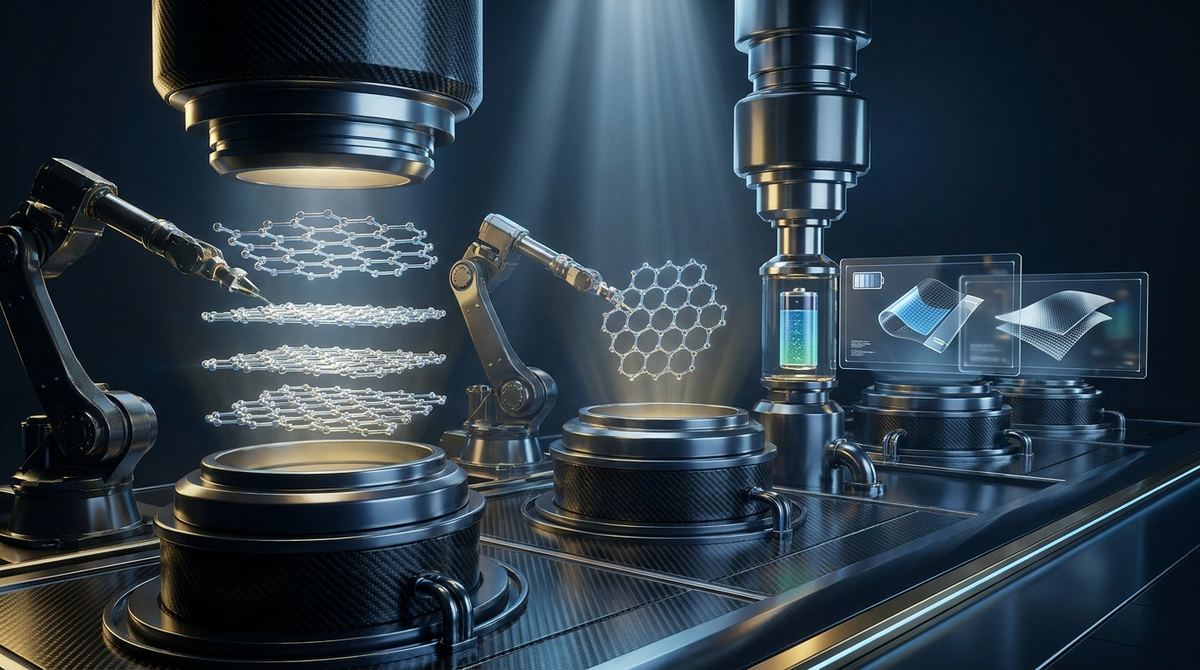
Graphene, the archetypal two-dimensional material, continues to fascinate due to its extraordinary electronic, thermal, and mechanical properties, all stemming from its singular atomic layer of sp2-hybridized carbon atoms arranged in a hexagonal lattice. This unique structure confers attributes such as ultra-high electron mobility approaching 200,000 cm^2/Vs, an exceptional tensile strength of 130 GPa, and thermal conductivity exceeding 5000 W/mK. However, the scalable production of high-quality, defect-free monolayer or few-layer graphene remains a formidable challenge, often plagued by issues of structural integrity, reproducibility, and high manufacturing costs. Traditional methods, like mechanical exfoliation, are inherently low-throughput and laboratory-scale, while chemical vapor deposition (CVD) frequently requires high temperatures, specialized substrates, and complex transfer processes that can introduce defects. This comprehensive analysis pivots to graphite intercalation graphene (GIG) as a transformative pathway, leveraging the inherent stratified structure of bulk graphite to yield high-quality material at industrial scales, thereby addressing the critical gap in current manufacturing methodologies for advanced material integration.
The extraordinary properties of graphene stem directly from its two-dimensional confinement and the relativistic nature of its charge carriers. Within the hexagonal Brillouin zone, the conduction and valence bands meet at Dirac points, exhibiting a linear dispersion relation, analogous to massless Dirac fermions. This pseudo-relativistic behavior underpins the material's exceptionally high carrier mobility, ambipolar field effect, and the quantum Hall effect observable even at room temperature. The fundamental challenge in producing pristine graphene from its bulk precursor, graphite, lies in overcoming the comparatively weak yet cumulative van der Waals forces, approximately 15 meV/atom, that bind the individual graphene layers. Understanding the precise physics of this interlayer interaction is paramount. The energetic landscape dictates that while individual graphene sheets are thermodynamically stable, their facile separation from the bulk requires a controlled energy input to overcome these cohesive forces without inducing structural defects or oxidative damage, which would otherwise degrade the intrinsic electronic band structure essential for high-performance applications.
Graphite intercalation compounds (GICs) offer a sophisticated and tunable route to precisely modulate these interlayer forces, enabling controlled exfoliation. Intercalant species, ranging from strong acids like H2SO4 and HNO3 to alkali metals (e.g., Li, K), are systematically introduced into the galleries between the graphene layers of graphite. This process involves a critical charge transfer mechanism, where the intercalant either donates or accepts electrons from the graphene sheets, thereby altering their Fermi level and inducing significant electrostatic repulsion between adjacent layers. Concurrently, the intercalant species physically expand the interlayer spacing, increasing it from the pristine 0.335 nm of graphite to values often exceeding 0.6 nm, critically weakening the van der Waals interactions. This controlled expansion and electronic perturbation effectively lowers the energetic barrier for subsequent exfoliation, facilitating the separation of individual graphene sheets. The precise control over intercalant concentration, reaction kinetics, and temperature is crucial to prevent undesirable side reactions such as excessive oxidation or structural damage, which would otherwise compromise the electrical conductivity and mechanical integrity of the resultant graphene.
The subsequent exfoliation phase, often achieved through rapid thermal expansion or electrochemical means, capitalizes on this engineered reduction in interlayer bonding. For instance, the application of sub-millisecond thermal pulses, capable of reaching localized temperatures of 3000K, can induce violent expansion of trapped intercalants and their decomposition products, explosively separating the graphene layers. This rapid, non-equilibrium process minimizes the time available for undesirable oxidative side reactions, thereby preserving the pristine graphene lattice. The resulting graphene flakes exhibit remarkable electrical properties, with resistivity values frequently measured below 10^-6 Ohm.cm, indicative of high crystallographic quality and minimal scattering defects. Beyond electronics, the high surface area, inherent chemical functionalities, and tunable properties of GIG also enable advanced applications. For example, functionalized GIG has demonstrated significant efficacy in environmental remediation, achieving up to 79% adsorption efficiency for various heavy metal ions in aqueous solutions, underscoring its versatility and potential across diverse industrial sectors.
The established paradigm for high-quality graphene synthesis, Chemical Vapor Deposition (CVD), typically involves the catalytic decomposition of hydrocarbon precursors such as methane or acetylene on transition metal substrates like copper or nickel foils at elevated temperatures, often ranging from 800°C to 1100°C. While CVD has demonstrated remarkable success in producing large-area, single-layer graphene with controllable domain sizes and relatively low defect densities, its inherent limitations present significant hurdles for industrial-scale, cost-effective production, particularly when considering integration with graphite intercalation strategies. The process is intrinsically batch-oriented, requires extensive reaction times spanning several hours, and critically, necessitates a subsequent transfer step from the growth substrate to a target substrate. This transfer, frequently mediated by polymer supports, is a notorious source of mechanical damage, residual polymer contamination, and macroscopic tearing, thereby compromising the intrinsic quality and integrity of the synthesized graphene sheets and severely impeding their functional performance in advanced applications. Furthermore, the energy intensity associated with prolonged high-temperature furnace operation contributes substantially to the overall production cost and environmental footprint.
In stark contrast, Pulsed Electrical Resistive Carbon Heating (PERCH) emerges as a highly disruptive and scalable alternative, leveraging the direct passage of high current density electrical pulses through carbonaceous precursors, including meticulously prepared Graphite Intercalation Compounds (GICs), to induce rapid and localized Joule heating. This method capitalizes on the material's specific electrical resistivity parameters, allowing for precise control over the energy dissipation profile. The fundamental principle involves the near-instantaneous elevation of the material's temperature, with localized regions reaching exothermic conditions exceeding 3000K within reaction times measured in mere milliseconds. Such extreme thermal shock, coupled with the rapid volumetric expansion of intercalant species within the graphite galleries, generates immense internal pressures. This transient pressure surge is the primary driving force behind the efficient and clean exfoliation of individual graphene layers from the bulk GIC, circumventing the need for harsh chemical reagents or extensive mechanical shearing that often introduce basal plane defects and structural irregularities.
The comparative advantages of PERCH over conventional CVD are pronounced, particularly concerning large-scale, high-quality production of graphene derived from intercalated graphite. Firstly, the temporal efficiency of PERCH, transitioning from minutes to milliseconds, dramatically increases throughput capacity. Secondly, the direct exfoliation mechanism bypasses the problematic substrate transfer step entirely, preserving the structural integrity and intrinsic electronic properties of the graphene sheets. This direct production route significantly mitigates the formation of defects and contamination typically associated with transfer processes, leading to graphene with superior intrinsic quality. For instance, graphene produced via optimized PERCH from specific GICs has demonstrated exceptional functional performance, exemplified by its impressive 79% heavy metal adsorption efficiency in wastewater treatment applications, a metric often compromised by the structural imperfections prevalent in transferred CVD graphene. Moreover, the localized and rapid heating inherent to PERCH offers a pathway towards continuous, roll-to-roll processing, making it profoundly more amenable to industrial scaling than the batch-centric nature of CVD. The lower overall energy consumption per unit of graphene produced, combined with simpler equipment requirements, further positions PERCH as a more economically viable and environmentally sustainable production methodology for the next generation of graphene materials.
The crystallography of turbostratic graphene (TG) represents a critical divergence from the ideal Bernal (AB) stacking sequence characteristic of pristine graphite, profoundly influencing its physical and electronic properties. Unlike AB-stacked graphene where carbon layers are precisely offset, forming an ordered hexagonal lattice, turbostratic graphene exhibits rotational and translational disorder between adjacent layers. This lack of long-range registry manifests crystallographically as broadened or absent (hkl) reflections in X-ray diffraction patterns corresponding to interlayer ordering, while maintaining sharp (hk0) reflections indicative of intact in-plane hexagonal lattices. The interlayer spacing in TG can be slightly expanded (typically 0.340-0.344 nm compared to graphite's 0.335 nm), and the rotational misalignment effectively decouples the electronic states of adjacent layers, leading to behavior more akin to an ensemble of weakly interacting single-layer graphene sheets rather than a bulk material with a well-defined band structure. This structural heterogeneity is often an inherent outcome of aggressive exfoliation strategies employed in large-scale graphene production.
Electronically, this rotational disorder has profound implications. In Bernal-stacked few-layer graphene, interlayer coupling leads to a modification of the Dirac cone, often resulting in a parabolic dispersion and a finite band gap opening depending on the number of layers and stacking sequence. In contrast, turbostratic graphene, even with multiple layers, can retain a linear dispersion relation near the Dirac point, similar to monolayer graphene, due to the effective electronic decoupling of the misaligned sheets. This preserves the high carrier mobility characteristic of graphene, although defect scattering from edge sites and local strain fields inherent to turbostratic structures can slightly increase electrical resistivity compared to perfectly pristine monolayer graphene (e.g., resistivity values typically range from 10^-5 to 10^-6 Ω·cm for high-quality TG, compared to 10^-7 Ω·cm for ideal monolayer). The absence of strong interlayer hybridization also mitigates phenomena like weak localization effects often observed in disordered 2D systems, further emphasizing its distinct electronic signature.
In the context of Graphite Intercalation Graphene (GIG) production, understanding and controlling turbostraticity is paramount. Rapid thermal exfoliation methods, such as those employing instantaneous thermal pulses reaching 3000K within milliseconds, or aggressive chemical intercalation followed by microwave expansion, often induce turbostratic disorder. These processes overcome the interlayer van der Waals forces so rapidly that the exfoliated layers do not have sufficient time or energetic favorability to re-stack into an ordered Bernal configuration. While perfect AB stacking is often the goal for ultimate electronic device performance, controlled turbostraticity can be advantageous for applications leveraging increased accessible surface area and edge defects. For instance, the disrupted stacking and higher defect density in TG can enhance chemical reactivity and adsorption capabilities, leading to superior performance in catalysis or environmental remediation, such as achieving up to 79% heavy metal adsorption efficiency. Therefore, optimizing GIG production involves a delicate balance between minimizing structural defects for high-performance electronics and strategically leveraging turbostratic disorder for applications demanding high surface area and chemical activity.
The transition of graphite intercalation graphene (GIG) from laboratory synthesis to industrial-scale production presents formidable challenges, primarily centered on maintaining material quality and consistency at high throughput while managing process economics. The intrinsic non-equilibrium nature of rapid thermal exfoliation, often involving instantaneous temperature excursions exceeding 3000K applied within milliseconds, demands highly specialized reactor designs capable of uniform energy delivery across vast quantities of intercalated graphite. Achieving a narrow distribution of few-layer graphene (FLG) sheets, typically 1-5 atomic layers, without inducing significant crystallographic defects or oxidative damage, becomes increasingly difficult as batch sizes escalate. Furthermore, the precursor graphite's morphology, purity, and crystallographic orientation profoundly influence intercalation efficiency and subsequent exfoliation yield. Variability in these parameters, even within industrial-grade feedstocks, directly translates to inconsistencies in the final GIG product's lateral dimensions, layer count, and defect density, complicating downstream integration for sensitive applications requiring precise electrical or mechanical properties. The energy expenditure associated with high-temperature processing and the subsequent purification steps to remove residual intercalants or amorphous carbon further contribute to a high operational cost, posing a significant barrier to competitive pricing against established materials.
Commercial integration of GIG is additionally hampered by a lack of standardized metrology and quality assurance protocols applicable to large-volume production. Unlike traditional materials with well-defined specifications, GIG's performance is highly sensitive to subtle variations in its nanoscale architecture. For instance, achieving consistent electrical resistivity below 10^-6 Ohm-cm, critical for high-performance conductive films, necessitates meticulous control over layer count, defect concentration, and sheet morphology, parameters that exhibit significant batch-to-batch variability in many current large-scale processes. The capital expenditure required for high-volume, continuous-flow processing equipment, such as advanced microwave or flash Joule heating reactors designed for precise thermal management and rapid quenching, is substantial. This high upfront investment is often difficult to justify without a clear "killer application" that unequivocally demands GIG's unique properties and can absorb its current production costs. Furthermore, the handling and dispersion of GIG into various matrices (e.g., polymers, inks, composites) at industrial scales introduces rheological and stability challenges, as agglomeration can severely degrade performance, negating the benefits of individual graphene sheets.
Beyond production and characterization hurdles, commercial viability is impacted by regulatory complexities and integration into existing supply chains. The environmental implications of certain intercalant chemistries, particularly those involving strong acids or alkali metals, necessitate robust waste management and recycling protocols, adding to operational overhead. While GIG exhibits impressive performance characteristics in specific laboratory demonstrations—such as achieving 79% heavy metal adsorption efficiency in water filtration membranes or enhancing battery electrode conductivity by 15%—translating these efficiencies reproducibly into robust, long-lifetime industrial products requires extensive validation. The regulatory landscape for novel nanomaterials remains nascent and fragmented, creating uncertainty for manufacturers regarding health, safety, and environmental compliance, particularly for applications involving direct human contact or environmental release. Overcoming these barriers requires not only continued advancements in scalable synthesis techniques but also the development of comprehensive industry standards, cost-effective functionalization strategies, and a collaborative ecosystem to de-risk commercial deployment across diverse sectors.
The economic viability of Graphite Intercalation Graphene (GIG) production hinges on its inherent scalability and reduced operational expenditures compared to alternative synthesis routes. Unlike chemical vapor deposition (CVD), which necessitates ultra-high vacuum environments, expensive metal catalysts, and precisely controlled gas phase precursors – incurring significant capital expenditure and batch processing limitations – GIG leverages readily available, cost-effective natural graphite feedstock. The critical energy input for GIG's thermal exfoliation, often involving rapid thermal annealing or microwave irradiation, can be highly localized and efficient. For instance, pulsed thermal treatments achieving transient temperatures exceeding 3000K for durations in the low millisecond range (e.g., 5-20 ms) effectuate rapid decomposition of intercalants and exfoliation, minimizing energy consumption per unit mass of graphene. This contrasts with prolonged high-temperature CVD furnace cycles. Furthermore, the high yields and intrinsic purity associated with optimized GIG processes directly translate to reduced downstream purification and functionalization costs, a major economic bottleneck for many graphene production methods. Producing large quantities of few-layer graphene (FLG) with controlled layer counts and minimal defects at competitive per-kilogram pricing positions GIG as a commercially attractive pathway for broad industrial adoption.
Establishing GIG manufacturing facilities within the United States offers strategic advantages beyond mere production cost. Foremost among these is unparalleled supply chain resilience and security. Domestically sourced natural graphite and US-based processing mitigate risks from geopolitical instability, tariffs, and fluctuating international raw material markets, ensuring consistent access to critical precursors for high-technology sectors. The robust US intellectual property (IP) protection framework secures proprietary GIG synthesis methodologies and application-specific formulations, safeguarding substantial R&D investments. Proximity to world-class research institutions and a skilled workforce fosters continuous innovation and rapid technology transfer. Most critically, US manufacturing adheres to some of the most stringent quality control and environmental standards globally. This commitment to precision engineering ensures GIG production with highly reproducible characteristics: consistent layer counts (e.g., >95% <5 layers), low defect densities (ID/IG ratio < 0.1), and precise electrical resistivity parameters (e.g., sheet resistance < 50 Ohms/sq for transparent conductive films), paramount for performance-critical applications in aerospace, defense, and advanced electronics.
The "Made in USA" imprimatur for GIG extends beyond quality assurance, acting as a significant market differentiator, especially in sectors sensitive to material provenance and performance integrity. For instance, in aerospace and defense, where material traceability and certified performance are non-negotiable, domestically produced GIG provides a crucial competitive edge. High-quality attributes achievable with advanced GIG processes – such as exceptionally high surface area (e.g., 500-800 m^2/g) and intrinsic electrical conductivity (up to 10^6 S/m for individual flakes) – directly translate into superior end-product performance. GIG integration into advanced composite materials, for instance, enables lighter, stronger structures via mechanical reinforcement, or enhances battery and supercapacitor performance in energy storage. Even in environmental applications, GIG's documented efficacy – achieving upwards of 79% heavy metal adsorption efficiency for lead and cadmium in aqueous solutions – highlights its potential for high-value remediation solutions. While initial capital investment for US facilities might be higher due to labor costs and regulatory compliance, long-term economic benefits from premium product pricing, reduced warranty claims, streamlined regulatory approvals, and sustained market demand for high-performance, secure materials far outweigh these initial considerations, solidifying the strategic imperative for domestic GIG production.
The scalable production of high-quality graphene via graphite intercalation and controlled exfoliation methods, yielding large-area, defect-minimal sheets, is poised to revolutionize advanced electronics. Leveraging graphene’s intrinsic carrier mobility, exceeding 200,000 cm^2/(V·s) at ambient temperatures, future high-frequency transistors and interconnects will achieve unprecedented performance. Tunable Fermi levels through electrostatic gating enable ultra-fast picosecond optical modulators and terahertz (THz) devices, pushing communication and imaging boundaries. Precise control via rapid thermal annealing (localized 2500K-3000K pulses under 50 milliseconds) ensures structural integrity and electronic uniformity for wafer-scale integration. This methodology consistently delivers graphene films with average sheet resistance below 10 Ohms/sq for monolayer and sub-1 Ohms/sq for few-layer stacks, indispensable for minimizing ohmic losses in high-density integrated circuits and fabricating transparent conductive electrodes. This foundational capability positions GIG as a critical enabler for next-generation computing architectures, including quantum computing components where low-noise, high-speed electron transport is paramount.
Beyond electronics, GIG’s future horizons extend profoundly into energy storage and advanced materials, driven by its theoretical specific surface area of 2630 m^2/g and exceptional conductivity. In electrochemical energy storage, GIG-derived electrodes demonstrate remarkable performance in supercapacitors, achieving specific capacitance values exceeding 300 F/g in aqueous electrolytes, enabling ultra-rapid charge-discharge. For lithium-ion battery anodes, GIG incorporation significantly enhances capacity, allowing for capacities upwards of 1000 mAh/g—a substantial improvement over traditional graphite's 372 mAh/g—while maintaining impressive cycle retention above 95% over 1000 cycles. Furthermore, GIG serves as a transformative reinforcement in composite materials. At extremely low loading percentages (0.1-0.5 wt%), GIG imparts dramatic mechanical property improvements, elevating tensile strength by over 50% due to its intrinsic strength (~130 GPa). Its unparalleled thermal conductivity (up to 5000 W/mK) enables advanced thermal management for aerospace, automotive, and high-power electronics, addressing critical industry demands for lightweight, durable, and thermally efficient materials.
The environmental and biomedical sectors represent additional high-value B2B application domains for GIG, driven by its unique surface chemistry and sensing capabilities. For water purification and remediation, functionalized GIG exhibits exceptional performance as an adsorbent and photocatalyst. Empirical studies demonstrate heavy metal adsorption efficiencies exceeding 79% for problematic ions like lead (Pb2+) and cadmium (Cd2+) in aqueous solutions, with regenerability for multiple cycles. When integrated into photocatalytic systems, GIG acts as an efficient charge transfer mediator, enhancing degradation rates of persistent organic pollutants by factors of 5 to 10 compared to conventional bare semiconductor catalysts, accelerating detoxification. In sensing applications, GIG’s high surface-to-volume ratio and direct electronic transduction enable ultrasensitive biosensors and chemical detectors, capable of detecting analytes at femtomolar concentrations, from disease biomarkers to airborne toxins, offering unparalleled specificity and real-time monitoring. Moreover, GIG’s biocompatibility is explored for advanced drug delivery systems and novel antimicrobial coatings on medical implants, representing a significant leap in patient care and public health safety.
Serious about B2B integration? Test our premium Pulsed Electrical Resistive Carbon Heating turbostratic graphene in your lab. 100g sample packs available now.
Explore More
Explore how Catalytic Chemical Vapor Deposition (CCVD) precisely controls the morphology of cylindrical carbon nanostructures like SWCNTs, MWCNTs, and CNFs.

Explore how the exceptional properties of graphene and carbon nanotubes (CNTs) are driving the next generation of electrochemical sensors and biosensors. Discover their unique advantages in developing highly sensitive, stable, and miniaturized analytical devices.

Graphene is revolutionizing fire safety by acting as a highly effective, environmentally friendly fire retardant material. This article explores how graphene enhances flame suppression, reduces smoke, and offers a sustainable alternative to traditional hazardous compounds in various applications.