
Practical Guide: A Practical Guide to Building a Graphene Battery Safety Sensor
Build a flexible graphene battery sensor for real-time temperature and strain monitoring, a crucial step toward preventing thermal runaway in Li-ion cells.
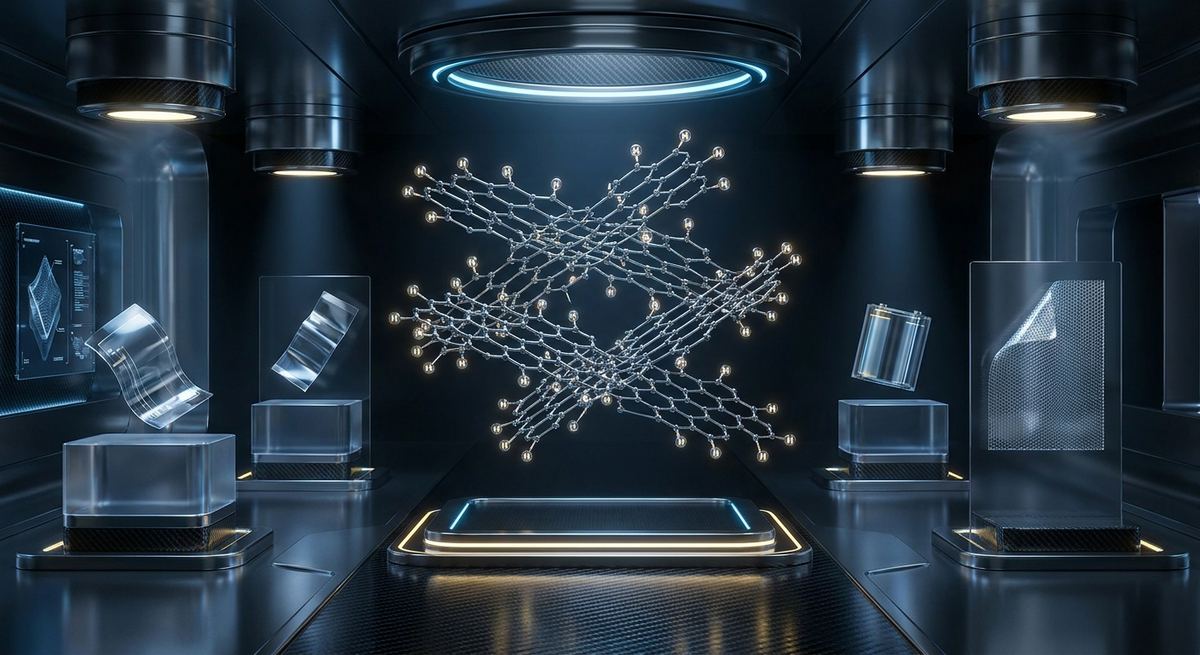
Graphene, a singular atomic layer of planar carbon atoms arranged in a hexagonal lattice, has captivated the scientific and industrial communities since its experimental isolation in 2004. Heralded as a nanomaterial with unparalleled electronic, thermal, and mechanical properties, its potential applications span from high-frequency electronics and advanced sensors to energy storage and biomedical devices. This remarkable two-dimensional (2D) material has not only redefined our understanding of carbon structures but has also opened vast avenues for fundamental research and technological innovation, earning its discoverers the Nobel Prize in Physics in 2010.
While graphene itself possesses extraordinary attributes, its inherent chemical inertness and zero band gap limit its direct application in certain semiconductor technologies. To overcome these limitations and unlock a broader spectrum of functionalities, scientists have turned to chemical modification strategies. Among the most promising and impactful of these modifications is hydrogenation, the controlled attachment of hydrogen atoms to the carbon lattice. This process yields a family of novel materials, including partially hydrogenated graphene (PHG) and its fully hydrogenated counterpart, graphane, each exhibiting distinct and highly tunable properties that diverge significantly from pristine graphene. Understanding the intricate preparation methods, the profound changes in their electronic and structural characteristics, and their emerging applications is crucial for advancing the next generation of materials science.
Hydrogenated graphene represents a transformative class of materials derived from graphene through the chemisorption of atomic hydrogen. This process fundamentally alters the carbon lattice, shifting the hybridization state of carbon atoms from sp2 to sp3. In pristine graphene, carbon atoms are sp2 hybridized, forming strong planar sigma bonds and delocalized pi bonds, which are responsible for its exceptional conductivity and flat structure. However, when hydrogen atoms bond covalently to these carbons, the carbon atoms relax out of the plane, adopting an sp3 hybridization similar to that found in diamond or hydrocarbons. This conversion from sp2 to sp3 is a cornerstone of hydrogenated graphene's unique properties, introducing puckering and breaking the planar symmetry of the original graphene sheet.
Depending on the extent of hydrogen coverage, two primary forms of hydrogenated graphene emerge: partially hydrogenated graphene (PHG) and fully hydrogenated graphene, known as graphane. PHG involves the attachment of hydrogen atoms to selected carbon sites, creating a heterogeneous structure with coexisting sp2 and sp3 domains. These localized sp3 regions, where C–H bonds form, act as defects within the sp2 C═C matrix at low hydrogen coverage. As hydrogen coverage increases, these sp3 C–H bonds coalesce into clusters, effectively confining the remaining sp2 C domains and profoundly influencing the material's electronic and structural characteristics. The region of structural distortion caused by a single C–H bond has been predicted to be remarkably small, typically within a few atoms around the hydrogenation site, much smaller than 1 nanometer.
In contrast, graphane is the ultimate product of complete hydrogenation, where hydrogen atoms are attached to all carbon sites. This results in an extended 2D covalently bonded hydrocarbon, analogous to a single layer of hydrogenated diamond. Sofo et al. first theoretically predicted the structure of graphane in 2007, demonstrating its potential as a semiconductor. This theoretical insight subsequently spurred experimental efforts, leading to the successful synthesis of graphane by Elias et al. in 2009. Graphane typically adopts stable chair or boat configurations of fused cyclohexane rings, reflecting the tetrahedral bonding geometry of sp3 hybridized carbon, making it a robust and intriguing material with distinct properties from its graphene precursor.
The preparation of hydrogenated graphene involves various approaches designed to introduce hydrogen atoms onto the graphene lattice in a controlled manner. One of the primary methods utilizes exposure to atomic hydrogen, often generated by plasma sources or hot filaments. This allows for the chemisorption of hydrogen atoms onto the graphene surface, initiating the transformation from sp2 to sp3 hybridization. The precise control over hydrogen exposure time, temperature, and pressure is critical for dictating the degree of hydrogenation, whether targeting PHG or full graphane. Other methods might involve chemical reactions with hydrogen-donating compounds or electrochemical processes, each offering different levels of selectivity and control over the hydrogenation patterns.
Characterizing the structure and properties of hydrogenated graphene requires a suite of advanced experimental techniques. Raman spectroscopy is an indispensable tool, providing crucial insights into the vibrational modes and structural changes induced by hydrogenation. The appearance of new peaks or shifts in existing ones, particularly the D and G bands, can indicate the formation of sp3 carbon domains and the presence of C–H bonds. Transmission electron microscopy (TEM) offers direct visualization of the atomic structure, revealing the puckering and structural distortions that accompany hydrogen chemisorption. TEM can also help differentiate between crystalline sp2 and disordered sp3 regions, providing evidence of the extent and uniformity of hydrogenation.
Beyond these, other techniques are vital for a comprehensive understanding. X-ray photoelectron spectroscopy (XPS) can confirm the presence of C–H bonds and quantify the ratio of sp2 to sp3 hybridized carbon. Scanning tunneling microscopy (STM) provides atomic-scale topographical and electronic information, allowing researchers to observe individual hydrogen adsorption sites and their impact on the local electronic structure. For a deeper understanding of the electronic and magnetic properties, electron spin resonance (ESR) and magnetic force microscopy (MFM) can detect and map induced magnetic moments. These combined characterization efforts are essential for validating theoretical predictions and guiding the development of tailored hydrogenated graphene materials for specific applications.
The chemisorption of hydrogen on graphene profoundly alters its electronic structure, moving it away from the semimetallic character of pristine graphene towards a semiconducting or even insulating state. While graphene exhibits a zero band gap, meaning electrons can move freely, the formation of C–H bonds in hydrogenated graphene breaks the sp2 conjugation, leading to the opening of a significant band gap. This transition is particularly pronounced in graphane, which theoretical studies have predicted to be a semiconductor with a band gap of approximately 3.5 to 5.5 eV, depending on its specific configuration. This transformation is pivotal, as it enables hydrogenated graphene to be utilized in transistor applications and other semiconductor devices, a role pristine graphene cannot fulfill without further complex patterning.
Partially hydrogenated graphene (PHG), with its mixed sp2 and sp3 domains, exhibits tunable electronic properties. The size and distribution of the sp2 regions, which remain conductive, can be engineered to create quantum confinement effects. This allows for the creation of quantum dots or nanowires within the PHG matrix, potentially leading to novel optoelectronic devices. The control over hydrogen coverage enables a continuous modulation of the band gap, making PHG a versatile platform for designing materials with desired electronic characteristics for specific applications, such as high-performance field-effect transistors.
Moreover, hydrogen chemisorption can induce fascinating magnetic properties in graphene. Theoretical and experimental investigations have shown that the attachment of hydrogen atoms can induce local magnetic moments in the system. This arises from the disruption of the perfect sp2 lattice and the creation of localized unpaired electron spins. At low hydrogen coverage, these chemisorbed H atoms behave like defects, generating localized magnetic moments. The ability to introduce and control magnetism through simple hydrogenation opens up exciting possibilities for spintronics, where the spin of electrons, rather than just their charge, is utilized for information processing and storage. This interplay between structural modification, electronic band gap engineering, and magnetic induction underscores the multifaceted potential of hydrogenated graphene.
Beyond its electronic and magnetic transformations, the hydrogenation of graphene also impacts its mechanical properties, albeit in complex ways. Pristine graphene is renowned for its exceptional strength and stiffness, stemming from its robust sp2 carbon-carbon bonds and perfect 2D crystalline structure. When hydrogen atoms attach to the carbon lattice, inducing sp3 hybridization, the planar structure puckers. This change in bonding and geometry can alter the material's mechanical response. While the formation of strong C–H bonds adds stability, the overall network's flexibility and tensile strength may be influenced by the extent and pattern of hydrogenation, potentially making it more brittle in certain configurations or enhancing its resilience in others. Computational studies, particularly those employing density functional theory (DFT), are crucial for predicting these mechanical properties, including elastic moduli and fracture strengths, for various hydrogenated graphene configurations.
Graphane itself can exist in several stable structural isomers, depending on the relative positions of the hydrogen atoms above and below the carbon plane. The excerpt highlights two energetically favorable configurations: chair and boat configurations of fused cyclohexane rings. In the chair configuration, hydrogen atoms alternate their positions above and below the carbon plane, leading to a highly stable, non-polar structure. The boat configuration, while also stable, involves a different arrangement of hydrogen atoms, potentially leading to different local strain fields and electronic properties. Theoretical studies have outlined at least four distinct isomeric single-sheet graphanes, each possessing unique structural and energetic characteristics. These isomeric forms demonstrate the rich structural diversity possible within fully hydrogenated graphene, offering avenues for tailoring properties through precise control over synthesis.
Furthermore, the feasibility of single-sided hydrogenated graphene has been explored through both theoretical and experimental studies, at both low and high hydrogen coverage. In such a structure, hydrogen atoms are preferentially adsorbed on only one side of the graphene sheet. This asymmetry could lead to novel functionalities, such as inherent dipole moments or anisotropic mechanical responses, which could be exploited in specific sensing or actuation applications. Understanding these structural nuances and their implications for both electronic and mechanical performance is paramount for the rational design of hydrogenated graphene derivatives for advanced engineering applications.
Theoretical and computational studies have played an indispensable role in unraveling the complexities of hydrogenated graphene, often preceding and guiding experimental investigations. Density functional theory (DFT) calculations, in particular, have been extensively employed to predict the structures, binding energies, and a wide array of properties for both partially hydrogenated graphene (PHG) and graphane. These simulations allow researchers to model the atomic-level interactions, determine the most stable configurations of hydrogen atoms on the graphene lattice, and calculate the energetic favorability of various hydrogenation patterns. For instance, DFT has been used to investigate the chemisorption of one and two hydrogen atoms with single-walled carbon nanotubes (SWCNTs), providing foundational insights applicable to graphene's 2D structure.
Computational studies have provided critical insights into several key properties. For example, the band gap of graphane, a crucial parameter for its semiconductor applications, has been precisely calculated using DFT, validating the experimental observations of its insulating nature. Nuclear magnetic resonance (NMR) chemical shifts have also been predicted, offering a theoretical fingerprint that can aid in the experimental characterization of different hydrogenated graphene structures. These computational NMR data provide specific signatures for C–H bonds in various environments, allowing researchers to distinguish between different bonding configurations and hydrogen coverages in synthesized samples.
Beyond electronic and spectroscopic properties, theoretical work has also delved into the magnetic properties of hydrogenated graphene, predicting the emergence of localized magnetic moments at specific hydrogenation sites. Mechanical properties, such as elasticity and strength, are also routinely investigated through simulations, providing estimates of how hydrogenation affects the material's structural integrity and flexibility. Furthermore, charge transfer, vibrational properties (which complement Raman spectroscopy), and even specific heat have been studied computationally, painting a comprehensive picture of these materials. These theoretical predictions are not merely academic exercises; they serve as a roadmap for experimentalists, helping to interpret complex data and design new experiments, thereby accelerating the discovery and development of novel hydrogenated graphene-based materials, including the hydrogenation of bilayer graphene and the exploration of graphane nanotubes.
The field of hydrogenated graphene is continually expanding, with research exploring more complex and tailored derivatives beyond simple PHG and graphane. One notable area of study involves fluorographene, a fluorinated derivative of graphene, which shares structural similarities with graphane due to the sp3 hybridization induced by fluorine attachment. Comparisons between fluorographene and hydrogenated graphene offer valuable insights into the impact of different atomic species on the graphene lattice, allowing for a deeper understanding of bond strengths, electronic properties, and potential applications. For instance, both fluorographene and graphane are wide band gap semiconductors, but their specific chemical reactivities and surface energies differ significantly.
Further research has focused on specific stoichiometries and configurations of partially hydrogenated graphene, such as C4H. This particular composition represents a fascinating intermediate state, where hydrogen atoms are adsorbed in a patterned manner, leading to unique electronic and magnetic properties. Understanding these precise configurations, which can be challenging to synthesize and characterize, is critical for achieving fine-tuned material functionalities. These studies often rely heavily on advanced computational modeling, such as density functional theory (DFT), to predict stable structures and their corresponding properties before experimental validation.
The exploration of multi-layered systems and nanostructures also represents a significant frontier. Graphane nanotubes, for example, are theoretical structures that envision rolling up a graphane sheet into a cylindrical form, analogous to carbon nanotubes. These structures could combine the mechanical robustness of nanotubes with the unique electronic properties of graphane, potentially leading to novel applications in nanoelectronics or hydrogen storage. Similarly, the hydrogenation of bilayer graphene introduces another layer of complexity, where hydrogen atoms can attach to one or both layers, leading to interlayer coupling effects and potentially creating entirely new electronic states. These advanced systems underscore the dynamic and fertile research landscape surrounding hydrogenated graphene, promising a new generation of functional materials with unprecedented capabilities.
The unique properties of hydrogenated graphene, stemming from its tunable electronic structure, modified mechanical characteristics, and potential for magnetism, position it as a material with immense potential across a diverse range of applications. Its most significant advantage lies in the ability to open a band gap, transforming graphene from a semimetal into a semiconductor. This is crucial for the development of next-generation electronics, enabling the creation of high-performance field-effect transistors (FETs) and integrated circuits that are currently limited by graphene's zero band gap. The tunable band gap of partially hydrogenated graphene (PHG) further allows for the design of optoelectronic devices, such as broadband photodetectors and light-emitting diodes, with specific wavelength sensitivities.
Beyond electronics, the modified surface chemistry of hydrogenated graphene makes it highly attractive for sensor technologies. The presence of C–H bonds and the altered electronic landscape can enhance its sensitivity and selectivity to various gases and biological molecules, leading to more efficient and reliable gas sensors and biosensors. Its potential for inducing magnetic moments also opens doors for spintronics, where the spin of electrons can be exploited for advanced data storage and processing, offering faster and more energy-efficient devices than traditional charge-based electronics. The ability to induce and control magnetism within a 2D carbon material is a significant breakthrough with far-reaching implications.
In the realm of energy, hydrogenated graphene could play a role in hydrogen storage technologies, leveraging its high surface area and the potential for reversible hydrogen chemisorption. Its mechanical properties, including tunable stiffness and potential for creating robust 2D membranes, may also find applications in filtration, protective coatings, and advanced composite materials. The ongoing research into graphane nanotubes, bilayer graphane, and other complex derivatives further expands this application landscape, promising materials with tailored properties for specific challenges in diverse fields such as chemistry, physics, biology, and medicine. As an emerging and important field, the fully hydrogenated derivative of graphene (called graphane) and PHG have many potential applications and deserve detailed review of their characteristics and further comprehensive studies, solidifying their status as critical materials for future innovation.
Q1: What is hydrogenated graphene and how does it differ from pristine graphene?
A1: Hydrogenated graphene is a chemically modified form of graphene where hydrogen atoms are covalently bonded to its carbon lattice. This process changes carbon's hybridization from sp2 to sp3, introducing puckering and opening a band gap, unlike pristine graphene which is planar and a semimetal with a zero band gap. This modification transforms its electronic, structural, and magnetic properties.
Q2: What are graphane and partially hydrogenated graphene (PHG)?
A2: Graphane is the fully hydrogenated derivative of graphene, where all carbon atoms are bonded to hydrogen, resulting in a 2D semiconductor. Partially hydrogenated graphene (PHG) involves hydrogen attachment to selected carbon sites, creating a mixed sp2/sp3 structure with tunable electronic properties, acting as an intermediate between graphene and graphane.
Q3: How is hydrogenated graphene prepared and characterized?
A3: Hydrogenated graphene is typically prepared by exposing graphene to atomic hydrogen, often generated by plasma sources, which induces hydrogen chemisorption. Characterization relies on techniques like Raman spectroscopy to detect C–H bonds and sp3 domains, and Transmission Electron Microscopy (TEM) to visualize structural changes and puckering at the atomic level.
Q4: What are the key electronic property changes in hydrogenated graphene?
A4: The most significant change is the opening of a band gap, transforming graphene from a semimetal into a semiconductor, particularly evident in graphane. This enables its use in electronic devices. Additionally, hydrogen chemisorption can induce localized magnetic moments, opening possibilities for spintronics applications.
Q5: What are the potential applications of hydrogenated graphene?
A5: Hydrogenated graphene has vast potential in next-generation electronics due to its tunable band gap, enabling high-performance transistors and optoelectronic devices. It is also promising for advanced sensors, spintronics, hydrogen storage, and novel composite materials, leveraging its modified surface chemistry and mechanical properties.
From its theoretical prediction to its experimental realization, hydrogenated graphene has emerged as a powerhouse in the realm of 2D materials, offering a compelling pathway to overcome the inherent limitations of pristine graphene. By precisely controlling the chemisorption of hydrogen atoms, scientists and engineers can engineer materials with a wide range of tailored properties – from tunable band gaps for advanced electronics and optoelectronics to induced magnetic moments for groundbreaking spintronics applications. The shift from sp2 to sp3 hybridization fundamentally redefines the material's structural, electronic, and mechanical characteristics, opening up new frontiers for innovation in countless industries.
The ongoing research into partially hydrogenated graphene (PHG), graphane, and their complex derivatives like graphane nanotubes and bilayer graphane underscores the dynamic and fertile nature of this field. As we continue to refine preparation techniques and deepen our understanding through both experimental validation and sophisticated computational modeling, the full potential of these materials is only beginning to be realized. For those pushing the boundaries of materials science and seeking to leverage the transformative power of advanced carbon nanomaterials, hydrogenated graphene represents a critical component of future technological advancements. Explore the possibilities and discover how usa-graphene.com can support your research and development needs with cutting-edge graphene solutions and expertise today.
Serious about B2B integration? Test our premium Pulsed Electrical Resistive Carbon Heating turbostratic graphene in your lab. 100g sample packs available now.
Explore More
Build a flexible graphene battery sensor for real-time temperature and strain monitoring, a crucial step toward preventing thermal runaway in Li-ion cells.

Research on 30° quasi-periodic twisted bilayer graphene reveals a unique, fractal-like energy structure under magnetic fields, paving the way for novel...

Researchers discover naturally formed graphene sheets and carbon ovals in stingless bee hives, creating a novel emergent material with powerful blue light...