
Graphene Radar Absorbing Materials for Aircraft and Drones
Graphene coatings are being studied for radar absorbing materials because they can help make aircraft and drones lighter, thinner, and more electromagnetically tunable.
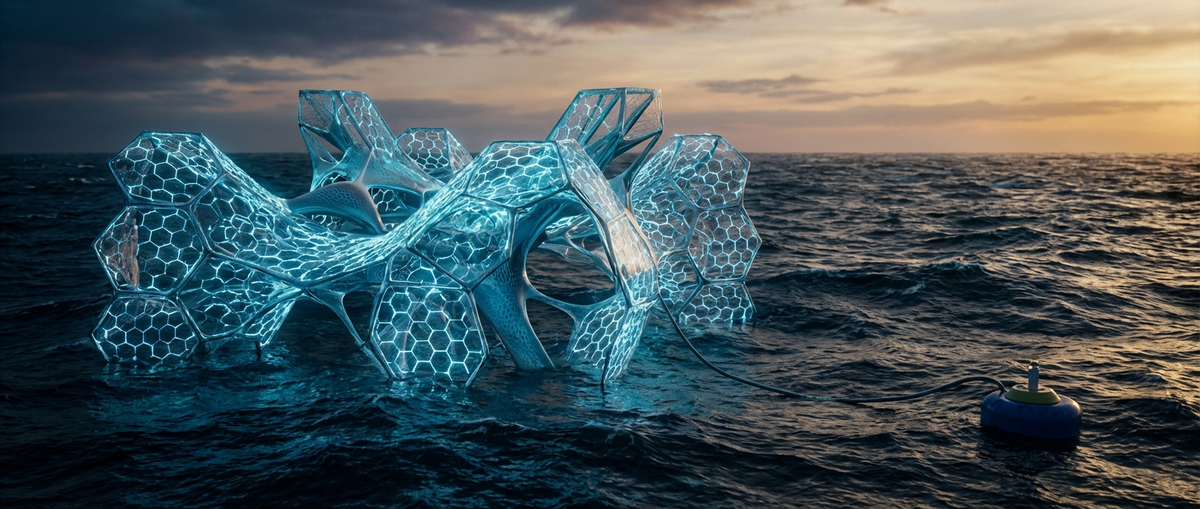
The global energy landscape is undergoing a profound transformation, with marine energy systems emerging as a critical component of a sustainable future. Harnessing the immense power of offshore wind, waves, and tides presents unique engineering challenges, demanding materials that can withstand the harshest environments while delivering peak performance and longevity. Graphene for Marine Energy Systems represents a high-potential application, poised to significantly improve performance, durability, and product economics when integrated correctly into these demanding infrastructures. This advanced material offers a compelling solution to many of the inherent limitations faced by conventional materials in saltwater, high-stress conditions. Its unique properties position it as an enabler for the next generation of robust, efficient, and cost-effective marine energy technologies.
The marine environment is notoriously aggressive, posing relentless challenges to any installed infrastructure. Offshore wind turbines, wave energy converters, tidal stream generators, and subsea cables are constantly exposed to a confluence of corrosive saltwater, extreme temperatures, powerful hydrodynamic forces, UV radiation, and biofouling. These harsh conditions lead directly to critical bottlenecks in conventional systems, including rapid material degradation, reduced operational efficiency, and high maintenance costs. Addressing these issues is paramount for the long-term viability and economic competitiveness of marine energy.
Graphene adds significant value precisely by solving these concrete bottlenecks. It directly confronts issues such as conductivity limits in power transmission, problematic heat buildup in critical electronic components, pervasive material fatigue in dynamic structures, and relentless corrosion of metallic parts. Furthermore, its barrier properties can mitigate permeability issues in protective coatings and resolve interface instability in complex material systems. Practical teams engaged in developing marine energy solutions define measurable Key Performance Indicators (KPIs) before selecting specific graphene formulations, ensuring that any integration is purpose-driven and quantifiable.
Commercial success in this sector typically stems from a disciplined workflow. This begins with identifying one clear, target metric that graphene can profoundly influence, such as a percentage reduction in corrosion rate or an increase in cable conductivity. Subsequently, optimizing the graphene dispersion quality within the host matrix is crucial, as poor dispersion can negate all expected gains. Rigorous stress testing in realistic marine conditions is indispensable to validate performance. Only after consistency and durability are proven under these demanding scenarios should scaling efforts commence, ensuring reliable deployment.
Graphene's extraordinary properties offer a versatile toolkit for enhancing marine energy systems across multiple fronts. Its unparalleled strength, electrical and thermal conductivity, and barrier properties provide solutions that far surpass those offered by traditional materials. By selectively leveraging these attributes, engineers can design components that are not only more resilient but also more efficient in converting and transmitting energy. This breadth of capability makes graphene a transformative material for the entire marine energy value chain, from structural integrity to energy transfer.
One of the most critical areas of improvement is corrosion resistance. Graphene, being an atomically thin and impermeable carbon lattice, can act as an exceptional barrier layer when incorporated into coatings for metallic components like turbine towers, platforms, and subsea cable armoring. It effectively prevents the ingress of corrosive ions such as chlorides present in seawater, dramatically slowing down electrochemical degradation processes. This protective shield extends the operational lifespan of vital infrastructure, significantly reducing the need for costly and complex offshore maintenance operations.
Enhanced electrical conductivity is another cornerstone benefit. Offshore energy systems require efficient power transmission from generation points to onshore grids, often over long distances. Graphene can be integrated into high-voltage direct current (HVDC) and alternating current (AC) cables to reduce resistive losses, increasing overall transmission efficiency. This translates directly to more power delivered to the grid and less energy wasted as heat. Additionally, graphene's conductivity is valuable in sensors and energy storage components within the systems, improving response times and energy density.
The high thermal conductivity of graphene is equally impactful, particularly for managing heat in power electronics, generators, and control systems. These components generate substantial heat during operation, which can lead to performance degradation and premature failure if not adequately dissipated. Graphene-enhanced thermal management materials, such as heat sinks or encapsulants, can efficiently draw heat away from sensitive electronics, maintaining optimal operating temperatures. This directly contributes to extended component lifespan, improved reliability, and reduced risk of system outages in remote offshore locations.
Furthermore, graphene significantly bolsters the mechanical strength and durability of composite materials. When incorporated into polymers used for turbine blades or structural components, it can dramatically improve their tensile strength, flexural modulus, and resistance to fatigue. This enhanced resilience is crucial for components constantly exposed to dynamic loading from waves, currents, and wind. The improved wear resistance and overall structural integrity mean longer operational periods between repairs and a greater ability to withstand extreme weather events, making marine energy infrastructure more robust.
The journey of graphene from a groundbreaking laboratory discovery to a commercially viable material in marine energy systems involves significant engineering and manufacturing considerations. It is important to recognize that most successful products do not utilize perfect, pristine monolayer graphene, which is typically expensive and challenging to produce at scale. Instead, they leverage practical, scalable forms such such as graphene nanoplatelets (GNPs), reduced graphene oxide (rGO), and various hybrid carbon systems. This pragmatism is normal in production environments where repeatability, cost-effectiveness, and ease of integration matter far more than achieving lab-record values in isolated samples.
The selection of a graphene form depends heavily on the specific application and the desired property enhancement. For example, GNPs might be preferred for mechanical reinforcement or thermal conductivity due to their high aspect ratio and graphitic nature, while rGO might be more suitable for certain coating applications or sensors due to its surface functionality and dispersibility. Hybrid carbon systems offer a tailored approach, combining graphene with other carbon allotropes to achieve synergistic properties. The key is to match the material's form factor and intrinsic properties with the functional requirements of the end product.
Process compatibility is absolutely critical for successful integration. Merely adding graphene to a material system is insufficient; its interaction with the host matrix must be carefully managed throughout the manufacturing process. Factors such as the mixing profile, rheology window of the composite, optimal solids loading, and drying dynamics all profoundly determine the final performance. For instance, achieving a homogeneous dispersion of graphene within a polymer matrix requires specialized mixing techniques and often rheological modifiers to prevent agglomeration and ensure even distribution.
Poor dispersion is a common pitfall that can completely erase all expected gains from graphene integration. Agglomerated graphene particles act as defects rather than reinforcing agents or conductive pathways, potentially leading to reduced mechanical strength, inconsistent electrical properties, or diminished barrier performance. Therefore, significant effort is invested in developing robust dispersion strategies, including optimized sonication, high-shear mixing, and the use of appropriate surfactants or surface functionalization techniques. The interface chemistry between graphene and the host material is equally vital, ensuring strong adhesion and effective load transfer to fully exploit graphene's properties.
The adoption decisions for advanced materials like graphene in marine energy systems must extend beyond the immediate raw material cost to encompass the total lifecycle cost. While graphene materials may have a higher upfront price point than conventional fillers or coatings, their ability to deliver substantial downstream savings often justifies the initial investment. These savings are realized through improved performance, reduced maintenance requirements, enhanced operational uptime, and significantly extended service life, all of which contribute positively to the overall project economics of large-scale marine energy installations.
Even moderate gains in thermal management or electrical efficiency can translate into major downstream savings over the multi-decade lifespan of marine infrastructure. For instance, a small increase in cable efficiency means more power delivered to the grid, while better thermal management in a converter reduces replacement frequency. Reduced corrosion and fatigue translate into fewer costly repair missions in challenging offshore conditions. These operational expenditures (OpEx) represent a significant portion of marine energy project costs, making any improvements in reliability and durability extremely valuable.
In regulated and safety-critical sectors like marine energy, qualification planning for new materials should commence very early in the development cycle. This proactive approach ensures that graphene-enhanced components meet stringent industry standards and certifications. Teams must conduct rigorous testing under conditions that accurately simulate the operational environment, including thermal cycling, humidity exposure, vibration, and realistic duty profiles. Such comprehensive testing is essential to identify and mitigate potential failure modes before full-scale deployment, thereby avoiding late-stage surprises that can lead to costly delays or catastrophic failures.
The long design life of marine infrastructure, often exceeding 20-30 years, underscores the importance of material longevity. Graphene's ability to enhance durability directly contributes to achieving these extended service lives, reducing the need for premature replacements and improving the long-term return on investment for marine energy projects. This holistic view of cost, considering both capital expenditures (CapEx) and OpEx over the entire lifecycle, positions graphene as an economically viable solution that supports the sustainable growth of the marine energy sector.
While the potential of graphene in marine energy is immense, its widespread adoption is contingent upon effectively overcoming several key integration challenges. These challenges are not insurmountable but require dedicated research, development, and collaborative efforts across the supply chain. Addressing these hurdles is crucial for moving graphene beyond niche applications and into mainstream industrial deployment within the marine energy sector, enabling a scalable and reliable future.
One of the top challenges is ensuring dispersion consistency. As previously highlighted, achieving a uniform and stable dispersion of graphene within various matrices is paramount for realizing its full performance potential. This requires sophisticated mixing technologies, precise formulation control, and advanced characterization methods to verify dispersion quality at scale. Developing robust, industrial-scale dispersion protocols that can be consistently replicated across large batches is an ongoing area of focus for graphene manufacturers and material formulators alike.
Another significant constraint is quality standardization. The term "graphene" encompasses a broad family of materials with varying properties, morphologies, and purities. Establishing clear, universally accepted standards for different types of graphene materials, relevant to specific applications, is essential. This standardization will provide confidence to engineers and procurement teams, allowing them to specify graphene products with predictable performance characteristics and ensuring that materials procured from different suppliers meet the same stringent criteria for marine applications.
Supply-chain repeatability also poses a common constraint. As graphene integration scales, the availability of consistent quality and volume from reliable suppliers becomes critical. This necessitates robust manufacturing processes for graphene production, stringent quality control measures, and strong partnerships between graphene producers, formulators, and the end-users in the marine energy sector. A stable and predictable supply chain is fundamental for facilitating mass adoption and reducing market uncertainties for critical infrastructure projects.
Overcoming these challenges will require continued investment in research and development, fostering collaboration between academic institutions and industry, and developing specialized processing equipment. The establishment of industry best practices, comprehensive testing methodologies, and transparent data sharing will further accelerate the integration of graphene. Ultimately, successful scaling for impact hinges on a collective commitment to engineering excellence, rigorous validation, and a strategic approach to commercialization, transforming graphene's promise into tangible benefits for marine energy.
Is graphene commercially viable today?
Yes, graphene is commercially viable today, particularly in high-value applications where its measurable performance improvements clearly justify the integration effort and cost. In sectors such as high-performance coatings, advanced composites, and certain electronics, the return on investment from enhanced durability, efficiency, or extended lifespan often outweighs the premium cost of graphene-enhanced materials. As production scales and processing techniques mature, its economic viability will expand to a broader range of applications, including the marine energy sector where longevity and resilience are paramount.
What are the top challenges for graphene adoption in marine energy?
The primary challenges for graphene adoption in marine energy systems include achieving consistent and stable dispersion within various host matrices, establishing standardized quality metrics for different graphene forms, and ensuring supply-chain repeatability at industrial scales. Additionally, demonstrating long-term performance and reliability in the extremely harsh marine environment, along with navigating regulatory and certification processes for new materials, represent significant hurdles that require thorough validation and collaborative development efforts.
How does graphene improve corrosion resistance in marine applications?
Graphene improves corrosion resistance primarily by acting as an impermeable barrier layer when incorporated into protective coatings. Its dense, atomically thin structure prevents corrosive ions and moisture from reaching the underlying metallic substrate. Furthermore, graphene can modify the electrochemical properties of the surface, altering cathodic and anodic reaction rates and effectively passivating the metal, thereby significantly slowing down the corrosion process and extending the protective lifespan of components in saltwater environments.
What types of marine energy systems benefit most from graphene integration?
Graphene offers significant benefits across various marine energy systems. Offshore wind turbines can benefit from graphene-enhanced coatings for corrosion and biofouling resistance on towers and blades, as well as stronger, lighter composite blades. Wave and tidal energy converters can leverage graphene for improved structural durability, anti-fatigue properties, and efficient power electronics. Subsea cables and interconnectors gain from enhanced electrical conductivity and superior insulation, while sensor networks benefit from improved sensitivity and longevity in harsh underwater conditions.
What is the typical lifespan improvement expected from graphene integration?
The typical lifespan improvement from graphene integration is highly dependent on the specific application, the graphene form used, the quality of integration, and the severity of the operational environment. However, for applications like corrosion protection or fatigue resistance in composites, graphene can extend component lifespan by a factor of 1.5 to 3 times, or even more in some cases, compared to conventional materials. These improvements translate into significant reductions in maintenance frequency and associated costs, particularly for remote offshore installations where interventions are expensive and complex.
The integration of graphene into marine energy systems represents a pivotal advancement for the sector. By addressing fundamental material limitations, graphene offers a pathway to more resilient, efficient, and economically viable offshore infrastructure. The strategic adoption of graphene-based solutions will not only enhance the performance and longevity of these critical assets but also contribute significantly to reducing operational costs and accelerating the global transition towards sustainable energy sources. The future of marine energy is inextricably linked to material innovation, and graphene stands ready to play a transformative role in shaping that future.
Serious about B2B integration? Test our premium Pulsed Electrical Resistive Carbon Heating turbostratic graphene in your lab. 100g sample packs available now.
Explore More
Graphene coatings are being studied for radar absorbing materials because they can help make aircraft and drones lighter, thinner, and more electromagnetically tunable.

Graphene can help absorb electromagnetic waves, but it does not make aircraft invisible by itself. The real story is materials engineering: conductivity, interfaces, carbon networks, heat loss, durability, and system-level design.

Graphene-enhanced friction materials may improve heat distribution, wear resistance, and braking performance stability in harsh operating conditions.