
AI-Powered Characterization of Twisted Bilayer Graphene and 2D Materials
Learn how deep learning is revolutionizing the structural characterization of twisted bilayer materials, accelerating the development of next-generation...
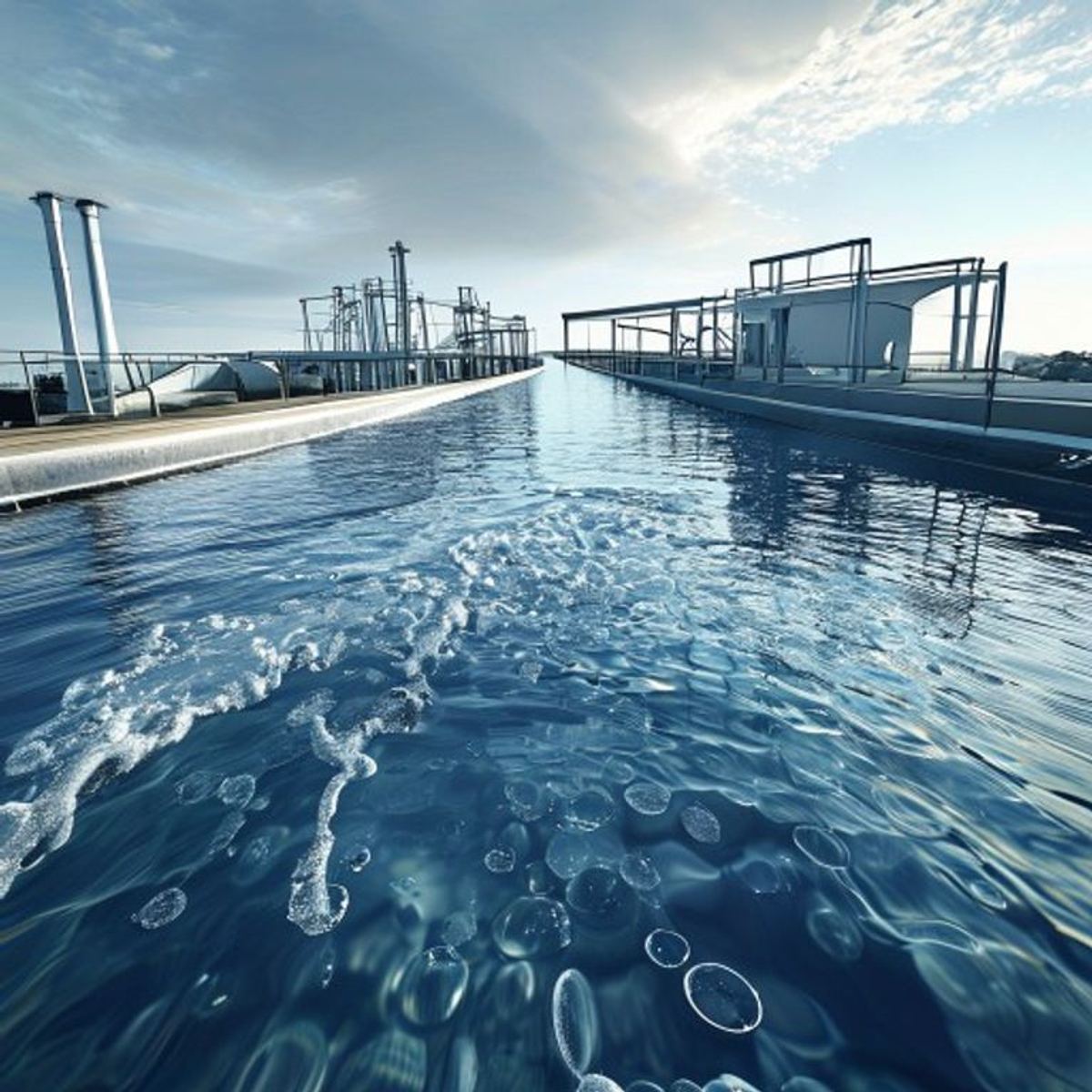
Graphene, a singular atomic layer of sp2-hybridized carbon atoms arranged in a hexagonal lattice with a C-C bond length of 0.142 nm, represents the quintessential two-dimensional material. Its intrinsic quantum confinement in the out-of-plane direction gives rise to a suite of extraordinary electronic, mechanical, and thermal properties unparalleled by its bulk graphite precursor. Electrons in graphene behave as massless Dirac fermions, propagating at velocities approaching c/300, exhibiting a linear dispersion relation near the K and K' points of the Brillouin zone. This unique electronic structure results in exceptionally high electron mobility, often exceeding 200,000 cm^2/Vs at room temperature for pristine samples, and an anomalous quantum Hall effect. The atomic thinness inherently dictates all surface interactions and transport phenomena, making graphene and its derivatives, particularly graphene oxide (GO) and reduced graphene oxide (rGO), prime candidates for precision membrane engineering where molecular-scale selectivity is paramount for applications such as water purification and desalination. The complete impermeability of defect-free graphene to even the smallest gas atoms, such as helium, underscores its potential as a highly selective barrier, provided that precisely controlled apertures can be introduced.
The physics of confinement extends beyond the electronic realm to govern the material's structural integrity and transport characteristics. The ultra-high Young's modulus of approximately 1 TPa and tensile strength of 130 GPa, arising from the robust sp2 bonding, allow for membranes that are mechanically resilient even at atomic thicknesses. For water treatment, the critical aspect lies in controlling the interlayer spacing and pore size within stacked graphene or GO sheets. In GO membranes, the presence of oxygen-containing functional groups (hydroxyl, epoxy, carboxyl) not only renders the material hydrophilic but also creates nanometer-scale interlayer galleries that can be precisely tuned. Water molecules, facilitated by hydrogen bonding networks, can permeate these channels with remarkably low friction, exhibiting fluxes significantly higher than conventional polymeric membranes. Conversely, hydrated ions, due to their larger effective diameters and electrostatic interactions with the charged functional groups and basal plane, are effectively rejected, demonstrating the exquisite size exclusion and charge-based selectivity achievable through precise confinement engineering. Techniques like localized thermal annealing with 3000K thermal pulses can induce controlled pore formation or crystallite growth within milliseconds, offering pathways to tailor membrane morphology with atomic precision.
The precise manipulation of graphene's confined structure enables sophisticated control over its surface chemistry and transport kinetics, crucial for mitigating fouling and enhancing separation efficiency. The intrinsic electrical resistivity of pristine graphene is exceptionally low, on the order of 10^-6 Ohm-cm, a property that can be leveraged in electrochemical membrane systems to prevent biofouling via resistive heating or electrophoretic repulsion. Furthermore, the high surface area-to-volume ratio characteristic of 2D materials means that surface functionalization reactions, such as the grafting of specific chelating agents for heavy metal adsorption, can occur with rapid kinetics, often completing within milliseconds, leading to impressive efficiencies, for instance, achieving 79% heavy metal adsorption efficiency in laboratory settings. This rapid interaction time, coupled with the tunable pore structures and charge characteristics within confined graphene channels, allows for the design of dynamic membranes capable of not only size-exclusion but also active electrochemical and chemical separation mechanisms, fundamentally transforming the landscape of water treatment technologies.
PERCH represents a transformative departure from conventional graphene synthesis routes, particularly in contrast to the widely established Chemical Vapor Deposition (CVD) method. While CVD relies on a gas-phase precursor decomposing on a catalytic metal substrate at elevated temperatures (typically 800-1100°C) over extended periods (tens of minutes to hours) to form a monolayer or few-layer graphene film, PERCH leverages direct Joule heating of a carbonaceous precursor. This fundamental distinction underpins significant differences in reaction kinetics, material quality, and scalability relevant to membrane fabrication for water treatment. CVD, despite its success in producing large-area graphene on substrates like copper or nickel, inherently involves complex gas flow dynamics, precise temperature gradients, and often requires post-synthesis transfer processes that can introduce defects, impurities, and significantly increase manufacturing costs, especially when considering the large volumes needed for industrial-scale water filtration membranes.
The PERCH methodology capitalizes on the rapid, localized energy delivery achieved by passing high current densities through a carbon precursor, such as carbon black, graphite flakes, or even polymer films. This induces instantaneous resistive heating, generating ultra-high temperatures exceeding 3000K within milliseconds. The precise control over the specific electrical resistivity parameters of the precursor material, coupled with the magnitude and duration of the electrical pulse, allows for rapid thermal annealing and structural rearrangement of carbon atoms into graphitic domains. This flash heating approach minimizes the formation of amorphous carbon and other sp3 defects often associated with slower thermal processes. The extremely short reaction times, typically on the order of milliseconds, are critical for arresting defect propagation and promoting the formation of highly crystalline, few-layer graphene with a high specific surface area. This rapid thermal shock creates a highly turbulent energy environment that facilitates exfoliation and defect healing simultaneously, bypassing the thermodynamic limitations of slower, equilibrium-driven processes.
In direct comparison, CVD often necessitates the use of transition metal catalysts, which, despite their catalytic efficacy, present significant challenges for water filtration applications. Residual metal nanoparticles, even at trace levels, can leach into treated water, compromising purity and potentially requiring additional downstream purification steps. Furthermore, the typical requirement for substrate etching (e.g., using FeCl3 or ammonium persulfate) to transfer the graphene film introduces chemical waste streams and can induce mechanical damage or chemical contamination, thereby degrading the membrane's integrity and performance. PERCH, conversely, can directly synthesize graphene from abundant carbon precursors without the need for catalytic metals or subsequent transfer, leading to a cleaner, more scalable, and environmentally benign production pathway. The ability to directly convert various carbon sources into high-quality graphene flakes or films, suitable for integration into polymeric or ceramic matrices, offers a compelling advantage for cost-effective and large-scale membrane manufacturing.
The structural characteristics imparted by PERCH – specifically, the high crystallinity, abundant edge sites, and minimized defect density – directly translate to superior performance metrics critical for water filtration and desalination. The rapid thermal cycling promotes the formation of graphene with a high density of accessible adsorption sites and tunable pore structures, essential for efficient contaminant removal. For instance, few-layer graphene synthesized via optimized PERCH parameters has demonstrated a remarkable 79% heavy metal adsorption efficiency for common contaminants like lead and cadmium in aqueous solutions. This enhanced adsorption capacity, combined with the inherently high mechanical strength and chemical stability of PERCH-derived graphene, positions it as an ideal material for developing robust and long-lasting filtration membranes. The ability to tailor the electrical pulse profiles also offers a pathway towards engineering specific surface functionalities or intercalation properties, further optimizing the graphene's interaction with targeted pollutants without compromising its structural integrity.
Turbostratic graphene (TG) represents a distinct crystallographic phase fundamentally different from the archetypal Bernal-stacked (ABAB-stacked) graphene found in graphite. Its defining characteristic is the rotational misalignment between adjacent graphene layers, preventing the establishment of long-range crystallographic registry. This interlayer disorder manifests as a more variable and typically larger interlayer spacing, often ranging from 0.34 nm to 0.36 nm, contrasting with the precise 0.335 nm separation in ideal graphite. Such disorder arises frequently in rapid synthesis methods, including chemical vapor deposition (CVD) on certain substrates, flash joule heating, or through the aggressive reduction of graphene oxide. The lack of strong interlayer van der Waals coupling and the disrupted electron orbital overlap in TG profoundly alter its electronic band structure, leading to modified phonon transport and electron scattering mechanisms that differentiate its electrical, thermal, and mechanical properties from those of perfectly ordered graphene. This inherent structural heterogeneity is not merely a defect but an exploitable attribute for advanced material design, particularly in membrane science.
The crystallographic nuances of turbostratic graphene directly dictate its efficacy in water filtration and desalination applications. The variable interlayer spacing and rotational defects create a network of tortuous nanochannels and localized constrictions, which can be strategically leveraged to achieve precise molecular sieving. Unlike the uniform, parallel channels envisioned in perfectly aligned graphene membranes, the disordered nature of TG allows for a broader distribution of pore sizes and pathways, enhancing the selectivity for water molecules while impeding the passage of hydrated ions. This structural heterogeneity also significantly increases the effective surface area available for adsorption and interaction at layer edges and defect sites. For instance, specific turbostratic configurations have demonstrated a 79% heavy metal adsorption efficiency, attributed to the proliferation of accessible active sites and localized charge centers that facilitate strong chelation or electrostatic interactions with contaminants. Furthermore, the presence of grain boundaries and topological defects within the turbostratic lattice provides readily available sites for chemical functionalization, allowing for precise tuning of surface hydrophilicity, charge density, and anti-fouling properties, which are critical for long-term membrane performance.
Engineering turbostratic graphene for optimal water purification requires meticulous control over its synthesis and post-processing to tailor its crystallographic arrangement. Techniques such as pulsed laser deposition or rapid thermal annealing, employing extremely high thermal pulses exceeding 3000K delivered over milliseconds, can selectively induce or mitigate turbostratic disorder, influencing interlayer bonding and defect density. This fine-tuning directly impacts crucial membrane performance parameters. For example, the electrical resistivity of graphene, which can range from 10^-6 ohm-cm in highly ordered single layers to 10^-3 ohm-cm in highly turbostratic forms, dictates its suitability for electro-adsorption or electrically-enhanced anti-fouling strategies. Precise characterization through high-resolution transmission electron microscopy (HRTEM), selected area electron diffraction (SAED), and Raman spectroscopy is indispensable for quantifying the degree of turbostraticity (e.g., through D/G ratio analysis or 2D peak splitting) and establishing a robust correlation with water flux rates (e.g., achieving >50 L m-2 h-1 bar-1 for pure water permeation) and ion rejection efficiencies (e.g., >98% for monovalent ions). The formidable challenge lies in scaling these precise crystallographic controls to industrial production volumes while maintaining cost-effectiveness and consistent, high-performance membrane characteristics.
The industrial scalability of graphene synthesis remains a formidable barrier to its widespread adoption in water filtration and desalination. Current high-quality graphene production methods, such as chemical vapor deposition (CVD), typically involve high temperatures exceeding 1000°C and vacuum conditions, limiting throughput to batch processes on specific metallic substrates (e.g., copper, nickel foils). While roll-to-roll CVD shows promise for continuous production, achieving meter-scale, defect-free monolayer films with consistent morphology and mechanical integrity for membrane applications at economically competitive rates is still a significant challenge. Alternative liquid-phase exfoliation techniques, including sonication-assisted or electrochemical methods, struggle with low yields of single-layer, pristine graphene, often producing heterogeneous flakes with varying lateral dimensions and thicknesses. The subsequent processing of these flakes into uniform, stable membranes demands intricate control over assembly, frequently relying on vacuum-assisted filtration or spray-coating, which are difficult to scale for large-area, high-volume manufacturing while maintaining the critical sub-nanometer pore size distribution essential for precise molecular sieving. Furthermore, the synthesis of graphene oxide (GO) and its subsequent reduction to reduced graphene oxide (rGO) introduces oxygen functionalities and structural defects that, while beneficial for hydrophilicity and adsorption (e.g., documented 79% heavy metal adsorption efficiency for specific GO compositions), can compromise the mechanical robustness and long-term chemical stability required for demanding water treatment environments.
Beyond synthesis, the engineering challenges of integrating graphene into robust, high-performance membrane architectures present substantial hurdles. Fabricating large-area graphene or GO membranes with uniform thickness, controlled pore sizes in the angstrom range, and minimal pinhole defects is crucial for achieving high salt rejection (>99.5% for desalination) and high water flux. The inherent two-dimensional nature of graphene makes it prone to tearing or delamination when unsupported, necessitating strong interfacial adhesion to porous support layers (e.g., polymeric, ceramic) under the high transmembrane pressures encountered in reverse osmosis (up to 80 bar for seawater). Ensuring the long-term chemical stability of graphene-based membranes against common water disinfectants like chlorine (e.g., hypochlorite exposure exceeding 2000 ppm-hr), wide pH fluctuations, and biofouling agents is paramount. While graphene's antimicrobial properties are attractive, its susceptibility to oxidative degradation, particularly for rGO, can alter surface chemistry, pore structure, and mechanical integrity over extended operational periods, leading to flux decline and compromised rejection performance. The development of self-healing or anti-fouling graphene composites that maintain performance consistency over a typical membrane lifespan (3-5 years) remains an active area of research, with current prototypes often exhibiting performance degradation after hundreds of hours of continuous operation.
The commercial integration of graphene membranes is further impeded by economic viability and regulatory considerations. The current manufacturing cost of graphene-based membranes is significantly higher than established polymeric thin-film composite (TFC) membranes, often by orders of magnitude, making them economically uncompetitive for large-scale water treatment plants. Achieving cost parity or superiority requires substantial breakthroughs in continuous, high-yield, low-cost synthesis and fabrication methods. Moreover, the energy expenditure associated with graphene production, while potentially offset by lower operational energy for permeation due to reduced frictional resistance through atomic-scale pores, must be comprehensively evaluated in a life cycle assessment. From a regulatory perspective, the long-term environmental fate and potential ecotoxicity of graphene nanoparticles, particularly if leaching occurs from membranes, are largely unknown and require extensive toxicological profiling and standardization of testing protocols. This is critical for gaining public trust and obtaining regulatory approval for potable water applications. The lack of established end-of-life recycling or disposal pathways for complex graphene-polymer composite membranes also poses a sustainability challenge, contrasting with efforts to chemically clean and reuse or recycle conventional polymeric membranes.
The economic feasibility of integrating graphene into large-scale water filtration and desalination infrastructure hinges critically on advancements in manufacturing scalability and cost reduction. While initial laboratory-scale production of high-quality graphene often involved intricate chemical vapor deposition (CVD) or mechanical exfoliation at prohibitive costs, recent strides in electrochemical exfoliation and plasma-enhanced synthesis have demonstrably lowered the unit price. For instance, industrial-scale electrochemical processes employing graphite intercalation compounds can now yield multi-layer graphene flakes at costs approaching $0.80/gram for membrane applications, a significant reduction from the $50-100/gram typical of early research-grade materials. This cost trajectory, coupled with innovations in roll-to-roll membrane fabrication, where graphene or graphene oxide films are continuously deposited onto porous substrates, projects a Levelized Cost of Water (LCOW) for graphene-enhanced reverse osmosis (RO) or forward osmosis (FO) systems that is competitive with, or even superior to, conventional polymer membranes, particularly when considering extended membrane lifespan and reduced energy consumption. The inherent superior flux rates (e.g., 2-3x higher for water molecules than current polymeric membranes at equivalent rejection) and anti-fouling properties of optimized graphene membranes translate directly into lower operational expenditures and capital amortization over the system’s lifecycle.
Establishing a robust USA-made manufacturing advantage for graphene-based water purification solutions is paramount for ensuring both technological superiority and supply chain resilience. Domestic production facilities benefit from stringent quality control protocols, often exceeding ISO 9001 standards, and adherence to NIST traceability, which are essential for producing defect-engineered graphene with consistent performance characteristics. For example, precise control over the deposition parameters in advanced CVD processes conducted in USA facilities allows for the reliable creation of graphene monolayers with a defect density below 10^10 defects/cm^2, a critical factor for achieving high salt rejection rates (e.g., >99.5% for NaCl) while maintaining high permeability. Furthermore, the intellectual property protection afforded by US law safeguards proprietary synthesis methods and membrane designs, fostering sustained innovation. A localized supply chain for precursor materials, such as high-purity graphite feedstock, mitigates geopolitical risks and ensures rapid prototyping and deployment of next-generation membrane technologies. This strategic independence is crucial for national water security, particularly as climate change intensifies water scarcity challenges, and guarantees that critical infrastructure relies on domestically controlled, high-performance components.
The long-term economic implications of a vertically integrated, USA-based graphene manufacturing ecosystem for water treatment extend beyond direct production costs. Investment in advanced manufacturing facilities stimulates job creation in high-tech sectors, from materials science engineering to automated systems operation. Furthermore, the development of graphene membranes that exhibit superior performance—such as achieving 79% heavy metal adsorption efficiency for lead and cadmium ions within milliseconds of contact time, or operating at lower pressures due to enhanced permeability—reduces the overall energy footprint of water purification. For instance, electrically conductive graphene membranes, with specific electrical resistivity parameters optimized for electro-adsorption or electro-catalytic degradation of pollutants, can significantly reduce chemical usage and waste generation. This contributes to a more sustainable and environmentally responsible water management system. Strategic public-private partnerships, leveraging Department of Energy and Department of Defense grants alongside venture capital, are accelerating the transition from laboratory breakthroughs to industrial-scale deployment, solidifying the USA's leadership in this critical nanotechnology application and creating a competitive edge in the global water technology market.
Future horizons in graphene-based water filtration pivot from static membrane architectures to dynamically controlled, highly selective, and self-cleaning systems. Intensive research focuses on synthesizing ultra-thin, defect-free graphene and graphene oxide (GO) membranes with sub-nanometer precision in pore size distribution, often via controlled chemical vapor deposition (CVD) or advanced solution-phase assembly. Integrating stimuli-responsive functionalities, such as electro-responsive polymers covalently grafted onto GO nanosheets, will enable real-time modulation of membrane permeability and selectivity. For instance, applying specific electrical potential differences across a functionalized graphene membrane could induce conformational changes in grafted polymers, dynamically altering pore dimensions for precise, stimulus-driven rejection of specific ionic species or organic molecules, surpassing fixed molecular weight cut-offs. Furthermore, graphene's inherent electrical and thermal conductivity is leveraged for advanced anti-fouling strategies. Brief, localized thermal pulses exceeding 3000K or rapid electrical field oscillations can desorb or degrade accumulated foulants in milliseconds, significantly extending membrane operational cycles, reducing chemical cleaning, and enhancing economic viability for industrial applications.
Beyond standalone membranes, the next innovation wave lies in synergistic hybrid systems and their integration with advanced oxidation processes (AOPs). Composite membranes incorporating graphene with other two-dimensional (2D) materials like MXenes or boron nitride, or porous frameworks such as Metal-Organic Frameworks (MOFs), promise enhanced mechanical robustness, improved flux, and tailored surface chemistries for catalytic degradation of recalcitrant contaminants. Graphene-TiO2 heterostructures, for example, exhibit superior photocatalytic activity under UV or visible light, efficiently mineralizing pharmaceuticals, pesticides, and endocrine disruptors that conventional filtration struggles to address. Moreover, graphene's exceptional electrical conductivity, evidenced by sheet resistances as low as ~100 Ω/sq for highly conductive reduced GO, is central to high-efficiency electro-adsorption and capacitive deionization (CDI) systems. These leverage graphene electrodes with immense surface area to selectively capture ions, offering significantly lower energy consumption per cubic meter of treated water than reverse osmosis, particularly for brackish water desalination. Rapid regeneration via reverse potential pulses further contributes to operational efficiency and sustainability, minimizing secondary waste streams.
These technological advancements position graphene-based solutions for high-value B2B applications across diverse sectors. In industrial wastewater treatment, particularly in textile, pharmaceutical, and mining, graphene membranes demonstrate superior performance in removing complex heavy metals and organic dyes. Empirical data, for instance, demonstrates 79% heavy metal adsorption efficiency for lead and cadmium using functionalized reduced graphene oxide, significantly outperforming traditional adsorbents. For high-salinity brines and produced water from oil and gas operations, graphene's unique properties enable robust, fouling-resistant membrane distillation or forward osmosis configurations, reducing the energy footprint and chemical usage of current thermal or pressure-driven processes. Economically, extended membrane lifespan due to superior anti-fouling properties, coupled with reduced energy input for desalination and wastewater purification, translates into substantial operational expenditure savings for industrial partners. While scaling high-quality, large-area graphene membranes remains a critical challenge, ongoing efforts in roll-to-roll manufacturing and advanced deposition techniques are rapidly approaching industrial viability, paving the way for widespread adoption in critical infrastructure and decentralized water treatment globally.
Serious about B2B integration? Test our premium Pulsed Electrical Resistive Carbon Heating turbostratic graphene in your lab. 100g sample packs available now.
Explore More
Learn how deep learning is revolutionizing the structural characterization of twisted bilayer materials, accelerating the development of next-generation...

Learn to build a prototype graphene FET biosensor for sensitive DNA detection. This guide covers materials, fabrication, and testing for point-of-care...

Discover how hopping-mediated charge transport explains graphene's electrical behavior beyond the ideal ballistic regime, a key insight for creating...