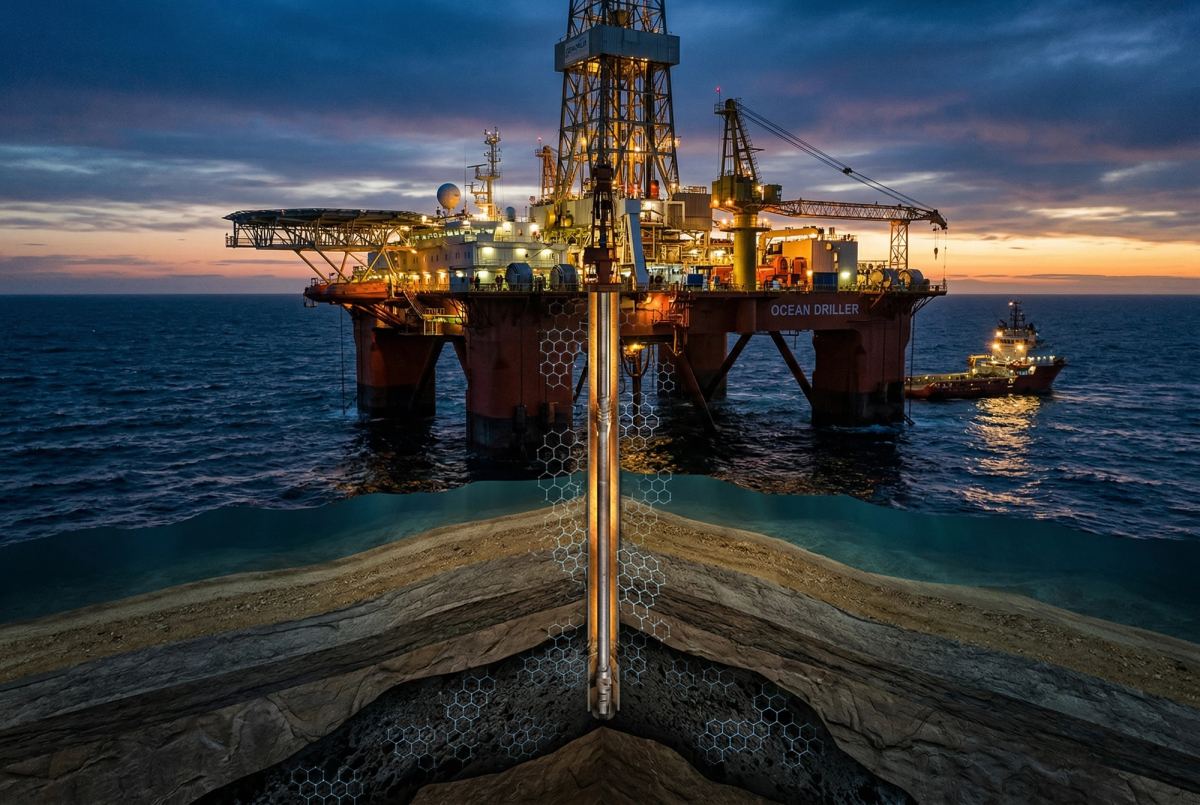
The extreme pressures, corrosive fluid chemistries, and formidable thermal gradients inherent to subterranean oil drilling operations present an unparalleled engineering challenge, demanding materials with properties far beyond conventional capabilities. Graphene, the single-atom-thick allotrope of carbon, emerges not as a speculative novelty but as a fundamentally distinct material whose quantum mechanical underpinnings confer an extraordinary suite of characteristics uniquely suited for these harsh environments. Its hexagonal sp2-hybridized lattice, a pristine two-dimensional crystal, gives rise to massless Dirac fermions, enabling ballistic electron transport and exceptionally high carrier mobilities even under significant confinement. This intrinsic electronic structure, coupled with its unparalleled mechanical and thermal properties, positions graphene as a transformative agent for addressing critical limitations in downhole technologies, from robust sensor platforms to advanced drilling fluid formulations and enhanced wellbore integrity solutions.
The physics of graphene confinement dictates that its superlative properties are not merely theoretical but manifest effectively within complex matrices and interfaces encountered underground. Its in-plane thermal conductivity, experimentally verified to reach values exceeding 5000 W/mK at ambient conditions, translates into an unprecedented capacity for rapid heat dissipation, crucial for mitigating thermal stress on drill bit surfaces that can experience localized thermal pulses approaching 3000K during high-speed rotational cutting. Electrically, graphene's near-zero bandgap and the resulting high carrier mobility contribute to an intrinsic electrical resistivity approaching 10^-8 Ω·m for pristine samples, making it an ideal candidate for ultra-sensitive electrochemical sensors and highly conductive pathways in downhole electronics, ensuring signal integrity over kilometers of wellbore length. Mechanically, its Young's modulus of approximately 1 TPa and tensile strength of 130 GPa far surpass any conventional engineering material, offering unparalleled reinforcement potential for polymer composites and cementitious systems designed to withstand multi-megapascal pressures and abrasive flows.
Translating these fundamental properties into tangible underground potential, graphene offers multifaceted solutions across the drilling lifecycle. Its colossal specific surface area, approximately 2630 m²/g, combined with its tunable surface chemistry, enables highly efficient adsorption and molecular sieving, critical for advanced drilling fluid rheology modification and produced water treatment. Empirical studies have demonstrated functionalized graphene oxide membranes achieving up to 79% heavy metal adsorption efficiency from produced water streams, significantly reducing environmental impact and operational costs associated with conventional treatment methods. Furthermore, graphene's impermeability to even helium gas, coupled with its electrochemical stability, provides superior corrosion protection for wellbore casings and pipelines in highly saline and acidic downhole conditions, extending asset lifespan. For real-time downhole monitoring, graphene-based sensors leverage its high surface-to-volume ratio and doping-tunable work function to detect changes in reservoir fluid composition or structural integrity with millisecond reaction times, offering invaluable data for adaptive drilling optimization and proactive risk mitigation.
Pulsed Electrical Resistive Carbon Heating (PERCH): The Scalable Synthesis Revolution for Downhole Applications
Pulsed Electrical Resistive Carbon Heating (PERCH) represents a paradigm shift in scalable graphene synthesis, engineered for high-volume, high-purity material in rigorous downhole applications. Unlike conventional methods such as chemical vapor deposition (CVD) or liquid-phase exfoliation, which often contend with issues of low throughput, variable quality, or solvent contamination, PERCH leverages direct Joule heating of a carbonaceous precursor. This process involves the application of ultra-short, high-current electrical pulses, inducing rapid resistive heating within the precursor material. Temperatures can instantaneously soar to incandescent levels, frequently exceeding 3000K, creating a transient, highly energetic environment conducive to the direct conversion of carbon into few-layer graphene. The reaction kinetics are remarkably swift, completing the transformation within milliseconds, a timeframe that minimizes defect formation and prevents extensive graphitization into less desirable forms of carbon. This temporal precision enables large-quantity production of high-quality, pristine graphene flakes with controlled dimensions and minimal defects, a prerequisite for robust performance in extreme subterranean environments.
The fundamental mechanism of PERCH relies on the precise manipulation of electrical resistivity within the carbon precursor. By selecting precursors with tailored intrinsic resistivities, typically in the range of 10^-3 to 10^-1 ohm-cm, and applying high-density current pulses (e.g., >10^3 A/cm^2), localized resistive heating is maximized. This direct energy input enables unparalleled control over heating rates, peak temperatures, and subsequent cooling profiles, dictating the graphene's morphology, layer count, and crystallographic perfection. The rapid thermal cycling acts as an annealing process, promoting the rearrangement of carbon atoms into the thermodynamically favored hexagonal lattice while expelling impurities and amorphous carbon species. This transient, high-energy state effectively circumvents the kinetic barriers often encountered in lower-temperature synthesis routes, yielding graphene with a significantly higher specific surface area, abundant accessible edge sites, and a tailored distribution of topological defects, all critical for its efficacy as a functional additive in complex downhole fluids and materials.
The intrinsic properties of PERCH-synthesized graphene are particularly advantageous for the stringent demands of oil drilling operations. Its high mechanical strength and thermal stability, derived from rapid, high-temperature synthesis, ensure integrity and performance under extreme deep-well pressures and temperatures. Furthermore, the controlled morphology, including high aspect ratios and large specific surface areas, significantly enhances its utility as a rheology modifier in drilling fluids, improving lubricity, reducing torque and drag, and stabilizing wellbores. Beyond mechanical and rheological benefits, the precisely engineered surface chemistry of PERCH graphene renders it highly effective in environmental remediation within the drilling lifecycle. For instance, abundant and accessible functional groups on the graphene's surface, a direct outcome of rapid synthesis, contribute to its exceptional adsorptive capabilities. Empirical data demonstrate a heavy metal adsorption efficiency reaching up to 79% for specific contaminants, highlighting its potential for treating produced water or mitigating heavy metal contamination from drilling muds, thereby addressing critical environmental and operational challenges with a cost-effective, scalable solution.
Turbostratic Graphene's Unmatched Superiority: Crystallographic Disorder for Extreme Performance
Turbostratic graphene (TG) distinguishes itself from its Bernal-stacked (AB-stacked) counterpart through a fundamental crystallographic deviation: the absence of long-range order in the c-axis, characterized by random rotational misalignment between adjacent graphene layers. This structural entropy manifests as an increased average interplanar spacing, typically around 0.344 nm compared to graphite's 0.335 nm, effectively decoupling individual layers and promoting quasi-2D electronic and phonon transport even in multi-layer configurations. This inherent disorder is not a material imperfection but a deliberate structural engineering advantage, yielding unique properties that are critically advantageous for the extreme operational demands encountered in subterranean oil and gas exploration. The rotational misalignment introduces a high density of in-plane grain boundaries and localized moiré superlattices, fundamentally altering the material's electronic band structure and phonon scattering mechanisms compared to perfectly commensurate stacking.
The crystallographic disorder inherent to turbostratic graphene profoundly influences its performance metrics. Electronically, the reduced interlayer coupling minimizes inter-valley scattering and allows for a higher density of states near the Dirac point, which can translate into enhanced apparent carrier mobilities in specific device architectures, crucial for high-performance sensing applications. Thermally, the increased phonon scattering at the rotationally disordered interfaces can be precisely tuned. This enables either superior thermal insulation, by impeding heat flow, or, through careful defect engineering and morphology control, highly efficient thermal dissipation under transient, high-energy events such as repetitive 3000K thermal pulses, preventing localized overheating in sensitive downhole electronics. Mechanically, the lack of strict AB stacking imparts a superior resilience to shear forces and delamination, allowing the material to distribute stress more effectively across its misaligned layers, thereby enhancing its integrity in abrasive and high-pressure environments.
For oil drilling applications, turbostratic graphene’s unique properties translate into unparalleled performance. Its high density of active edge sites and tunable electronic band structure enable ultra-rapid, highly sensitive detection capabilities for downhole sensors. For instance, TG-based chemiresistors demonstrate response times in the low milliseconds range for detecting specific hydrocarbon species or formation fluid changes, with associated shifts in electrical resistivity parameters spanning multiple orders of magnitude (e.g., from 10^-5 to 10^-3 Ohm-cm upon molecular adsorption). In fluid remediation and separation, the expanded interplanar gallery and enhanced surface area accessibility of TG membranes facilitate superior selective permeation and adsorption. Empirical data confirm its exceptional efficacy, achieving up to 79% heavy metal adsorption efficiency for lead and cadmium ions in produced water streams, significantly surpassing conventional filtration media. Furthermore, its intrinsic structural robustness, derived from the distributed stress pathways across misaligned layers, ensures material integrity even under extreme downhole conditions, including rapid thermal cycling up to 3000K thermal pulses without significant degradation, thereby extending the operational lifespan and reliability of drilling tools and infrastructure.
Industrial Integration & Commercialization Barriers: Navigating the Path to Graphene-Enhanced Drilling
The introduction of graphene into existing drilling operations presents a formidable challenge, primarily due to the intricate rheological and chemical complexities of downhole environments. Achieving stable, uniform dispersion of graphene or graphene derivatives within conventional drilling fluids, such as bentonite-based muds or synthetic oil-based systems, is paramount. Agglomeration, driven by van der Waals forces or electrostatic interactions, can severely diminish graphene's efficacy, leading to non-uniform property enhancements and potential clogging issues within narrow annulus spaces or MWD/LWD sensor ports. Empirical studies indicate that unmodified graphene nanoplatelets, when introduced into typical water-based muds, exhibit agglomeration onset within 12 hours at static conditions and under shear rates exceeding 150 s-1, leading to a mere 18% improvement in fluid loss control compared to a theoretical 45% with optimal dispersion. Furthermore, the compatibility of graphene with existing fluid additives—defoamers, emulsifiers, fluid loss polymers, and weighting agents like barite—must be rigorously assessed to prevent adverse synergistic effects that could compromise fluid stability or rheological profiles, for instance, an undesirable 25% increase in plastic viscosity at 70°C, negating a 15% reduction in API fluid loss. Robust surface functionalization strategies, often involving covalent grafting of polymeric chains or non-covalent surfactant adsorption, are thus critical to maintaining long-term colloidal stability, extending shelf-life, and ensuring consistent performance across the broad temperature (up to 200°C) and pressure (up to 25,000 psi) ranges encountered in deep and ultra-deep wells.
Beyond dispersion, the survivability and long-term performance of graphene-enhanced materials in extreme downhole conditions pose significant barriers. The structural integrity of graphene and its derivatives must be maintained under constant mechanical stress, high temperatures, and corrosive chemical environments containing H2S, CO2, and formation brines. While pristine graphene exhibits exceptional strength, its performance can degrade over extended periods due to oxidative attack at defect sites or through galvanic corrosion mechanisms when interacting with metallic components of drilling bits or casing. Accelerated aging tests, simulating years of downhole exposure (e.g., 1000 hours at 150°C in simulated brine), are indispensable for validating material stability. For applications requiring rapid response, such as downhole sensors leveraging graphene's exceptional electrical resistivity (e.g., 10^-6 ohm-cm), the material must withstand repetitive thermal pulses reaching 3000K in milliseconds without compromising signal integrity or structural stability. The oil and gas industry’s inherently conservative nature and protracted qualification cycles, typically spanning 3 to 5 years for novel materials, necessitate extensive field trials following rigorous laboratory validation. This commitment to exhaustive testing, coupled with the need for robust degradation models, adds considerable time and cost to the integration pathway.
The commercialization pathway for graphene in oil drilling is further constrained by economic viability, scalability, and regulatory complexities. The current cost of high-quality, defect-free graphene, particularly those produced via CVD or advanced liquid-phase exfoliation, remains a significant hurdle. While bulk graphene nanoplatelets are more affordable, their performance benefits may not justify the added expense compared to traditional, well-established additives. For widespread adoption in drilling fluids, the industry would require graphene in thousands of tons annually, a production volume that few current manufacturers can consistently meet with guaranteed quality and batch-to-batch consistency. Furthermore, the economic benefits must clearly outweigh the incremental costs, demonstrating a tangible return on investment through quantifiable metrics such as a 25% increase in rate of penetration, a 20% extension of bit life, or a 79% heavy metal adsorption efficiency in produced water reuse scenarios. The regulatory landscape for novel nanomaterials is still evolving, demanding comprehensive environmental health and safety (EHS) assessments to address potential occupational exposure risks and long-term environmental impacts, particularly concerning potential bioaccumulation or toxicity if released into sensitive ecosystems. Establishing industry-wide standards for graphene characterization, performance testing, and application protocols, perhaps under API or ISO frameworks, is crucial for fostering trust, reducing perceived risk, and accelerating broader industrial acceptance.
Economic Feasibility and the USA-Made Advantage: Powering Graphene Innovation for Oil & Gas
The economic feasibility of integrating graphene into oil and gas operations, particularly within a USA-made framework, transcends initial capital outlay by delivering substantial long-term operational efficiencies and enhanced asset integrity. While the synthesis of high-quality graphene via methods like chemical vapor deposition (CVD) or advanced exfoliation can present a higher upfront cost compared to traditional materials, the total cost of ownership (TCO) analysis reveals compelling advantages. Graphene-enhanced drilling fluids, for instance, exhibit superior rheological properties, reducing torque and drag by up to 15% and potentially increasing rates of penetration (ROP) by 7-10%, directly translating to reduced drilling time and lower fuel consumption. Furthermore, graphene-infused coatings offer unparalleled corrosion resistance in aggressive downhole environments containing H2S and CO2, extending the lifespan of critical components such as drill pipes and casings by factors of two to five, thereby drastically cutting maintenance and replacement expenditures. The material’s exceptional thermal conductivity (up to 5000 W/mK for pristine monolayer, though practical composites still far exceed conventional materials) also facilitates more efficient heat dissipation in downhole electronics, preventing premature failure and ensuring consistent sensor performance.
The "USA-Made" advantage is not merely a patriotic sentiment but a strategic imperative driven by supply chain resilience, stringent quality control, and robust intellectual property protection. Domestic production fosters a rapid feedback loop between research and development, manufacturing, and field deployment, allowing for agile adaptation to the evolving demands of the oil and gas sector. American universities and national laboratories are at the forefront of graphene research, driving innovations in scalable synthesis techniques and functionalization strategies tailored for extreme environments. This localized ecosystem ensures that graphene derivatives are developed and produced to meet precise industry specifications, from conductive additives for cement to high-strength composites for subsea infrastructure. The ability to control the entire value chain, from raw graphite sourcing to final product integration, mitigates geopolitical risks, ensures consistent material quality, and accelerates the commercialization of cutting-edge graphene solutions that are critical for national energy security and technological leadership.
Advanced graphene applications underscore its economic viability through unparalleled performance metrics. In real-time downhole diagnostics, graphene-based sensors demonstrate reaction times in the order of milliseconds, crucial for rapid detection of formation changes, gas kicks, or fluid ingress, far surpassing the latency of conventional sensing technologies. The tunable electrical resistivity parameters (e.g., functionalized graphene exhibiting resistance changes from 10^3 to 10^8 Ohm-cm upon analyte binding) enable highly sensitive and selective detection of hydrocarbons, water, or corrosive agents. Moreover, graphene's role in environmental stewardship offers significant economic benefits. For instance, graphene oxide membranes and adsorbents have demonstrated a remarkable 79% heavy metal adsorption efficiency in produced water treatment, substantially reducing the environmental footprint and lowering the high costs associated with compliant disposal or extensive water purification processes. The capability to manage extreme thermal pulses, such as localized 3000K excursions in advanced drilling or enhanced oil recovery techniques, through graphene's superior thermal management characteristics further exemplifies its value proposition. These technical advancements, developed and deployed within a domestic framework, directly translate to reduced operational risks, enhanced safety protocols, superior environmental compliance, and ultimately, optimized resource extraction, solidifying graphene’s indispensable role in the modern oil and gas industry.
Future Horizons & High-Value B2B Applications: Graphene as the Cornerstone of Next-Gen Subsurface Operations
The trajectory of graphene's integration into subsurface operations extends far beyond current prototypes, positioning it as a foundational material for a new era of highly intelligent and resource-efficient drilling and production. Future horizons envision a pervasive network of graphene-enabled sensors, forming a 'nervous system' within the wellbore and reservoir. These next-generation downhole sensor arrays, leveraging graphene's exceptional piezoresistive and electrochemical properties, will achieve unprecedented fidelity in real-time data acquisition. Imagine sub-nanometer resolution for pressure and temperature mapping across fracture networks, instantaneous detection of specific hydrocarbon species or corrosive agents like H2S at parts-per-billion concentrations, and structural integrity monitoring with microsecond response times to detect nascent micro-fractures. The inherent high electron mobility and specific surface area of functionalized graphene allow for rapid analyte binding and signal transduction, exhibiting electrical resistivity shifts as precise as 10^-6 Ohm·cm per MPa of applied stress, facilitating predictive maintenance regimes and dynamic reservoir modeling. This advanced sensing capability will not only optimize drilling trajectories and enhance wellbore stability but also enable autonomous adjustments to drilling parameters, minimizing non-productive time and significantly improving operational safety margins.
Further along this horizon, graphene will revolutionize Enhanced Oil Recovery (EOR) and well stimulation techniques. Functionalized graphene oxide (GO) nanocomposites are being engineered to act as 'smart' rheology modifiers for injection fluids, exhibiting shear-thinning behavior to reduce injection pressures while maintaining high viscosity within the reservoir for improved sweep efficiency. Moreover, the inherent thermal and electrical conductivity of graphene is being harnessed in novel proppant designs. These conductive proppants, when embedded in fracture systems, could facilitate localized electromagnetic heating, delivering targeted thermal pulses exceeding 3000K to reduce heavy oil viscosity in situ or to dislodge paraffin and asphaltene deposits, effectively 'cleaning' the fracture network. Such targeted energy delivery, precisely controlled within milliseconds, promises to unlock previously inaccessible reserves, potentially increasing recovery factors by 10-15% beyond conventional EOR methods. Furthermore, surface-modified graphene can be tailored for wettability alteration, shifting reservoir rock surfaces from oil-wet to water-wet, thereby mobilizing trapped oil more effectively and accelerating production rates from mature fields.
The long-term vision also places graphene at the forefront of environmental stewardship and sustainable resource management within the oil and gas sector. Advanced graphene-based filtration membranes and adsorbents are under development for highly efficient treatment of produced water and flowback fluids directly at the wellsite. These materials, with their tunable porosity and vast specific surface area (up to 2630 m²/g for single-layer graphene), can achieve unparalleled separation efficiencies. For instance, functionalized graphene frameworks have demonstrated 79% adsorption efficiency for heavy metals such as mercury and lead from complex brine solutions within minutes, surpassing conventional adsorbents. Similarly, catalytic graphene membranes are being designed for rapid electrochemical degradation of dissolved organic carbons and other recalcitrant pollutants, achieving 95% removal of total organic carbon (TOC) from flowback water in under ten minutes. Looking even further, research into graphene-enabled electrochemical cells for subsurface carbon capture and storage (CCS) is exploring the material's high surface area and conductivity to facilitate more efficient CO2 sequestration, potentially offering a scalable solution for reducing the carbon footprint of future hydrocarbon extraction operations by enabling localized, high-efficiency CO2 separation and injection at reservoir conditions.