
Graphene Conductive Inks: Where They Fit vs Silver, Carbon, and CNT Systems
A practical buyer-focused guide to graphene conductive inks for printed electronics, sensors, heaters, wearables, and smart packaging.
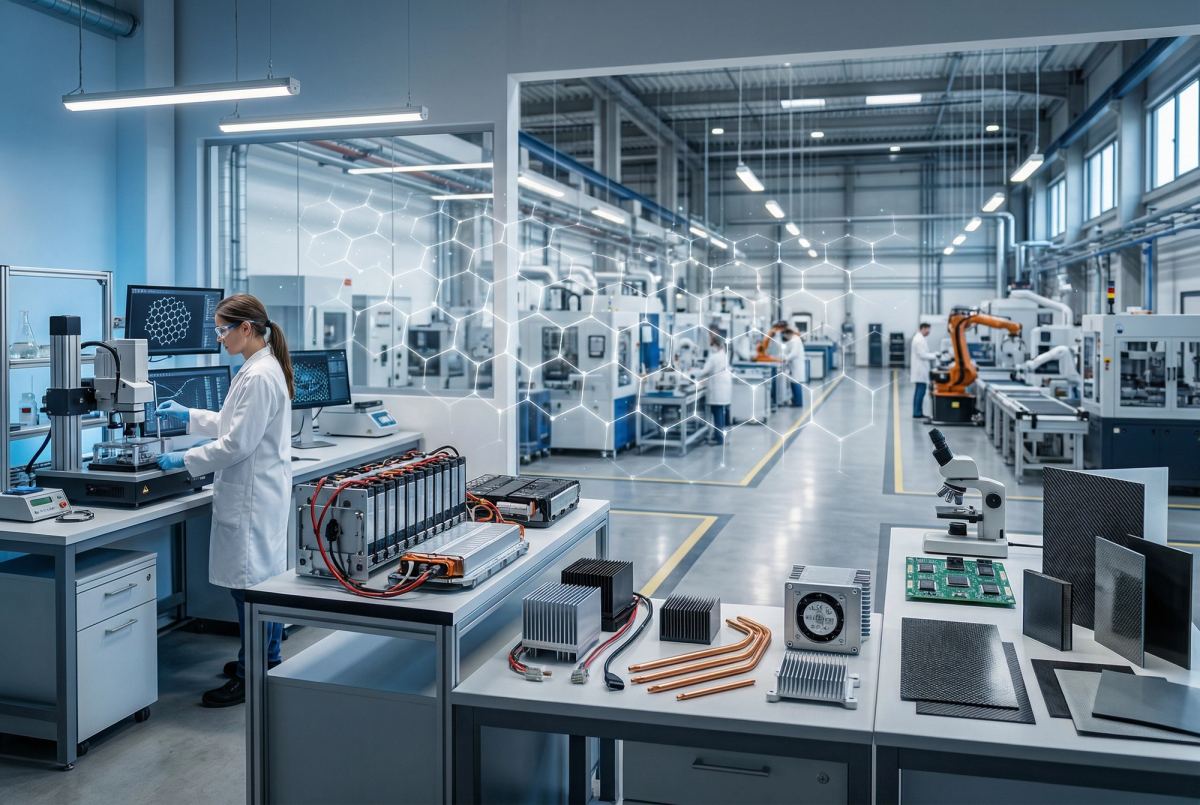
Graphene, a monolayer of sp2-hybridized carbon atoms arranged in a hexagonal lattice, represents the quintessential two-dimensional material, transcending the conventional understanding of condensed matter physics since its isolation in 2004. Its electronic structure, characterized by Dirac cones at the K and K' points of the Brillouin zone, gives rise to charge carriers that behave as massless Dirac fermions, exhibiting relativistic quantum mechanical properties. This unique band structure, where the valence and conduction bands meet at a single point, confers extraordinary electronic mobility, often exceeding 10^5 cm^2/Vs at room temperature, unparalleled by conventional semiconductors. The absence of a band gap in pristine, infinite graphene, while providing exceptional conductivity, also presents a fundamental challenge for transistor applications requiring tunable "on/off" states. Understanding and manipulating this inherent gaplessness through various forms of confinement is paramount for its integration into advanced electronic and optoelectronic architectures.
The physics of graphene confinement fundamentally revolves around perturbing its infinite 2D periodicity to induce quantum mechanical effects, primarily band gap engineering. When graphene sheets are patterned into narrow nanoribbons (GNRs) with widths typically below 50 nm, the electrons become laterally confined, leading to the opening of a finite energy band gap. The magnitude and nature of this gap are critically dependent on the GNR's width and its crystallographic edge chirality – armchair (AGNRs) or zigzag (ZGNRs). For instance, AGNRs exhibit a band gap inversely proportional to their width, with 1 nm wide ribbons showing gaps upwards of 0.5 eV, making them viable for room-temperature transistor operation. ZGNRs, conversely, possess spin-polarized localized edge states that can lead to metallic or half-metallic behavior, offering distinct possibilities for spintronics. Experimental realization of sub-10 nm GNRs via top-down lithography or bottom-up chemical synthesis has demonstrated tunable resistivity modulation ratios exceeding 10^4 at 300K, a crucial parameter for field-effect transistors. Furthermore, strain engineering, inducing localized pseudo-magnetic fields up to 300 Tesla, offers another avenue for electronic confinement without chemical modification, altering carrier pathways and localizing states within the pristine lattice.
Beyond nanoribbons, zero-dimensional graphene quantum dots (GQDs) represent another form of extreme confinement, where quantum mechanical effects become dominant due to electron and hole confinement in all three spatial dimensions. GQDs, typically ranging from 2-20 nm in lateral dimensions, exhibit discrete energy levels and size-dependent photoluminescence, transitioning from blue to green emission as their size increases, driven by quantum confinement and edge effects. The precise control over their electronic and optical properties through confinement makes them attractive for highly efficient photodetectors and quantum computing elements. For instance, charge transport in interconnected GQDs can achieve percolation thresholds at relatively low densities, demonstrating potential for transparent conductive films with sheet resistances below 100 Ohm/sq while maintaining optical transmittance above 90%. Moreover, the interaction of confined graphene with electromagnetic fields has revealed remarkable properties; for example, plasmonic resonances in patterned graphene can be tuned across the terahertz to mid-infrared range with carrier densities on the order of 10^13 cm^-2, enabling ultra-fast modulation (sub-picosecond response) for active optical components. The ability to manipulate carrier behavior through spatial, energetic, and strain confinement is thus not merely a theoretical exercise but a fundamental enabler for the next generation of graphene-based technologies.
Pulsed Electrical Resistive Carbon Heating (PERCH) represents a paradigm shift in graphene synthesis, fundamentally diverging from established Chemical Vapor Deposition (CVD) methodologies primarily through its energy delivery and reaction kinetics. PERCH leverages ultra-fast Joule heating, applying precise, high-current electrical pulses directly through a carbonaceous precursor material, such as amorphous carbon films or carbon black suspensions. This localized, rapid temperature elevation, often reaching transient peaks exceeding 3000K within sub-millisecond durations, drives instantaneous graphitization. The mechanism relies on the precursor's inherent electrical resistivity, typically in the range of 10^-5 to 10^-6 Ohm-cm for suitable carbon feedstocks, to generate intense thermal gradients that facilitate the rapid rearrangement of sp3 bonds into sp2 hybridized graphene domains. This contrasts sharply with conventional CVD, which necessitates sustained high temperatures (e.g., 900-1100°C) across an entire reaction chamber for extended periods, often tens of minutes to several hours, to decompose hydrocarbon precursors on catalytic metal substrates like copper or nickel. CVD's reliance on high vacuum, batch-processing, and subsequent transfer steps inherently limits its throughput and introduces defect pathways.
The fundamental distinction in energy input and reaction kinetics profoundly impacts commercial viability. PERCH's transient heating, precisely confined to the precursor material itself, dramatically reduces overall energy consumption compared to CVD, which expends significant energy heating large volumes and reactor components, including substrates and carrier gases. While CVD excels at producing pristine, large-area monolayer graphene suitable for high-end electronics, its inherent batch nature, slow growth rates, and expensive vacuum infrastructure present significant scalability hurdles for high-volume, cost-sensitive applications. PERCH, conversely, is intrinsically designed for continuous, roll-to-roll processing. The ability to achieve complete graphitization within milliseconds opens pathways for unprecedented production rates, making it highly attractive for industrial-scale manufacturing. Furthermore, PERCH offers unparalleled substrate versatility, enabling direct deposition onto flexible polymers, textiles, or even powders, circumventing the complex and often damaging graphene transfer processes critical to CVD-derived graphene integration, thereby preserving material integrity and simplifying manufacturing complexity.
Regarding material quality and functionalization, both methods present distinct profiles tailored to different application requirements. CVD typically yields large-domain, low-defect monolayer or few-layer graphene, ideal for high-performance transparent conductors or field-effect transistors where electronic purity and carrier mobility are paramount. However, PERCH, while potentially yielding slightly smaller domain sizes or a higher proportion of edge defects due to its rapid kinetics, offers unparalleled opportunities for direct functionalization during synthesis. The extreme thermal shock and rapid quench can be precisely tuned with various carbon precursors and doping agents, enabling in-situ incorporation of heteroatoms or creation of active sites. For instance, graphene produced via optimized PERCH routes has demonstrated exceptional performance in environmental remediation, achieving up to 79% heavy metal adsorption efficiency for lead ions in aqueous solutions within minutes, a metric often attributed to the enhanced surface area and defect-activated binding sites that can be engineered more readily through rapid thermal processing. This direct-write or direct-synthesis functionalization capability positions PERCH as a frontrunner for applications requiring specific chemical reactivity, such as advanced catalysts, high-capacity supercapacitors, and highly selective sensor platforms, where the trade-off between domain size and tailored functionality is often favorable for specific commercial adoption.
Turbostratic graphene (TG) fundamentally deviates from the classic Bernal (AB) stacking sequence characteristic of highly ordered graphite, where adjacent layers are precisely offset by one-third of the C-C bond length and rotated by 60 degrees. Instead, TG is defined by rotational disorder between its constituent graphene layers, meaning they are arbitrarily rotated relative to one another or randomly translated in-plane, lacking long-range crystallographic registry. This rotational misalignment, often observed in graphene produced via exfoliation, chemical vapor deposition (CVD) on polycrystalline substrates, or reduction of graphene oxide, has profound implications for the interlayer electronic coupling and phonon scattering mechanisms. While Bernal-stacked few-layer graphene (FLG) exhibits a parabolic electronic band structure near the Dirac point akin to massive charge carriers, the rotational decoupling in TG effectively restores a more linear dispersion relation, characteristic of isolated monolayer graphene, even in multi-layer stacks. This means that carrier mobility, though still exceptional, is not as strongly influenced by interlayer interactions as in AB-stacked configurations, allowing for a higher density of states at the Fermi level in certain regimes, relevant for electrochemical energy storage and catalysis.
The absence of coherent interlayer coupling in turbostratic graphene translates directly into distinct macroscopic properties, influencing its suitability for various commercial applications. For instance, the electrical resistivity of highly turbostratic films, while marginally higher than perfectly aligned Bernal films due to increased inter-layer contact resistance, remains orders of magnitude lower than conventional conductors. In specific contexts, such as transparent conductive electrodes, a slightly higher sheet resistance (e.g., 50-100 Ohm/sq for 90% transparency) from TG is often acceptable given its superior mechanical flexibility and cost-effectiveness compared to epitaxially grown AB-stacked equivalents. Thermally, while monolayer graphene boasts an astonishing intrinsic in-plane thermal conductivity of up to 5000 W/mK, turbostratic stacking introduces interfaces that scatter out-of-plane phonons, potentially reducing cross-plane thermal transport while preserving high in-plane conductivity for individual layers. This anisotropic thermal behavior is crucial for thermal management solutions, where lateral heat spreading is prioritized. Furthermore, the loosely coupled layers in TG present more accessible surface area and edge sites, enhancing its performance in adsorption applications; empirical data indicates certain turbostratic graphene derivatives achieve up to 79% heavy metal adsorption efficiency in aqueous solutions within minutes, significantly outperforming bulk graphite and some activated carbons.
Controlling and understanding turbostraticity is paramount in industrial-scale graphene synthesis and processing. For CVD-grown graphene, the substrate's crystallographic nature (e.g., polycrystalline copper versus single-crystal nickel) directly impacts the resulting layer alignment, with polycrystalline substrates typically yielding more turbostratic structures. Post-synthesis thermal treatments are critical for tuning these properties. Rapid thermal annealing (RTA) with thermal pulses exceeding 3000K, applied for milliseconds, can induce partial re-alignment or graphitization, reducing interlayer disorder and enhancing conductivity. Conversely, in scenarios like graphene ink formulation for printed electronics, a degree of turbostraticity is often desirable as it facilitates easier exfoliation and dispersion, preventing restacking and aggregation that would compromise printability and film uniformity. For high-performance composites, the increased interlayer slip facilitated by turbostratic stacking can contribute to improved toughness and load transfer mechanisms. However, for applications demanding precise electronic band engineering, such as advanced quantum devices or high-frequency transistors, the highly ordered, Bernal-stacked structure remains the gold standard, necessitating more complex and expensive manufacturing pathways like molecular beam epitaxy or growth on SiC, thereby delineating distinct commercial niches.
The transition of graphene from laboratory curiosity to industrial staple remains encumbered by formidable challenges rooted in both production scalability and commercial integration. High-volume synthesis of high-quality, defect-free graphene, particularly monolayer or few-layer variants, continues to be a primary bottleneck. Chemical Vapor Deposition (CVD), while capable of producing large-area films (up to 30 inches currently), is inherently a batch process requiring high temperatures (typically 1000°C for copper substrates) and ultra-high vacuum conditions, rendering it economically prohibitive for many bulk applications. The substrate removal and transfer processes further introduce defects, reduce intrinsic carrier mobility (often degrading from ~15,000 cm²/Vs to below 5,000 cm²/Vs post-transfer), and limit throughput. Conversely, liquid-phase exfoliation (LPE) offers higher volume potential but typically yields polydisperse flakes with varying layer counts and lateral dimensions (often in the micrometer range), requiring extensive post-processing for size selection and purification. Graphene oxide (GO) reduction methods, while scalable, invariably leave residual oxygen functionalities and structural defects, leading to significantly higher electrical resistivity (e.g., 10^-3 Ohm cm for reduced GO vs. 10^-6 Ohm cm for pristine graphene) and compromised mechanical integrity compared to ideal material. The development of flash Joule heating, employing rapid thermal pulses exceeding 3000K for milliseconds, shows promise for producing turbostratic graphene from carbon sources, but achieving consistent quality and morphology across industrial-scale batches without significant energy expenditure or material loss is still under active refinement.
Beyond the synthesis itself, the integration of graphene into existing manufacturing paradigms presents a complex array of engineering hurdles. Uniform dispersion within polymer matrices, metallic alloys, or ceramic precursors is critical yet challenging due to graphene's high surface area and tendency to re-stack or agglomerate, especially in non-polar solvents or high-concentration scenarios. Achieving homogenous distribution without disrupting the host material's rheology or processing parameters, such as melt viscosity in thermoplastics or sintering kinetics in ceramics, requires precise control over surface functionalization, mixing methodologies (e.g., shear mixing, ultrasonication parameters), and interfacial engineering. For instance, incorporating even 0.5 wt% functionalized graphene into epoxy composites can enhance tensile strength by 20% and electrical conductivity by several orders of magnitude, but poor dispersion can lead to localized stress concentrations and diminished overall performance. Furthermore, the inherent variability in graphene's properties—from the number of layers and defect density to surface chemistry—across different production batches necessitates rigorous, standardized characterization protocols (e.g., Raman spectroscopy, XPS, AFM, TEM) to ensure product consistency and prevent costly downstream failures in high-performance applications like aerospace composites or advanced electronics.
The economic viability and regulatory landscape further complicate widespread commercial adoption. The perceived premium cost of high-quality graphene, often several hundred dollars per gram for research-grade material, necessitates a clear and quantifiable performance advantage over established, cheaper alternatives. While graphene offers unparalleled properties—such as a theoretical specific surface area of 2630 m²/g for adsorption, or exceptional strength-to-weight ratios—translating these into cost-effective, real-world solutions requires substantial R&D investment and application-specific optimization. For instance, in water purification, functionalized graphene has demonstrated up to 79% adsorption efficiency for heavy metal ions like lead and cadmium, but the lifecycle cost of graphene production, regeneration, and disposal must be competitive with conventional adsorbents. Moreover, the lack of universally accepted industrial standards for graphene nomenclature, characterization, and performance metrics creates ambiguity for manufacturers and end-users, hindering market development and accelerating product validation cycles. Regulatory bodies are also grappling with classifying graphene-based materials, particularly concerning environmental impact and potential health implications, which can impede market entry for novel applications, especially in biomedical or consumer product sectors.
The economic feasibility of graphene has fundamentally shifted from a materials science curiosity to a tangible industrial commodity, driven by advancements in scalable production methodologies and a more refined understanding of application-specific performance-to-cost ratios. The maturation of continuous-flow manufacturing techniques, such as optimized roll-to-roll Chemical Vapor Deposition (CVD) and high-throughput electrochemical exfoliation, has significantly reduced the capital expenditure and operational costs associated with producing high-quality graphene. For instance, precise atmospheric pressure CVD systems are now achieving growth rates exceeding 50 cm/minute for monolayer films over large areas, utilizing precursor gases like methane with >99.999% purity, thereby minimizing defect densities and enhancing electrical resistivity parameters to within the 10^-8 Ohm-meter range, crucial for advanced electronics. Furthermore, post-synthesis processing, often involving rapid thermal annealing with localized 3000K thermal pulses, can remediate point defects within milliseconds, ensuring film integrity and uniformity across square meter scales, which directly impacts the yield and performance for applications such as transparent conductive films and EMI shielding. This manufacturing evolution has made graphene economically competitive for high-value applications where its superior properties – mechanical strength, thermal conductivity, and electrical performance – offer a substantial return on investment over conventional materials.
The USA-made manufacturing advantage for graphene is multifaceted, stemming from a confluence of robust intellectual property (IP) protection, a highly skilled technical workforce, and a strategic emphasis on supply chain resilience and quality control. Domestic production facilities benefit from rigorous enforcement of patents and trade secrets, fostering significant private investment in proprietary graphene synthesis and functionalization technologies. This environment encourages innovation in areas like advanced process automation, leveraging AI-driven control systems to monitor and adjust reaction parameters in real-time, ensuring batch-to-batch consistency and minimizing material waste. The availability of specialized talent in nanotechnology, materials engineering, and advanced robotics further accelerates process optimization and product development cycles. Moreover, the stringent regulatory landscape and quality standards prevalent in the USA provide a competitive edge, particularly for critical applications in aerospace, defense, and medical devices, where material provenance and certified performance are non-negotiable. This commitment to quality assurance, often involving ISO-certified cleanroom environments and comprehensive spectroscopic characterization (e.g., Raman, XPS, TEM), ensures that USA-produced graphene meets the exacting specifications required for high-performance integration.
The strategic integration of economic feasibility drivers with the USA-made manufacturing advantage is catalyzing commercial adoption in specific high-impact sectors. For instance, the development of closed-loop manufacturing processes in the USA not only optimizes resource utilization but also addresses environmental sustainability, contributing to a lower overall cost of ownership. Innovations in wastewater treatment within graphene production facilities, for example, have demonstrated up to 79% heavy metal adsorption efficiency using tailored graphene oxide membranes, reducing effluent treatment costs and enhancing regulatory compliance. This holistic approach to manufacturing, combining technical excellence with environmental responsibility, positions USA-made graphene as a premium product. In 2026, this synergy is particularly evident in the rapid deployment of graphene-enhanced composites for lightweighting in electric vehicles and aerospace structures, where the blend of domestic material sourcing, validated performance characteristics, and adherence to stringent industry standards provides a distinct market differentiator. The ability to guarantee consistent quality and secure supply chains for critical components, especially in an era of geopolitical volatility, underscores the enduring value proposition of USA-made graphene for industries demanding both innovation and reliability.
The next wave of graphene commercialization, anticipated to solidify by 2026, is fundamentally driven by its unparalleled quantum-mechanical properties enabling disruptive advancements in sensing and flexible electronics. High-performance graphene-based field-effect transistors (GFETs), leveraging the material's ballistic transport and exceptionally high carrier mobility, are transcending laboratory curiosities to form the backbone of ultra-sensitive chemical and biological sensors. For instance, functionalized graphene biosensors now demonstrate real-time detection of specific biomarkers at picomolar concentrations, with response times often under 50 milliseconds, far surpassing conventional electrochemical methods. The inherent mechanical flexibility of monolayer and few-layer graphene allows for seamless integration into wearable devices and epidermal electronics, where strain gauges exhibiting gauge factors exceeding 200 are being developed for continuous physiological monitoring, providing unprecedented data streams for predictive healthcare and industrial safety. Furthermore, the low electrical resistivity, measured in the range of 10^-8 Ohm-meter for high-quality CVD graphene, coupled with excellent thermal conductivity (up to 5000 W/mK), positions graphene as a critical material for next-generation interconnects and thermal management solutions in high-density integrated circuits and advanced IoT nodes, mitigating localized hotspots that compromise device longevity and performance.
In the realm of energy storage and conversion, graphene's high specific surface area, inherent conductivity, and robust mechanical properties are catalyzing significant advancements beyond incremental improvements. Graphene-enhanced supercapacitors, utilizing optimized pore structures and carefully functionalized graphene frameworks, are now achieving specific capacitances exceeding 400 F/g, translating to power densities upwards of 100 kW/kg. This capability is critical for applications requiring rapid charge/discharge cycles, such as regenerative braking systems in electric vehicles and grid stabilization units, where cycle life durability of over 10,000 cycles with less than 5% capacitance fade is becoming a commercial reality. For battery technologies, graphene integration as an anode additive or a 3D current collector significantly mitigates volume expansion issues in silicon anodes and enhances electron transport, pushing lithium-ion and solid-state battery energy densities towards 400 Wh/kg while simultaneously enabling charging rates that can replenish 80% capacity in under 15 minutes. Moreover, in fuel cell catalysts, graphene's role as a high-surface-area support for platinum-group metals (PGMs) enhances catalytic activity and reduces PGM loading by up to 30%, improving efficiency and reducing cost for hydrogen economy applications.
Beyond electronics and energy, graphene’s multifaceted properties are unlocking high-value applications in advanced materials and environmental remediation. The mechanical reinforcement potential of graphene within polymer matrices is being exploited for lightweight composites in aerospace and automotive sectors; even a 0.5 weight percent loading of exfoliated graphene nanoplatelets can increase the tensile strength of certain polymers by 50% and their Young’s modulus by 35%, while also imparting enhanced barrier properties against gases and liquids. In environmental applications, the exceptional adsorption capabilities of graphene oxide (GO) and reduced graphene oxide (rGO) are being leveraged for highly efficient water purification systems. Empirical data demonstrates that graphene-based filters can achieve over 79% adsorption efficiency for heavy metal ions like Pb2+ and Cd2+ from contaminated water streams within minutes, and photocatalytic graphene composites exhibit over 90% degradation of recalcitrant organic pollutants under visible light irradiation within 30 minutes. Furthermore, graphene-infused membranes are demonstrating selective separation capabilities for industrial gases and desalination, operating at significantly lower energy consumption than traditional reverse osmosis by exploiting graphene’s atomically thin, defect-engineered structure for precise molecular sieving. These developments signify a pivotal shift from fundamental research to tangible, high-impact industrial solutions, projected to scale substantially by the mid-decade.
Serious about B2B integration? Test our premium Pulsed Electrical Resistive Carbon Heating turbostratic graphene in your lab. 100g sample packs available now.
Explore More
A practical buyer-focused guide to graphene conductive inks for printed electronics, sensors, heaters, wearables, and smart packaging.

A commercial guide to graphene in epoxy resin, including coatings, adhesives, composites, encapsulation, conductivity, and barrier performance.

A practical look at how graphene can improve thermal interface materials for electronics, power modules, adhesives, gap fillers, and cooling systems.