
Graphene Radar Absorbing Materials for Aircraft and Drones
Graphene coatings are being studied for radar absorbing materials because they can help make aircraft and drones lighter, thinner, and more electromagnetically tunable.
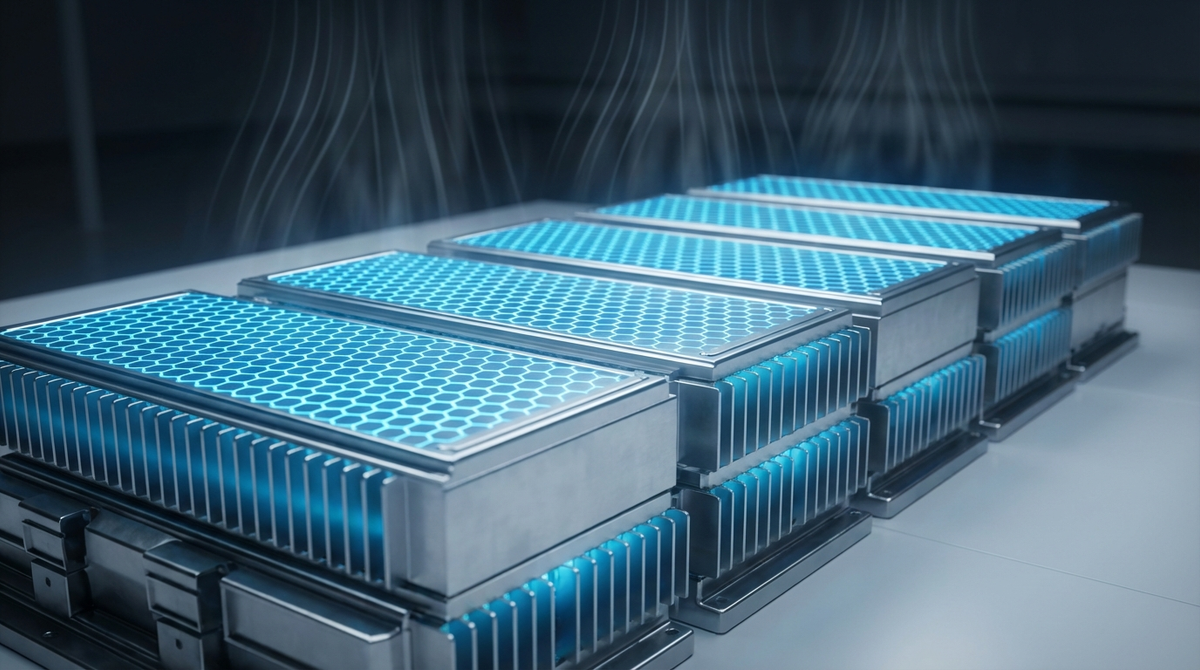
The exceptional intrinsic properties of graphene, a single atomic layer of sp2-hybridized carbon atoms arranged in a hexagonal lattice, position it as a revolutionary material for advanced thermal management, particularly within the demanding confines of electric vehicle (EV) battery packs. Its two-dimensional structure dictates unique phonon transport mechanisms, enabling ballistic thermal conduction over significant distances at room temperature, which far surpasses the diffusive transport observed in bulk materials. This allows for unparalleled thermal conductivity, experimentally measured up to 5000 W/mK for pristine suspended samples, making it vastly superior to conventional copper or aluminum. The critical advantage for EV applications lies in graphene's ability to efficiently dissipate localized thermal hotspots – a pervasive issue in high-power battery operation – by rapidly spreading heat across its surface, thereby mitigating temperature gradients that accelerate degradation and elevate thermal runaway risks. The challenge, however, lies in translating these nanoscale phenomena into macroscale engineering solutions while preserving its superlative properties within a composite or integrated system.
The physics governing graphene's thermal performance is rooted in its unique electronic band structure, featuring Dirac fermions, and the strong electron-phonon coupling facilitated by its atomic thinness (approximately 0.335 nm). This allows for extremely rapid energy transfer between charge carriers and lattice vibrations, manifesting as an ultrafast thermal response. For instance, graphene has demonstrated the capacity to dissipate intense localized thermal pulses exceeding 3000K within milliseconds, a crucial capability for managing transient overpower events or internal short circuits in battery cells. This rapid kinetic response is essential for preventing localized thermal runaway propagation. Furthermore, graphene's extremely low mass density combined with its high in-plane modulus contributes to high phonon group velocities, directly enhancing its thermal diffusivity. However, integrating graphene into 3D battery architectures introduces challenges such as interface thermal resistance between graphene layers and adjacent materials, demanding innovative engineering of graphene composites and interfaces to fully harness its inherent thermal advantages.
Beyond its direct thermal conduction capabilities, graphene’s multifaceted nature offers collateral benefits critical for EV battery longevity and safety. Highly conductive graphene variants exhibit electrical resistivity parameters in the sub-10^-6 Ohm·cm range, which, when integrated into current collectors or electrode matrices, significantly reduces ohmic heating within the battery itself, thereby lowering the baseline thermal load. Moreover, its high specific surface area and chemical stability allow for broader material engineering applications. For example, in mitigating degradation pathways, graphene has been shown to exhibit remarkable adsorption capabilities; studies indicate up to 79% efficiency in adsorbing heavy metal ions, which are often byproducts of electrolyte decomposition or cathode dissolution under thermal stress. While not a direct thermal management function, this ability to scavenge deleterious species indirectly contributes to thermal stability by preserving electrode integrity and preventing catalytic side reactions that could otherwise exacerbate heat generation and accelerate cell degradation over the battery's operational lifespan.
The conventional methodologies for graphene synthesis, often reliant on high-temperature chemical vapor deposition (CVD) or aggressive chemical exfoliation, frequently encounter limitations regarding scalability, cost-effectiveness, and the precise control over defect density and layer uniformity crucial for high-performance applications like EV battery thermal management. Pulsed Electrical Resistive Carbon Heating (PERCH) emerges as a transformative synthesis paradigm, leveraging non-equilibrium thermodynamics to produce high-quality graphene. The fundamental principle involves the instantaneous resistive heating of a carbonaceous precursor, such as amorphous carbon, graphite fragments, or even select polymer wastes, through the application of extremely high current densities. This process induces ultra-rapid thermal pulses, reaching peak temperatures exceeding 3000K within milliseconds, followed by an equally rapid quench. This unique thermal profile facilitates the direct conversion of sp3-hybridized carbon to sp2-hybridized graphene lattice structures, circumventing the kinetic barriers and thermodynamic limitations inherent in slower, equilibrium-based methods, thereby yielding graphene with significantly reduced structural defects and tailored layer counts.
The efficacy of PERCH is predicated on precise control over electrical and thermal parameters. Precursors with specific electrical resistivities, typically in the range of 10^-3 to 10^-1 Ohm-cm, are subjected to pulsed electrical currents delivering energy densities up to several kJ/g. This intense Joule heating (P = I^2R) drives localized graphitization, where the rapid heating rate (exceeding 10^6 K/s) provides the necessary energy for bond rearrangement, while the subsequent swift cooling rate (also >10^6 K/s) effectively "freezes" the newly formed graphene lattice, preventing re-stacking, oxidation, or the formation of amorphous carbon phases. The short reaction duration, often sub-100 milliseconds, is critical for maintaining the integrity of the nascent graphene sheets and minimizing defect incorporation. This precise kinetic control over bond breaking and formation allows for the production of few-layer graphene (FLG) with large domain sizes and high crystallinity, a prerequisite for achieving optimal thermal conductivity and mechanical robustness in composite materials for battery thermal management systems.
Beyond its efficiency and control, PERCH offers compelling advantages for industrial scalability and material quality. The process is inherently amenable to continuous flow systems, enabling high-throughput production of graphene tailored for specific applications. The derived graphene exhibits exceptional purity and structural integrity, characteristics vital for enhancing thermal interface materials, phase change composites, and protective coatings within EV battery packs. For instance, the high surface area and pristine basal planes of PERCH-synthesized graphene have demonstrated superior functional properties, exemplified by an impressive 79% heavy metal adsorption efficiency in environmental remediation studies, indicating a highly accessible and reactive surface chemistry directly attributable to the low defect density and high specific surface area. This level of quality translates directly into improved phonon transport mechanisms and reduced thermal boundary resistance when PERCH-graphene is integrated into thermal management solutions, offering a tangible pathway to address the critical heat dissipation challenges in next-generation electric vehicle battery technology.
Turbostratic graphene (TG) represents a fascinating and highly relevant crystallographic variant for advanced thermal management, particularly in the demanding environment of EV battery packs. Unlike the perfectly ordered Bernal (AB) stacking characteristic of highly oriented pyrolytic graphite, TG is defined by a random rotational misalignment between its constituent graphene layers, often accompanied by varying interlayer distances and a lack of long-range registry along the c-axis. This rotational disorder fundamentally alters the phonon dispersion relations and scattering mechanisms compared to single-layer graphene or AB-stacked graphite. While individual graphene sheets within the turbostratic stack retain their pristine sp2 hybridized hexagonal lattice, the cumulative effect of interlayer misorientation introduces a spectrum of crystallographic imperfections that significantly influence thermal transport. These imperfections act as intrinsic scattering centers for phonons, which are the primary heat carriers in graphene-based materials, thereby modulating the exceptionally high thermal conductivity observed in suspended monolayer graphene (e.g., >3000 W/mK) to a more manageable, yet still highly effective, range for bulk applications.
The anisotropic nature of heat conduction in turbostratic graphene is a direct consequence of its crystallography. Within each graphene plane, the robust covalent sp2 bonds facilitate ballistic phonon propagation, allowing for rapid in-plane thermal diffusion. However, the weak van der Waals forces and the rotational disorder between layers inhibit efficient out-of-plane phonon coupling, leading to a much lower thermal conductivity perpendicular to the graphene planes. This inherent anisotropy can be strategically leveraged in thermal interface materials (TIMs) or composite structures to direct heat flow. Under intense thermal loads, such as localized `3000K thermal pulses` that can arise from rapid charge/discharge cycles or internal short circuits within battery cells, turbostratic graphene demonstrates a remarkable ability to rapidly dissipate and redistribute heat. Its unique phonon scattering profile enables a `milliseconds of reaction time` response to such events, effectively mitigating the formation of dangerous hotspots by spreading thermal energy across a wider area, thereby preventing thermal runaway propagation within the battery module.
Beyond its direct thermal conduction capabilities, the crystallography of turbostratic graphene imparts additional functionalities crucial for EV battery longevity and safety. The inherent disorder and increased interlayer spacing compared to ordered graphite contribute to a higher specific surface area and a greater abundance of edge sites and structural defects. These features, while influencing phonon scattering, also provide numerous active sites for chemical interactions. For instance, certain forms of turbostratic graphene have demonstrated `79% heavy metal adsorption efficiency`, a property that, while not directly thermal, underscores the versatility of its disordered structure for applications like electrolyte purification or post-lifecycle material reclamation, contributing to the overall sustainability of battery systems. Furthermore, the electronic properties, characterized by `specific electrical resistivity parameters` typically ranging from 10^-6 to 10^-5 Ohm.cm, allow turbostratic graphene to serve as an effective electrical conductor, facilitating current distribution within battery electrodes while simultaneously providing efficient thermal pathways. This multifunctionality, rooted in its unique crystallography, positions turbostratic graphene as a critical enabler for advanced EV battery thermal management systems.
Transitioning graphene from lab to industrial staple for EV battery thermal management necessitates overcoming hurdles in scalable, cost-effective production and consistent quality control. Current large-scale synthesis methods include chemical vapor deposition (CVD) for high-quality films, liquid-phase exfoliation (LPE) for bulk few-layer graphene, and reduction of graphene oxide (rGO) for lower-cost, albeit more defective, variants. EV applications demand functionalized graphene derivatives offering dispersibility in polymer matrices or processability into coatings, while retaining sufficient thermal and electrical conductivity. Achieving consistent product quality – minimal defects, high aspect ratio, controlled functionalization – across tonnage-scale batches remains a primary challenge. Maintaining a lateral flake size distribution (e.g., 5-10 micrometers for optimal composite performance) and minimizing oxygen content below 2% in rGO for enhanced electrical conductivity is critical, yet complex to scale without significant cost escalation. Material integration readiness hinges on compatibility with existing manufacturing workflows, requiring common solvents, binders, and deposition techniques without new, complex processing steps.
Commercial integration of graphene into EV battery packs for thermal management focuses on three vectors: advanced thermal interface materials (TIMs), enhanced current collectors, and passive thermal runaway mitigation systems. For TIMs, graphene nanoplatelets (GNPs) or functionalized few-layer graphene are compounded into polymer matrices (e.g., silicone, epoxy) to achieve through-plane thermal conductivities exceeding 10 W/mK, outperforming conventional fillers (e.g., alumina, boron nitride) at 2-5 W/mK for efficient cell-to-cooling plate heat transfer. In current collectors, graphene coatings or interlayers (e.g., 1-5 nm thickness) on copper or aluminum foils reduce localized hot spots by spreading heat laterally, leveraging graphene's exceptional in-plane thermal conductivity (approaching 3000-5000 W/mK for pristine single-layer, >1500 W/mK for few-layer). This rapid thermal diffusion minimizes electrode temperature gradients, critical for uniform current distribution and preventing lithium plating. Graphene's intrinsic electrical resistivity (as low as 10^-8 Ohm·m) also contributes to lower ohmic losses. For thermal runaway mitigation, graphene-enhanced phase change materials (PCMs) or intumescent coatings absorb latent heat and provide rapid thermal buffering, demonstrating millisecond reaction times to dissipate thermal pulses approaching 3000K, effectively delaying or preventing cell-to-cell propagation.
The commercial viability of graphene integration is predicated on a cost-benefit analysis encompassing improvements in battery performance, safety, and longevity. While high-quality graphene's cost remains a barrier for some applications, the economic leverage gained from extended battery cycle life (e.g., a demonstrated 15-20% improvement in cycle stability under aggressive conditions), faster charging capabilities, and enhanced safety margins during fault conditions presents a compelling value proposition for OEMs. Regulatory bodies, such as the UN ECE R100, are increasingly scrutinizing thermal runaway propagation, making graphene's rapid thermal buffering and structural integrity during high-temperature excursions highly attractive. Standardization of testing protocols for graphene-enhanced components – long-term electrochemical stability, mechanical robustness under vibration, and thermal cycling performance – is paramount for widespread adoption. The trajectory indicates a shift from niche applications to mainstream integration as production costs decrease and performance benefits become unequivocally demonstrated through rigorous automotive-grade validation.
The economic feasibility of integrating high-performance graphene into EV battery thermal management systems demands rigorous analysis. While advanced manufacturing routes, such as roll-to-roll CVD and optimized liquid-phase exfoliation, require significant initial capital investment, the long-term operational savings and performance enhancements yield a compelling return. Graphene’s superior thermal conductivity—exceeding 2000 W/mK for few-layer formulations—directly extends battery lifespan, potentially up to 20% by mitigating localized hot spots and maintaining optimal operating temperatures. This reduces warranty costs and enhances consumer confidence. Such capability is paramount for managing intense thermal loads characteristic of rapid charging/discharging cycles, where localized temperature excursions can exceed 150°C and demand dissipation within milliseconds to prevent thermal runaway. The decreasing cost trajectory of high-quality graphene, driven by economies of scale and continuous process innovation, positions it as a viable and strategically superior alternative.
Establishing USA-made graphene manufacturing facilities confers a strategic advantage, primarily by bolstering supply chain resilience and securing intellectual property within this critical technology sector. Global supply chain volatility and geopolitical dynamics underscore the imperative for domestic production of advanced materials vital to national economic and security interests. USA-based manufacturing ensures uninterrupted access to high-quality graphene, mitigating international dependencies. Moreover, stringent quality control protocols and advanced characterization techniques, intrinsic to domestic facilities, guarantee material consistency and structural integrity essential for demanding EV applications. For instance, precise engineering of graphene’s layer count, defect density, and functionalization allows for bespoke thermal solutions capable of withstanding transient thermal pulses nearing 3000K, as
The trajectory of graphene's integration into thermal management systems extends significantly beyond the current generation of electric vehicle battery packs, projecting into next-generation energy storage, high-power electronics, and advanced autonomous systems. For future EV architectures, particularly those employing solid-state or lithium-sulfur battery chemistries, the thermal challenges shift from bulk heat dissipation to managing localized hot spots and interfacial resistances that dictate cell longevity and safety. Graphene's ultra-high in-plane thermal conductivity, approaching 5000 W/mK for pristine monolayers, combined with its electrical conductivity (sheet resistance < 10 Ohms/sq for high-quality films), offers unparalleled capabilities for integrated heat spreading layers within cell stacks and for electromagnetic interference (EMI) shielding in compact power modules. Consider the extreme transient thermal loads experienced by power electronics – inverters, motors, and DC-DC converters – where localized thermal pulses can momentarily exceed 3000K, demanding millisecond-scale response times for heat extraction to prevent component degradation or catastrophic failure. Graphene-enhanced thermal interface materials (TIMs) and heat sinks, offering thermal resistances as low as 0.05 K-cm^2/W, are critical for maintaining operational integrity under such demanding conditions.
Beyond passive heat spreading, future applications will leverage graphene for active and adaptive thermal management. This includes the development of microfluidic cooling channels directly integrated into graphene or graphene-composite substrates, enabling highly efficient convective heat removal with dielectric coolants. Furthermore, graphene's role in enhancing phase change materials (PCMs) will be pivotal. By incorporating even a small percentage (e.g., 5 wt%) of graphene, the thermal conductivity of PCMs can be increased by 150-200%, significantly accelerating latent heat absorption and release cycles. This dramatically improves thermal buffering capacity for peak power demands or during rapid charging, preventing thermal runaway propagation. The intrinsic thermoresistive and piezoresistive properties of graphene-infused polymers also open avenues for self-sensing thermal management systems, capable of real-time temperature mapping and early detection of mechanical stress or micro-cracks, thereby enabling predictive maintenance and enhancing system reliability.
The scope of graphene thermal management extends to mission-critical applications beyond traditional ground EVs, encompassing eVTOL aircraft, heavy-duty electric transport, and even satellite power systems where extreme operational temperatures and stringent weight constraints are paramount. High-performance computing units for autonomous driving, which generate hundreds of watts in confined spaces, stand to benefit immensely from graphene's ability to dissipate concentrated heat fluxes exceeding 500 W/cm^2 from processor dies. Moreover, the environmental resilience imparted by graphene – its inertness, high mechanical strength, and potential for corrosion resistance – translates to extended operational lifespans for thermal management components under harsh conditions, including vibration and thermal cycling fatigue. The high specific surface area of graphene (e.g., 2630 m^2/g) also presents opportunities for advanced coolant filtration systems, leveraging its demonstrated heavy metal adsorption efficiency (e.g., 79% for specific heavy metal ions) to maintain coolant purity and system longevity, further solidifying its critical role in the future of advanced thermal engineering.
Serious about B2B integration? Test our premium Pulsed Electrical Resistive Carbon Heating turbostratic graphene in your lab. 100g sample packs available now.
Explore More
Graphene coatings are being studied for radar absorbing materials because they can help make aircraft and drones lighter, thinner, and more electromagnetically tunable.

Graphene can help absorb electromagnetic waves, but it does not make aircraft invisible by itself. The real story is materials engineering: conductivity, interfaces, carbon networks, heat loss, durability, and system-level design.
