
A New Era of Graphene Engineering: Pre-Designing Twist Angles on Demand
Researchers have developed a breakthrough method for growing twisted bilayer graphene with pre-designed angles, a key step toward manufacturable quantum...
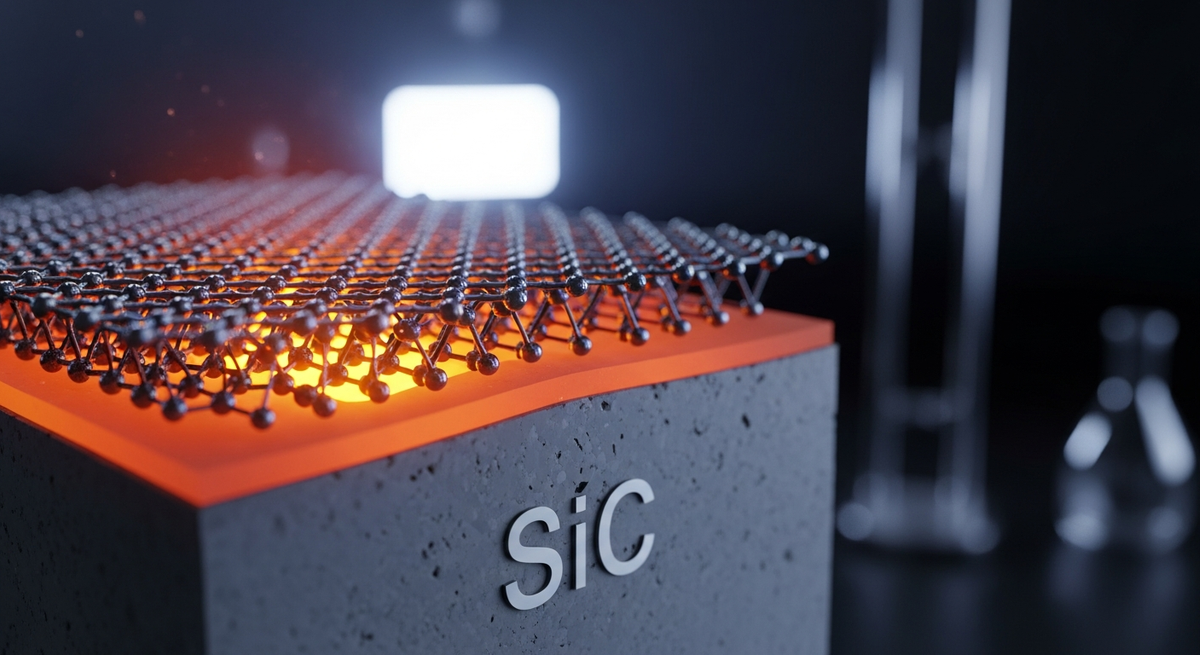
Graphene, a single layer of carbon atoms arranged in a hexagonal lattice, continues to be one of the most compelling materials in modern nanotechnology. Its extraordinary electrical, thermal, and mechanical properties hold the promise of revolutionizing fields from electronics and energy storage to biomedicine and advanced composites. However, unlocking graphene's full potential hinges on the ability to synthesize high-quality, scalable, and customizable forms of this two-dimensional wonder material. While numerous fabrication techniques have emerged, each with its own advantages and limitations, the graphene synthesis by pyrolysis of organic matter and related thermal decomposition methods stands out for its versatility and potential to yield diverse graphene structures and composites. This approach offers a pathway to not only pristine graphene layers but also functionalized variants, including doped graphene and intricate nanofoams, all critical for next-generation technological advancements. This article delves into the sophisticated world of pyrolytic graphene synthesis, exploring the mechanisms, key precursors like silicon carbide (SiC), and the resultant properties that make these materials so valuable. We will uncover how precise control over thermal conditions can lead to tailored graphene architectures, paving the way for groundbreaking applications across various industrial sectors.
Graphene synthesis by pyrolysis encompasses a suite of thermal decomposition techniques applied to various precursors, primarily organic compounds, in an oxygen-deficient or inert atmosphere. This method is distinguished by its ability to transform precursor molecules through controlled thermal energy. It initiates a complex series of chemical reactions, including dehydration, dehydrogenation, and deoxygenation, leading to the formation of carbonaceous intermediates. These intermediates subsequently undergo further thermal processing, including cross-linking and graphitization, to form the hexagonal carbon network characteristic of graphene. The inherent flexibility of pyrolysis allows for the production of a wide array of graphene-based materials, from individual flakes to continuous films and three-dimensional foams.
The foundational principle of pyrolysis involves breaking down complex organic molecules into simpler carbon structures at elevated temperatures, typically ranging from a few hundred to over two thousand degrees Celsius. Crucially, this process must occur in an environment devoid of oxygen to prevent combustion, which would otherwise convert the carbon precursors into carbon dioxide. Instead, the inert atmosphere facilitates the rearrangement of carbon atoms into thermodynamically stable graphitic structures. The initial phase, often termed carbonization, involves the densification of the precursor, expelling volatile components and enriching the carbon content. This is followed by graphitization, where the amorphous carbon network begins to order into crystalline graphene domains.
The journey from a precursor molecule to a graphene sheet involves several critical steps. Firstly, the precursor material absorbs thermal energy, leading to bond scission and the formation of reactive free radicals. These radicals then recombine and polymerize, forming larger aromatic structures. As the temperature increases further, these aromatic units stack and align, eventually forming extended two-dimensional graphitic layers. The quality and morphology of the resulting graphene are profoundly influenced by the nature of the precursor, the heating rate, the final pyrolysis temperature, and the specific atmosphere employed throughout the process.
The selection of a precursor material is a pivotal decision in pyrolytic graphene synthesis, as it dictates not only the processing conditions but also the final properties and morphology of the graphene product. Pyrolysis offers an exceptional breadth of precursor options, each with a distinct pathway and suitability for specific applications. Understanding these varied routes is essential for optimizing the synthesis of tailored graphene materials.
One of the most established pyrolytic routes involves the thermal decomposition of silicon carbide (SiC). When heated to extremely high temperatures, typically above 1200 °C in an ultra-high vacuum or inert gas atmosphere, the silicon atoms preferentially sublimate from the surface of the SiC crystal. This leaves behind the carbon atoms, which then reconstruct into epitaxial graphene layers directly on the SiC substrate. This method is highly regarded for producing high-quality, large-area graphene films with controlled layer numbers, making it particularly valuable for electronics applications where uniformity and purity are paramount. The precise control over temperature and growth rate allows for the fine-tuning of graphene thickness and structural integrity.
Another significant class of precursors includes hydrocarbon gases, such as methane, ethylene, or acetylene. While often associated with chemical vapor deposition (CVD), the underlying mechanism is fundamentally pyrolytic, involving the thermal decomposition of the hydrocarbon gas at high temperatures. These gases are typically introduced into a reactor containing a catalytic metal substrate, like copper or nickel, which facilitates the dissociation of the hydrocarbons and acts as a template for graphene growth. The carbon atoms dissolve into the metal and then precipitate out as graphene upon cooling or saturation. This technique is well-suited for producing large-area graphene films, crucial for applications in transparent conductive electrodes and flexible electronics.
Polymers represent another versatile category of precursors for pyrolytic graphene synthesis, offering cost-effectiveness and scalability. Materials like polyimide (PI), polyacrylonitrile (PAN), or even common plastics can be transformed into graphene through a multi-step pyrolysis process. Initially, the polymer undergoes carbonization at moderate temperatures (300-900 °C), expelling non-carbon elements and forming a char. Subsequent graphitization at higher temperatures (1500-3000 °C) promotes the ordering of this amorphous carbon into graphitic structures. This approach often yields graphene flakes, powders, or even three-dimensional architectures like graphene foams, depending on the polymer's initial form and the processing conditions. The molecular structure of the starting polymer significantly influences the ease of graphitization and the quality of the resulting graphene.
Beyond synthetic polymers, biomass and various forms of bio-waste have emerged as sustainable and abundant precursors for pyrolytic graphene. Sugars, cellulose, lignin, and even coffee grounds can be converted into graphene-like materials through carefully controlled pyrolysis. This approach aligns with green chemistry principles, transforming waste products into high-value materials. While the quality may vary compared to epitaxial graphene, bio-derived graphene often possesses inherent doping (e.g., nitrogen or oxygen) and a high surface area, making it attractive for energy storage devices, catalysts, and environmental applications. The complexity of biomass precursors means that the resulting graphene often features a higher degree of defects and functional groups, which can be advantageous for certain applications needing enhanced reactivity.
The true power of pyrolytic graphene synthesis lies in its adaptability, allowing for the precise tailoring of graphene architectures and properties through meticulous control over process parameters. By manipulating factors such as temperature, atmosphere, pressure, and the presence of catalysts, researchers can direct the formation of graphene from amorphous carbon to highly crystalline layers, and from isolated flakes to complex three-dimensional networks. This level of control is fundamental for unlocking graphene's diverse application potential.
Temperature is arguably the most critical parameter in pyrolytic synthesis. Low temperatures, typically below 1000 °C, tend to produce amorphous carbon or highly defective graphitic structures with many sp3 hybridized carbon atoms. As the temperature increases, usually into the range of 1500-3000 °C, the kinetic energy of carbon atoms becomes sufficient to overcome energy barriers, promoting the rearrangement into stable sp2 hybridized hexagonal lattices. Higher temperatures generally lead to improved crystallinity, larger domain sizes, and fewer structural defects, yielding higher quality graphene. Flash pyrolysis, a rapid heating technique, can produce bulk quantities of graphene quickly, but careful control is needed to manage defect density.
The reaction atmosphere plays a profound role in dictating the outcome of pyrolysis. An inert atmosphere, typically composed of argon or nitrogen, is essential to prevent oxidation of the carbon precursor, ensuring that carbon atoms are available for graphitization rather than combustion. The presence of a reducing atmosphere, such as hydrogen, can be beneficial in certain pyrolytic processes, as hydrogen can etch away amorphous carbon and defects, thereby improving graphene quality and purity. Furthermore, reactive gases containing elements like nitrogen or boron (e.g., ammonia or borane compounds) can be introduced during pyrolysis to achieve in-situ doping of the graphene lattice, imparting specific electronic properties for applications in catalysis or sensors.
Catalysts and substrates significantly influence the morphology and growth mechanism of pyrolytic graphene. Transition metals like nickel, copper, or cobalt are widely used in the pyrolysis of hydrocarbon gases, acting as catalytic surfaces where carbon atoms preferentially nucleate and grow into graphene films. The choice of catalyst, its surface properties, and its interaction with carbon profoundly affect the growth rate, domain size, and number of graphene layers. For solid precursors, a template or substrate can guide the formation of specific graphene structures. For instance, porous templates can be used to synthesize three-dimensional graphene foams with high surface areas, critical for energy storage and filtration applications.
Other parameters, including heating rate, residence time, and pressure, also contribute to the final material characteristics. A controlled heating rate prevents thermal shock and allows for gradual evolution of the carbon structure. Sufficient residence time at the peak pyrolysis temperature ensures complete graphitization. Pressure variations, particularly in gas-phase pyrolysis, influence the concentration of precursor molecules and their interaction with the substrate, affecting growth kinetics and the overall yield. By orchestrating these parameters, engineers can precisely tune the electrical conductivity, mechanical strength, porosity, and specific surface area of the resulting pyrolytic graphene, opening avenues for application-specific material design.
Pyrolytically synthesized graphene exhibits a remarkable array of properties that position it as a transformative material across numerous industries. The ability to tailor its structure, from pristine monolayers to doped nanofoams, translates directly into a spectrum of functional attributes, enabling its integration into cutting-edge technologies. Understanding these properties and their direct application linkages is crucial for appreciating the value of pyrolytic methods.
Electronically, pyrolytic graphene, particularly that derived from SiC or controlled catalytic pyrolysis of hydrocarbons, possesses exceptional electrical conductivity. Its high electron mobility, approaching that of ballistic transport, makes it an ideal candidate for high-frequency electronics, ultra-fast transistors, and advanced sensors. The inherent two-dimensional nature and large surface area also enable highly sensitive detection of chemical and biological analytes. Furthermore, the ability to dope pyrolytic graphene with elements like nitrogen or boron allows for tuning its electronic band structure, which is crucial for semiconductor applications and enhanced catalytic activity.
Thermally, graphene stands as one of the best known conductors, boasting a thermal conductivity superior to copper. This property makes pyrolytic graphene invaluable for thermal management solutions in electronics, such as heat sinks and heat spreaders, where efficient dissipation of waste heat is paramount for device longevity and performance. Graphene-enhanced materials can also be integrated into thermal interface materials, significantly improving heat transfer across disparate components. Its thermal stability at high temperatures further broadens its utility in demanding environments.
Mechanically, graphene is renowned for being the strongest material ever tested, possessing an extraordinary tensile strength combined with remarkable flexibility. When pyrolytically produced graphene is incorporated into composite materials, it can significantly enhance their strength, stiffness, and fracture toughness, while adding minimal weight. This makes it highly attractive for aerospace, automotive, and sporting goods industries, where lightweight yet robust materials are in high demand. Three-dimensional pyrolytic graphene foams, with their interconnected porous structure, exhibit excellent mechanical resilience and can serve as shock absorbers or structural reinforcements.
In the realm of energy storage, pyrolytic graphene's high surface area, excellent electrical conductivity, and robust chemical stability make it a superior material for supercapacitors and lithium-ion batteries. Its porous architectures can accommodate a large number of charge carriers, facilitating rapid charge and discharge cycles and enhancing energy density. For fuel cells, pyrolytic graphene can act as a highly efficient support material for platinum-group metal catalysts, improving their dispersion and durability. The possibility of achieving heteroatom doping (e.g., N-doped graphene) through pyrolysis further boosts its catalytic activity and electrocatalytic performance.
Beyond these core areas, pyrolytic graphene finds utility in environmental applications, such as water purification and air filtration, owing to its high adsorption capacity and catalytic properties. Its biocompatibility, especially for certain forms, opens doors for biomedical applications including drug delivery systems, biosensors, and tissue engineering scaffolds. The versatility in form factor, from thin films to bulk powders and complex 3D structures, ensures that pyrolytic graphene can be adapted to a vast array of practical and impactful technologies, continually expanding its reach into new markets.
While pyrolytic methods offer exceptional versatility and scalability for graphene production, several challenges persist that require innovative solutions for widespread industrial adoption. Addressing these limitations is paramount for transitioning pyrolytic graphene from laboratory success to commercial viability and for fully realizing its immense potential across various sectors. The future trajectory of pyrolytic synthesis hinges on overcoming these hurdles.
One of the primary challenges lies in consistently achieving high-quality graphene at scale. While epitaxial growth from SiC yields pristine graphene, its cost and substrate dependency limit broader application. Pyrolysis of organic precursors, while more scalable, often results in graphene with varying degrees of defects, smaller domain sizes, and a broader distribution of layer numbers. Developing precise control mechanisms to minimize defects, maximize crystallinity, and ensure uniformity across large batches remains an active area of research. Balancing the trade-off between production volume and material quality is a continuous effort.
Cost-effectiveness is another significant barrier. The high temperatures required for graphitization, often exceeding 2000 °C, demand substantial energy input and specialized equipment. Reducing the energy footprint of the pyrolysis process, perhaps through novel reactor designs or lower-temperature graphitization techniques, is crucial for lowering production costs. Furthermore, the development of more affordable and readily available precursors, particularly from sustainable sources like biomass, will contribute to making pyrolytic graphene more economically competitive. Efficient purification methods to remove residual impurities from precursors or catalysts are also essential for cost-reduction.
The standardization of pyrolytic graphene characterization and quality control is also a critical need. With a multitude of precursors and synthesis parameters, the properties of pyrolytic graphene can vary widely. Establishing universally accepted benchmarks for purity, defect density, electrical conductivity, and mechanical strength will enable consistent evaluation and comparison of materials from different sources. This standardization is vital for fostering trust in pyrolytic graphene products and facilitating their integration into industrial supply chains.
Looking to the future, research efforts are focused on several promising directions. The exploration of novel precursors, particularly those from waste streams or abundant natural resources, will continue to drive sustainable and cost-effective graphene production. Advancements in in-situ functionalization techniques during pyrolysis are expected to yield tailor-made graphene materials with specific chemical functionalities or doping profiles, eliminating the need for post-synthesis modification. This would further streamline production and expand the material's application scope, particularly in catalysis, sensing, and energy storage.
The development of advanced reactor designs, including continuous flow systems and microwave-assisted pyrolysis, aims to enhance energy efficiency, throughput, and control over reaction kinetics. Integrating machine learning and artificial intelligence into process optimization will enable more precise control over synthesis parameters, leading to predictable and reproducible graphene properties. As these challenges are systematically addressed, pyrolytic graphene synthesis is poised to become a dominant force in the advanced materials landscape, delivering on the promise of graphene for a myriad of transformative technologies.
1. What is pyrolysis in the context of graphene synthesis?
Pyrolysis, for graphene synthesis, is a thermochemical decomposition process where organic precursors are heated to high temperatures (typically 300-3000 °C) in an oxygen-deficient or inert atmosphere. This process breaks down complex molecules, expelling non-carbon elements and promoting the rearrangement of carbon atoms into the hexagonal lattice structure of graphene. It is a versatile method for creating various forms of graphene materials.
2. Why is an oxygen-deficient atmosphere critical for pyrolytic graphene synthesis?
An oxygen-deficient or inert atmosphere (e.g., argon or nitrogen) is critical because oxygen would react with the carbon precursors at high temperatures, leading to combustion and the formation of carbon dioxide. By excluding oxygen, the process ensures that carbon atoms are preserved and can instead reorganize into the desired graphitic structures, facilitating the formation of graphene rather than its destruction.
3. Can pyrolytic methods produce different forms of graphene?
Yes, pyrolytic methods are exceptionally versatile and can produce a wide array of graphene forms. These include high-quality epitaxial graphene films from silicon carbide, large-area films on catalytic metal substrates from hydrocarbon gases, individual graphene flakes or powders from polymers, and three-dimensional graphene foams with high porosity from various carbon precursors. The form is highly dependent on the chosen precursor and specific process parameters.
4. What are the main advantages of pyrolytic graphene synthesis?
The main advantages of pyrolytic graphene synthesis include its versatility in using diverse precursors, from industrial polymers to sustainable biomass, its potential for scalability, and the ability to tailor graphene properties and architectures through process control. It can also produce functionalized graphene (e.g., doped graphene) directly, which is beneficial for specific applications and can reduce post-synthesis processing steps.
5. What distinguishes silicon carbide pyrolysis from polymer pyrolysis for graphene production?
Silicon carbide (SiC) pyrolysis typically produces high-quality, epitaxial graphene films with controlled layer numbers directly on the SiC substrate, making it ideal for electronics. Polymer pyrolysis, on the other hand, involves the carbonization and graphitization of solid polymer precursors, often resulting in graphene flakes, powders, or three-dimensional structures, which are typically more cost-effective and suitable for applications like energy storage or composites where high purity or single-layer status is not strictly required.
The realm of graphene synthesis by pyrolysis stands as a cornerstone in the advancement of this extraordinary material. Its inherent versatility, allowing for the conversion of a broad spectrum of precursors into diverse graphene architectures, underscores its significance in the ongoing quest for scalable and customizable graphene production. From the pristine epitaxial layers derived from silicon carbide to the high-surface-area foams crafted from sustainable biomass, pyrolytic methods offer unparalleled control over the resultant material's properties. This precision in tailoring graphene's electronic, thermal, and mechanical attributes is what empowers its revolutionary potential across electronics, energy, biomedicine, and advanced composites. While challenges in quality control and cost-effectiveness persist, the continuous innovation in precursor development, process optimization, and reactor design promises to overcome these hurdles. The future of pyrolytic graphene synthesis is bright, securing its role as a foundational technology that will continue to shape the landscape of advanced materials and propel the next generation of technological breakthroughs for years to come.
Serious about B2B integration? Test our premium Pulsed Electrical Resistive Carbon Heating turbostratic graphene in your lab. 100g sample packs available now.
Explore More
Researchers have developed a breakthrough method for growing twisted bilayer graphene with pre-designed angles, a key step toward manufacturable quantum...

Learn how deep learning is revolutionizing the structural characterization of twisted bilayer materials, accelerating the development of next-generation...

Learn to build a prototype graphene FET biosensor for sensitive DNA detection. This guide covers materials, fabrication, and testing for point-of-care...