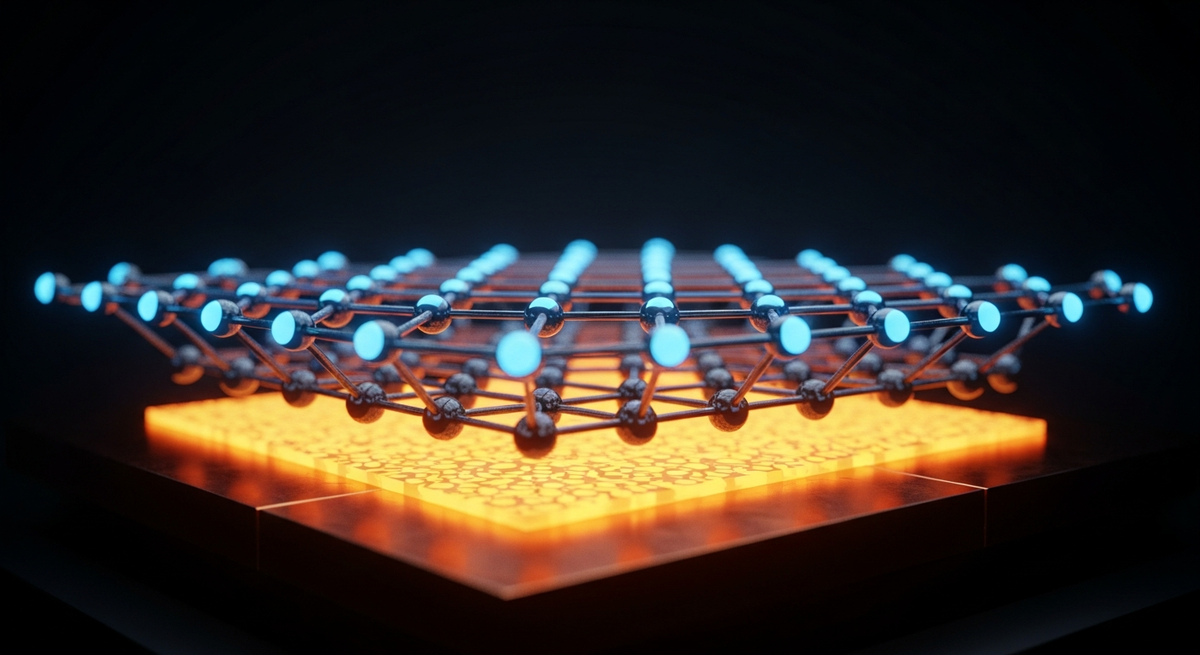
The realm of nanoscale materials has witnessed an unprecedented surge in interest, driven by their potential to revolutionize diverse applications across industries. Among these, graphene, the remarkable two-dimensional carbon allotrope, stands out as a true game-changer. Its extraordinary properties have positioned it at the forefront of materials science research, particularly in the development of sophisticated carbon-based nanostructures and their composites.
At usa-graphene.com, we understand the critical importance of mastering the intricacies of graphene synthesis methods and characterization to unlock its full potential. This deep dive explores the fundamental strategies employed in fabricating pristine graphene and its highly versatile graphene/metal oxide nanocomposites, providing a foundational understanding for engineers, materials scientists, and R&D professionals seeking to push the boundaries of innovation.
From the meticulous exfoliation of graphite to advanced chemical and physical deposition techniques, the journey to producing high-quality graphene is as fascinating as its capabilities. We will delve into the precise methodologies and analytical tools that define the landscape of graphene production, offering insights crucial for those aiming to integrate this wonder material into next-generation technologies.
Understanding Graphene: The 2D Carbon Marvel
Graphene is fundamentally a single atomic layer of the graphite structure, a two-dimensional carbon allotrope composed entirely of sp2 hybridized carbon atoms arranged in a hexagonal, honeycomb lattice. This unique atomic configuration grants graphene its exceptional properties, making it a subject of intense scientific and industrial fascination. The concept of graphene has existed since the 1940s, though it was long considered thermodynamically unstable under ambient conditions, a notion challenged by groundbreaking discoveries.
It was not until 2004 that single monolayer graphene was experimentally observed, leading to a paradigm shift in materials science. This pivotal discovery earned Konstantin Novoselov and Andre Geim the Nobel Prize in Physics in 2010, catapulting graphene into the global spotlight. Since then, the number of publications and patents related to graphene has soared, underscoring its rapid ascent as a star material.
The unique properties of graphene — including its unparalleled strength, exceptional electrical and thermal conductivity, and optical transparency — have paved the way for a myriad of potential applications. These include advanced fuel cells and batteries, highly sensitive sensors and biosensors, transparent conductive films for touch screens, high-frequency circuits, efficient toxic material removal systems, and flexible electronics. The specific application often hinges on the type of graphene, such as monocrystalline graphene for advanced applications or polycrystalline graphene for specific transistors and composites, further categorized by structural properties like armchair or zigzag chirality, which dictates its metallic or semiconducting nature.
Pioneering Graphene Synthesis Methods: An Overview
The ability to effectively produce well-defined graphene sheets is paramount for realizing its vast application potential. Since the initial experimental validation of graphene’s electronic properties in 2004, research has heavily concentrated on developing robust and scalable graphene synthesis methods. These methodologies are broadly classified into three primary categories: the exfoliation and cleavage of graphite, chemical vapor deposition (CVD), and various chemical derivatives approaches.
Each of these strategies offers distinct advantages and challenges, influencing the quality, purity, and scalability of the resulting graphene. The choice of synthesis method is often dictated by the intended application, with some methods yielding large-area, high-quality films suitable for electronics, while others produce powders or flakes ideal for composite materials or energy storage devices. Understanding these fundamental approaches is critical for tailoring graphene production to specific industrial needs.
Beyond these major classifications, the landscape of graphene production also encompasses a range of other techniques, including electrochemical synthesis, thermal reduction, photocatalytic reduction of graphene oxide (GO), and the creation of fluoro-graphene. The ongoing pursuit in materials science is to refine these methods, striving for increased efficiency, reduced cost, and enhanced control over graphene's structural and electronic properties, ultimately aiming for cost-effective production from readily available and inexpensive sources such as graphite.
The Chemical Path: Exfoliation and Reduction of Graphene Oxide
Chemical exfoliation stands as a foundational method for synthesizing graphene from its bulk precursor, graphite. This process involves the chemical treatment of graphite to overcome the van der Waals forces between its layers, leading to the separation of individual graphene sheets. A key pathway within chemical exfoliation involves the oxidative treatment of graphite, followed by subsequent exfoliation and reduction.
Historically, three principal methods have been developed for the oxidative treatment of graphite: those pioneered by Brodie (1860), Hummers and Offeman (1958), and Staudenmeier. These methods typically involve strong oxidizing agents to introduce oxygen-containing functional groups onto the graphite layers, transforming it into graphene oxide (GO). The presence of these functional groups increases the interlayer spacing and hydrophilicity, making the material amenable to exfoliation into single or few-layer GO sheets in aqueous solutions.
One of the most widely adopted and refined chemical exfoliation techniques is the improved Hummers method, which offers a pathway for preparing graphene from purified natural graphite. In a typical procedure, 1 gram of graphite is meticulously mixed with 6 grams of potassium permanganate (KMnO4). This mixture is then carefully added to a 135:15 mL mixture of concentrated sulfuric acid (H2SO4) and phosphoric acid (H3PO4) within an ice-bath, critically maintained below 5°C to control the exothermic reaction. Following this initial phase, the ice-bath is removed, and the resulting mixture is stirred at approximately 50°C for 30 minutes. Subsequently, 200 mL of deionized water is slowly introduced, which naturally causes an increase in temperature, typically ranging from 70°C to 98°C. After an optimum reaction time of 12 hours, the mixture is cooled to room temperature and finally poured onto a mixture of 200 mL of ice and 1 mL of hydrogen peroxide. This process yields graphene oxide, which can then be reduced back to graphene (often referred to as reduced graphene oxide, or rGO) through chemical, thermal, or other reduction methods, restoring its electrical conductivity and other graphene-like properties.
Beyond Exfoliation: Advanced Graphene Fabrication Techniques
While chemical exfoliation offers a versatile route to graphene, particularly for applications requiring dispersions or composite integration, other advanced graphene synthesis methods are crucial for producing high-quality, large-area films suitable for electronics and optics. Chemical Vapor Deposition (CVD) is one such prominent technique, widely recognized for its ability to grow uniform, continuous graphene films on catalytic metal substrates, such as copper or nickel. In CVD, carbon-containing gases (e.g., methane) are decomposed at high temperatures, and the carbon atoms then precipitate and arrange into a hexagonal lattice on the metal surface, forming graphene. This method offers excellent control over film thickness and domain size, essential for high-performance devices.
Another class of advanced fabrication involves electrochemical methods, where graphene or graphene oxide can be produced through anodic exfoliation of graphite in an electrolyte, or by electrochemical reduction of graphene oxide. These methods often provide a greener alternative, avoiding harsh chemical oxidants and offering tunable control over the exfoliation process. The precise control over potential and current allows for the direct production of graphene flakes with specific dimensions and functionalities, opening avenues for direct integration into electrochemical devices.
Furthermore, thermal reduction of graphene oxide presents a straightforward approach to restore graphene's electrical properties. By subjecting graphene oxide to high temperatures, oxygen-containing functional groups are removed, leading to the formation of reduced graphene oxide (rGO). This method is often combined with other techniques to achieve desired material characteristics. Other specialized techniques include photocatalytic reduction of graphene oxide, utilizing light energy to drive the reduction process, and the synthesis of fluoro-graphene, where fluorine atoms are covalently bonded to the graphene lattice, modifying its electronic structure and surface properties for specific applications.
Engineering Enhanced Materials: Graphene/Metal Oxide Nanocomposites
The inherent limitations of pristine graphene in certain applications, such as stability in harsh environments or specific catalytic activity, have spurred intense research into graphene/metal oxide nanocomposites. These hybrid materials combine the extraordinary properties of graphene with the diverse functionalities of metal and metal oxide nanoparticles, leading to synergistic effects and enhanced performance across various fields. The integration of metal oxides like titania, alumina, nickel oxide, and zinc oxide onto graphene platforms has become a significant focus due to the resulting materials' superior optical, thermal, electrical, and mechanical properties.
These nanocomposites are engineered to leverage the high surface area and excellent conductivity of graphene as a support matrix, while the embedded or coated metal oxide nanoparticles contribute specific catalytic, photocatalytic, or adsorptive properties. For instance, graphene-titania (TiO2) composites show enhanced photocatalytic activity for environmental remediation, while graphene-nickel oxide (NiO) or graphene-zinc oxide (ZnO) composites are promising for advanced sensor applications and energy storage due to improved charge transfer kinetics and structural stability.
The synthesis of these graphene/metal oxide nanocomposites typically involves two main strategies: the activation or functionalization of graphene followed by the decoration of graphene with pre-formed nanoparticles, or the in-situ growth of metal oxide nanoparticles on graphene or graphene oxide sheets. These methods are carefully chosen to ensure strong interfacial interactions between the graphene and the metal oxide, which is crucial for maximizing the synergistic benefits. The resulting composites have demonstrated exceptional efficacy as catalysts, photocatalysts, and adsorbents, indicating their broad applicability in addressing complex challenges in environmental science, energy technologies, and advanced manufacturing.
The Science of Verification: Characterization of Graphene and its Composites
Producing high-quality graphene and graphene/metal oxide nanocomposites is only half the battle; equally crucial is their rigorous characterization to confirm their morphology, structural properties, and chemical composition. A suite of advanced analytical techniques is employed to provide a comprehensive understanding of these nanoscale materials, ensuring they meet the stringent requirements for specific applications. This meticulous validation process is indispensable for both fundamental research and industrial quality control.
X-ray Diffraction (XRD) is a powerful tool used to determine the crystalline phases present in the material, the average crystallite size, and the interlayer spacing in graphene-based materials. For graphene, XRD patterns can confirm the presence of graphitic structures and the degree of exfoliation or reduction. In nanocomposites, XRD helps identify the crystalline phases of the metal oxide nanoparticles and any changes induced by their interaction with graphene.
Field Emission Scanning Electron Microscopy (FESEM) provides high-resolution images of the material's surface morphology, revealing the macroscopic structure of graphene sheets, the distribution and aggregation of nanoparticles, and the overall composite architecture. This technique is invaluable for understanding how the metal oxide nanoparticles are dispersed and anchored onto the graphene matrix. Complementing FESEM, High-Resolution Transmission Electron Microscopy (HRTEM) offers atomic-scale insights, allowing researchers to visualize the graphene lattice, identify defects, and precisely characterize the size, shape, and crystallinity of individual metal oxide nanoparticles embedded within or decorated on the graphene sheets. HRTEM can also reveal the interface between graphene and the metal oxide, providing critical information about their interaction.
Finally, Infrared Transform Absorption Spectrometry (IRT-AS), commonly known as FTIR spectroscopy, is employed to identify the functional groups present on the graphene surface and within the nanocomposites. For graphene oxide, FTIR confirms the presence of oxygen-containing groups (e.g., hydroxyl, carboxyl, epoxy), while for reduced graphene oxide, it monitors their removal. In nanocomposites, FTIR can detect the characteristic vibrational modes of both graphene and the metal oxide, and importantly, reveal any chemical interactions or bonding between the two components, which can significantly influence the composite's performance.
FAQ: Graphene Synthesis and Characterization
Q1: What are the primary methods for synthesizing graphene?
A1: The primary methods for synthesizing graphene include the exfoliation and cleavage of graphite, chemical vapor deposition (CVD) growth, and various chemical derivatives approaches like the chemical, electrochemical, thermal, and photocatalytic reduction of graphene oxide (GO). Each method is chosen based on the desired purity, scale, and specific application of the graphene produced.
Q2: What is the Hummers method used for in graphene synthesis?
A2: The Hummers method is a widely used chemical exfoliation technique for synthesizing graphene oxide (GO) from graphite. It involves the oxidative treatment of graphite using strong acids and oxidants like potassium permanganate, which introduces oxygen functional groups, facilitating the exfoliation of graphite into GO sheets. The GO can then be reduced to graphene.
Q3: Why are graphene/metal oxide nanocomposites important?
A3: Graphene/metal oxide nanocomposites are important because they combine the exceptional properties of graphene (high surface area, conductivity) with the specific functionalities of metal oxides (catalytic, photocatalytic, adsorptive properties). This synergy leads to enhanced optical, thermal, electrical, and mechanical properties, enabling superior performance in applications like catalysts, sensors, and energy storage.
Q4: What characterization techniques are essential for graphene?
A4: Essential characterization techniques for graphene and its composites include X-ray Diffraction (XRD) for crystalline phases and size, Field Emission Scanning Electron Microscopy (FESEM) for surface morphology, High-Resolution Transmission Electron Microscopy (HRTEM) for atomic-scale structure and interface visualization, and Infrared Transform Absorption Spectrometry (IRT-AS) for identifying functional groups and chemical interactions.
Q5: What are some key applications for graphene and its nanocomposites?
A5: Graphene and its nanocomposites have a wide array of applications, including advanced fuel cells, high-capacity batteries, sensitive sensors and biosensors, transparent conductive films for touch screens, high-frequency electronic circuits, efficient systems for toxic material removal, and flexible electronics. The specific application often depends on the type of graphene and the properties conferred by its composite structure.
Conclusion
The journey through the fabrication and characterization of graphene and its metal oxide nanocomposites underscores the immense scientific and technological progress in materials science. From the initial conceptualization of a 2D carbon allotrope to its precise synthesis through methods like the improved Hummers technique, CVD, and electrochemical routes, the evolution of graphene synthesis methods is a testament to human ingenuity. The ability to create hybrid materials with enhanced properties, coupled with rigorous characterization using advanced microscopy and spectroscopy, is paving the way for revolutionary applications across countless sectors.
At usa-graphene.com, we are dedicated to advancing the understanding and application of graphene. Our commitment lies in providing high-quality graphene materials and fostering the innovation that arises from a deep grasp of its synthesis and properties. As the global discussion continues to highlight the importance of cost-effective and efficient production from readily available sources like graphite, we invite you to explore our resources and partner with us in shaping the future of materials science. Discover how our expertise in graphene can empower your next breakthrough by visiting usa-graphene.com today.