
A New Era of Graphene Engineering: Pre-Designing Twist Angles on Demand
Researchers have developed a breakthrough method for growing twisted bilayer graphene with pre-designed angles, a key step toward manufacturable quantum...
Since its pivotal discovery in 2004 by A.K. Geim and K.S. Novoselov, graphene has rapidly ascended to prominence as a revolutionary material within the carbon nanostructure family. This one-atom-thick, two-dimensional planar sheet of sp2-bonded carbon atoms, meticulously arranged in a honeycomb crystal lattice, has captivated the scientific and industrial communities with its extraordinary properties. Its unparalleled attributes include an exceptionally high planar surface area, superior mechanical strength, remarkable electronic characteristics, alluring optical features, and unmatched thermal conductivity, positioning it as a cornerstone for next-generation technologies.
The profound interest in graphene stems directly from its potential to transform a vast array of application fields. From advanced electronics and field emission devices to energy storage solutions, sophisticated biophysics tools, high-sensitivity sensors, and cutting-edge engineering outlets, the demand for high-quality graphene is escalating. However, realizing this potential hinges critically on the ability to synthesize graphene that is not only defect-free but also possesses desired size, purity, crystallinity, and, crucially, can be produced with a high yield at an industrial scale. This intricate balance between quality and quantity has driven extensive research into diverse graphene synthesis methods.
The journey from Geim and Novoselov's initial mechanical cleavage technique to today's sophisticated industrial processes highlights a continuous quest for optimized manufacturing. Each synthesis approach presents its own set of benefits and limitations, with the overarching challenge remaining the precise control over defect-free structure and the consistent number of graphene layers across an entire substrate. This exploration delves into the foundational and advanced strategies for graphene fabrication, examining their underlying principles, technical nuances, and their crucial role in advancing graphene from the laboratory bench to widespread commercial implementation.
The landscape of graphene synthesis methods is incredibly diverse, reflecting the material's complex requirements and varied applications. The initial discovery of graphene through mechanical cleavage opened the door, but its inherent limitations quickly necessitated the development of more scalable and controlled techniques. Researchers have since developed a spectrum of approaches, ranging from top-down methods that exfoliate graphene from bulk graphite to bottom-up strategies that build graphene atom by atom. Each method is meticulously designed to address specific challenges, such as achieving high purity, controlling layer count, minimizing defects, and ensuring cost-effectiveness.
The choice of synthesis method profoundly impacts the resulting graphene's properties, dictating its suitability for particular applications. For instance, while some applications demand pristine, single-layer graphene with minimal defects, others might tolerate or even benefit from multi-layered graphene or graphene with controlled functionalization. The ongoing optimization of these methods involves fine-tuning parameters like hydrocarbon precursors, substrate materials, and reaction temperatures, all aimed at enhancing the yield, quality, and structural integrity of the synthesized graphene. Understanding these diverse strategies is paramount for researchers and engineers seeking to harness graphene's full potential.
Key among these strategies are mechanical exfoliation, chemical exfoliation through reduction of graphene oxide, chemical vapor deposition (CVD), surface segregation, liquid-phase exfoliation, and molecular beam epitaxy. Beyond these primary techniques, a host of other innovative approaches, including flame synthesis, electrochemical methods, and microwave-assisted processes, are also under active investigation. This rich tapestry of fabrication techniques underscores the dynamic nature of graphene research, as scientists continuously strive to overcome the existing challenges in producing high-quality graphene at scales relevant for industrial adoption.
The earliest and most straightforward graphene synthesis method to yield truly pristine graphene was the mechanical cleavage method. Pioneered by Geim et al. in 2004, this technique involves the simple physical peeling of commercially available Highly Oriented Pyrolytic Graphite (HOPG) sheets. By repeatedly peeling layers using adhesive tape, researchers could isolate single-layer graphene (SLG) flakes. This method was instrumental in the initial discovery of graphene's unique electronic and mechanical properties, leading to numerous groundbreaking scientific findings. However, its primary limitation is its inherently low production yield and lack of scalability, making it impractical for industrial applications where large quantities are required.
Building on the concept of physical separation, chemical exfoliation methods emerged, often involving the oxidation of graphite to graphite oxide (GO), followed by subsequent thermal exfoliation. While this approach can provide larger quantities of graphene-like material, the aggressive chemical treatment inevitably introduces structural defects. These defects, which can be observed and characterized through techniques like Raman spectroscopy, significantly alter graphene's intrinsic properties, often diminishing its electrical conductivity and mechanical strength. Therefore, for applications demanding the pristine structural integrity of graphene, alternative physical exfoliation approaches are highly desirable.
Liquid-phase exfoliation (LPE) represents a significant advancement in achieving high-quality, defect-free graphene through physical means. This method leverages the principle of matching the surface energy of the exfoliation medium with that of graphene, facilitating the separation of individual layers from bulk graphite. Researchers like Hernandez et al. and Blake et al. successfully exfoliated graphite in N-methyl-pyrrolidone (NMP), a solvent with a surface energy closely matching that of graphene, to produce high-quality, defect-free SLG. Other groups, such as Lotya and coworkers, have utilized surfactants like sodium dodecylbenzene sulfonate (SDBS) in aqueous solutions to stabilize exfoliated graphene flakes, preventing their re-aggregation and enabling the production of large quantities of graphene dispersions suitable for various applications.
These exfoliation techniques, particularly liquid-phase methods, offer a pathway to producing graphene without the extensive chemical damage associated with GO reduction. While still facing challenges in terms of controlling flake size distribution and achieving ultra-high concentrations, they are crucial for applications where the intrinsic properties of graphene, such as its exceptional charge transport and mechanical strength, must be preserved. The ability to produce high-quality, defect-free graphene sheets in a liquid suspension opens doors for ink-jet printing, composite materials, and transparent conductive films.
Among the most widely studied and extensively utilized graphene synthesis methods for producing graphene on a larger scale is the chemical reduction of graphite oxide. This approach begins with the oxidation of graphite, typically through methods such as the Hummers' method, which involves treating graphite with strong oxidizing agents like sulfuric acid, nitric acid, and potassium permanganate. This process intercalates oxygen-containing functional groups (e.g., hydroxyl, epoxy, carboxyl) between the graphite layers, significantly increasing the interlayer spacing and rendering the material hydrophilic. The resulting graphite oxide can then be readily exfoliated into individual graphene oxide (GO) sheets, often through sonication or vigorous stirring in water.
Once exfoliated, the GO sheets possess a high degree of oxygen functionalization, which disrupts the sp2-hybridized carbon network, making them electrically insulating. To restore graphene-like properties, these GO sheets undergo a chemical reduction process. Various reducing agents have been extensively studied and employed for this purpose, including hydrazine hydrate, sodium borohydride, ascorbic acid, and even environmentally benign options like vitamin C. The reduction step aims to remove the oxygen-containing groups, thereby restoring the sp2 carbon lattice and enhancing electrical conductivity. The product is commonly referred to as reduced graphene oxide (rGO).
While the chemical reduction of GO offers a highly scalable and cost-effective route to graphene production, it is not without its challenges. The invasive chemical oxidation treatment inevitably generates structural defects and vacancies within the carbon lattice, as evidenced by Raman spectroscopy. Furthermore, the reduction process often leaves residual oxygen functionalities and structural imperfections that are difficult to completely eliminate. These remaining defects and oxygen groups can significantly impact the electronic, thermal, and mechanical properties of the resulting rGO, often making it inferior to pristine graphene obtained through mechanical or CVD methods.
Despite these limitations, the versatility and scalability of the GO reduction method make it incredibly valuable for a vast range of applications. rGO can be easily dispersed in various solvents, processed into thin films, or integrated into composite materials. Ongoing research focuses on optimizing both the oxidation and reduction steps to minimize defects, achieve higher degrees of reduction, and improve the overall quality of rGO, bridging the gap between its scalability and the desired performance characteristics for industrial applications.
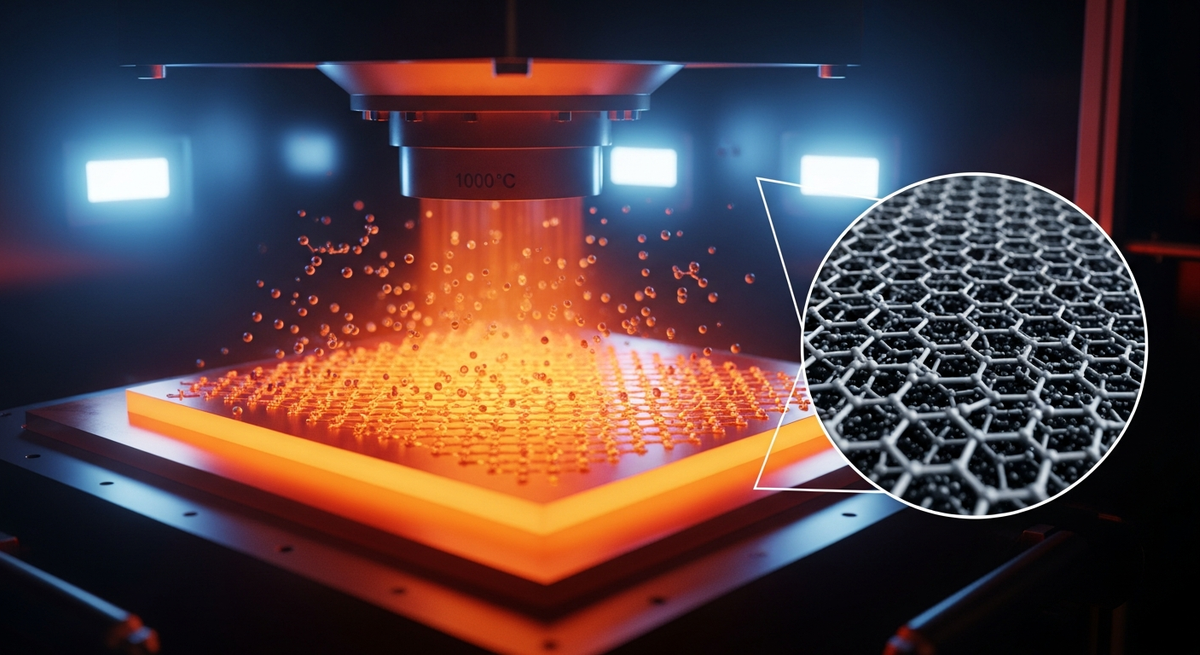
Chemical Vapor Deposition (CVD) stands out as a preeminent graphene synthesis method for producing high-quality, large-area, and often single-layer graphene with excellent crystallinity. This bottom-up approach involves the decomposition of hydrocarbon precursors (e.g., methane, acetylene, ethylene) at high temperatures in a vacuum chamber, typically in the presence of a metal catalyst substrate. The carbon atoms from the decomposed precursor then dissolve into or adsorb onto the heated metal surface, nucleate, and subsequently precipitate or grow as graphene layers upon cooling or controlled exposure. The fine control over parameters such as hydrocarbon flow rates, temperature, pressure, and substrate choice allows for precise tailoring of graphene's properties, including the number of layers and defect density.
CVD growth is highly dependent on the chosen metal substrate, with various metals and transition metals exhibiting distinct catalytic activities and carbon solubilities, which in turn affect the synthesis, yield, and purity of the graphene produced. For instance, Cobalt substrates and Iron substrates are known for their relatively high carbon solubility, which can lead to the formation of multi-layer graphene. During the cooling process, dissolved carbon precipitates out, forming graphene layers. Controlling the cooling rate and carbon source concentration is crucial to manage the number of layers.
Nickel substrates also exhibit significant carbon solubility, making them suitable for multi-layer graphene growth via a precipitation mechanism. While nickel can yield large-area graphene, achieving uniform single-layer growth can be challenging due to the rapid precipitation of carbon upon cooling. Researchers often optimize parameters to control the thickness and uniformity of the graphene films on nickel. In contrast, Copper substrates are widely favored for the growth of high-quality Single-Layer Graphene (SLG). This is primarily due to copper's low carbon solubility at typical CVD growth temperatures (e.g., around 1000°C), which promotes a surface-adsorption growth mechanism rather than precipitation. This self-limiting growth process makes it easier to achieve uniform SLG over large areas, making copper a preferred choice for electronic applications.
Other noble metal substrates, such as Platinum substrates and Gold substrates, have also been explored for CVD graphene growth. Platinum, with its high melting point and catalytic activity, can facilitate graphene growth, though its high cost limits widespread use. Gold, being a relatively inert metal with low carbon solubility, can also serve as a substrate, particularly for specific applications requiring minimal interaction between graphene and the underlying substrate. The ongoing research in CVD focuses on optimizing these substrate interactions, exploring novel alloy substrates, and developing roll-to-roll processes to achieve continuous, large-scale production of high-quality graphene, pushing the boundaries of what is achievable in industrial fabrication.
While mechanical exfoliation, chemical reduction of GO, and CVD represent the most common and well-established graphene synthesis methods, the quest for even more efficient, cost-effective, and specialized production techniques continues. This ongoing research has led to the development of several advanced and emerging methods that offer unique advantages for specific applications or overcome limitations of conventional approaches. These innovative strategies often leverage novel energy sources, chemical reactions, or precursor materials to achieve desired graphene characteristics.
Flame synthesis is one such promising technique, offering a potentially low-cost and high-throughput method for graphene production. In this process, hydrocarbons are combusted in a controlled flame environment, leading to the formation of carbon soot that contains graphene flakes. This method is attractive due to its simplicity and potential for scalability, although challenges remain in controlling the quality, purity, and number of layers in the synthesized material. Similarly, electrochemical approaches provide a versatile and environmentally friendly route, typically involving the cathodic or anodic exfoliation of graphite in an electrolyte. By applying an electric potential, graphite layers can be separated and functionalized, offering precise control over the exfoliation process and the resulting graphene's properties.
Microwave methods and solvothermal methods represent other innovative avenues. Microwave synthesis utilizes rapid and volumetric heating to achieve quick chemical reactions and exfoliation, potentially reducing processing times and energy consumption. Solvothermal synthesis, on the other hand, involves high-pressure, high-temperature reactions in a solvent, providing a controlled environment for the growth or exfoliation of graphene. These methods can often yield graphene with specific morphologies or functionalizations, opening up possibilities for specialized applications in catalysis or energy storage.
Further pushing the boundaries are highly specific chemical reactions and conversion techniques. For instance, the synthesis of graphene using calcinations of aluminum sulfide or the reaction of CO2 and Mg in a flame represent novel chemical routes to graphene. Even the conversion of existing carbon nanostructures, such as carbon nanotubes (CNTs), into graphene offers an intriguing possibility, leveraging established materials to create new ones. These diverse and evolving methods underscore the dynamic nature of graphene research, constantly seeking to optimize manufacturing processes to unlock the full spectrum of graphene's distinct properties for a wide array of technological advancements.
Despite the remarkable progress in the development of various graphene synthesis methods, several critical challenges persist in moving graphene from the laboratory to widespread industrial adoption. A paramount challenge remains the fine control of the defect-free structure and the precise number of graphene layers over an entire substrate. Achieving truly monolayer graphene consistently, without defects or unwanted multi-layer regions, is crucial for applications demanding ultra-high electronic performance, such as high-speed transistors and transparent conductive electrodes. The presence of defects can significantly degrade carrier mobility, reduce mechanical strength, and alter optical properties, thus limiting graphene's potential.
Another significant hurdle is ensuring the synthesis of graphene with desired size, purity, and crystallinity, coupled with a high yield. While some methods, like mechanical exfoliation, produce pristine graphene, their yield is inherently low. Conversely, scalable methods like the chemical reduction of graphite oxide often introduce defects and impurities. The trade-off between quality, yield, and cost-effectiveness is a constant struggle in graphene manufacturing. Industrial applications demand not just high-quality material, but also a consistent supply at a competitive price point, necessitating robust and reproducible synthesis protocols that can be scaled up efficiently.
Moreover, the integration of graphene into existing manufacturing processes poses its own set of challenges. Developing reliable transfer techniques for CVD-grown graphene from metal substrates to target substrates (e.g., silicon, polymers) without introducing defects or contamination is an active area of research. For liquid-phase methods, achieving stable dispersions with controlled flake size and preventing re-aggregation are vital for composite and coating applications. The standardization of characterization techniques to uniformly assess graphene quality across different manufacturers and synthesis methods is also essential for market growth and trust.
The search to optimize the manufacturing process with a view to realizing the distinct properties of graphene layers is therefore ongoing and multifaceted. Future directions include the exploration of novel precursors and catalysts for CVD, the development of greener and more efficient exfoliation techniques, and the integration of machine learning and artificial intelligence to predict and control graphene growth parameters. Overcoming these challenges will not only accelerate the commercialization of graphene but also unlock its full transformative potential across industries, paving the way for a new era of advanced materials and technologies.
Q1: What is graphene and why is it considered a revolutionary material?
A1: Graphene is a one-atom-thick, two-dimensional planar sheet of sp2-bonded carbon atoms arranged in a honeycomb crystal lattice. It's revolutionary due to its extraordinary properties, including superior mechanical strength, unparalleled thermal conductivity, remarkable electronic properties, and alluring optical characteristics, making it suitable for a vast array of high-tech applications.
Q2: Who discovered graphene and when was this groundbreaking discovery made?
A2: Graphene was discovered by A.K. Geim and K.S. Novoselov in 2004 at the University of Manchester. Their pioneering work on isolating and characterizing this novel carbon nanostructure earned them the Nobel Prize in Physics in 2010, accelerating global research into its synthesis and applications.
Q3: What are the primary graphene synthesis methods used today?
A3: The most common graphene synthesis methods include mechanical exfoliation from graphite, chemical reduction of graphite oxide, chemical vapor deposition (CVD) on various metal substrates (like copper and nickel), surface segregation, and liquid-phase exfoliation. Each method offers distinct advantages and limitations regarding quality, scalability, and cost.
Q4: Why is it challenging to synthesize high-quality graphene on an industrial scale?
A4: Synthesizing high-quality graphene at an industrial scale is challenging due to the difficulty in achieving defect-free structures, precisely controlling the number of graphene layers over large areas, and ensuring high purity and crystallinity consistently. Balancing these quality demands with cost-effective, high-yield production remains a significant hurdle for all graphene synthesis methods.
Q5: How does the choice of substrate impact graphene growth in Chemical Vapor Deposition (CVD)?
A5: In CVD, the substrate's properties, particularly its carbon solubility and catalytic activity, profoundly impact graphene growth. For example, copper's low carbon solubility at high temperatures favors the growth of high-quality single-layer graphene, while nickel's higher solubility often leads to multi-layer graphene through a precipitation mechanism. Substrate choice directly influences the synthesis, yield, and purity of the resulting graphene film.
The journey of graphene from a scientific curiosity to a material with immense industrial promise is fundamentally tied to the evolution of its synthesis strategies. From the pioneering mechanical cleavage that first unveiled its existence to the sophisticated industrial-scale production via Chemical Vapor Deposition and the versatile scalability of reduced graphene oxide, the diverse graphene synthesis methods represent a testament to scientific ingenuity. Each approach offers a unique pathway, addressing specific needs for purity, layer control, defect minimization, and yield, thereby shaping the landscape of graphene applications.
As research continues to push the boundaries, the ongoing optimization of these fabrication techniques remains crucial for unlocking graphene's full potential across electronics, energy, sensing, and advanced materials. The ability to consistently produce high-quality, defect-free graphene at scale is the key to its widespread adoption and transformative impact on future technologies. For researchers, engineers, and innovators seeking to leverage the extraordinary capabilities of this 2D material, understanding these synthesis nuances is paramount.
Discover how usa-graphene.com is at the forefront of providing high-quality graphene materials, tailored through advanced synthesis methods, to power your next-generation innovations. Explore our comprehensive range of graphene products and solutions by visiting usa-graphene.com today to learn more about how we can support your research and development needs.
Serious about B2B integration? Test our premium Pulsed Electrical Resistive Carbon Heating turbostratic graphene in your lab. 100g sample packs available now.
Explore More
Researchers have developed a breakthrough method for growing twisted bilayer graphene with pre-designed angles, a key step toward manufacturable quantum...

Learn how deep learning is revolutionizing the structural characterization of twisted bilayer materials, accelerating the development of next-generation...

Learn to build a prototype graphene FET biosensor for sensitive DNA detection. This guide covers materials, fabrication, and testing for point-of-care...