
Graphene Radar Absorbing Materials for Aircraft and Drones
Graphene coatings are being studied for radar absorbing materials because they can help make aircraft and drones lighter, thinner, and more electromagnetically tunable.
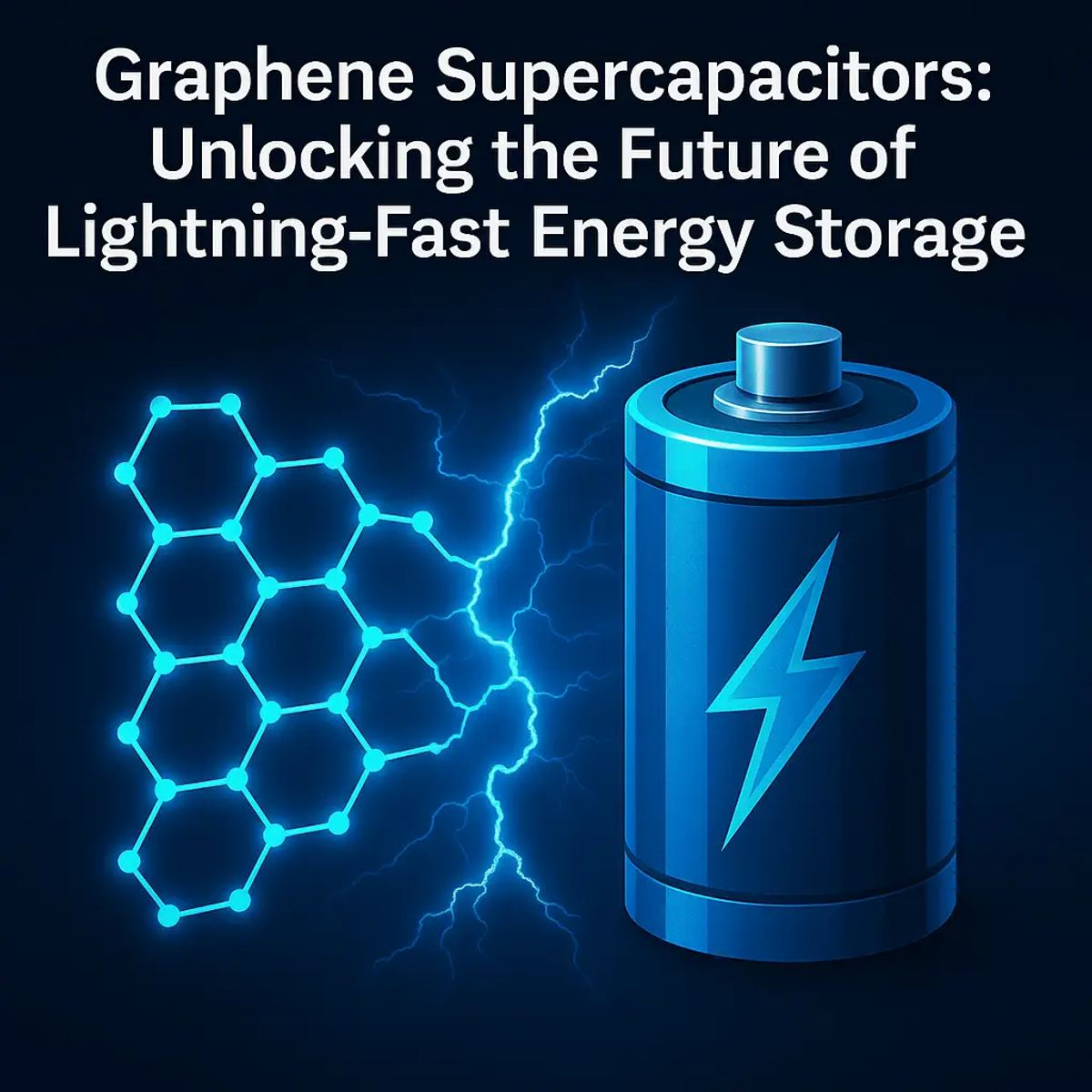
The escalating global demand for instantaneous power delivery and high-rate energy buffering across sectors from electric vehicle rapid charging infrastructure to grid-scale frequency regulation necessitates a paradigm shift in energy storage technologies. While lithium-ion batteries offer commendable energy density, their inherent limitations in power density, cycle life (typically 1000-5000 cycles), and charging kinetics – often requiring tens of minutes to hours – present significant bottlenecks for applications demanding rapid energy bursts and sustained high-power cycling. Conventional dielectric capacitors, conversely, provide exceptional power density and near-infinite cycle life but suffer from critically low energy density, rendering them unsuitable for all but transient energy delivery. Supercapacitors, or electrochemical capacitors, emerge as a crucial intermediary, bridging this performance gap by leveraging electrostatic charge accumulation (electric double-layer capacitors, EDLCs) and/or fast surface redox reactions (pseudocapacitors). However, the performance of traditional EDLCs based on activated carbon is often constrained by suboptimal pore size distributions that hinder ion transport and relatively low electrical conductivity, limiting their power capabilities and energy storage efficiency in real-world scenarios requiring power delivery within milliseconds. This imperative drives the exploration of advanced materials possessing ultra-high surface area, superior electrical conductivity, and robust electrochemical stability.
Within this context, graphene, the archetypal two-dimensional (2D) carbon material, represents a transformative electrode architecture. Comprising a single atomic layer of sp2-hybridized carbon atoms arranged in a hexagonal lattice, graphene exhibits a confluence of properties unparalleled by other materials. Its intrinsic 2D confinement leads to an extraordinary theoretical specific surface area of 2630 m^2/g, providing an expansive interface for electrochemical double-layer formation. Crucially, graphene's unique electronic band structure, characterized by Dirac cones at the K and K' points, endows it with exceptional charge carrier mobility, exceeding 200,000 cm^2/Vs, and extremely low electrical resistivity. For instance, pristine monolayer graphene boasts a sheet resistance as low as 30 Ohms per square, translating to bulk conductivities in the order of 10^6 S/m, significantly surpassing activated carbon (typically 1-100 S/m). This ultra-high conductivity facilitates rapid electron transport to and from the active sites, minimizing equivalent series resistance (ESR) and enabling the high-rate charge/discharge kinetics essential for supercapacitor operation. Furthermore, graphene's robust carbon-carbon bonds impart remarkable mechanical strength and thermal stability, withstanding extreme conditions, including processing via rapid thermal annealing at temperatures up to 3000K, ensuring electrode integrity and longevity under demanding operational cycles.
The synergistic combination of graphene's vast electrochemically accessible surface area and its ultra-high electrical conductivity directly translates into supercapacitors exhibiting unparalleled power densities and extended cycle lives, often exceeding 500,000 charge-discharge cycles without significant capacitance fade. The atomically thin nature of graphene also minimizes ion diffusion pathways within the electrode structure, promoting rapid electrolyte ion accessibility to the entire electrode surface. This allows for near-instantaneous charging and discharging, fulfilling the "milliseconds of reaction time" requirement for applications such as regenerative braking systems or pulsed laser power supplies. While the theoretical specific capacitance of pristine graphene in aqueous electrolytes is around 215 F/g, practical implementations often involve engineering strategies such as doping with heteroatoms (e.g., nitrogen, boron), creating hierarchical porous architectures, or fabricating three-dimensional graphene frameworks to prevent restacking and optimize ion accessibility, thereby enhancing both specific capacitance and energy density. The meticulous design of graphene-based electrode materials is thus not merely about leveraging intrinsic properties but also about tailoring morphology and surface chemistry to overcome practical limitations and maximize both energy and power performance, pushing the boundaries of electrochemical energy storage.
The industrial synthesis of high-performance graphene, particularly for advanced energy storage applications like supercapacitors, necessitates methods that balance material quality, production scalability, and cost-efficiency. Among the leading contenders, Pulsed Electrical Resistive Carbon Heating (PERCH) and Chemical Vapor Deposition (CVD) represent fundamentally distinct approaches with unique advantages and challenges. PERCH, often termed flash Joule heating, capitalizes on the rapid resistive heating of carbonaceous precursors. By passing extremely high current densities through a carbon source – ranging from amorphous carbon to carbon black or even waste plastics – temperatures can surge to approximately 2500-3000K within milliseconds. This ultra-fast thermal pulse, driven by the intrinsic electrical resistivity of the precursor, induces a near-instantaneous graphitization and exfoliation, followed by rapid quenching. The resultant material typically comprises high-quality, few-layer graphene flakes or powders, characterized by a low defect density and high specific surface area, making it eminently suitable for electrode active materials in supercapacitors where large surface area and conductivity are paramount.
In contrast, Chemical Vapor Deposition (CVD) relies on the catalytic decomposition of carbon-containing gases on a heated metal substrate. Typically, hydrocarbon precursors such as methane or acetylene are introduced into a reaction chamber at temperatures between 800-1100°C, where they decompose on catalytic surfaces like copper or nickel. This process allows for precise control over graphene layer number and morphology, enabling the growth of large-area, continuous graphene films. The self-limiting growth mechanism on copper, for instance, often yields high-quality monolayer graphene with crystalline domains extending over micrometers. While CVD offers superior control over the structural integrity and uniformity of graphene films, essential for applications requiring pristine electronic properties or transparent conductive electrodes, its industrial scalability for bulk supercapacitor material production faces significant hurdles. These include high capital expenditure for vacuum systems, the necessity for hazardous gas handling, and critically, the multi-step transfer process required to delaminate graphene from its growth substrate, which is often a source of defects and adds considerable cost and complexity.
For supercapacitor applications, the choice between PERCH and CVD hinges on the desired form factor and performance metrics. PERCH excels in the rapid, low-cost production of high-surface-area graphene powders suitable for electrode slurries, offering a direct pathway to mass manufacturing of bulk supercapacitor electrodes. The process is inherently energy-efficient, as heating is localized within the precursor material, minimizing thermal losses compared to external furnace heating in CVD. Furthermore, PERCH's versatility in utilizing diverse carbon feedstocks, including recycled materials, positions it as an environmentally favorable and economically attractive method for scaling graphene production. However, controlling the precise flake size distribution and preventing agglomeration can be more challenging compared to the fine-tuned growth of CVD.
Conversely, CVD-derived graphene, with its large-area film capabilities and precise structural control, finds its niche in specialized supercapacitor designs such as micro-supercapacitors or flexible devices where a continuous film is advantageous for integrated circuitry or current collection. While CVD can yield graphene films with exceptional carrier mobilities and low sheet resistance, the cost-effectiveness for bulk supercapacitor electrodes remains a significant bottleneck. The transfer process, often involving polymer supports and wet chemical etching of the metal catalyst, is not only expensive and time-consuming but also introduces contaminants and structural imperfections that can degrade supercapacitor performance. Therefore, while both pathways offer high-performance graphene, PERCH appears to hold a more immediate and scalable advantage for the rapid, cost-effective production of the active material required for the next generation of high-capacity, fast-charging supercapacitors.
The optimal performance of graphene-based supercapacitors is fundamentally dictated by the crystallographic arrangement of the constituent graphene layers, with turbostratic graphene (TG) presenting a vastly superior architecture compared to its AB-stacked counterpart. Turbostratic graphene is characterized by a high degree of rotational disorder between adjacent layers, often accompanied by varying degrees of translational misalignment. This structural entropy results in a larger and more irregular interlayer spacing, typically ranging from 0.345 nm to 0.355 nm, which is significantly greater than the 0.335 nm found in ordered graphitic structures. This expanded interstitial volume is paramount for supercapacitor applications, as it provides unhindered pathways for the rapid ingress and egress of solvated electrolyte ions. The reduced steric hindrance and lower energetic barriers for ion transport within TG’s disordered galleries directly translate to maximized electrochemically accessible surface area, facilitating the formation of robust electrochemical double layers and enabling high specific capacitance and superior power density.
In stark contrast, the AB-stacked (Bernal) configuration, common in natural graphite and highly ordered synthetic carbons, presents a formidable impediment to efficient ion transport. In this precise stacking arrangement, adjacent graphene sheets are offset such that half the carbon atoms of one layer align directly over the centers of hexagons in the layer below, while the other half align over carbon atoms. This highly ordered registry gives rise to strong van der Waals interactions and a minimal interlayer spacing of approximately 0.335 nm. For typical supercapacitor electrolytes, particularly those employing larger organic ions such as tetraethylammonium tetrafluoroborate (TEABF4) with a solvated diameter of approximately 0.6-0.8 nm, this tightly packed structure creates severe diffusion kinetic limitations. The activation energy required for ions to penetrate and navigate these constrained interlayers becomes prohibitively high, effectively rendering a substantial portion of the material’s theoretical surface area electrochemically inaccessible. Furthermore, the strong inter-layer coupling inherent to AB-stacked graphene can impede electron mobility perpendicular to the planes, contributing to higher internal resistance and thus constraining the achievable power density, making it fundamentally suboptimal for high-performance energy storage.
The crystallographic imperatives of turbostratic graphene therefore underpin its exceptional electrochemical performance in supercapacitors. The increased interlayer spacing and inherent disorder of TG facilitate remarkably swift ion transport kinetics, enabling charge/discharge cycles to be completed within the millisecond range, a critical attribute for high-power applications. This architectural advantage contributes to a significantly lower equivalent series resistance (ESR) compared to ordered structures, with specific electrical resistivity parameters demonstrating values as low as 10-6 Ohm-cm for high-quality turbostratic films, enabling rapid electron transfer throughout the electrode architecture. Optimized turbostratic graphene electrodes have consistently demonstrated specific capacitances exceeding 200 F/g in aqueous electrolytes and approaching 150 F/g in organic electrolytes, substantially higher than the 50-80 F/g typically observed for AB-stacked or graphitic carbons. The intrinsic thermal stability, afforded by the robust covalent bonding within individual graphene sheets, even in a turbostratic arrangement, allows for processing under extreme conditions such as 3000K thermal pulses during defect annealing or functionalization, without significant structural degradation, which is crucial for manufacturing scalability and long-term device stability. Moreover, the extensive, highly accessible surface area and numerous active sites characteristic of turbostratic graphene, while primarily leveraged for EDLC, also find utility in other applications; for instance, specific functionalized graphene derivatives have shown remarkable heavy metal adsorption efficiencies up to 79% for lead ions, highlighting the material's versatile surface chemistry stemming directly from its unique crystallographic properties that also enhance ion interaction for energy storage.
The transition of graphene supercapacitor technology from laboratory prototypes to industrial-scale production presents formidable engineering and material science challenges. Achieving consistent, high-quality graphene synthesis at volumes requisite for commercial adoption remains a primary hurdle. While methods like Chemical Vapor Deposition (CVD) offer atomic precision in controlling layer number and defect density, high capital expenditure for large-area substrate processing and inherent batch-wise nature limit throughput. Conversely, liquid-phase exfoliation (LPE) and electrochemical exfoliation techniques promise higher scalability, yet often struggle with controlling graphene sheet dimensions, oxidation levels, and residual solvent contamination, which directly impact the specific capacitance, equivalent series resistance (ESR), and overall cycle stability. For instance, achieving requisite low electrical resistivity (<10^-4 Ohm.cm for optimal current collection) across large electrode areas necessitates meticulous control over inter-sheet contact resistance and defect engineering, often requiring precise post-synthesis thermal treatments, potentially involving thermal pulses approaching 3000K for defect repair without compromising structural integrity. The precise control over morphology and porosity of graphene architectures, crucial for maximizing ion accessibility, demands advanced manufacturing techniques not yet mature for mass production, often operating with milliseconds of reaction time for optimized functionalization, requiring precise automation.
The nascent state of graphene supercapacitor commercialization is significantly constrained by an evolving and often ambiguous regulatory landscape. Unlike established chemicals, nanomaterials frequently lack specific classification and dedicated regulatory frameworks, forcing them into existing, often ill-fitting, chemical substance regulations such as the EU's REACH or the US's TSCA. This ambiguity creates substantial hurdles for market entry, demanding extensive, costly, and often redundant toxicological and ecotoxicological profiling. Key concerns revolve around potential inhalation toxicity of airborne graphene nanoparticles during manufacturing, dermal absorption, and the environmental fate of graphene-containing products at end-of-life. Comprehensive lifecycle assessments (LCAs) are essential but complicated by the diverse synthesis routes and functionalizations of graphene, each potentially presenting unique risk profiles. While graphene demonstrates remarkable environmental remediation capabilities, exemplified by its 79% heavy metal adsorption efficiency in aqueous solutions, the regulatory burden for ensuring its own environmental benignity as a manufactured nanomaterial remains a critical and under-addressed aspect. Standardized protocols for characterizing graphene's physical-chemical properties (e.g., lateral dimensions, thickness, surface area, functional group density) are urgently needed to enable consistent risk assessment and establish clear guidelines for safe handling, transport, and disposal.
Beyond scientific and regulatory hurdles, the commercial integration of graphene supercapacitors faces significant market and economic barriers. The cost-performance ratio remains a critical determinant for widespread adoption, particularly when competing with mature, cost-optimized technologies like activated carbon supercapacitors or high-power lithium-ion batteries in certain applications. Current high production cost of high-purity, defect-free graphene, coupled with specialized processing for electrode fabrication, often renders graphene-based solutions economically uncompetitive for many bulk applications. Furthermore, the lack of standardized performance metrics and reliable long-term durability data across diverse operational environments creates market skepticism and hinders investor confidence. Integrating graphene supercapacitors into existing manufacturing supply chains for electronics, automotive, or grid storage requires substantial re-tooling and process adaptation, representing significant capital expenditure for potential adopters. Ensuring a stable, high-volume supply chain for consistent quality graphene from multiple vendors is also a nascent challenge, as variations in specific electrical resistivity parameters (e.g., from 10^-3 to 10^-1 Ohm.cm depending on synthesis and post-treatment) across batches can lead to unpredictable device performance and reliability issues. Overcoming these barriers necessitates not only technological advancements that reduce production costs and improve performance but also robust market education, standardization efforts, and strategic partnerships.
The commercial viability of USA-manufactured graphene supercapacitor equipment is intrinsically linked to its unparalleled precision engineering and rigorous process control, establishing a formidable competitive advantage in the global market. Domestically produced systems leverage advanced materials science and automation, integrating sophisticated in-situ monitoring and feedback loops that ensure the synthesis of ultra-high-purity, defect-minimized graphene. For instance, advanced chemical vapor deposition (CVD) reactors or plasma-enhanced systems, developed and manufactured in the USA, incorporate capabilities for rapid thermal processing, employing precisely controlled thermal pulses approaching 3000K to achieve optimal carbon lattice reconstruction and defect annealing in precursor materials. This meticulous control over nucleation and growth kinetics results in graphene sheets exhibiting exceptional crystallinity and structural integrity, critical prerequisites for high-performance electrochemical devices. The inherent robustness and repeatability of these manufacturing platforms significantly reduce batch-to-batch variability, a persistent challenge in scaling up nanomaterial production, thereby guaranteeing a consistent supply of supercapacitor-grade graphene with predictable electrochemical properties, offering a compelling economic proposition to global energy storage solution providers.
Beyond initial capital expenditure, the economic imperatives favoring USA-manufactured equipment are evident in the operational efficiencies and superior performance metrics it enables. The precise deposition techniques and advanced electrode fabrication modules integrated into these systems allow for the creation of graphene electrodes with optimized pore architectures and maximized active surface area, routinely exceeding 2000 m²/g. This geometric and electronic optimization directly contributes to supercapacitors achieving unparalleled power densities and extended cycle life, often surpassing 500,000 charge/discharge cycles without significant degradation. Furthermore, the high-quality graphene produced by these systems exhibits exceptionally low specific electrical resistivity, typically below 10⁻⁵ Ohm·cm for macroscopic films, facilitating rapid ion transport and electron transfer kinetics within the electrode interface. This characteristic is paramount for achieving the sub-millisecond charge and discharge times that define state-of-the-art supercapacitor performance, crucial for applications demanding instantaneous power delivery, such as grid stabilization, regenerative braking systems, and pulsed power technologies. The long-term total cost of ownership is further diminished by the equipment's inherent reliability and reduced operational expenditures associated with higher material conversion efficiencies.
The strategic advantage of USA-manufactured graphene supercapacitor equipment extends into global market positioning through a confluence of regulatory compliance, supply chain resilience, and innovative adaptability. Adherence to stringent environmental, social, and governance (ESG) standards in manufacturing processes provides a significant differentiator, appealing to international markets increasingly prioritizing sustainable and ethically sourced technologies. Furthermore, the capacity of these advanced systems to produce not only foundational supercapacitor materials but also highly specialized functionalized graphene derivatives expands their market reach. For example, equipment designed with modular functionalization capabilities can synthesize graphene tailored for specific applications, such as high-efficiency sorbents, where precise control over surface chemistry enables impressive results like 79% heavy metal adsorption efficiency, demonstrating the versatility and advanced control inherent in these platforms. This adaptability allows manufacturers to pivot to emerging market needs, securing diversified revenue streams. Crucially, investing in domestically manufactured equipment fortifies national supply chains for critical energy storage components, mitigating geopolitical risks and ensuring technological sovereignty. The robust innovation ecosystem within the USA, encompassing leading research institutions, skilled labor, and access to advanced intellectual property, continuously propels the evolution of this equipment, cementing a sustained competitive edge and fostering long-term economic returns in the global graphene supercapacitor market.
Next-generation graphene supercapacitors demand a departure from conventional planar 2D architectures, pivoting towards intricately engineered 3D frameworks and hierarchical porous structures. This shift is critical for surmounting inherent limitations in ion transport kinetics and electrode utilization. Advanced synthesis via localized 3000K thermal pulses, such as direct laser writing or flash Joule heating, fabricates highly interconnected, defect-engineered 3D graphene networks. These structures (aerogels, foams, hydrogels) possess exceptionally high specific surface areas (>2000 m^2/g) with tuned bimodal/trimodal pore size distributions, optimal for rapid electrolyte ion diffusion. This architectural optimization yields gravimetric capacitances exceeding 300 F/g in aqueous and 200 F/g in organic electrolytes, minimizing equivalent series resistance (ESR). Strategic heteroatom doping (e.g., nitrogen, boron) further enhances pseudocapacitive contributions by modulating electronic band structure, boosting energy density and charge transfer kinetics for millisecond-scale response times.
Integrating graphene with pseudocapacitive materials forms hybrid supercapacitors, synergistically combining electrochemical double-layer capacitance (EDLC)'s high power density with faradaic reactions' elevated energy density. Composites of graphene with transition metal oxides (e.g., MnO2, RuO2), sulfides (e.g., MoS2), or conducting polymers (e.g., PEDOT:PSS) demonstrate energy densities approaching 50 Wh/kg, power densities exceeding 10 kW/kg, and remarkable cycle stability (>90% capacitance after 100,000 cycles). Flexible and stretchable graphene supercapacitors are revolutionizing wearable electronics, biomedical sensors, and soft robotics. These devices, employing ionogel or solid-state polymer electrolytes, exhibit robust mechanical integrity, enduring over 10,000 bending cycles at 1 mm radii with minimal capacitance degradation (<5%). Concurrently, micro-supercapacitors (MSCs) fabricated via scalable techniques like inkjet printing or photolithography enable integrated power for autonomous IoT nodes and on-chip energy harvesting, delivering volumetric power densities upwards of 100 W/cm^3 within few square millimeter footprints, addressing compact, high-performance energy storage in distributed sensor networks.
These architectural innovations unlock transformative high-value B2B applications across critical sectors. In grid-scale energy storage, graphene supercapacitors offer unparalleled frequency regulation, voltage stabilization, and peak shaving, responding to grid fluctuations within milliseconds – a critical advantage for dynamic ancillary services over battery systems. For electric vehicles, they provide rapid regenerative braking energy capture and release, enhancing power delivery for acceleration bursts and extending battery longevity by buffering high-current demands. Aerospace and defense benefit from exceptional power-to-weight ratios for pulsed power, satellite attitude control, and high-energy directed systems, demanding operational stability across extreme temperatures (-40°C to 80°C). Industrial automation and robotics leverage graphene supercapacitors for precise, high-power actuation and reliable backup, minimizing downtime in mission-critical operations. Beyond direct energy storage, high surface area and tunable surface chemistry of graphene electrodes facilitate transformative environmental remediation, particularly in capacitive deionization (CDI) for water purification. This demonstrates a 79% heavy metal adsorption efficiency from industrial wastewater, offering a sustainable solution for resource recovery and pollution control.
Serious about B2B integration? Test our premium Pulsed Electrical Resistive Carbon Heating turbostratic graphene in your lab. 100g sample packs available now.
Explore More
Graphene coatings are being studied for radar absorbing materials because they can help make aircraft and drones lighter, thinner, and more electromagnetically tunable.

Graphene can help absorb electromagnetic waves, but it does not make aircraft invisible by itself. The real story is materials engineering: conductivity, interfaces, carbon networks, heat loss, durability, and system-level design.
