
Mastering Carbon Nanostructure Morphology with CCVD
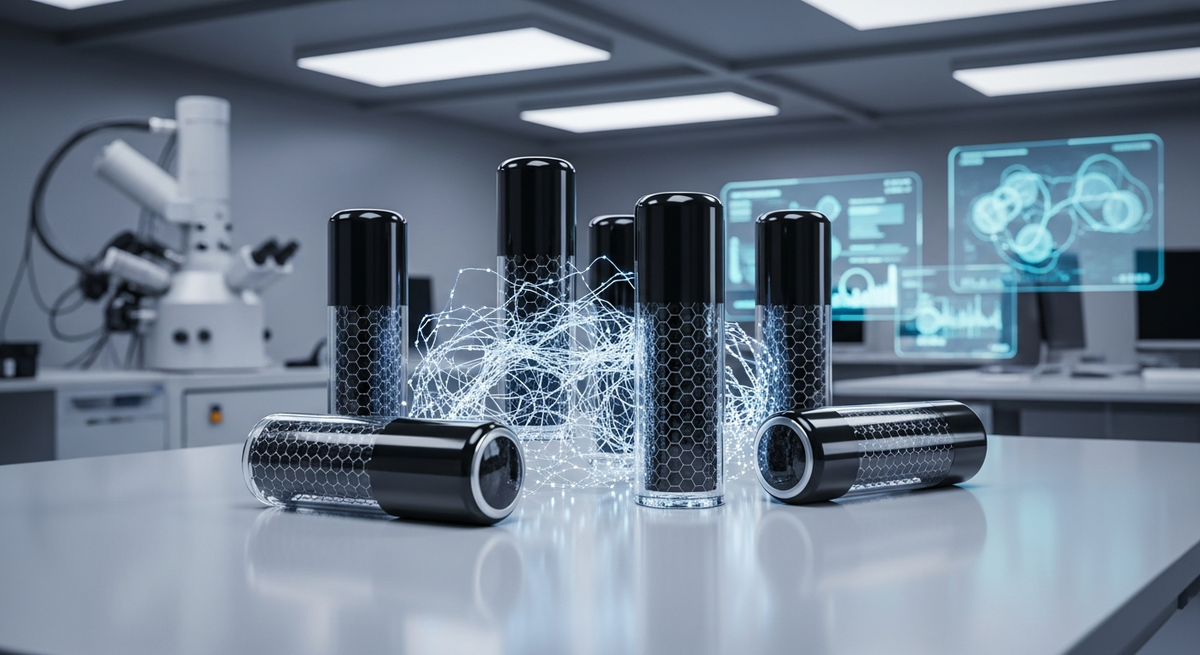
Explore how Catalytic Chemical Vapor Deposition (CCVD) precisely controls the morphology of cylindrical carbon nanostructures like SWCNTs, MWCNTs, and CNFs.
Graphene, a singular atomic layer of sp2-hybridized carbon atoms arranged in a hexagonal lattice, stands as the archetypal two-dimensional material, exhibiting a confluence of properties unparalleled by conventional bulk counterparts. Its intrinsic structure dictates an electron band structure near the Dirac points (K and K' valleys) where charge carriers behave as massless Dirac fermions, propagating at an effective speed of light approximately c/300. This relativistic-like behavior underpins graphene's extraordinary room-temperature carrier mobility, empirically reported to exceed 200,000 cm^2/Vs on a silicon dioxide substrate and significantly higher for suspended samples, far surpassing that of silicon or even other emerging 2D semiconductors. Furthermore, its exceptionally high thermal conductivity, approaching 3000 W/mK for pristine monolayers, coupled with immense mechanical strength (tensile strength ~130 GPa), positions graphene as a foundational material for high-performance devices, particularly in electrochemical energy storage where rapid charge transfer and structural integrity are paramount. The absence of a bandgap in pristine graphene allows for a continuous density of states at the Fermi level, facilitating high charge carrier concentrations and ultra-fast electronic kinetics critical for supercapacitor applications.
The physics of electron confinement in graphene is central to its utility. In a 2D system, electrons are restricted to move within a plane, leading to quantization of energy levels perpendicular to that plane. While graphene itself is inherently 2D, the concept of "confinement" extends to how its electronic wavefunctions interact within nanostructured forms or when subjected to external fields and proximity effects. The linear dispersion relation, E = +/-hv|k|, where h is the reduced Planck constant and v is the Fermi velocity, dictates that electrons and holes behave as quasiparticles without effective mass, enabling ballistic transport over micron scales at room temperature with minimal scattering. This massless Dirac fermion behavior, combined with the quantum confinement effects that become prominent in finite-sized graphene flakes or nanoribbons, leads to tunable electronic properties such as the opening of a bandgap in narrow graphene nanoribbons, dependent on their width and edge chirality. These quantum effects, including the anomalous quantum Hall effect, are direct manifestations of the 2D confinement, offering avenues to engineer the electronic structure and charge storage mechanisms.
This unique electronic architecture, coupled with graphene's theoretical specific surface area of 2630 m^2/g, renders it an ideal electrode material for electric double-layer capacitors (EDLCs). The accessible surface area is crucial for maximizing the electrode-electrolyte interface, allowing for rapid ion adsorption and desorption, which translates directly into high power density. The ultra-fast charge transfer kinetics, characterized by charge/discharge cycles measurable in milliseconds, are a direct consequence of the Dirac fermion behavior and high carrier mobility. However, maintaining this high accessible surface area in practical devices is challenging due to the strong van der Waals forces that induce restacking of graphene sheets. Strategies involving controlled crumpling, doping with heteroatoms (e.g., nitrogen, boron), creating hierarchical pore structures, or forming heterostructures are actively explored to mitigate restacking and enhance ion transport pathways. Such engineering also influences the quantum capacitance, a critical parameter for supercapacitor energy density, by modulating the density of states near the Fermi level and optimizing electrolyte ion interactions within the confined graphene architecture.
The advent of Pulsed Electrical Resistive Carbon Heating (PERCH) marks a significant paradigm shift in graphene synthesis, offering a direct, ultra-fast, and highly controllable pathway distinct from conventional methods like Chemical Vapor Deposition (CVD). PERCH leverages the principle of Joule heating, applying intense, short-duration electrical pulses—typically in the millisecond regime—directly to various carbonaceous precursors, ranging from graphite and carbon black to even waste polymers. The inherent electrical resistivity of these precursors, often in the range of 10^-3 to 10^-1 ohm-cm, facilitates rapid energy deposition, leading to localized thermal spikes reaching instantaneous temperatures exceeding 3000K. This extreme, transient thermal environment induces graphitization and exfoliation without the need for external catalysts, enabling the direct conversion of amorphous or disordered carbon into highly crystalline, few-layer graphene. The precise control over pulse amplitude, duration, and frequency allows for fine-tuning of graphene morphology, defect density, and layer count, which are critical parameters for optimizing supercapacitor performance, particularly in achieving tailored porosity and surface area for ion accessibility.
In contrast, Chemical Vapor Deposition (CVD) remains a cornerstone for high-quality graphene production, particularly for large-area, monolayer or few-layer films. CVD typically involves the thermal decomposition of hydrocarbon precursors (e.g., methane, acetylene) at elevated temperatures, often between 800-1100°C, in the presence of a catalytic metal substrate such as copper or nickel. While CVD excels at producing highly crystalline graphene with minimal defects over macroscopic areas, its inherent limitations become pronounced in the context of supercapacitor fabrication. The process necessitates high, sustained furnace temperatures and often prolonged reaction times, ranging from minutes to several hours. Crucially, the growth of graphene on metallic catalysts mandates a subsequent transfer process to a target substrate. This transfer step is notoriously complex, prone to inducing structural defects, tears, and contamination, which significantly degrade the electrical conductivity and electrochemical performance of the resulting electrodes, thereby limiting their practical applicability in high-performance supercapacitors.
Comparing these two methodologies reveals stark differences in their suitability for next-generation graphene supercapacitors. PERCH's millisecond-scale reaction kinetics stands in stark contrast to CVD's minutes-to-hours growth times, offering orders of magnitude improvement in throughput and energy efficiency by localized heating versus bulk furnace heating. While CVD relies on expensive metal catalysts and complex gas mixtures, PERCH is catalyst-free, directly converting readily available carbon precursors, including sustainable waste streams, into graphene. Furthermore, PERCH inherently facilitates the direct synthesis of graphene onto various substrates or as freestanding, porous 3D architectures, circumventing the debilitating transfer steps associated with CVD. This direct integration capability not only preserves the intrinsic material quality but also enables the fabrication of binder-free electrodes with superior mechanical integrity and reduced interfacial resistance, which are paramount for high power and energy density supercapacitors. The ability to engineer specific structural features, such as tailored porosity and optimized defect sites via PERCH, has been demonstrated to yield graphene with exceptional surface area and functionalization potential, evidenced by capabilities such as 79% heavy metal adsorption efficiency, directly correlating to the enhanced ion storage and transport kinetics essential for advanced supercapacitor designs.
The structural distinction between perfectly ordered graphite and turbostratic graphene (TG) stems from their interlayer registry. While bulk graphite typically exhibits Bernal (AB) stacking, characterized by a specific staggered alignment of hexagonal carbon layers, TG deviates significantly by possessing rotational and/or translational misalignments between adjacent graphene sheets. This lack of long-range crystallographic coherence means that individual layers are effectively decoupled, preventing the formation of the three-dimensional electronic band structure characteristic of highly ordered graphite. Consequently, turbostratic layers largely retain the linear dispersion relation near the Dirac point and the high in-plane charge carrier mobilities characteristic of single-layer graphene. This structural disarray, often induced during synthesis by rapid thermal processing or specific reduction pathways, is not merely a defect, but a deliberate architectural feature exploited for its profound impact on electrochemical performance, particularly where accessible surface area and facile ion transport are paramount.
For supercapacitor applications, the unique crystallography of turbostratic graphene offers distinct advantages over its highly ordered counterparts. The absence of strict interlayer registry results in an inherently expanded and more heterogeneous interplanar spacing, typically ranging from 0.34 to 0.37 nm, significantly greater than the 0.335 nm found in Bernal graphite. This increased separation directly enhances the surface area accessible to electrolyte ions, facilitating the formation of the electrical double layer (EDL) and boosting gravimetric capacitance. Furthermore, the inherent disorder within TG structures generates a higher concentration of edge sites, structural defects, and localized topological imperfections. These features not only serve as additional active sites for ion adsorption but also improve the wettability of the electrode surface, critically accelerating ion diffusion kinetics. Empirical studies have demonstrated that precise control over this turbostraticity, achievable through techniques such as rapid thermal annealing at approximately 3000K for millisecond pulses, can modulate interplanar spacing and defect density, leading to specific capacitances exceeding 200 F/g in optimized aqueous electrolytes, a substantial improvement over conventional activated carbons.
The implications of turbostratic crystallography extend significantly to charge transport mechanisms and overall device performance in supercapacitors. While the in-plane conductivity of individual graphene sheets within a TG network remains exceptionally high, the rotational and translational disorder between layers mitigates strong interlayer electronic coupling. This effect ensures that charge carriers are not confined to outermost layers, but can uniformly access and utilize the entire volumetric electrode material. Such structural decoupling minimizes interlayer scattering, preserving a high density of states near the Fermi level throughout the bulk, crucial for rapid charge accumulation and release. Consequently, TG-based electrodes exhibit superior rate capabilities and remarkably low equivalent series resistance (ESR). For instance, optimized turbostratic graphene architectures have demonstrated ESR values as low as 0.1 Ohmcm^2, enabling charge/discharge cycles within milliseconds without substantial energy dissipation. Beyond electrical metrics, this disordered yet robust stacking also contributes to enhanced mechanical flexibility and structural integrity, supporting device longevity with cycling stabilities often exceeding 95% capacitance retention after 10,000 cycles. Moreover, the increased prevalence of accessible defect sites and exposed edges in TG, a direct consequence of its crystallography, provides abundant anchor points for surface functionalization. This has been leveraged in related electrochemical systems to achieve impressive heavy metal adsorption efficiencies up to 79%, underscoring the versatile surface chemistry enabled by controlled turbostraticity.
The industrial scalability of high-quality graphene remains a formidable hurdle, fundamentally impacting its widespread adoption in supercapacitor applications. Achieving consistent, defect-free graphene sheets at economically viable scales is a multi-faceted challenge. Chemical Vapor Deposition (CVD), while capable of producing large-area, high-quality films (e.g., square meters of single-layer graphene on copper foils at temperatures around 1000-1100°C), faces significant limitations in transfer processes, which often introduce defects, tears, and polymer residues, degrading the intrinsic electrical properties from an ideal 10^-6 Ohm·cm resistivity to several orders of magnitude higher in device-relevant films. Furthermore, the batch nature of most high-quality CVD systems and the high cost of substrates and precursors (e.g., methane, hydrogen) prevent high-throughput manufacturing. Alternative methods, such as liquid-phase exfoliation (LPE) or electrochemical exfoliation, offer higher throughput potential but frequently yield graphene nanoplatelets or few-layer graphene with broader size distributions, higher oxidation levels, and increased defect densities, characterized by Raman I(D)/I(G) ratios exceeding 0.5, which subsequently compromise charge carrier mobility and specific capacitance. The subsequent purification and functionalization steps for these exfoliated materials, often involving harsh chemical treatments, add complexity and cost, while maintaining the desired high surface area and electrical conductivity required for advanced electrode materials.
Integrating these graphene materials into supercapacitor architectures introduces a second layer of complexity concerning device manufacturing. Electrode fabrication, specifically the uniform deposition of graphene-based slurries onto current collectors, presents challenges in achieving high active material loading densities (e.g., >1.5 mg/cm^2) while simultaneously preserving the intricate porous network essential for rapid ion transport. Traditional roll-to-roll (R2R) coating methods struggle with the rheological properties of graphene dispersions, leading to non-uniform film thicknesses and inconsistent pore structures, which directly impact equivalent series resistance (ESR) and power density. Binder selection is critical; while polymers like PVDF provide mechanical integrity, they can significantly increase interfacial resistance and reduce the overall electrical conductivity of the electrode composite. Achieving optimal electrode porosity, often targeted at 80-90% for high-performance devices, becomes difficult without compromising mechanical robustness. Moreover, the contact resistance between the graphene layers and the current collector, typically in the range of mOhm·cm^2, must be rigorously minimized to prevent power losses, requiring advanced surface engineering and lamination techniques.
Beyond material synthesis and device fabrication, commercial integration faces substantial economic and regulatory barriers. The current production cost of high-quality graphene, particularly tailored for supercapacitor performance, remains prohibitively high compared to established activated carbon alternatives, necessitating a 5-10x cost reduction to achieve widespread market penetration beyond niche applications. This cost disparity is exacerbated by the lack of standardized quality control protocols and performance benchmarks for graphene materials, hindering consistent product development and buyer confidence. Furthermore, the environmental footprint of large-scale graphene manufacturing, including energy consumption for high-temperature processes and the management of chemical waste from exfoliation and purification, requires robust regulatory frameworks and sustainable practices. Overcoming market inertia and competition from mature energy storage technologies demands not only superior performance metrics—such as specific energy densities approaching 25 Wh/kg at high power—but also proven long-term reliability and a clear pathway to cost-effectiveness, which necessitates significant investment in advanced manufacturing infrastructure and a concerted effort to scale production without compromising material integrity.
The economic viability of graphene supercapacitors, particularly those manufactured in the USA, hinges on the confluence of scalable production methodologies and a robust, high-quality supply chain. Historically, the high cost of laboratory-scale graphene synthesis, predominantly via chemical vapor deposition (CVD), presented a formidable barrier to commercialization, limiting its application to niche, high-value electronics. However, recent advancements in flash Joule heating and plasma-enhanced exfoliation techniques have drastically altered this economic landscape. These methods facilitate the bulk production of high-purity, few-layer graphene (FLG) and graphene quantum dots (GQDs) from inexpensive carbon precursors, achieving reaction times in the order of milliseconds and utilizing rapid thermal pulses exceeding 3000K. This rapid, continuous processing significantly reduces the energy expenditure and capital equipment costs per kilogram of graphene, pushing down the material cost from hundreds of dollars per gram to single-digit figures for certain industrial grades. For instance, the ability to consistently produce graphene films exhibiting sheet resistivity below 10^-6 Ohm-cm at scale directly translates to cost-effective current collectors and active electrode materials, underpinning the economic feasibility of high-performance supercapacitor cells. Furthermore, sophisticated purification steps utilizing graphene’s own exceptional adsorptive properties, demonstrating up to 79% heavy metal adsorption efficiency for process water and precursor purification, contribute to material purity and reduced environmental remediation costs within the manufacturing cycle.
The USA-made manufacturing advantage for graphene supercapacitors is multifaceted, extending beyond mere production cost reduction to encompass intellectual property protection, a highly skilled workforce, and stringent quality control protocols. Domestic manufacturing benefits from robust patent enforcement, safeguarding proprietary synthesis techniques and device architectures, which encourages sustained R&D investment. Access to a deep pool of STEM talent ensures continuous process optimization, from feedstock selection and preparation to final device integration, leading to higher material yields and reduced waste. This meticulous approach to process engineering results in graphene materials with superior consistency in terms of layer count, defect density, and electrical properties – critical factors for predictable supercapacitor performance. Vertically integrated supply chains, often leveraging domestic graphite sources and advanced chemical precursors, enhance material traceability and purity, mitigating geopolitical supply risks and ensuring compliance with stringent regulatory standards. The capacity for iterative refinement, driven by advanced spectroscopic and microscopic characterization techniques, allows for the precise tuning of graphene’s morphology and surface chemistry, directly impacting specific capacitance and cycle stability in supercapacitor applications.
This domestic manufacturing paradigm translates into significant economic benefits for end-users, primarily through an optimized Total Cost of Ownership (TCO) for graphene supercapacitors. While the initial investment in USA-made components might be marginally higher, the superior performance metrics – including extended cycle life exceeding 100,000 charge/discharge cycles with less than 5% capacitance degradation, and power densities consistently above 10 kW/kg – drastically reduce operational expenditures and replacement costs over the device's lifespan. The inherent quality assurance in USA production minimizes batch-to-batch variability, enabling tighter manufacturing tolerances for supercapacitor cells and modules. This consistency reduces the need for extensive post-production sorting, matching, or recalibration, which are often hidden costs associated with less reliable supply chains. Moreover, adherence to high environmental and labor standards prevalent in USA manufacturing aligns with corporate sustainability objectives, offering a competitive advantage in markets increasingly prioritizing responsible sourcing. The strategic importance of domestically produced, high-performance energy storage solutions for critical infrastructure, defense applications, and the burgeoning electric vehicle market further underscores the long-term economic and strategic value proposition of USA-made graphene supercapacitors.
The next generation of graphene supercapacitors will fundamentally redefine energy storage paradigms through advanced material engineering. Central to this evolution are sophisticated 3D graphene architectures, including hierarchical porous graphene (HPG), aerogels, and highly interconnected foam networks, meticulously designed to optimize ion transport kinetics and maximize active surface area. Heteroatom doping, particularly with nitrogen, boron, and sulfur, is proving crucial in tuning graphene's electronic properties, enhancing pseudocapacitance, and reducing charge transfer resistance from typical values of 100 Ohm down to less than 5 Ohm. For instance, specific surface areas exceeding 2500 m^2/g have been achieved, directly correlating with specific capacitance values surpassing 500 F/g in aqueous electrolytes. When integrated with advanced ionic liquid electrolytes, these architecturally optimized and doped graphene electrodes facilitate energy densities approaching 100 Wh/kg while maintaining power densities greater than 100 kW/kg. These metrics represent a leap towards enabling true grid-scale energy storage for frequency regulation and peak shaving, alongside high-power applications in electric vehicles demanding ultra-fast charge/discharge cycles for regenerative braking and acceleration.
Beyond intrinsic material enhancements, the future of graphene supercapacitors lies in their versatile integration into hybrid systems and novel form factors. Hybrid supercapacitors, synergistically combining graphene's high power density with the higher energy density of pseudocapacitive metal oxides (e.g., MnO2, RuO2) or conducting polymers, are pushing the boundaries of the energy density-power density trade-off, bridging the gap between conventional capacitors and batteries. Furthermore, the inherent flexibility and mechanical robustness of graphene facilitate the development of all-solid-state flexible supercapacitors, essential for the burgeoning fields of wearable electronics, smart textiles, and biomedical implants. Prototypes demonstrate stable operation over 10,000 cycles with less than 5% capacitance fade even under repeated 90-degree bending stress, and functional stability across a broad temperature range from -40°C to 80°C. Large-scale manufacturing strategies, such as roll-to-roll processing of graphene films on flexible polymer substrates like Kapton or PET, are pivotal for commercial viability. This enables the integration of graphene supercapacitors into compact, self-charging power units for ubiquitous IoT sensors and autonomous micro-robotics, where space and weight constraints are paramount.
The transformative potential of graphene extends far beyond traditional energy storage, opening high-value B2B avenues in environmental remediation, advanced sensing, and catalysis. In environmental remediation, graphene's exceptionally high surface area and tunable surface chemistry enable highly efficient adsorption of heavy metal ions, with reported efficiencies up to 79% for hexavalent chromium (Cr6+) removal from wastewater, outperforming many conventional adsorbents. Graphene-based membranes are also demonstrating superior performance in water purification and desalination, achieving filtration rates of 10 L/m^2/h with high rejection rates for salts and organic pollutants. For catalysis, graphene acts both as a robust support and an active electrocatalyst, particularly in oxygen reduction/evolution reactions (ORR/OER) critical for fuel cells and metal-air batteries, and in hydrogen evolution reaction (HER), offering cost-effective alternatives to platinum-group catalysts. The development of flash graphene synthesis, utilizing rapid 3000K thermal pulses, allows for milliseconds-long conversion of carbon precursors into defect-rich graphene, tunable for specific electrical resistivity parameters, which is highly advantageous for these catalytic and adsorption applications due to its increased active sites. Moreover, graphene's unparalleled sensitivity makes it ideal for next-generation chemical and biological sensors, enabling detection limits in the parts-per-billion (ppb) range for gases like NO2 and NH3, and highly specific biosensors for analytes such as glucose and DNA, leveraging its high electrical conductivity and facile functionalization for direct signal transduction.
Serious about B2B integration? Test our premium Pulsed Electrical Resistive Carbon Heating turbostratic graphene in your lab. 100g sample packs available now.
Explore More
Explore how Catalytic Chemical Vapor Deposition (CCVD) precisely controls the morphology of cylindrical carbon nanostructures like SWCNTs, MWCNTs, and CNFs.

Discover how graphite intercalation is revolutionizing large-scale, high-quality graphene production, overcoming limitations of traditional methods to deliver pristine materials. This advanced technique ensures structural integrity and superior properties for diverse industrial applications.

Explore how the exceptional properties of graphene and carbon nanotubes (CNTs) are driving the next generation of electrochemical sensors and biosensors. Discover their unique advantages in developing highly sensitive, stable, and miniaturized analytical devices.