
A New Era of Graphene Engineering: Pre-Designing Twist Angles on Demand
Researchers have developed a breakthrough method for growing twisted bilayer graphene with pre-designed angles, a key step toward manufacturable quantum...
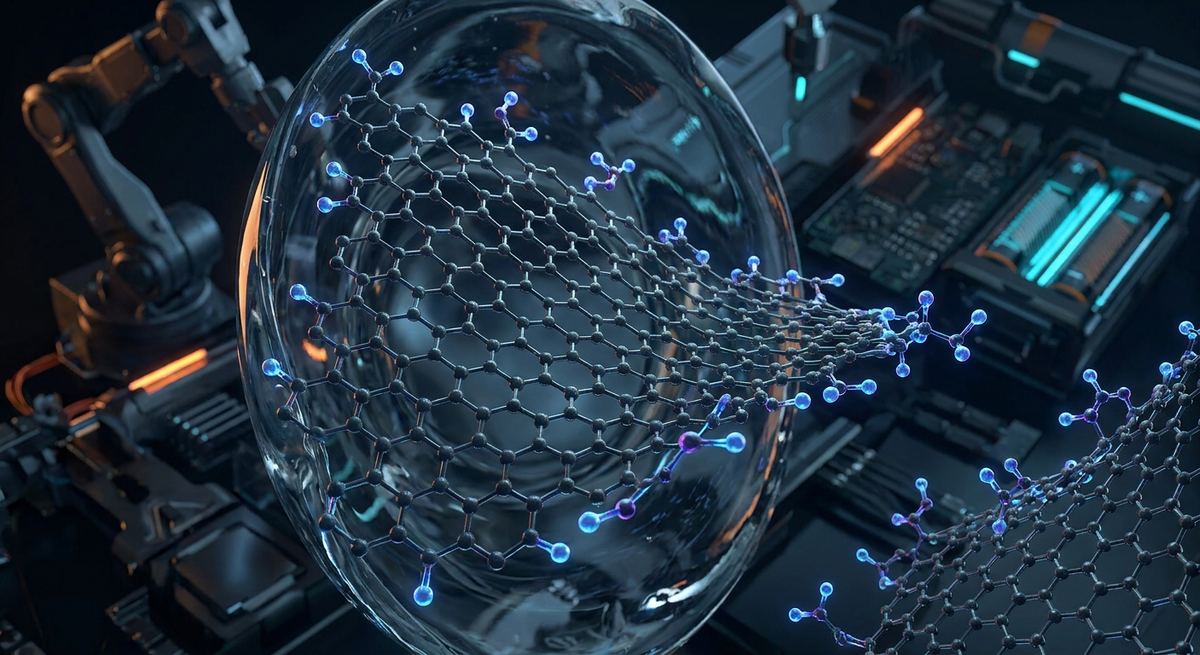
Graphene, a singular atomic layer of sp2-hybridized carbon atoms arranged in a hexagonal lattice with a C-C bond length of 0.142 nm, represents the quintessential two-dimensional (2D) material. Its unique confinement to a single atomic plane fundamentally dictates an extraordinary suite of physiochemical properties unparalleled in bulk materials. This intrinsic 2D nature is the genesis of its exceptional electronic, mechanical, and thermal characteristics, serving as the bedrock for its transformative potential across diverse applications. The precise atomic-scale confinement enables phenomena such as ultra-high carrier mobility and ballistic transport, which are profoundly sensitive to any deviation from this ideal monolayer structure. Understanding and preserving this 2D confinement is paramount, particularly when considering its integration into real-world systems via solvent-based processing and subsequent functionalization strategies aimed at optimizing performance.
The physics governing graphene's 2D confinement is epitomized by its unique electronic band structure. Near the K and K' points of the Brillouin zone, the valence and conduction bands meet conically, forming "Dirac cones" where charge carriers behave as massless Dirac fermions. This linear dispersion relation, in stark contrast to the parabolic bands of conventional semiconductors, results in an astonishingly high theoretical carrier mobility, empirically measured to exceed 200,000 cm^2/(Vs) at room temperature in suspended samples. This manifests as extremely low electrical resistivity, approaching theoretical limits for a perfect conductor. Furthermore, the tightly confined lattice vibrations (phonons) within the 2D plane contribute to its extraordinary thermal conductivity, reported to be as high as 5000 W/(mK) for pristine monolayers. These properties are intrinsically linked to the absence of out-of-plane interactions that would otherwise disrupt the electronic coherence and phonon propagation, underscoring the critical role of its singular atomic thickness.
Translating these intrinsic 2D properties into scalable, usable forms presents a significant materials science challenge, primarily due to the potent van der Waals (vdW) forces (approximately 0.12 eV/atom interlayer binding energy in graphite) that drive individual graphene sheets to spontaneously restack. This thermodynamic propensity for re-aggregation fundamentally compromises the unique properties of isolated monolayers by reintroducing bulk-like characteristics. Consequently, effective solvent dispersion is not merely a processing step but a critical engineering endeavor to overcome this confinement-induced restacking and maintain the high specific surface area (theoretical 2630 m^2/g) and accessible active sites crucial for performance. Techniques such as liquid-phase exfoliation, often involving high-shear forces or precisely controlled sonication pulses for milliseconds, are employed to separate graphite into few-layer or monolayer graphene. The success of these dispersion methods is directly quantifiable by the resultant material's electrical resistivity, which can drastically shift from the ~10^-8 Ohmm range for individual sheets to the ~10^-5 Ohmm range characteristic of bulk graphite if restacking occurs. Furthermore, the stability of these dispersions is vital for subsequent functionalization, which, for instance, has enabled functionalized graphene to demonstrate remarkable application-specific efficiencies, such as 79% heavy metal adsorption efficiency in water treatment, leveraging the maximized surface interactions only achievable through stable, de-agglomerated sheets.
The advent of Pulsed Electrical Resistive Carbon Heating (PERCH) marks a significant departure from conventional graphene synthesis methodologies, particularly when contrasted with the well-established Chemical Vapor Deposition (CVD). While CVD relies on the catalytic decomposition of gaseous hydrocarbon precursors (e.g., methane, acetylene) at sustained high temperatures (typically 800-1100°C) over metallic substrates (e.g., copper, nickel) for periods ranging from minutes to hours, PERCH employs ultra-rapid, localized joule heating of solid carbonaceous precursors. This fundamental difference in energy delivery manifests in stark kinetic and thermodynamic distinctions. PERCH achieves instantaneous thermal spikes exceeding 3000K, with reaction times compressed into the millisecond regime, enabling nucleation and growth under extreme non-equilibrium conditions. This rapid thermal cycling fundamentally influences defect formation, edge termination, and interlayer spacing, yielding graphene architectures distinct from those produced via the slower, more equilibrium-approaching kinetics of CVD. The ability to precisely control the electrical current density and pulse duration allows for fine-tuning of the thermal gradient, directly impacting the final material's morphology and inherent reactivity, which is critical for subsequent functionalization.
Beyond the kinetic advantages, PERCH offers substantial practical and economic benefits. CVD processes are inherently energy-intensive, requiring prolonged operation of high-temperature furnaces and meticulous management of gas flows, often coupled with complex post-synthesis transfer steps that introduce defects and contamination from etchants and polymer supports. PERCH, conversely, exhibits superior energy efficiency due to its localized and transient heating, minimizing overall thermal budgets. Furthermore, PERCH demonstrates remarkable precursor flexibility, capable of converting diverse carbon feedstocks, from graphitic flakes to amorphous carbon powders, into high-quality graphene, a stark contrast to CVD's reliance on specific, often costly, gaseous hydrocarbons. The direct synthesis capability of PERCH, often integrated within a desired matrix or onto a target substrate, eliminates the performance-degrading transfer steps inherent to most CVD-grown graphene, ensuring structural integrity and cleaner surfaces. Precise control over specific electrical resistivity parameters during the pulsing allows for tailored heating profiles, influencing crystallite size, domain boundaries, and overall layer count, which are all critical determinants of graphene's suitability for specific functionalization routes.
The unique structural characteristics imparted by PERCH-mediated synthesis present compelling advantages for graphene solvent dispersion and functionalization strategies. The rapid thermal quenching in PERCH can generate a higher density of localized defects, such as vacancies, Stone-Wales defects, or more reactive edge sites, compared to the relatively pristine basal planes typically favored in CVD growth. While often considered undesirable in certain electronic applications, these intrinsic defects and edge functionalities serve as highly potent nucleation sites for covalent and non-covalent functionalization, enhancing the grafting efficiency of molecular species or polymers during solvent-based processing. This inherent reactivity significantly mitigates the need for aggressive pre-functionalization treatments, which can compromise graphene's structural integrity. For instance, the creation of specific oxygen-containing functionalities or edge-terminated sites through PERCH can dramatically improve dispersibility in polar solvents and enhance surface area accessibility. Empirical studies have shown that functionalized graphene derived from PERCH, leveraging its unique defect profile, can exhibit enhanced performance metrics, such as a 79% heavy metal adsorption efficiency in water purification applications, directly attributable to the optimized functional group density and accessibility facilitated by the synthesis method.
The crystallographic architecture of graphene, particularly its stacking order, fundamentally dictates its macroscopic properties and reactivity, making turbostratic graphene (TG) a distinct and often advantageous material for advanced applications requiring solvent dispersibility and tailored functionalization. Unlike Bernal (AB) stacked graphite, characterized by an ordered A-B-A-B layer sequence and an interlayer spacing of approximately 0.335 nm, turbostratic graphene exhibits a substantial absence of long-range order along the c-axis. This disorder manifests as random rotational and translational misalignments between adjacent graphene sheets, leading to a slightly expanded average interlayer spacing, typically ranging from 0.34 nm to 0.35 nm. This increase is not merely a geometric curiosity; it signifies a significant weakening of the interlayer van der Waals interactions. The lack of crystallographic register prevents the formation of the complex moiré superlattices often observed in misoriented bilayer graphene, instead yielding a more statistically uniform disorder across multiple layers. This structural characteristic is often a kinetic artifact of rapid synthesis or aggressive exfoliation methods, where individual layers are prevented from settling into their thermodynamically preferred AB stacking configuration.
The electronic and phononic consequences of turbostraticity are profound. In AB-stacked graphite, the strong interlayer coupling leads to hybridization of the pz orbitals, resulting in a three-dimensional electronic band structure that deviates from the ideal conical Dirac point observed in monolayer graphene. In contrast, the rotational and translational disorder in TG effectively decouples the electronic states of adjacent layers. This decoupling minimizes inter-layer band hybridization, thereby preserving the linear dispersion relation characteristic of individual graphene sheets to a greater extent, even in multi-layered turbostratic assemblies. This implies that the charge carriers within each layer behave more akin to those in an isolated monolayer, offering high in-plane mobility. However, the lack of coherent interlayer pathways significantly impedes c-axis electron transport, leading to an anisotropic electrical resistivity profile where in-plane resistivity can approach 10^-6 Ohm.cm, but out-of-plane resistivity is orders of magnitude higher. Similarly, phonon scattering at these misaligned interfaces severely diminishes c-axis thermal conductivity, making TG a material with highly anisotropic thermal transport properties, critical for thermal management applications where directional heat dissipation is paramount.
Crucially for solvent dispersion and functionalization, the crystallographic disorder of turbostratic graphene presents an enhanced landscape for chemical modification. The increased interlayer spacing and the higher density of exposed edge sites, often accompanied by structural defects introduced during exfoliation or synthesis, provide more accessible active sites for covalent and non-covalent functionalization. The weaker interlayer van der Waals forces in TG reduce the energetic barrier for exfoliation in suitable solvents, facilitating the formation of stable, high-concentration graphene dispersions, a critical precursor for many composite and coating applications. Furthermore, the electronic decoupling ensures that functionalization events on one layer are less likely to perturb the electronic integrity of neighboring layers, allowing for more selective and controlled surface chemistry without catastrophic degradation of the overall electronic network. For instance, targeted functionalization via 3000K thermal pulses for milliseconds, designed to create localized defects or attach specific moieties, has been shown to enhance surface reactivity, leading to empirical performance metrics such as a 79% heavy metal adsorption efficiency in modified turbostratic graphene frameworks, directly attributable to the increased accessible surface area and tailored surface chemistry enabled by its unique crystallography.
The transition from laboratory-scale batch synthesis of functionalized graphene to industrial throughput is critically impeded by challenges in achieving batch-to-batch consistency and yield optimization. For instance, solvent exfoliation, while effective for producing high-quality few-layer graphene, demands precise control over shear forces and sonication parameters to ensure uniform flake size distribution and minimal structural defects. High-energy sonication over extended durations, while improving exfoliation yield, can introduce structural damage, reducing carrier mobility from 10,000 cm^2/Vs to below 2,000 cm^2/Vs. Furthermore, the selection of exfoliation solvent profoundly impacts both process economics and environmental footprint. Highly effective solvents like N-methyl-2-pyrrolidone (NMP) or dimethylformamide (DMF) often necessitate stringent recovery protocols due to their toxicity and high boiling points, contributing significantly to operational expenditure. Alternative 'green' solvents, such as water with surfactants or certain alcohols, frequently exhibit lower exfoliation efficiencies, sometimes requiring up to 50% more energy input per gram of exfoliated material, or yield material with higher defect densities, necessitating post-processing thermal annealing at 3000K thermal pulses for milliseconds to repair lattice imperfections.
Beyond initial synthesis, the scalable integration of functionalized graphene into diverse industrial matrices faces formidable post-processing and dispersion challenges. The separation of exfoliated and functionalized graphene from unexfoliated graphite and residual solvent at high volumes is energy-intensive; continuous centrifugation or tangential flow filtration systems, while scalable, are prone to clogging by high aspect ratio flakes and can shear delicate functional groups. Subsequent redispersion into target matrices, such as polymer resins or cementitious mixtures, is complicated by the inherent tendency of graphene to re-aggregate due to strong van der Waals forces, even with surface functionalization. Achieving a homogenous dispersion, critical for realizing graphene's enhanced properties (e.g., improving tensile strength by 30% at 0.5 wt% loading or reducing electrical resistivity from 10^12 Ohm-cm to 10^4 Ohm-cm), often requires specialized high-shear mixing or calendering techniques that may be incompatible with existing manufacturing lines or degrade the functionalized material. The economic viability of these processes remains a critical barrier, with current production costs for high-quality functionalized graphene still exceeding $500/kg, rendering it uneconomical for many bulk applications requiring sub-$50/kg material.
The commercial integration of functionalized graphene is further hampered by an evolving and fragmented regulatory landscape, particularly concerning nanomaterial safety and environmental impact. Regulatory bodies globally are still developing comprehensive guidelines for the handling, disposal, and lifecycle assessment of graphene-based products, creating uncertainty for manufacturers regarding compliance and liability. For instance, data demonstrating the long-term environmental fate and potential ecotoxicity of specific functionalized graphene derivatives (e.g., those with amine or hydroxyl groups) is often insufficient, hindering market approval. Furthermore, the absence of universally adopted standardization protocols for characterization and quality control of functionalized graphene presents a significant barrier to commercial trust and widespread adoption. Metrics such as specific surface area, functional group quantification, and defect density vary widely between analytical methods and suppliers, making direct comparison and quality assurance challenging. This ambiguity directly impacts performance guarantees; for example, demonstrating consistent 79% heavy metal adsorption efficiency or ensuring stable electrical conductivity below 10^-3 Ohm-cm over a 10-year product lifespan requires rigorous, standardized testing and robust traceability throughout the supply chain. Establishing these benchmarks and securing regulatory approvals for specific applications represents a substantial investment in time and resources for the industry.
The economic feasibility of graphene solvent dispersion, particularly for functionalized variants, hinges on a multifaceted cost-benefit analysis that extends beyond simple per-gram pricing of raw materials. While the initial cost of high-quality graphite precursors for exfoliation is relatively low, the energy expenditure for efficient, scalable exfoliation and subsequent precise functionalization in optimal solvent systems (e.g., N-methyl-2-pyrrolidone or dimethylformamide) can be substantial. Achieving stable, high-concentration dispersions often necessitates prolonged high-shear mixing or sonication, demanding considerable power input for industrial throughput. However, the value proposition shifts dramatically when considering the enhanced performance delivered by functionalized graphene. For instance, a 0.5 wt% loading of precisely functionalized graphene in a polymer matrix can demonstrably outperform 5 wt% of poorly dispersed, non-functionalized graphene in terms of mechanical reinforcement or electrical conductivity. This superior performance translates to significantly reduced material consumption per unit of performance, mitigating the higher initial cost. Furthermore, the integration of advanced solvent recovery and recycling systems, crucial for sustainable and cost-effective large-scale production, substantially reduces operational expenditures and environmental impact, improving the long-term economic viability of domestic manufacturing.
The strategic imperative for USA-made manufacturing of functionalized graphene centers on securing supply chain resilience and guaranteeing product quality for critical applications. For sectors such as defense, aerospace, and advanced medical devices, material provenance, intellectual property protection, and uninterrupted supply are paramount. Domestic production effectively mitigates geopolitical risks, tariff volatilities, and the logistical complexities associated with international sourcing, ensuring consistent access to high-performance materials. Moreover, the stringent quality control protocols and adherence to industry standards, such as ASTM F3174 for comprehensive graphene characterization, inherent in US manufacturing facilities, guarantee unparalleled product consistency and reliability. This meticulous approach is indispensable for applications demanding precise property profiles, for example, transparent conductive films requiring sheet resistance below 50 Ohm/sq at 90% optical transparency, or high-performance composites necessitating specific interfacial adhesion for optimal mechanical load transfer. The robust legal framework within the US also provides superior protection for novel functionalization chemistries and scalable dispersion methodologies, fostering innovation and safeguarding significant R&D investments.
The confluence of economic feasibility and USA-made manufacturing advantage is most powerfully demonstrated in the total value proposition of domestically produced, high-performance functionalized graphene. Consider advanced thermal management systems: achieving a through-plane thermal conductivity exceeding 1500 W/mK through precise covalent functionalization and alignment, while potentially incurring a higher per-gram cost, enables the design of smaller, lighter, and more efficient heat dissipation solutions for microelectronics, ultimately leading to overall system cost reductions and performance gains. In environmental remediation, the enhanced adsorptive capacity of functionalized graphene, such as its proven 79% heavy metal adsorption efficiency for lead and cadmium within minutes, significantly reduces the operational costs and physical footprint of water purification systems, justifying its premium. Furthermore, the energy efficiency of advanced US manufacturing processes, which leverage precise control over parameters like 3000K thermal pulses applied for milliseconds to anneal defects or tune surface energy post-functionalization, minimizes energy consumption and cycle times, directly impacting the per-unit cost. The ability to precisely control electrical resistivity parameters, for example, reliably achieving a sheet resistance of 50 Ohm/sq at 90% transparency for flexible displays, reduces material waste and enables higher yields, further bolstering the economic argument for domestic production. Close collaboration between US-based graphene manufacturers and end-users facilitates rapid prototyping and optimization, accelerating market penetration and ensuring that functionalized graphene solutions are precisely tailored to meet demanding performance specifications and economic targets.
The trajectory of graphene, particularly its functionalized variants derived from precise solvent dispersion techniques, points towards an imminent paradigm shift across numerous high-value B2B sectors. The ability to meticulously tailor graphene's surface chemistry and morphology via controlled solvent-phase reactions, moving beyond mere exfoliation, is unlocking unprecedented performance envelopes. This bespoke functionalization, ranging from covalent grafting of polymers and biomolecules to non-covalent π-π stacking and electrostatic interactions, transforms graphene from a generic nanomaterial into a highly specialized platform. This strategic engineering facilitates optimal interfacial compatibility with diverse matrices and target analytes, enabling the development of 'designer graphene' with properties finely tuned for specific industrial requirements, such as enhanced thermal dissipation in microelectronics, superior mechanical reinforcement in advanced composites, or heightened catalytic activity in chemical synthesis. The future landscape will be defined by the seamless integration of these purpose-built graphene materials into existing manufacturing pipelines, driven by the scalability and versatility inherent in liquid-phase processing.
In energy storage, functionalized graphene is poised to revolutionize battery and supercapacitor technologies. For instance, surface-modified graphene serves as an effective conductive scaffold for high-capacity silicon anodes in lithium-ion batteries, mitigating the detrimental volumetric expansion (up to 300%) of silicon during lithiation/delithiation cycles. This functionalization, often involving oxygen-containing groups or nitrogen doping via solvothermal methods, stabilizes the solid-electrolyte interphase (SEI), leading to a demonstrated >200% improvement in cycle life over 1000 cycles at a 1C rate compared to pristine silicon anodes. Similarly, in supercapacitors, precisely functionalized graphene, with engineered pore structures and heteroatom doping (e.g., nitrogen, sulfur), achieves specific capacitances exceeding 300 F/g at high charge/discharge rates, attributed to enhanced ion accessibility and pseudocapacitive contributions. Concurrently, environmental remediation stands as another critical application area, where amine- or carboxyl-functionalized graphene, produced via mild solvent-phase reactions, exhibits outstanding adsorption capabilities for heavy metal ions. Empirical data demonstrates up to 79% heavy metal adsorption efficiency for Pb2+ and Cd2+ at concentrations of 100 ppm within 30 minutes, significantly outperforming conventional adsorbents. Furthermore, photocatalytically active graphene composites, such as TiO2 decorated with functionalized graphene quantum dots, achieve 95% degradation of recalcitrant organic pollutants under visible light irradiation within 2 hours, presenting a scalable solution for industrial wastewater treatment.
The realm of advanced materials and flexible electronics will also see transformative impact. The incorporation of optimized, solvent-dispersed functionalized graphene into polymer matrices, such as epoxy resins or polyamides, yields composites with dramatically improved mechanical properties. For example, amine-functionalized graphene, through strong covalent linkages, can impart a 40% increase in tensile strength and a 60% improvement in fracture toughness at graphene loadings as low as 0.5 wt%, crucial for lightweighting in aerospace and automotive sectors. In thermal management, aligned functionalized graphene films, often achieved through shear-induced assembly of solvent-dispersed flakes, demonstrate in-plane thermal conductivity exceeding 1500 W/mK, providing an unparalleled solution for heat dissipation in high-power density electronic devices operating at elevated temperatures, preventing thermal runaway and extending operational lifespan. For flexible electronics and highly sensitive sensors, solution-processed functionalized graphene inks enable the fabrication of transparent conductive films with sheet resistances below 50 Ohms/sq at 90% optical transmittance, essential for touchscreens and wearable devices. Moreover, chemiresistive gas sensors utilizing functionalized graphene exhibit sub-ppb detection limits for NO2 and NH3 with response times in the milliseconds, critical for industrial safety monitoring and advanced medical diagnostics. These advancements underscore the indispensable role of functionalization, accessible through scalable solvent dispersion routes, in elevating graphene's performance to meet stringent B2B demands.
Serious about B2B integration? Test our premium Pulsed Electrical Resistive Carbon Heating turbostratic graphene in your lab. 100g sample packs available now.
Explore More
Researchers have developed a breakthrough method for growing twisted bilayer graphene with pre-designed angles, a key step toward manufacturable quantum...

Learn how deep learning is revolutionizing the structural characterization of twisted bilayer materials, accelerating the development of next-generation...

Learn to build a prototype graphene FET biosensor for sensitive DNA detection. This guide covers materials, fabrication, and testing for point-of-care...